What type of remnant can form after a supernova?
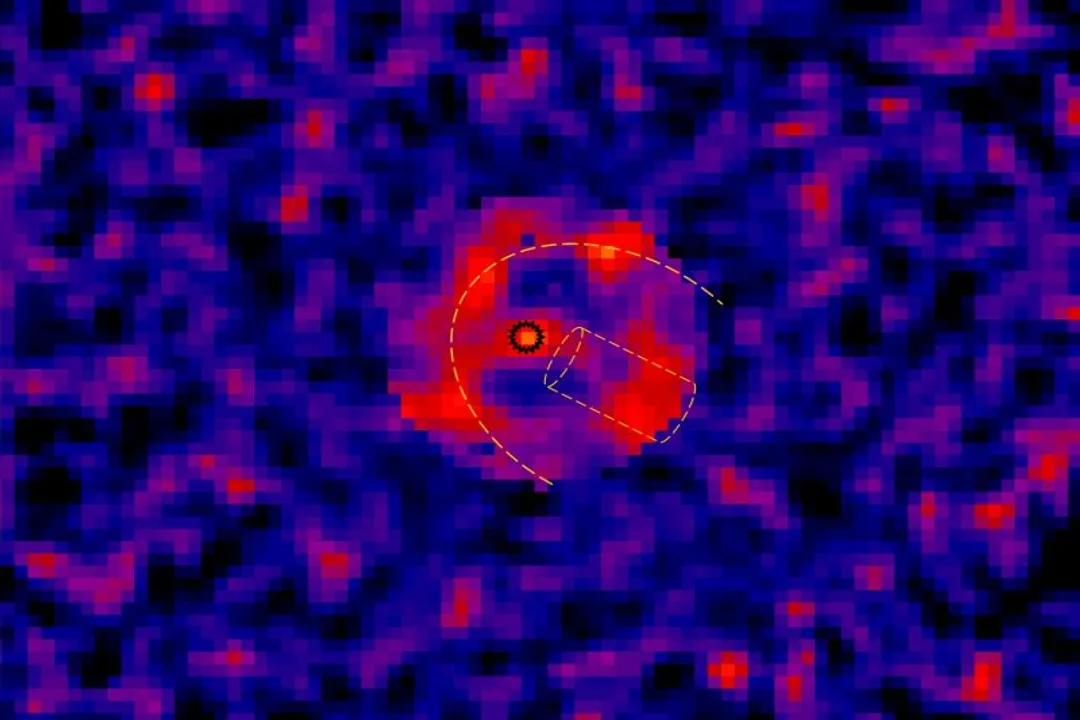
The aftermath of a star’s dramatic demise in a supernova explosion leaves behind fascinating celestial objects, fundamentally changing the surrounding interstellar medium. [2][5] The material ejected during the explosion, along with the gas and dust swept up from the interstellar medium, forms an expanding cloud known as a supernova remnant (SNR). [2][3] These remnants represent the visible, albeit temporary, consequence of the stellar death event. [5]
# Blast Aftermath
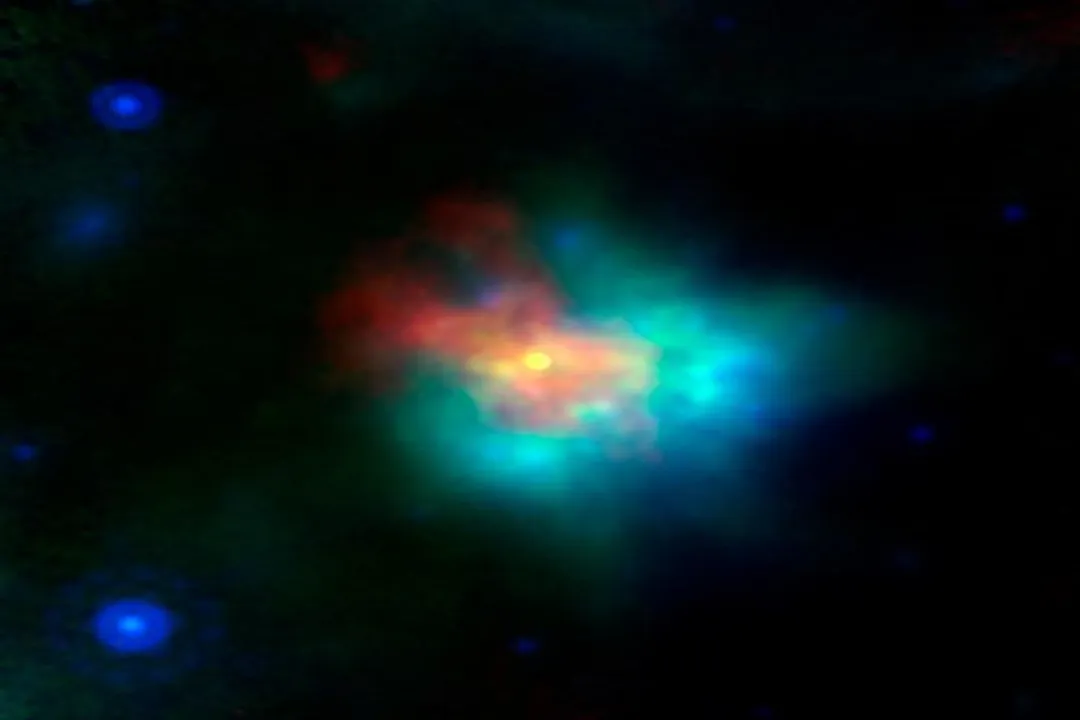
A supernova remnant is characterized by its rapid expansion into the cosmos. [3] The initial explosion ejects stellar material at immense speeds, creating a shock wave that slams into the relatively cooler, thinner gas and dust already present in the galaxy. [2][5] This violent interaction heats the material to millions of degrees, causing it to glow brightly across the electromagnetic spectrum, from radio waves up to X-rays. [3] Observing these remnants offers scientists a tangible connection to a past stellar explosion, allowing study of the processes involved in stellar evolution and nucleosynthesis. [4]
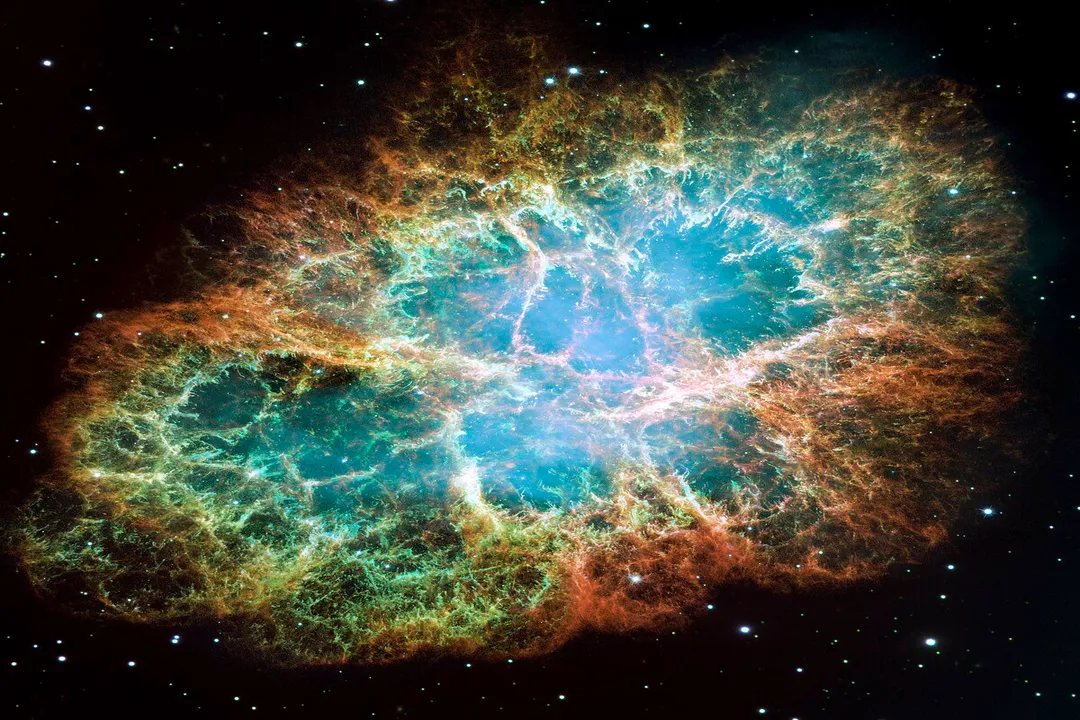
The structure of the SNR itself is complex, often appearing as an expanding shell or a complex bubble. [5][2] Within this expanding envelope of high-energy plasma, the very building blocks of heavier elements synthesized during the star's life—and sometimes during the explosion itself—are dispersed back into the galaxy, ready to be incorporated into future stars and planets. [5] This process of cosmic recycling is vital for the chemical enrichment of the universe. [5]
# Core Collapse Fate
While the visible SNR is the immediate, expansive signature of the event, the fate of the star’s original core—the stellar remnant—is arguably more profound, determining what remains long after the glowing cloud has faded. [1] The remnant left behind depends almost entirely on the initial mass of the star that exploded. [1] When a massive star exhausts its nuclear fuel, its core collapses under gravity. [1]
If the core’s mass is relatively lower after shedding its outer layers in the supernova, the collapse halts when the core reaches an extremely high density, forming a neutron star. [1][7] These are exotic objects composed almost entirely of neutrons packed tightly together. [7] A neutron star packs the mass of perhaps one or two suns into a sphere only about the size of a city, often exhibiting incredible magnetic fields and rapid rotation. [7]
However, if the progenitor star was sufficiently massive, the force of gravity overwhelms even the degeneracy pressure of neutrons. In this more extreme scenario, the collapse continues indefinitely, resulting in the formation of a black hole. [1] A black hole is a region of spacetime exhibiting such strong gravitational effects that nothing—not even particles and electromagnetic radiation such as light—can escape from inside it. [1]
# Mass Matters Most
The boundary between forming a neutron star and a black hole is dictated by the remaining mass of the core following the supernova. [1] This dependence on the progenitor star’s mass is the single most important determinant of the final central object. [1][5] While the exact critical mass thresholds can be complex due to the physics of core collapse, the principle remains clear: greater mass leads to a greater gravitational crush. [1]
It is interesting to consider that the supernova event itself dictates which object forms. A less massive star might end its life as a white dwarf after a planetary nebula phase, while a medium-to-large star produces a core that becomes a neutron star. [1] Only the most massive stars leave behind a black hole remnant after their collapse-driven supernova. [1] This means that observing a specific type of SNR might give astronomers clues about the mass range of the star that created it, indirectly informing us about the central object's nature, even if the object itself (especially a black hole) is not directly visible in the SNR context. [4]
A point worth noting is the difference in lifespan between the two main components. The expanding gaseous shell of the SNR is an ephemeral structure, likely dissipating or merging with the interstellar medium over tens of thousands of years. [3] In contrast, the stellar remnant—whether a neutron star or a black hole—is effectively permanent on astronomical timescales, persisting for billions of years, representing the true, enduring monument to the star's existence. [1]
# Remnant Characteristics
The nature of the central remnant profoundly influences the long-term appearance and activity of the SNR, though this influence is more pronounced with a neutron star.
| Progenitor Outcome | Stellar Remnant | Associated Visibility/Effect | Expected Longevity |
|---|---|---|---|
| Medium-Mass Star | Neutron Star | Often seen as a pulsar emitting regular radio pulses [7] | Extremely Long |
| High-Mass Star | Black Hole | Typically does not interact directly with the SNR gas | Indefinite |
| Ejected Material | Supernova Remnant (SNR) | Glows across the spectrum due to shock heating [3] | Tens of Thousands of Years |
A rapidly spinning neutron star with a strong magnetic field, known as a pulsar, can sometimes be found at the center of an SNR. [7] These pulsars emit beams of electromagnetic radiation that sweep across space, and if one of these beams crosses Earth’s line of sight, we detect it as a precisely timed pulse. [7] This provides direct evidence of the compact remnant’s existence within the expanding cloud. [7] When this happens, the pulsar powers the high-energy emission coming from the center of the remnant. [3]
If the core remnant is a black hole, the situation is different. Since nothing escapes a black hole, it does not emit light or radio waves on its own in the same manner as a pulsar. [1] While the black hole itself might be invisible within the SNR, its immense gravity could still influence the surrounding gas or perhaps later accrete matter if the remnant evolves close enough to other stellar bodies in a binary system, though the direct emission from the SNR cloud is generally tied to the shock wave expansion rather than the black hole's immediate presence. [1][2] The search for these central objects is key to understanding stellar death endpoints. [4]
The physical contrast between the two primary core remnants—a dense ball of matter versus a singularity of spacetime—highlights the dramatic range of physics unleashed by a supernova explosion. [1] One is the densest known form of stable matter; the other is the ultimate manifestation of gravity’s victory over all other forces. [1]
#Videos
What Is Left After A Supernova? - Physics Frontier - YouTube
Related Questions
#Citations
When Does a Neutron Star or Black Hole Form After a Supernova?
Supernova remnant - Wikipedia
Supernova Remnants - Imagine the Universe!
Supernovas & Remnants | Center for Astrophysics
Flexi answers - What occurs after a supernova? | CK-12 Foundation
What Is Left After A Supernova? - Physics Frontier - YouTube
Since a supernova can leave behind a neutron star, does that mean ...
How do planets form after star death? | Space - EarthSky
Supernova explosions - Las Cumbres Observatory