Are supernova remnants hot?
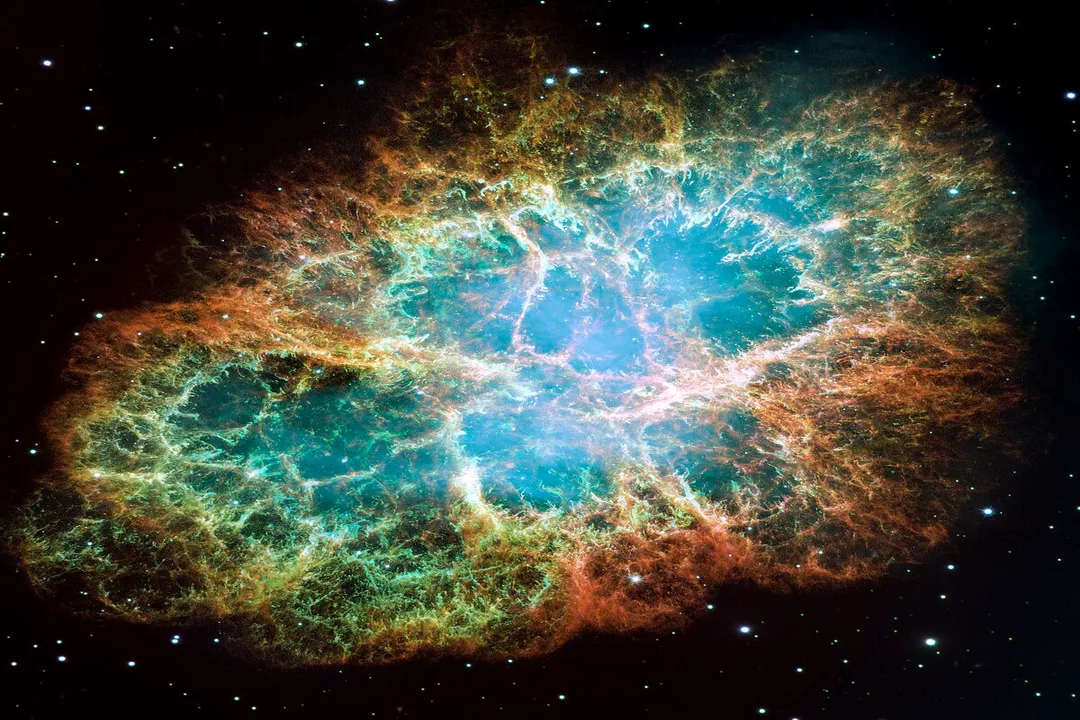
The aftermath of a massive star’s demise, known as a supernova remnant (SNR), is one of the most energetic and violent phenomena in the cosmos, leaving behind expanding clouds of gas and debris. When asking whether these structures are hot, the answer is an emphatic yes; they are among the hottest environments known outside of the interior of a star itself. The temperatures reached within these expanding shells are not merely warm or scorching, but are measured in millions of degrees Kelvin, representing a fundamental transformation of the matter involved.
# Shock Dynamics
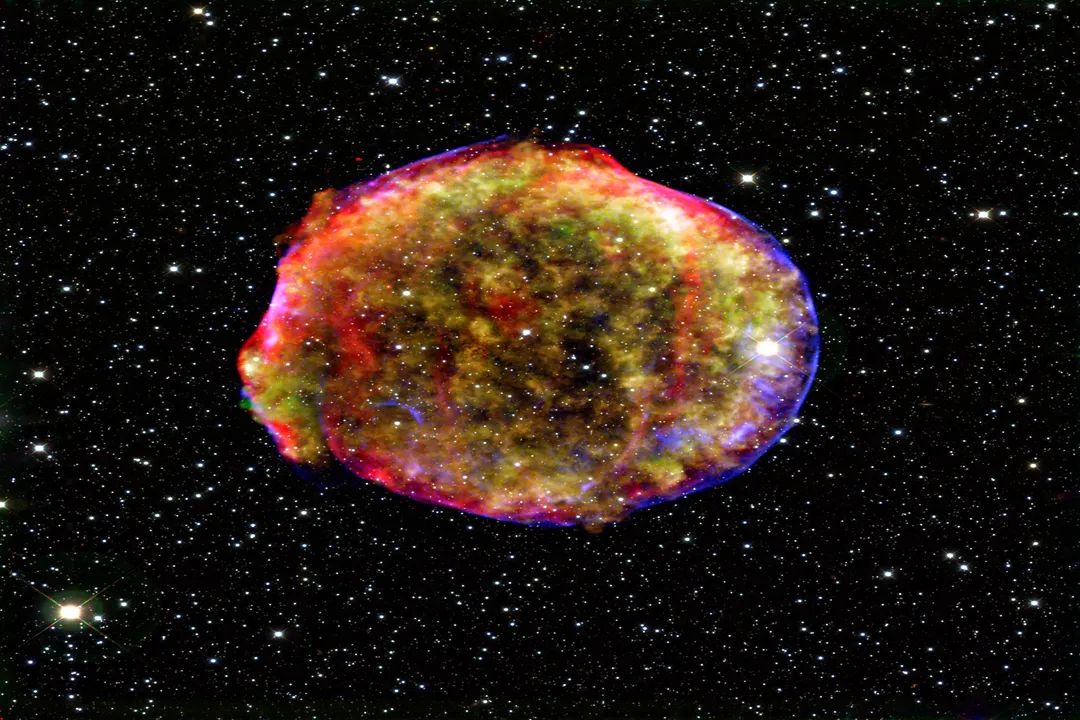
The extreme heat signature of a supernova remnant is directly tied to the process of its creation and subsequent evolution: the shock wave. When a star explodes, it ejects a tremendous amount of material outward at supersonic speeds, creating a blast wave that slams into the surrounding interstellar medium (ISM). This collision is not a gentle interaction; it involves kinetic energy being rapidly converted into thermal energy as the gas is compressed and heated in the ensuing shock front. This process occurs as the outward-moving ejecta sweeps up the colder, ambient gas and dust that pervaded the space before the explosion. The shock wave acts like an invisible, supersonic hammer, heating the ISM material it encounters to incredible extremes.
# Temperature Extremes
Quantifying the heat reveals just how extreme the conditions are. The gas situated just behind these powerful shock fronts routinely reaches temperatures exceeding 10 million Kelvin. Observatories specializing in high-energy radiation, such as NASA’s NuSTAR mission, have detected radiation from these remnants that confirms temperatures reaching tens of millions of degrees. For comparison, the surface of our Sun is about , and even the hottest laboratory plasmas generated on Earth rarely sustain temperatures comparable to the material in an active SNR.
To put this into perspective, consider what happens to the matter itself. At these temperatures, the thermal energy is so immense that the electrons are violently stripped away from the atomic nuclei. This results in a state of matter known as a fully ionized plasma. It is no longer composed of neutral atoms but rather a soup of free electrons and bare nuclei moving at near-relativistic speeds relative to one another. This state is far more energetic than the hot gas found in the corona of a typical star.
# Emission Signatures
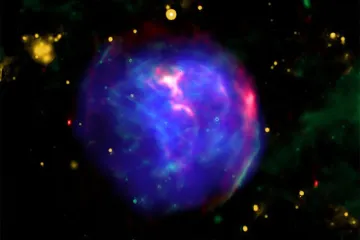
This intense heat dictates how we observe these objects across vast cosmic distances. Material heated to millions of degrees emits most of its energy not as visible light, but as high-energy electromagnetic radiation, predominantly X-rays. This necessity for X-ray detection is why dedicated missions are required to study the hottest components of an SNR. The intensity and spectrum of the X-rays provide astronomers with a direct diagnostic tool to map the temperature distribution within the remnant. Regions that have only recently been shocked will exhibit the highest temperatures and brightest X-ray emission, while older, cooler regions might be visible primarily in lower-energy optical or radio wavelengths.
# Structure Contrast
It is important to realize that the temperature within a supernova remnant is not uniform; it exists across a vast gradient. The structure typically involves distinct layers:
- The Forward Shock: The leading edge, where the blast wave is currently smashing into the ISM, creating the highest temperatures (millions of Kelvin).
- The Reverse Shock: A weaker shock propagating backward into the ejecta—the material originally expelled by the star itself—heating it as well.
- The Interior/Cooler Regions: Older, swept-up material that has had time to cool radiatively down to perhaps tens of thousands of Kelvin, which is still significantly hotter than the surrounding interstellar medium ( or less).
The sheer contrast in temperature between the hot plasma and the background ISM is what makes the SNR structure so visible and studyable.
While the shock-heated gas reaches millions of Kelvin, it's worth contrasting this with the temperature required for the expansion to appear static on human timescales. The shells expand at speeds that can be thousands of kilometers per second. However, since the remnant's diameter can span many light-years, the apparent change in size over a human lifetime or even a few centuries is minimal. For example, a remnant expanding at over a distance of (approximately ) would take over to double its radius, making the motion subtle when viewed over typical observational periods. This extended timescale allows us to study the hot, shocked plasma long enough for its energy to be successfully analyzed before it dissipates into the wider galaxy.
# Chemical Enrichment
The heating process itself is intrinsically linked to the chemical impact of the supernova. The explosion is the primary mechanism by which heavy elements—those forged in the dying star and during the explosion itself—are mixed into the galactic supply of gas and dust. When the gas is superheated to millions of degrees and then begins to cool, these elements, such as oxygen, silicon, and iron, are injected into the ISM in an ionized state. Subsequent generations of stars will form from this enriched material. Therefore, the immense heat is a temporary, but necessary, condition for the chemical evolution of the galaxy, facilitating the creation of the building blocks for planets and life. The energy involved is so great that it drives significant turbulence, stirring the ISM over vast regions.
# Evolutionary Cooling
Supernova remnants are not permanent fixtures at peak temperature; they are transient structures evolving over cosmic timescales, sometimes lasting tens of thousands of years. As the remnant continues to expand, the shock front encounters less dense material, or the energy of the blast wave is spread thinner over an ever-increasing volume. This causes the effective heating rate to slow down relative to the volume of gas being processed, allowing radiative cooling mechanisms to take over. Over time, the material behind the shock front radiates away its heat energy into space, and the structure eventually fades, merging its enriched, hot gas with the cooler background ISM. The energetic legacy remains in the chemical composition, but the extreme thermal signature subsides.
Related Questions
#Citations
Supernova remnant - Wikipedia
X-ray Astrophysics Laboratory - Supernova Remnants - NASA
How can supernova remnants become "static" in a region of space?
Norberts's Supernova Remnants Page
Interstellar Medium: Hot
Supernova Remnants | Research Starters - EBSCO
Cosmic Rays from the Remnant of a Supernova - NuSTAR
How hot are atoms in the shock wave of an exploding star?
Supernova remnants - The XMM Newton Satellite Schoolpage