What is the best explanation for the location of hot Jupiters?

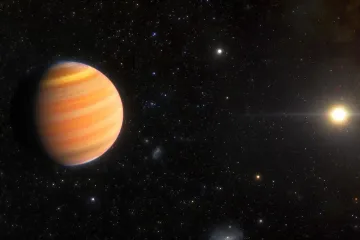
The discovery of exoplanets has fundamentally reshaped our view of planetary systems, presenting astronomers with many unexpected configurations compared to our own Solar System. Among the most startling revelations were the so-called Hot Jupiters: massive, gas-giant planets that orbit incredibly close to their host stars, completing an orbit in just a few Earth days or even hours. [5][3] These behemoths, akin to our own Jupiter in size and mass, exist in scorching environments, a stark contrast to the cool, distant homes of the outer planets in our neighborhood. [5][10]
# Defining the Class
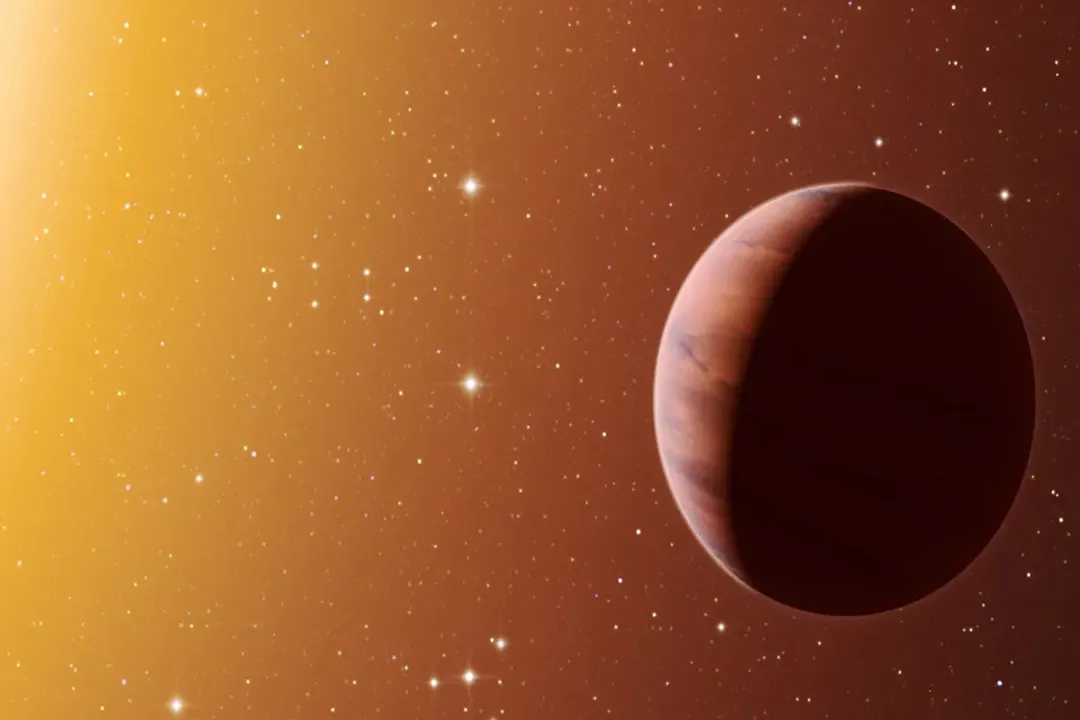
Hot Jupiters are, by definition, Jovian-mass planets—meaning they are comparable to or larger than Jupiter—that orbit their stars at very small semi-major axes, generally less than $0.5$ Astronomical Units (AU). [1][3] For context, Mercury orbits the Sun at about $0.39$ AU, meaning these gas giants often orbit closer than the innermost planet in our system. [1] Their orbital periods can be incredibly brief, sometimes clocking in at less than ten days. [10] This proximity leads to intense irradiation from their parent stars, resulting in extremely high estimated surface temperatures, often exceeding $1,000$ Kelvin. [5] The discovery of $51$ Pegasi b in $1995$ marked the first confirmed exoplanet of this type, initiating a scientific revolution because such worlds seemed impossible based on early planet formation theories. [3][5]
# The Formation Puzzle
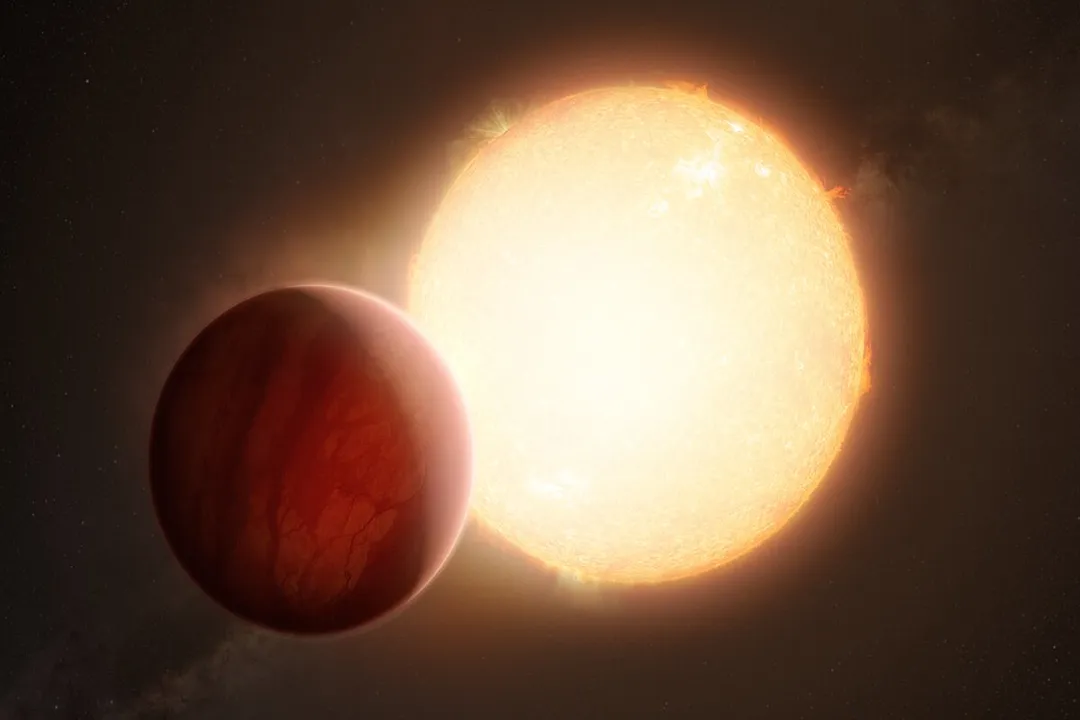
The existence of Hot Jupiters creates a genuine dilemma for established theories of planet formation, primarily the core accretion model. [10] This model suggests that planets begin as small solid cores that slowly accumulate gas from the surrounding protoplanetary disk of dust and gas that orbits a young star. [10] Critically, this disk is believed to dissipate—evaporate or be cleared away—within a few million years. [3] For a planet as massive as Jupiter to form via core accretion, it needs a significant amount of time and a large reservoir of gas, both of which are typically only available in the cooler, outer regions of the disk—far from the star where ice can exist to boost core growth. [10] Planets forming close to the star, inside the "ice line," simply do not have enough solid material available to build a core large enough to gravitationally capture the huge envelope of hydrogen and helium that makes a Jupiter. [3][10]
Therefore, the leading explanation for why we observe these massive worlds in close orbits is not that they formed there, but that they moved there. [5][10] The solution to the puzzle lies in orbital migration. [5]
# Disk Migration
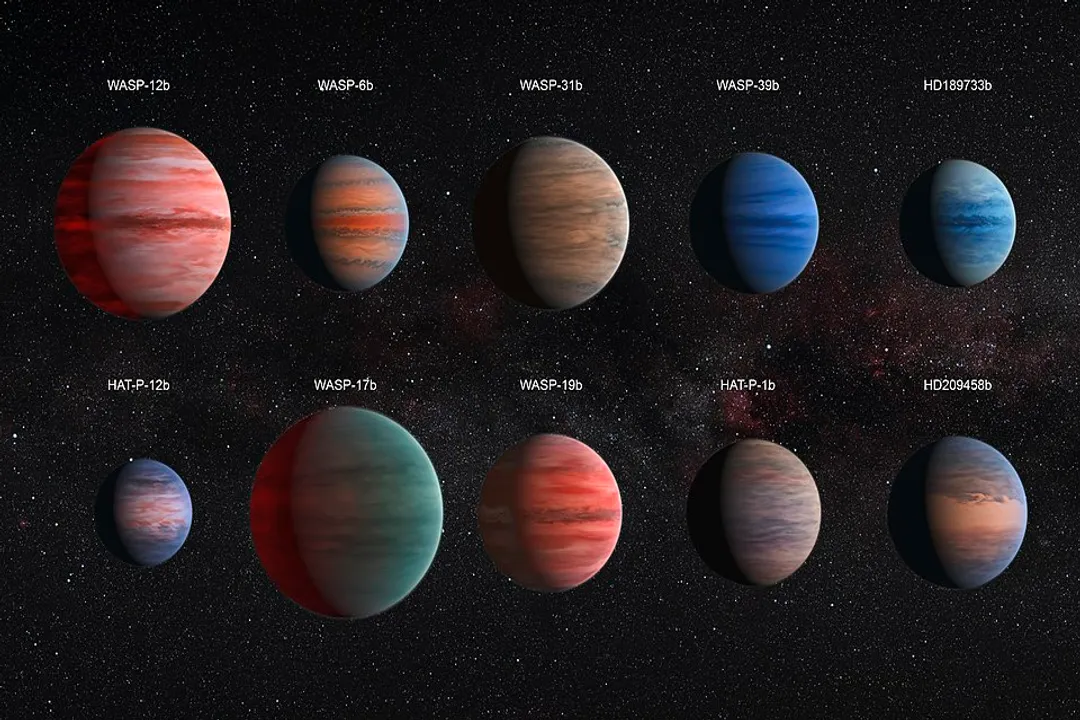
Orbital migration is the process by which a planet’s orbit changes over time due to gravitational interactions with the surrounding protoplanetary disk. [5] This mechanism effectively allows a planet to move inward toward its star or outward away from it. [10] The dominant mechanism for this inward drift, especially for planets less massive than about twice Jupiter's mass, is often referred to as Type I migration. [3]
In Type I migration, the planet creates density waves (like a ship in water) in the gaseous disk. [3] These waves exert a net torque on the planet, causing it to lose orbital angular momentum and spiral inward. [10] This process is relatively slow but inexorable as long as the planet is embedded within a sufficiently massive and extended disk. [5]
As the planet gains mass and nears Jupiter's mass, the interaction becomes stronger, and the model transitions conceptually to Type II migration. [3] Type II migration occurs when the growing planet opens a significant gap in the disk, essentially clearing a path for itself as it migrates inward. [3][10] This process is generally faster than Type I, as the planet is now coupled to the viscous evolution of the entire disk structure outside the gap. [5] It is hypothesized that Hot Jupiters formed much farther out, perhaps beyond the equivalent of Saturn’s orbit in our own system, and then migrated en masse toward their current close-in positions before the gas disk vanished. [5]
# Scattering Events
While disk migration explains a gradual inward pull, another powerful, albeit more violent, mechanism must be considered, particularly for systems that might contain multiple giant planets: gravitational scattering. [5]
In systems where two or more giant planets form farther out—perhaps in the "habitable zone" or beyond—their mutual gravitational interactions can become unstable over time. [5] This instability can lead to a planetary close encounter where one planet gains energy and is flung outward into a wide orbit or even ejected from the system entirely, while the other planet loses energy and spirals inward into a much tighter orbit. [10][5] If the inward-spiraling planet is Jupiter-sized, it becomes a Hot Jupiter. [10]
The scattering scenario offers a compelling explanation for systems that might feature a Hot Jupiter alongside a distant, potentially eccentric companion planet, or where the Hot Jupiter has a highly eccentric (non-circular) orbit, although most known Hot Jupiters have circular orbits. [5] The prevalence of circular orbits among Hot Jupiters actually favors the smooth, circularizing effect of disk migration over the typically high-eccentricity outcomes of a scattering event. [5] However, scattering remains a viable pathway for planets that might start on slightly eccentric paths or for systems that undergo multiple evolutionary phases.
# Comparative Migration Effects
It is helpful to visualize the difference between the two leading migration models: disk migration acts like a steady, frictional brake applied by the surrounding environment, reliably driving the planet inward in a generally circular path. [5] Gravitational scattering, conversely, is a chaotic, sudden event, like a billiard break, which often results in a dramatic change in orbital shape, not just distance. [10]
When we look at the population data, we see a predominance of nearly circular orbits among Hot Jupiters. [5] This observation strongly suggests that disk migration, likely Type II, is the dominant explanation for the location of the majority of these scorching worlds. [5][10] The timescale for migration is a critical factor; the planet must migrate inward before the gas disk disperses, which places a constraint on how far out the planet could have started and how fast the migration process must have been. [3]
To better assess the timing, one might consider the relationship between the planet's final mass and the disk dispersal time. If a Hot Jupiter has a mass significantly greater than $1$ Jupiter mass, it implies it underwent rapid migration, potentially Type II, which is generally thought to occur relatively quickly, perhaps within the first million years, when the disk is thickest. [3] The sheer speed required for a Jovian-mass object to spiral from AU inward to $0.05$ AU in under a million years is a testament to the efficiency of gravitational torque in a dense disk.
# Observational Context
Astronomers look for evidence supporting these theories by studying the very environment where these planets supposedly formed. If disk migration is the rule, we might expect to see fewer Hot Jupiters around very old stars whose disks dissipated long ago, or we might observe an increased frequency of them orbiting stars with remaining, but thin, gaseous disks that seem too young to have allowed for their current orbital positions unless migration was fast. [5]
Furthermore, the study of the eccentricity—how much the orbit deviates from a perfect circle—provides a key diagnostic tool. A low eccentricity, common in Hot Jupiters, points toward migration. [5] If the migration process stops prematurely, perhaps because the planet encounters the inner edge of the disk or the disk dissipates, the planet ends up as a Warm Jupiter orbiting a bit further out, sometimes retaining a slightly more eccentric orbit if the interaction wasn't perfectly circularizing. [5]
An interesting parallel emerges when comparing the orbital dynamics of Hot Jupiters to the Solar System's own giant planets. Jupiter and Saturn, though massive, reside in stable orbits far from the Sun. Their current positions are likely the result of a balance between early migration and subsequent gravitational interactions with the residual planetesimal disk (a process sometimes grouped under the Nice model, although the context here is a gas disk around a young star). [10] The fact that we don't have a Hot Jupiter in our Solar System suggests either that our early migration phase stopped before the planet reached the inner system, or that Earth-sized or smaller rocky planets were able to successfully scatter away the inward-drifting giant planet, a failure scenario for Hot Jupiter formation in our own system. [5]
# Beyond Jupiter
The existence of these extreme worlds has broadened the classification of exoplanets, leading to related categories. For instance, Warm Jupiters are similar in mass but orbit further out, perhaps from $0.5$ to a few AU, putting them in a transitional zone where migration might have been incomplete or where they formed in situ (in place). [5] Then there are the Ultra-Short Period planets, which are Hot Jupiters with orbital periods less than one day. [10] These must have migrated incredibly close, often requiring the final stages of migration to occur after the disk has largely dissipated, perhaps through tidal interactions with the star or through interaction with a remnant planetary core/belt close to the star. [10]
If we consider a hypothetical system where a Jupiter-mass planet forms around a star with a very low-metallicity disk (a disk poor in heavy elements), the initial core growth would be significantly slower. [1] This slow growth might delay the onset of Type II migration, allowing the disk to disperse before the planet grows massive enough to open a gap and rapidly migrate inward. In such a case, the planet might stall as a Warm Jupiter or fail to grow beyond a Super-Earth, providing a natural cut-off for the Hot Jupiter population based on the star's birth environment. [3] This illustrates how the initial conditions of the star system dictate the final architecture, even when migration is the primary transportation method.
The key takeaway remains that while the location of Hot Jupiters—right next to their stars—is a consequence of orbital migration, their existence as massive gas giants is a product of successful core accretion that must have occurred farther out in the cooler parts of the initial protoplanetary disk. [10][5] The best explanation is therefore a two-step process: distant formation followed by efficient inward transportation, with disk-based mechanisms being the most likely driver for the observed orbital characteristics. The ongoing challenge for astrophysicists is precisely modeling the precise rate of migration and the environmental triggers that ultimately stop the inward spiral, leaving a giant planet baking in its star's glare. [3]
#Videos
What are Hot Jupiters? - YouTube
Related Questions
#Citations
ast hw12 Flashcards - Quizlet
What's the best explanation for the location of hot Jupiter? - Quora
Hot Jupiter - Wikipedia
What is the best explanation for the location of hot Jupiters ... - Brainly
Hot Jupiter - NASA Science
Astronomy Quiz Questions - Hot Jupiters & Doppler Method Insights
Jupiter-sized planets orbit stars at thousands of degrees
What's the best explanation for the location of hot Jupiters?
What are Hot Jupiters? - YouTube