What best describes Jupiter?
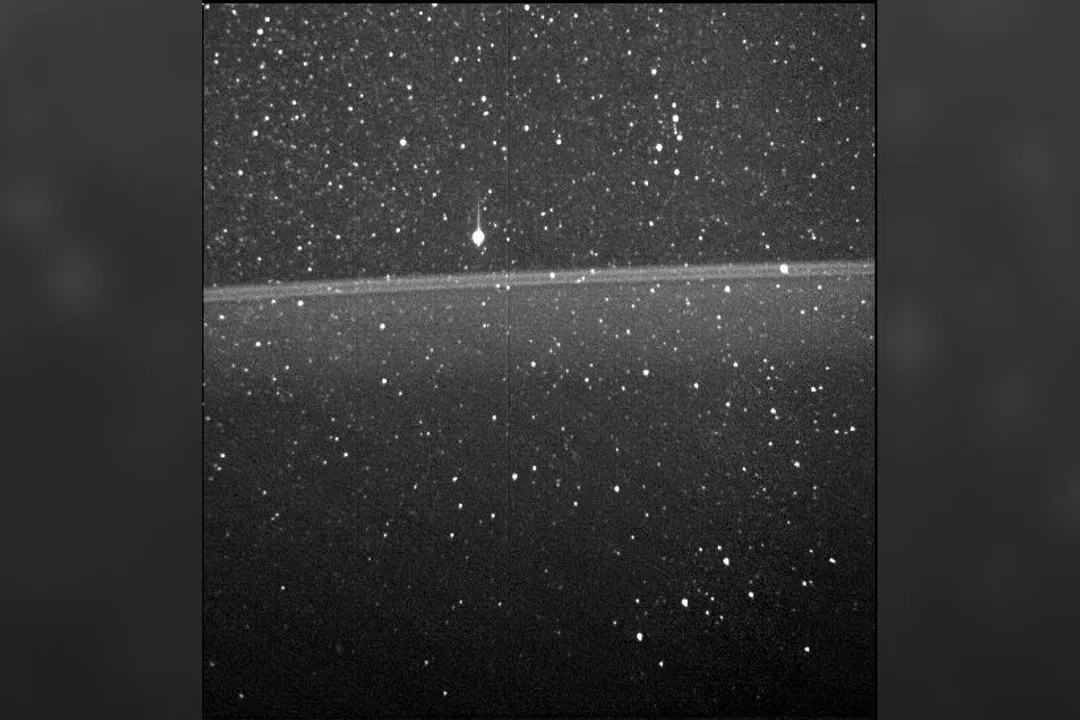
Jupiter is, quite simply, defined by its immensity. It is the undisputed monarch of our Solar System, a colossal globe of swirling gases that dwarfs everything else orbiting our Sun except the star itself. [6][4] To look at Jupiter is to gaze upon a planet that commands attention, a world whose sheer bulk shapes the gravitational dynamics of the entire planetary neighborhood. [5]
# King Planet
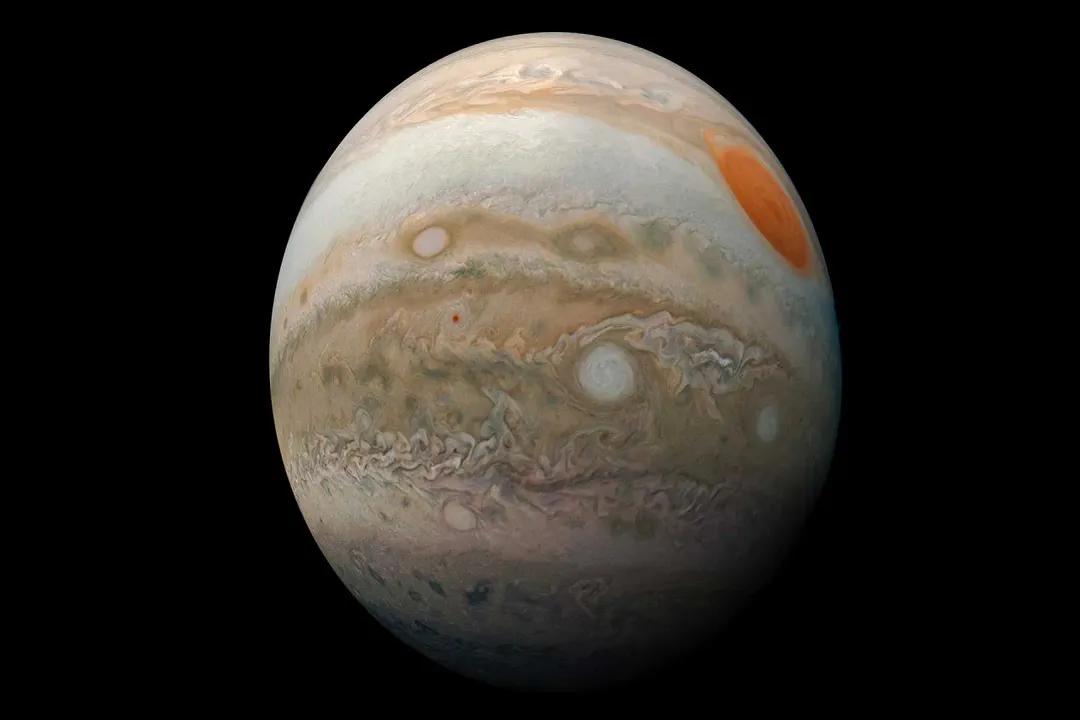
The best descriptor for Jupiter often starts with its sheer scale. It holds the title of the largest planet in our solar system. [6][4] Its diameter measures approximately $142,984$ kilometers. [5] When you consider mass, the distinction becomes even starker: Jupiter contains more than twice the mass of all the other planets in the Solar System combined. [6][5] This overwhelming presence means that its influence is felt across vast distances, making it a gravitational anchor in the outer system. If you could somehow aggregate the matter of Earth, Mars, Venus, Mercury, Saturn, Uranus, and Neptune, Jupiter would still outweigh that combined total by a factor of two and a half. [5] Its distance from the Sun places it as the fifth planet out from our star. [5][4] Despite its gargantuan size, it maintains a surprisingly swift rotation, completing one full spin in just under ten hours, making it the fastest-spinning planet known to us. [6][4][5]
# Gaseous Nature
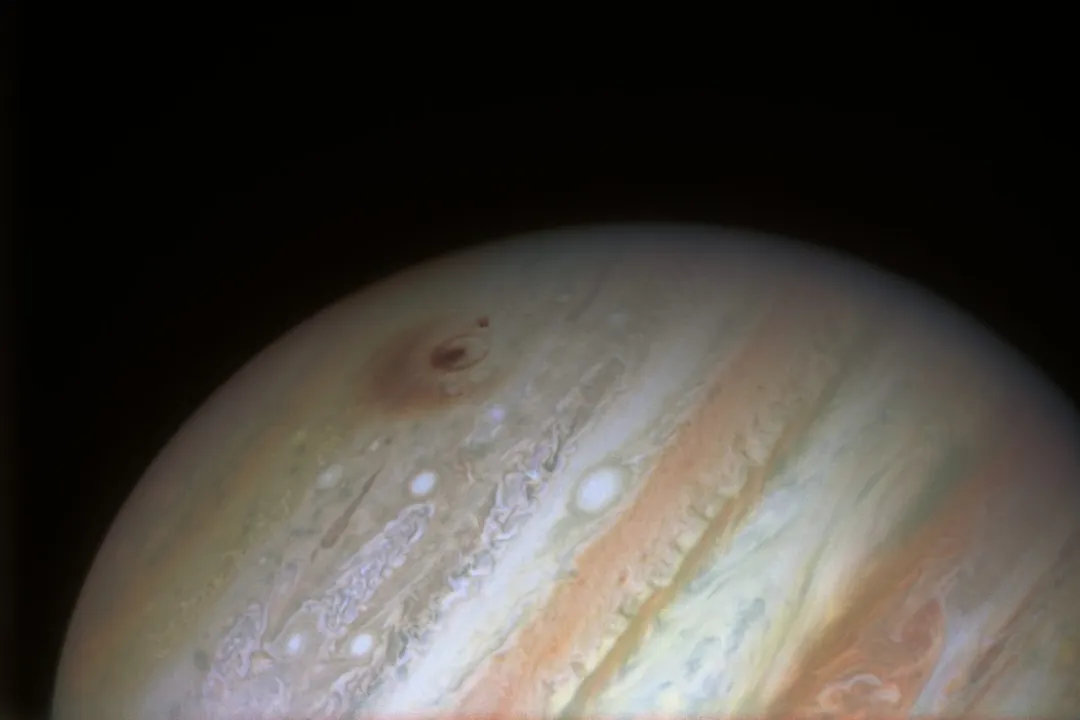
Jupiter is fundamentally different from the inner, rocky worlds like Earth. It is classified as a gas giant. [5][1][4] This means it lacks a solid surface in the way we commonly understand one. [1] Its bulk composition is dominated by the lightest elements: overwhelmingly hydrogen and helium. [5][1]
When we observe Jupiter through a telescope or via space probes, what we see is not a solid shell, but the uppermost layer of its incredibly deep atmosphere, characterized by striking features. [2] These features appear as alternating light-colored zones and dark-colored belts that stretch around the planet parallel to its equator. [1][2] These visual bands are essentially high-altitude clouds marking areas of rising and sinking gases driven by the planet’s rapid rotation and internal heat. [2] The rapid spin is what stretches these atmospheric features into the distinct zonal patterns we observe, unlike the appearance of slower-rotating worlds. [2]
# Storm Eye
Perhaps the most iconic single feature describing Jupiter is its most famous weather pattern: the Great Red Spot (GRS). [1][2][6] This is not just a large storm; it is a persistent, high-pressure anticyclonic storm that has been observed for centuries. [1][2] At its peak observation times, this vortex has been large enough to swallow our entire home planet. [6] It is an example of the sheer, untamed power of Jovian meteorology, a storm system that remains stable and active over timescales spanning centuries, a feat impossible for the shorter-lived storms of Earth. [2]
# Family Structure
Jupiter is far from a solitary world; it is the center of a massive system. It hosts a large family of orbiting satellites, with at least 95 confirmed moons as of recent counts. [1][4] Four of these are famous in their own right: the Galilean moons—Io, Europa, Ganymede, and Callisto. [4] These large satellites are worlds unto themselves, each exhibiting unique geological characteristics, from Io’s intense volcanism to Europa’s subsurface ocean. [4] Among them, Ganymede holds a special distinction: it is the largest moon in the entire Solar System, bigger even than the planet Mercury. [4] Beyond these major companions, Jupiter is also encircled by a faint, though detectable, system of rings, much like Saturn, though far less prominent. [1][4]

# Hidden Depths
Peering beneath the visible cloud tops reveals a structure vastly different from Earth's internal layers. While Jupiter likely possesses a dense, rocky core, the material surrounding it is truly exotic. [7] Scientists theorize that as the immense pressure increases deeper into the giant, the hydrogen gas transforms into a state known as metallic hydrogen. [7][5] In this state, the hydrogen acts like an electrical conductor, much like liquid metal, due to the crushing force squeezing its electrons from their atoms. [7] Above this layer lies more conventional liquid molecular hydrogen, eventually giving way to the gaseous envelope we see. [7][5]
# Magnetic Shield
Another defining characteristic is Jupiter's immense magnetic field. It is the strongest magnetic field of any planet in the Solar System. [1][6] This field is generated by the dynamics within the planet, likely linked to the massive currents flowing within that layer of liquid metallic hydrogen. [7] This powerful magnetosphere traps charged particles, creating radiation belts that are incredibly intense, posing significant hazards to unshielded spacecraft. [1] The field itself is almost 14 times stronger than Earth's magnetic field at the surface of the planet. [1]
Jupiter’s orbital period around the Sun takes nearly twelve Earth years, roughly $11.86$ of our years. [5] However, its rapid rotation, which creates its distinctive appearance and powerful internal dynamo, is a key factor in understanding its dynamic state. [6][5] Understanding how these factors—the rapid spin, the massive size, and the metallic hydrogen layer—interact is the focus of ongoing exploration, such as the Juno mission, which is actively studying the planet’s deep interior and magnetic environment. [7] It is this combination of extreme scale, exotic interior physics, and unparalleled atmospheric violence that truly describes Jupiter best.
#Videos
Fun Facts About Jupiter - YouTube
Related Questions
#Citations
Jupiter Facts - NASA Science
Jupiter - ESA/Hubble
All About Jupiter | NASA Space Place – NASA Science for Kids
Jupiter, the planet with a planetary system of its own
Jupiter | Facts, Moons, Rings, Temperature, Size, & Color | Britannica
Jupiter: A guide to the largest planet in the solar system | Space
Fun Facts About Jupiter - YouTube
What's in Jupiter's Core? - Mission Juno
The Planet Jupiter - Reading and Assessment - Edinformatics