How do humans know what the Milky Way looks like?
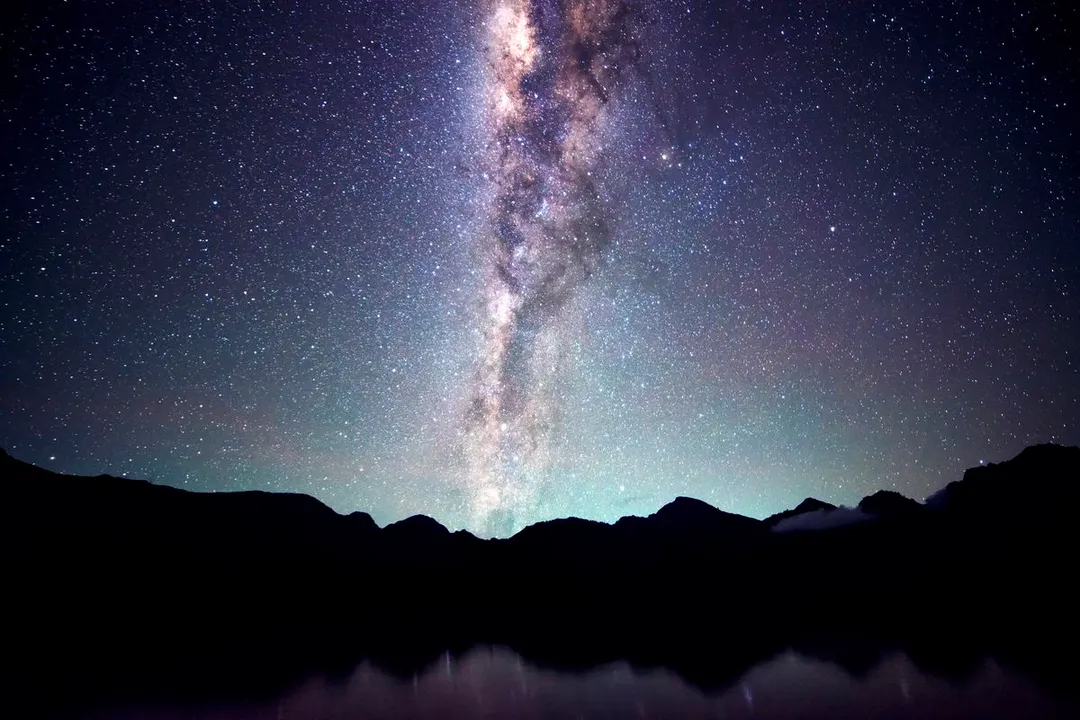
The view of the Milky Way from our position on Earth is both stunning and misleading. When we look up on a dark, clear night, we see a hazy, luminous band stretching across the sky. [3] This iconic sight, which gives our galaxy its name, is not a snapshot of the entire structure, but rather the combined, smeared-out light of countless stars too distant for our eyes to resolve individually. [3][4] The fundamental challenge in knowing what the Milky Way really looks like—its true spiral shape, bar structure, and overall dimensions—stems from a very basic fact: we are located deep inside the galactic disk, much like trying to describe the shape of a pancake while standing on top of it. [1][2][7][10]
# Viewpoint Problem
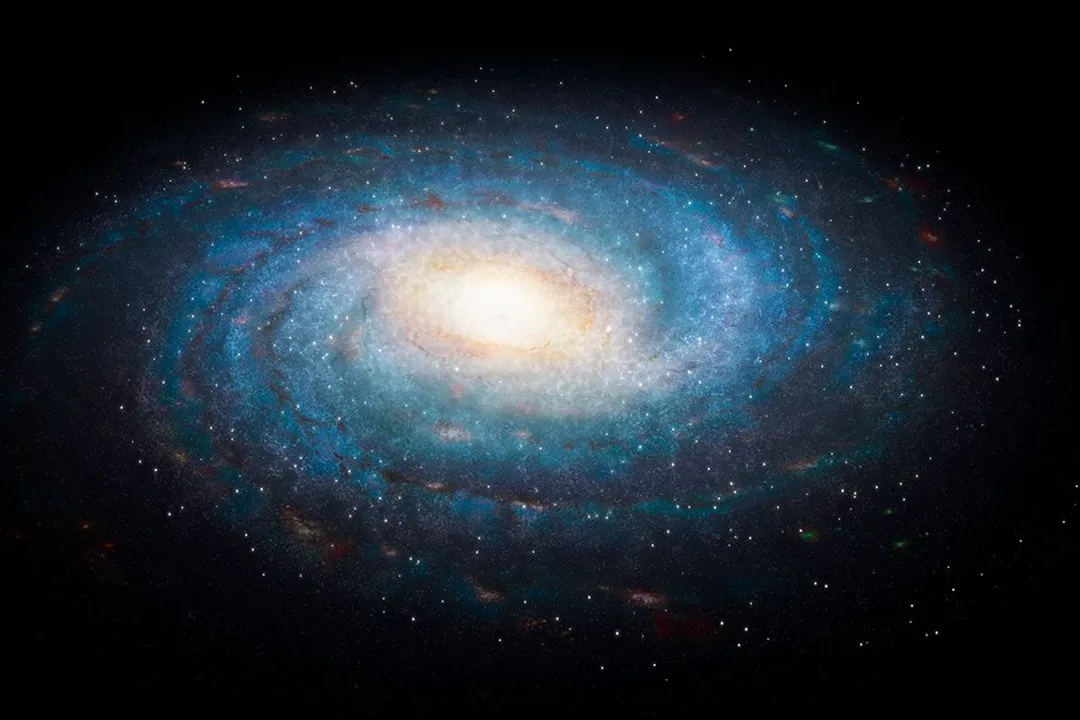
Because we are embedded within the disk, looking toward the center gives us a dense field of light, and looking toward the edges gives us a thinner field. [5] We cannot simply take an airplane photo of our galaxy; we lack an external vantage point. [2][7] This internal perspective means that any visual observation is heavily biased by our location in the Orion Arm, approximately two-thirds of the way out from the core. [4] If we could view the galaxy from light-years away, we would see a distinct, flattened spiral shape, perhaps 100,000 light-years across, featuring prominent spiral arms curving out from a central bar structure. [2][4][5]
# Seeing Faintly
The immediate problem for astronomers trying to map this structure using visible light is obscuration. Vast clouds of interstellar dust and gas lie between us and the galactic core. [2] This dust effectively acts like a thick fog, absorbing and scattering the visible light from the billions of stars lying beyond it, particularly those near the dense central bulge. [5] Trying to map the structure using only visible light is akin to trying to map the layout of a massive stadium by standing near the exit tunnel while someone throws smoke bombs onto the field—you can see the immediate vicinity, but the far side is completely obscured. [1]
To pierce this veil, scientists must turn to parts of the electromagnetic spectrum that can pass through the dust unimpeded. Radio waves and infrared light are far better suited for this task. [2] Radio astronomy, in particular, allows researchers to detect the emission from neutral hydrogen gas, which is abundant throughout the galaxy. Since hydrogen atoms naturally emit radio waves at a specific wavelength of about 21 centimeters, mapping where these signals originate provides a direct tracer of the galaxy's gaseous components, which largely follow the location of the stars. [2][5] Similarly, infrared light cuts through the dust, revealing the structure of star clusters and the central bulge that is otherwise hidden in visible light views. [2]

# Mapping Structure
The process of determining the Milky Way’s shape is less about a single observation and more about piecing together millions of data points gathered over decades using various methods. One crucial element involves determining the distance to these clouds of gas and stars. Astronomers use techniques like parallax, which measures tiny shifts in apparent position as the Earth orbits the Sun, to find the distances to closer objects. [2] For more distant structures, measuring the velocity of the gas clouds—specifically, how fast they are moving toward or away from us, known as radial velocity, via the Doppler effect—is essential. [2][5]
By measuring both the direction and the speed of various components, scientists can reconstruct their three-dimensional positions relative to the Sun. When plotted, these positions reveal clear patterns. [2] These patterns consistently show that the components are not randomly scattered but are organized into recognizable features: a flattened disk, a central concentration of stars known as the bulge, and most importantly, the spiral arms. [4][5]
# Comparative Models
Since we cannot step outside our galaxy to verify the map, astronomers rely heavily on studying other spiral galaxies that we can view face-on or edge-on. [2] This comparative study is perhaps the most convincing piece of evidence for our own structure. If we observe hundreds of other galaxies that fit the description of a "barred spiral" (like M83 or NGC 1300) and our internal measurements of stellar motion, gas distribution, and dust lanes within the Milky Way match the characteristics expected of that type, it provides strong confirmation. [2] For instance, the detection of a prominent central bar structure in our galaxy, inferred from infrared surveys looking toward the core, aligns perfectly with what we see in many similar, observable external galaxies. [2]
# The Map Mosaic
The final, publicly available images of the Milky Way are not photographs but artistic, data-driven renderings or mosaics. [4][7] They represent a composite assembled from these disparate observations across the spectrum. The image showing the spiral arms winding around a central bar is the result of combining radio maps showing hydrogen clouds, infrared maps showing glowing dust and old stars near the core, and visible light observations for nearby star fields. [4] An interesting realization when looking at these composites is that they are inherently historical. Given that the galaxy spans about 100,000 light-years across, any image we construct is a collage of light that has taken different amounts of time to reach us, meaning the image represents the galaxy as it was at various points in its past, not as a single, frozen moment. [4]
# Galactic Components
The current model accepted by most astronomers describes the Milky Way as a barred spiral galaxy, often categorized as type SBc or similar. [2][5] This classification breaks down into several key features derived from the mapping efforts:
- Disk: This is the flattened plane containing the spiral arms, most of the gas, dust, and younger stars. The Sun resides in this disk. [4][5]
- Central Bar: Observations strongly suggest a bar-shaped structure composed of older stars running through the very center, about 20,000 light-years long. [2] The spiral arms do not originate from the core itself but seem to sprout from the ends of this bar. [2]
- Bulge: A dense, roughly spherical concentration of older stars surrounding the core, visible in infrared surveys. [4]
- Halo: A much larger, fainter, spherical region surrounding the disk and bulge, primarily composed of very old stars and, crucially, dark matter. [4] While dark matter cannot be "seen" directly, its gravitational influence on visible matter is essential to explaining the rotation speeds observed in the outer regions of the galaxy. [2]
The ability to map the motion of objects within the disk, and then extrapolate those motions to model the entire structure, provides a level of confidence that goes well beyond mere guesswork. It’s similar to predicting the flow of traffic in a densely packed underground tunnel system by monitoring the entry and exit points; you can infer the overall layout even if you can't see the middle sections directly. [1]
# Putting It Together
The final visual representation we see—often reproduced with artistic flair by NASA or other agencies—is a scientific consensus built on complex measurements. It is a successful feat of astronomical detective work performed entirely from the inside out. [2][7] If you ever see a beautiful, crisp image of the Milky Way that looks like a detailed, swirling pinwheel, remember that you are looking at a sophisticated data visualization, not a single photograph taken from an external spacecraft, because such a photograph is fundamentally impossible for us to obtain. [7] We know what the Milky Way looks like because we have meticulously measured the location and movement of its parts across the electromagnetic spectrum and successfully modeled that data onto the known geometry of other external galaxies. [2]
#Videos
Q&A 90: How Do We Know What The Milky Way Looks ... - YouTube
How Do We Know What the Milky Way Looks Like? - YouTube
Related Questions
#Citations
How do we know what the Milky Way looks like if we are within it?
How do we know what the Milky Way looks like? - Space
How we know what the Milky Way Galaxy looks like
Q&A 90: How Do We Know What The Milky Way Looks ... - YouTube
How we learned the shape of the Milky Way - Astronomy Magazine
What does the Milky Way really look like in person? Have ... - Quora
Milky Way - Imagine the Universe! - NASA
how do we know what our galaxy, the milky way, looks like - #space