Has anyone actually seen the Milky Way?
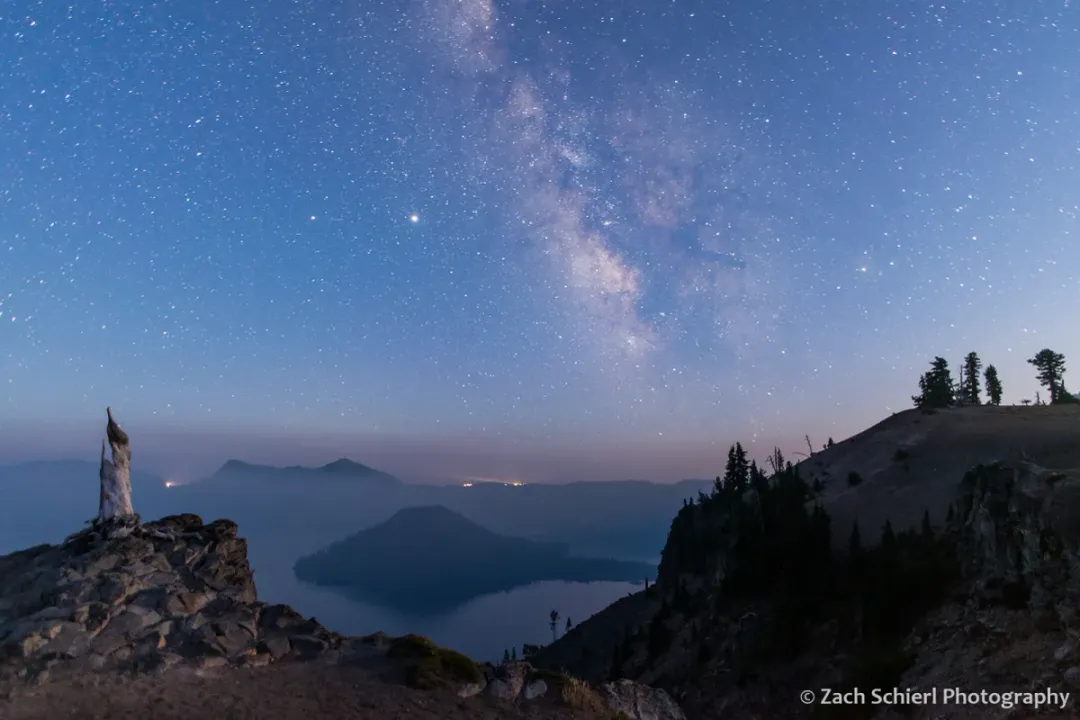
This is an essential question for anyone who has only seen the dazzling, multicolored Milky Way splashed across social media feeds and screensavers: can human eyes actually see it that way? The short answer, perhaps unsatisfyingly, is no. Our reality is much subtler, but no less breathtaking, provided you are in the right location and your eyes are ready. The ability to see our home galaxy, a structure so vast we reside within it, is increasingly becoming a privilege reserved for those willing to escape the glow of civilization. [3][5]
It is not an exaggeration to say that a significant portion of humanity has never witnessed the Milky Way as a visible feature in the night sky. Surveys suggest that about one-third of the world's population cannot see the Milky Way at all, a number that is likely climbing due to the expansion of artificial illumination. [3][5] Living in a city or even a suburban transition area often means that the faint, diffuse light of our galaxy is completely washed out by light pollution. [3] People living in densely populated areas, such as the capital of Bangladesh, Dhaka, report being unable to see it, contrasting sharply with experiences in rural areas far from city lights. [3]
# Naked Eye View
When people who have seen it gather to discuss the experience, the primary takeaway is the disconnect between expectation and reality, as driven by astrophotography. [3][5] If you travel to a truly dark sky location—say, deep in the desert of Southern Utah, far offshore on the ocean, or in remote regions like the Australian outback—you will see the Milky Way. [3] But it won't look like the vibrant, hyper-saturated images often circulated online. [5]
# Monochromatic Vision
The main reason for the difference lies in the physics of the human eye versus a camera sensor. Human vision uses two types of cells in the retina: cones for color vision and rods for low-light perception. Cones require significant light to activate, meaning that in the dim environment required to see the Milky Way, our cones essentially shut down. Our rods take over, and they are largely colorblind. Therefore, the naked-eye view of the Milky Way is predominantly seen in shades of white or gray. [3] While astrophotographers can capture subtle, real colors—like the pale green of airglow or the pinkish hues of hydrogen gas clouds—these are generally too faint for our rods to register.
This leads to a key point of analysis: the experience is not about missing detail, but about missing intensity and color. [3] With proper viewing conditions, the naked eye can perceive complexity, including bright star density, a general glow, and darker voids or dust lanes winding through the bright band. [3] The difference between what the eye sees and what a camera captures is not necessarily a lie, but rather a difference in artistic representation versus immediate perception. [5]
For those who grow up in heavily illuminated areas, this dim, monochromatic band is often invisible, creating what ecologists term "shifting baseline syndrome"—where the diminished view becomes the accepted normal state of the environment.
# Ideal Conditions
Seeing the true structure of the galaxy requires more than just driving an hour outside of town. It demands adhering to several strict criteria:
- Darkness: You need skies far removed from light pollution, often requiring travel several hours from a major city to reach Bortle Scale 2 or 3 locations. [3] Local geography matters; haze, dust, or altitude, even far from artificial lights, can obscure the view. [3]
- Eyes Adjusted: The rods in your eyes require time to reach peak sensitivity, a process called dark adaptation, which takes 20 to 30 minutes in complete darkness. Checking a cell phone or using a standard white light headlamp resets this process.
- Timing: The visibility of the core of the galaxy—the brightest section—is seasonal. In the Northern Hemisphere, this bright core is best viewed during the summer and early autumn months when we are looking toward the galactic center; during winter, we look outward toward the sparser galactic rim, resulting in a dimmer appearance. [3]
- Moon Phase: The glow from a bright Moon, even when you are in a remote location, can easily overpower the relatively faint diffuse glow of the Milky Way. [3] A night near the new moon is essential for the best viewing. [3]
# Photographic Enhancement
Images that appear "real" to a camera are the result of combining multiple long exposures, often stacked and processed to pull out details the eye simply cannot register. [4] Telescopes, like those used to study the supermassive black hole at the Milky Way's center, capture data across multiple wavelengths, which is then artistically rendered to show us what we cannot see directly. While we do not have a single, true photograph of the entire Milky Way because we are inside it, these composites, based on extensive scientific data, offer an educated guess as to its shape. [4]
One fascinating consequence of astrophotography is the simulation of what the view could look like under better circumstances. Comparing images taken at different light pollution levels shows a progression from barely visible, hazy bands to the dramatic structures seen in truly dark skies.
# Comparing Views
A comparison between the naked eye view and astrophotography can be summarized this way:
| Feature | Naked Eye View (Dark Sky) | Astrophotography (Long Exposure) |
|---|---|---|
| Color | Mostly monochromatic (white/gray) | Vibrant colors possible (hues, pinks, blues) [5] |
| Brightness | Diffuse, subtle glow; can be bright enough to read by under exceptional conditions | Dramatically brighter; dust lanes and nebulae become prominent features [5] |
| Detail | Observable cloudiness, general structure, and star density [3] | Complex dark dust lanes and faint gas structures are highly visible |
If you are in a truly dark spot, such as a designated Dark Sky Park or far out at sea, the Milky Way can feel almost palpable, with some observers describing it as looking like a painted, translucent layer across the stars. [3] One person recalled seeing it so brightly in Southern Utah that it appeared "technicolor" and cast shadows on the ground, though they noted this memory is rare and sought after. [3]
# Finding Your Galaxy
If you live near a major urban center, seeing the Milky Way will likely require travel, but research can dramatically increase your odds. [3] Many experienced sky watchers recommend looking for locations far from city glow, specifically pointing to areas in the American West like Utah, Nevada, and Arizona for reliably dark skies. [3] Furthermore, remember that altitude helps; observatories are often built on mountains for a reason—the higher you are, the less atmosphere and haze you look through. [3]
A practical step you can take even before leaving home is to check light pollution maps, such as those provided by the International Dark-Sky Association. These resources help locate Bortle Scale 1 or 2 areas near you. [3] Another useful, but often overlooked, variable is atmospheric clarity: smoke from wildfires, even if not clearly visible as haze, can significantly reduce contrast and visibility of the fainter structures. [3]
Here is a personal approach to maximizing your chances, integrating local knowledge with best practices: When planning a trip away from a light-polluted area, aim for a destination that offers both low artificial light (a low Bortle rating) and high altitude, if possible. For example, a high-elevation desert location often provides the dual benefit of dry, clear air and distance from urban glow, offering a better chance of perceiving the subtle structures described by seasoned observers.
Finally, consider the tools at hand. While the goal is to see it with the naked eye, using binoculars, even modest ones, can dramatically improve the view for a beginner, transforming the diffuse glow into a much richer field of stars without requiring the processing time of a camera. [3] Many experienced observers note that the experience is so fundamentally different from city life that it remains an awe-inspiring event even when it appears only as a "cloudy outline". [3] It is this subtle, real-world experience, earned through effort and darkness, that makes the effort to see the Milky Way worthwhile. Many people accustomed to cities may not realize the extent to which their peripheral vision is more sensitive to the faint overall light of the Milky Way than their central vision, which is better at color recognition. Try locating the brightest patch of the band, then look slightly to the side of it; you might see the structure more clearly before bringing your gaze directly onto it.
#Videos
What Does The Milky Way Look Like - YouTube
Capturing the Milky Way from Every Light Pollution Level - YouTube
Related Questions
#Citations
Just curious, can you guys actually see the Milky Way with the naked ...
You've Never Seen a Picture of the Entire Milky Way | Discovery
What Does The Milky Way Look Like - YouTube
Does the Milky Way Really Look Like That?