What is made up of ice and dust?
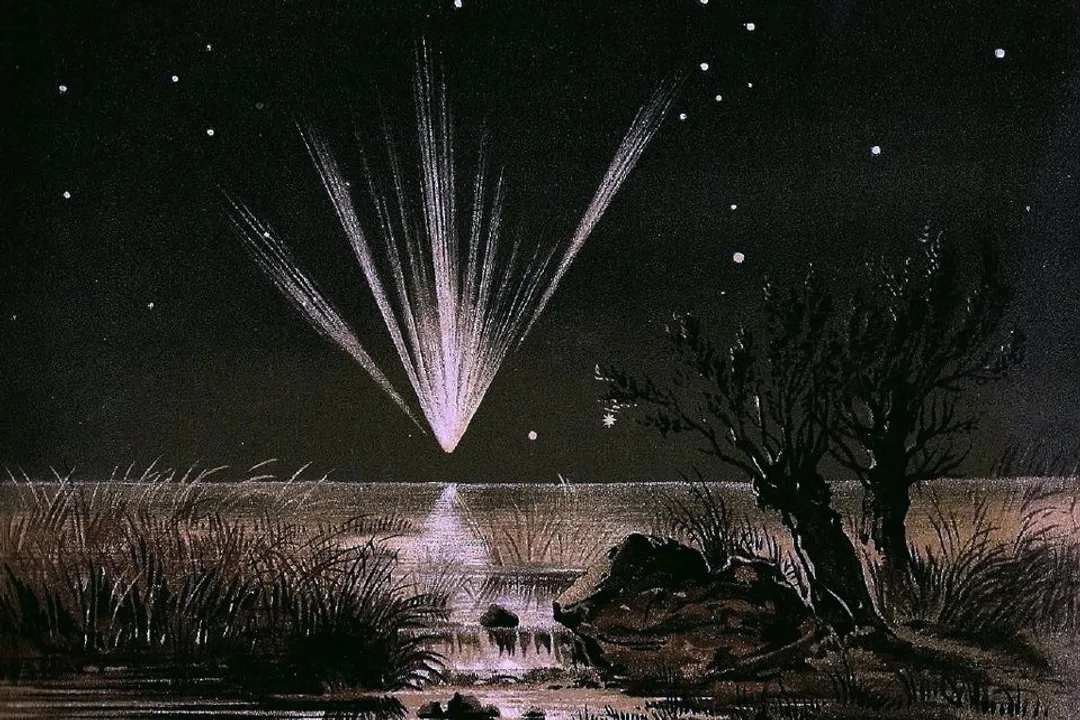
Comets are cosmic wanderers, appearing as streaks of light in the night sky when they venture close enough to the Sun, but their fundamental nature is far simpler and more ancient: they are primarily made up of ice and dust. [2][8] This composition leads to their popular, though perhaps oversimplified, description as "dirty snowballs". [1][6] They are essentially primordial building blocks, leftover fragments from the original formation of our solar system billions of years ago. [5][8]
# Icy Mix
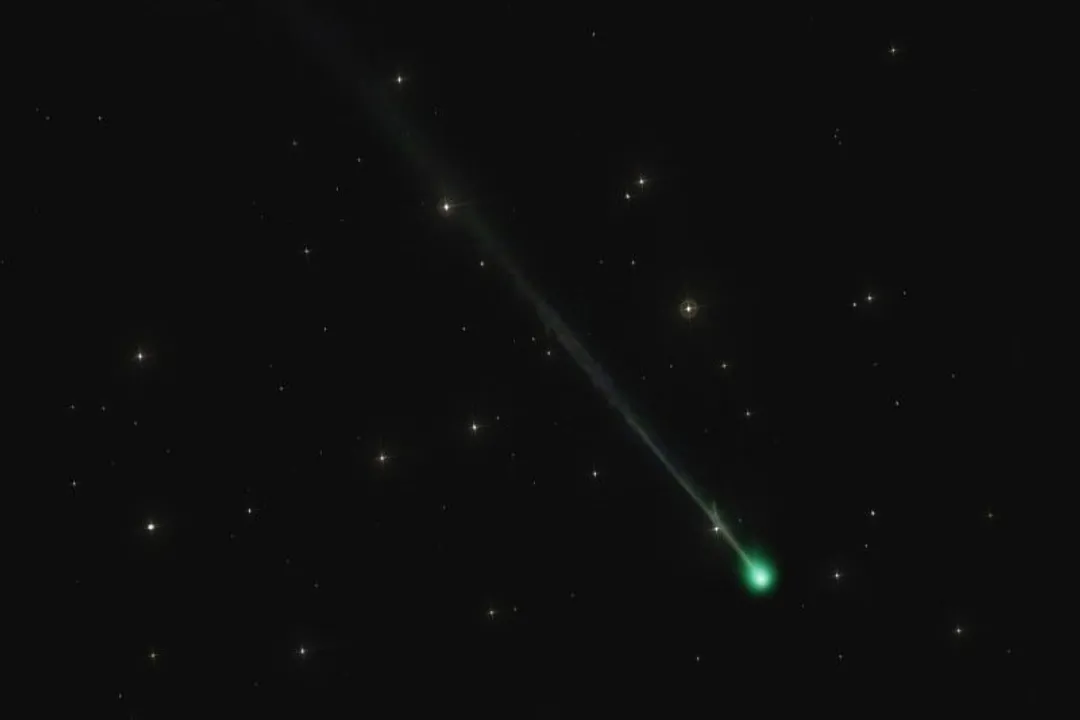
The "ice" component of a comet is not limited to the frozen water we see every day. While water ice is certainly a major constituent, comets harbor a far more complex frozen mixture, often referred to as volatiles. [1][2] These are substances that turn directly into a gas when heated, a process called sublimation. [6]
The frozen inventory often includes compounds like frozen carbon dioxide, which we know as dry ice, along with frozen carbon monoxide, methane, and ammonia. [1][6][2] When a comet travels far from the Sun, deep in the cold reaches of space, these gases remain locked solid within the nucleus, leaving the object relatively inert. It is only as it begins its inward trajectory toward the Sun that this mixture starts to cook off. [1]
# Solid Materials
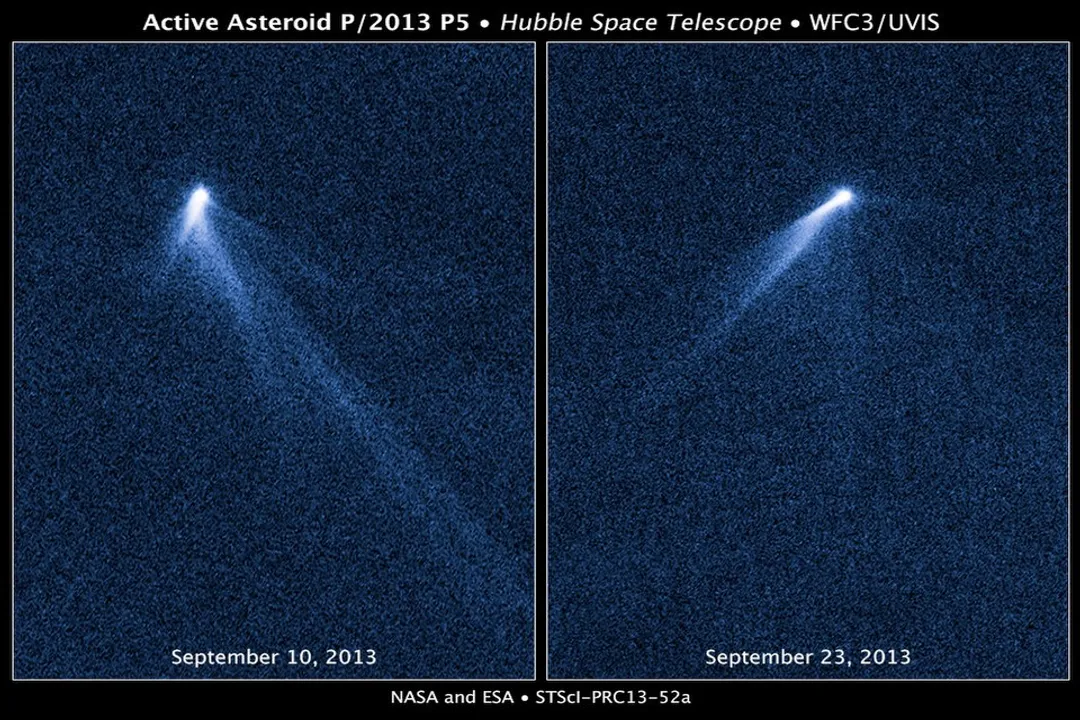
Complementing the frozen materials is the solid component, which consists mainly of dust and rocky material. [2][8] This is generally composed of silicates, much like the sand and rock found on Earth. [1] When the ices sublimate, they leave behind these dust particles, which are then swept away by solar radiation pressure to form one of the comet’s distinctive tails. [6] The nucleus itself, the solid core of the comet, is a conglomerate structure of these two main ingredients: ice binding the dust together. [2]
For those visualizing the structure, imagine a chunk of dirty ice, perhaps only a few miles or kilometers across at its largest, tumbling through space. [1][6] This nucleus is the heart of the object, containing all the material that makes the comet unique and observable. [1]
# Compositional Reality
The classic descriptor, "dirty snowball," provided a useful starting point for understanding these celestial bodies. [1][6] However, decades of study and observation have introduced important nuances to this picture, suggesting that the reality is often less like a snowball and more like a clumpy, dusty amalgamation. [3]
Data gathered from missions studying comets, such as the Rosetta mission, have revealed that the ratio of dust to ice in some comets might be significantly skewed toward the dust side. [3] In some analyses, the amount of dust detected has been found to be substantially greater than the amount of ice present. [3] This finding forces a slight revision of our mental model; while ice is essential for generating the visible coma and tail, the bulk mass of the object might be dominated by refractory, rocky, or dusty grains. [3]
If we were to create a spectrum of solar system remnants based on composition, comets might actually occupy a space leaning heavily toward the 'dusty' end, rather than being perfectly balanced between dust and ice. This compositional difference hints at where in the early solar nebula a particular comet formed, with locations closer to the Sun but still distant likely favoring dust accretion over the stable retention of more volatile ices. [7] The variation suggests that not all comets are created equal; some are drier and dustier than others that formed further out where temperatures were low enough to freeze everything. [7]
# Celestial Origins
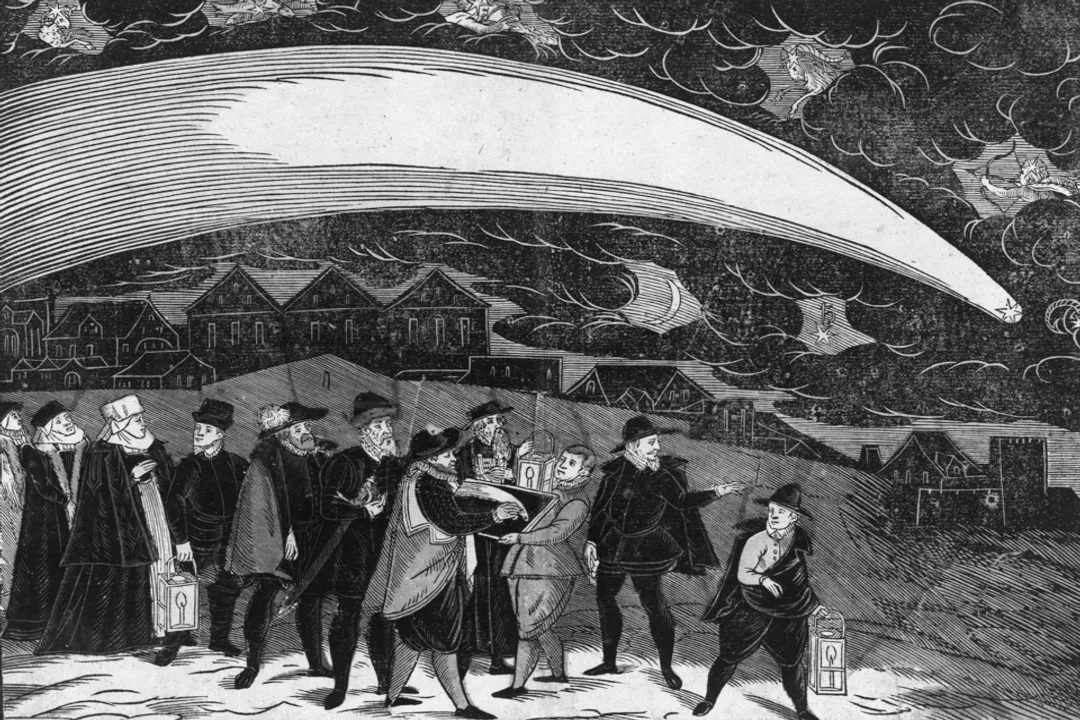
The icy and dusty travelers we observe are not native residents of the inner solar system; they are interlopers from the solar system's frigid outer reaches. [4] These objects hail primarily from two distinct reservoirs located far beyond the orbit of Neptune. [4][6]
The first reservoir is the Kuiper Belt. [4] This area is often described as a vast, doughnut-shaped ring of icy bodies orbiting the Sun beyond Neptune. [4] Comets originating here are generally considered short-period comets, meaning their orbits around the Sun take less than 200 years. [4] They are the younger, more easily perturbed members of the outer system population. [4]
The second, and much more distant, source is the Oort Cloud. [4] This is hypothesized to be a massive, spherical shell of icy debris that envelops the entire solar system, extending perhaps halfway to the next star. [4] Comets flung inward from the Oort Cloud are typically long-period comets, sometimes taking thousands or even millions of years to complete a single orbit. [4]
The material in both regions—the Kuiper Belt and the Oort Cloud—was never incorporated into the major planets like Jupiter or Earth during the solar system's initial formation. [5][9] They are, therefore, pristine samples of the original interstellar cloud of gas and dust from which the Sun and planets condensed. [5]
# Solar Proximity Effect
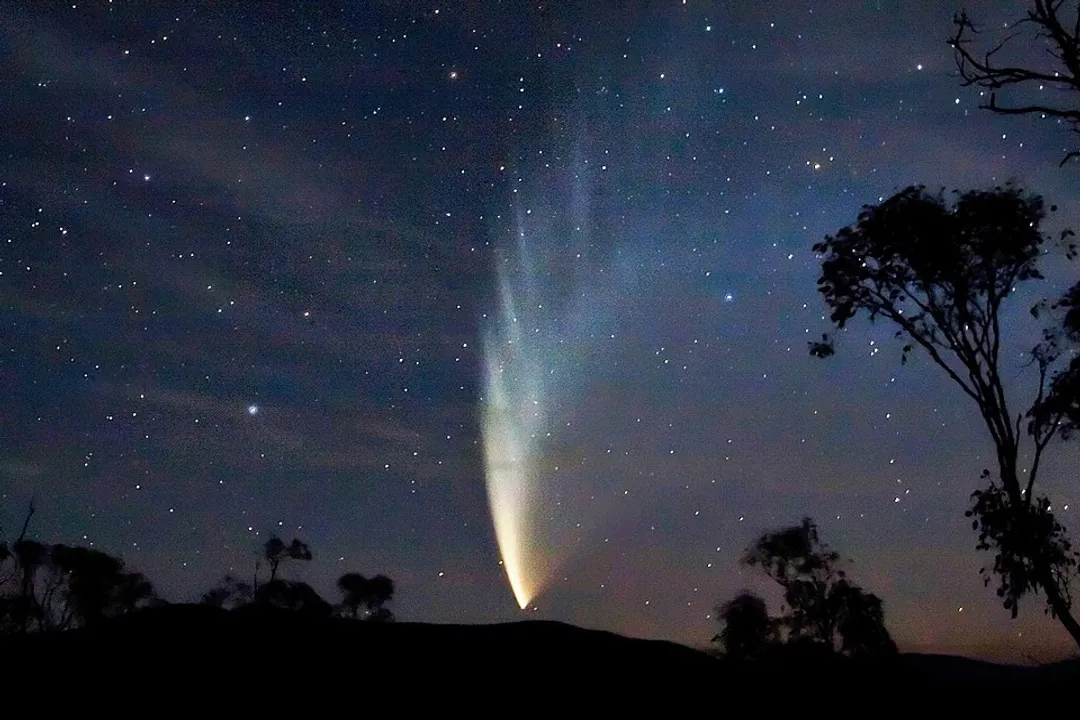
The defining characteristic of a comet—its spectacular tail—only manifests when its orbital path brings it into the vicinity of the Sun. [1][6] As the comet approaches, the solar energy causes the frozen ices within the nucleus to warm up and transition directly into gas—sublimation. [6]
This outgassing process is dramatic. The escaping gas drags vast quantities of dust particles away from the nucleus. [1] Together, this mix of gas and dust forms a giant, temporary atmosphere around the nucleus known as the coma. [6][2] The coma can swell to be larger than a planet, though it remains extremely tenuous. [1]
Once the coma material is released, the solar wind (a stream of charged particles flowing outward from the Sun) and radiation pressure begin to act upon it, shaping it into the comet’s trademark tails. [2][1] Typically, two distinct tails are formed: a broad, curved dust tail, which reflects sunlight and is comprised of the heavier dust particles, and a straighter, fainter ion (or gas) tail, which consists of ionized gas molecules pushed directly away from the Sun by the solar wind. [1][6] It is interesting to note that the ion tail always points directly away from the Sun, regardless of the comet's direction of travel, while the dust tail often lags behind, creating the characteristic curve. [1]
# Structure Defined
The visible comet is a layered structure extending millions of miles into space, yet the engine driving the entire phenomenon is incredibly small. [1]
The fundamental structure includes:
- Nucleus: The solid, icy, dusty core. [2] This is the true comet, often only a few kilometers across. [1] All other features stem from activity here. [6]
- Coma: The massive, temporary atmosphere enveloping the nucleus, created by sublimating ice and released dust. [6][2]
- Tails: The streamers pushed away from the Sun. A comet can develop a dust tail and an ion tail, which can stretch for millions of miles. [1][6]
It is worth considering that a comet spends most of its life—perhaps millennia—as just a dark, cold nucleus in the deep freeze of the outer solar system, only "turning on" its spectacular display for a brief period during its close pass by the Sun. [4]
# Ancient Samples
The ice and dust that make up comets hold immense scientific value because they are essentially unaltered records of the solar system’s birth environment. [5] Unlike the inner rocky planets, which have been geologically reshaped by heat, volcanism, and erosion, the material in the Oort Cloud and Kuiper Belt has remained frozen and preserved at temperatures near absolute zero for approximately 4.6 billion years. [5][7]
This preservation makes them the most ancient material available for direct study. [5] Scientists often look to comets as potential carriers of volatile materials—like water—that were delivered to the early Earth. [9] While the extent to which comets contributed to Earth's oceans versus asteroids remains a subject of active scientific debate, the sheer volume of frozen water contained within the Oort Cloud suggests they represent a colossal, untapped reservoir of primordial H2O. [9] Examining the chemical fingerprints—the ratio of deuterium to regular hydrogen, for instance—in comet ice can offer clues as to whether they supplied a significant portion of the water we see today, or if they delivered essential organic molecules that helped kickstart life. [9] The ability to bring these pieces of the early solar system back to Earth via sample return missions speaks directly to the trust scientists place in their pristine, icy, and dusty composition. [3]
Related Questions
#Citations
Comets - NASA Science
Comet - Wikipedia
Evidence for more dust than ice in comets - ESA
Comets, the Kuiper Belt and the Oort Cloud
What is a Comet? - Research, Innovation and Impact
Comets are icy balls of gas, dust and rock - EarthSky
About Comets - Lunar and Planetary Institute
A comet is a ball of ice and rock and is a leftover fragment from the ...
How did comets form, and why is there water on them? - Reddit