How do scientists know what distant stars are made of?
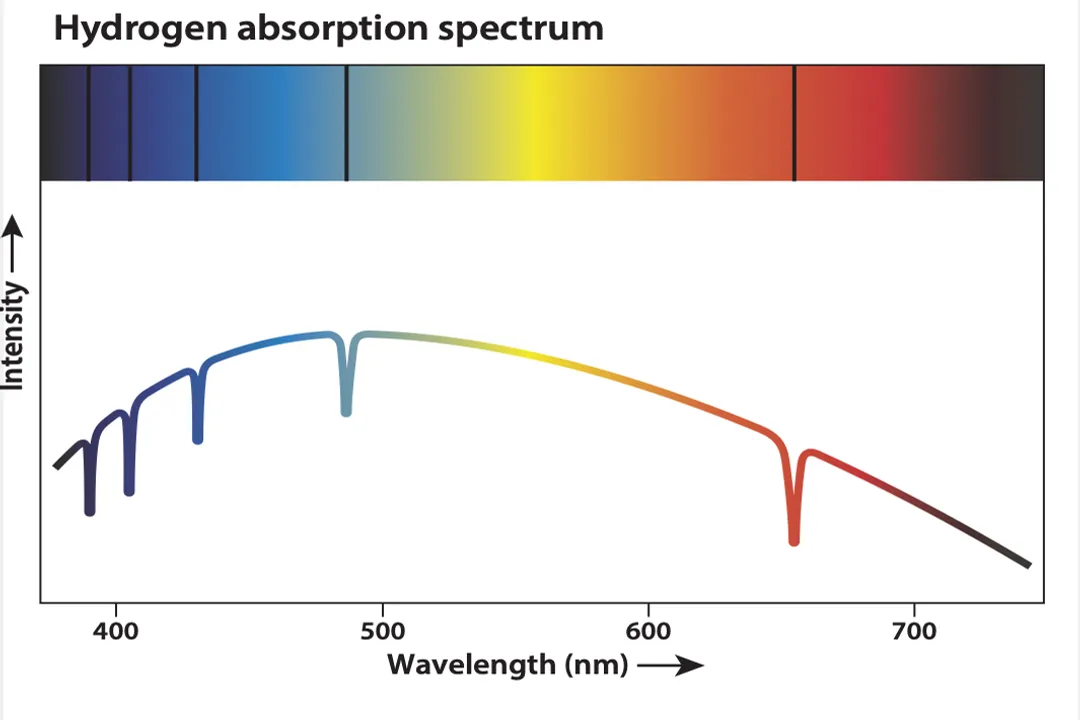
The glow reaching us from a star millions of light-years away carries more than just illumination; it holds the detailed record of its chemical makeup, right down to the exact proportions of its constituent atoms. For centuries, the true nature of these celestial bodies remained a profound mystery, but modern astronomy has unlocked this secret using a technique that transforms light into a legible chemical report card. We don't need to collect a sample; instead, scientists rely on the physics of light itself to decode what distant suns are forged from. [2][6]
# Light Messenger
When we look up at the night sky, everything we perceive about distant objects—their color, brightness, distance, and composition—is delivered via electromagnetic radiation, primarily visible light. [2] Since we cannot physically travel to these stars to gather a sample, the light they emit must serve as our sole source of information. [6] This light, while appearing uniform to the naked eye, is actually a composite signal containing hidden signatures that reveal the physics and chemistry occurring millions or billions of miles away. [5]
The fundamental step in decoding this message involves taking the incoming starlight and separating it into its individual component colors, much like a prism splits sunlight into a rainbow. [5] This process results in a spectrum, which is a continuous band of colors ranging from red through violet. [8] If a star were a perfect, hot, glowing object radiating light without any intervening material, its spectrum would be smooth and unbroken. However, stars are not simple radiators; their light has to travel through the star’s own outer layers, which contain cooler gases. [5]
# Elemental Fingerprints
It is within these cooler outer layers that the real chemical investigation begins. Atoms, whether in a gas cloud here on Earth or in the atmosphere of a star, interact with light in a very specific, non-negotiable way based on the laws of quantum mechanics. [5] When a photon (a particle of light) strikes an electron in an atom, the electron can absorb that photon only if the photon has exactly the right amount of energy to bump the electron to a higher energy level. [5]
This energy requirement is unique for every element. For instance, a hydrogen atom will only absorb photons at very particular wavelengths, while a helium atom requires a different set of wavelengths. [8] When scientists observe the star’s spectrum, these specific wavelengths of absorbed light appear as dark gaps or lines superimposed on the continuous rainbow background. [5] These are known as absorption lines. [2][5] Conversely, if the gas is hot enough, it can emit light at these exact same wavelengths, creating bright lines in the spectrum, known as emission lines. [5]
The pattern formed by these dark or bright lines acts as an unmistakable chemical fingerprint for the element that created them. [2][5] For example, hydrogen produces a very distinct set of lines known as the Balmer series, and scientists can confirm the presence of hydrogen in a star just by looking for these specific lines, regardless of how far away that star is. [8] Every element on the periodic table—from common hydrogen and helium to trace amounts of heavier metals—leaves its own unique signature in the star's light. [2][5]
Here is a simplified look at how distinctive these signatures are, even for the most abundant elements:
| Element | Key Spectral Feature (Type of Line) | Significance |
|---|---|---|
| Hydrogen () | Balmer Series (Absorption) | Dominant component in virtually all stars [8] |
| Helium () | Specific Ultraviolet lines | Second most abundant element |
| Iron () | Numerous lines across visible spectrum | Used as a standard marker for metallicity |
This dependence on specific energy transitions means that astronomers can identify the elemental ingredients of a star with extremely high confidence. It is a direct physical measurement, not an inference based on color alone. [2]
# Reading Patterns
Determining what a star is made of involves meticulously mapping the observed spectral lines against known patterns derived from laboratory experiments on Earth. [2][5] By comparing the spectral data from a distant star with laboratory reference spectra, astronomers can achieve identification. [2]
However, the analysis goes much deeper than just naming the elements present. Scientists analyze the strength of the absorption lines to determine the relative abundance of each element. [2] A very dark, wide absorption line for iron, for instance, indicates that there is a large quantity of iron atoms in the star's outer layers capable of absorbing that specific wavelength. [5] Stars are overwhelmingly composed of hydrogen and helium, with all other elements—what astronomers sometimes call "metals"—making up only a small fraction of the total mass. [8] The precise ratio of these "metals" is incredibly important for understanding the star's age and origin. [2]
This technique also provides vital physical data beyond composition. The exact wavelength at which a spectral line should appear is known from physics tables. If the observed line is slightly shifted toward the red or blue end of the spectrum, it tells us the star is moving away from or toward us, respectively—this is the Doppler effect. [2] Furthermore, the width and sharpness of the spectral lines can reveal information about the star's surface temperature, pressure, and density. [2][5] A very broad line might suggest high pressure in the stellar atmosphere, affecting the energy levels of the atoms slightly differently than in a low-pressure lab setting.
It is fascinating to consider that the vast majority of the information we receive is from the star's outer shell, the photosphere, which is relatively cool compared to the core where nuclear fusion occurs. [5] The chemical makeup of the core, where the star generates its energy, is inferred based on standard stellar evolution models, which are heavily calibrated by the precise surface compositions we can measure through spectroscopy. [8] If the surface analysis shows a higher than expected abundance of elements like carbon or oxygen relative to hydrogen, it might suggest the star has already gone through a phase of internal mixing, bringing core material outward—a subtle hint of its past nuclear life.
# Tools Involved
To capture and analyze this faint, distant light, astronomers rely on sophisticated instruments called spectrographs. [5] These instruments are typically attached to large telescopes, which act as light collectors. [7] The process involves directing the light from the star through a slit, then using a component—often a diffraction grating or a prism—to precisely separate the light into its constituent wavelengths. [5][7] A detector, like a highly sensitive digital camera, then records the resulting spectrum. [5]
Modern instruments are sensitive enough to pick up the incredibly weak signals from objects billions of light-years away. [6] The advancement of digital detectors and computing power over the last few decades has made analyzing these spectral fingerprints much faster and more accurate than earlier photographic methods. [1] The development of instruments capable of observing in ultraviolet, infrared, and X-ray parts of the spectrum, in addition to visible light, has further expanded our chemical inventory of the cosmos, revealing information about extremely hot or energetic phenomena around stars. [2]

# Stellar Recipe
The overall conclusion drawn from analyzing countless stars is remarkably consistent: the universe is fundamentally built from just a few key elements, though the precise recipe varies based on age and location. [8] The earliest stars, formed shortly after the Big Bang, were almost pure hydrogen and helium, as heavier elements are only forged inside stars and then scattered into space when those stars die. [8] Subsequent generations of stars, like our Sun, incorporated these heavier, "metal" elements scattered by previous stellar deaths. [2]
This composition knowledge directly informs our understanding of cosmic history. When we find a star with a very low metal content, we classify it as an older, Population II star, indicating it formed when the universe had fewer recycled materials available. [2] Conversely, stars with higher metal content, like the Sun (a Population I star), are younger, having formed from gas clouds already enriched by multiple generations of supernovae. [2]
It's worth noting an inherent complexity in this measurement: distinguishing between the composition of the star itself and any intervening material. Light passing through a cloud of gas floating in the space between the star and Earth can also create its own absorption lines. [5] Expert analysis requires carefully checking the spectral lines against known Doppler shifts; if the line caused by the star is slightly red-shifted (moving away) but a faint line from interstellar dust is not, the observer knows the dust absorption is local, not stellar. This careful parsing of shifting patterns is a standard part of the expertise required in this field, ensuring that the chemical inventory we record truly belongs to the distant light source. [2][5] This technique, though reliant on basic physics, demands a high degree of observational skill and computational analysis to extract reliable, universal truths about the building blocks of matter across the vast gulfs of space. [6]
#Videos
How Do We KNOW What Stars Are Made Of? - YouTube
Related Questions
#Citations
How do astronomers know so much about a distant space object just ...
Ask Astro: How do scientists determine the chemical compositions of ...
How Do We KNOW What Stars Are Made Of? - YouTube
How do we determine what distant planets, stars etc are made of?
Spectroscopy - Center for Astrophysics | Harvard & Smithsonian
How do scientists determine the composition of distant stars ... - Quora
Spectroscopy in Space: Deciphering Stellar Composition - AZoOptics
How can astronomers determine that distant stars are made ... - CK-12
How do scientists know what distant stars are made of? Through a ...