How do scientists count stars?
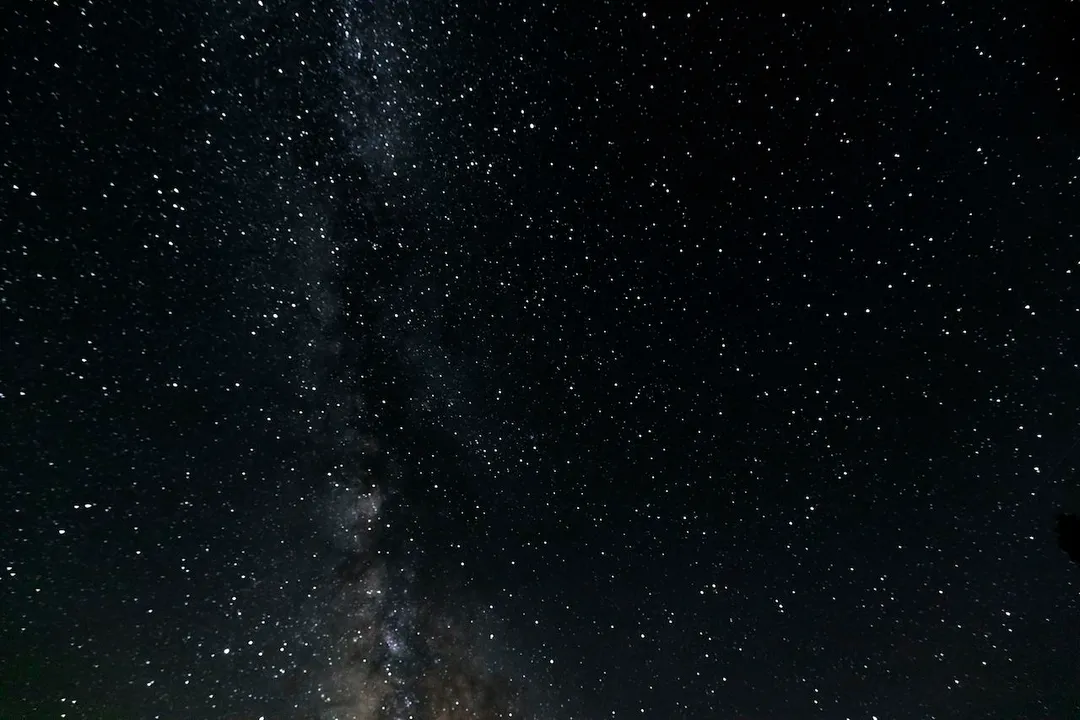
Counting the stars is one of astronomy’s oldest fascinations, yet for scientists today, it remains an exercise in educated estimation rather than meticulous enumeration. Trying to look up at the Milky Way and count them one by one, even with the world’s most powerful telescopes, is simply not feasible because of the sheer scale involved and the limits of visibility. [5][9] In our own galaxy, the Milky Way, the estimates typically fall in the range of $100$ billion to $400$ billion stars, with many common figures settling around $300$ billion. [1][5][6] To arrive at such staggering numbers, astronomers rely on methods rooted in physics and mathematics, primarily revolving around determining mass and making extrapolations. [2]
# Mass Calculation
The fundamental approach for estimating the number of stars within a galaxy like ours involves calculating the galaxy's total mass first, and then dividing that mass by the average mass of a star. [1][2]
To determine the total mass of the Milky Way, scientists cannot just weigh it directly. Instead, they observe the gravitational influence the galaxy exerts on objects orbiting within or near it, such as globular clusters or orbiting stars. [1] By measuring the speed at which these objects move along their orbits—a technique that relies on Doppler shifts and positional tracking—astronomers can construct a rotation curve for the galaxy. [1] This curve reveals how mass is distributed throughout the galaxy, providing a robust estimate of the total mass enclosed within a certain radius. [2]
A significant caveat arises here: this total mass includes far more than just stars. A large portion, often the majority, is made up of invisible dark matter, which only interacts gravitationally. [1] Therefore, the next critical step is isolating the mass contributed by the visible, baryonic matter—the gas, dust, and, most importantly, the stars themselves. [2] Once the mass attributable to luminous matter is estimated, the work shifts to defining the typical stellar citizen.
# Stellar Mass Function
If every star in the galaxy were exactly like our Sun, calculating the total star count would be straightforward: divide the galaxy's stellar mass by the Sun's mass. However, the Sun is far from typical. [2]
In reality, the stellar population is heavily skewed toward smaller, dimmer objects. The most common type of star is the red dwarf, or M-type star, which is significantly less massive than our Sun. [2] Because the majority of stars are low-mass stars, the average mass of a star in the Milky Way is much lower than $1$ solar mass. Astronomers must use models of the Initial Mass Function (IMF), often based on detailed observations of smaller, more easily resolved star clusters, to predict the distribution of stellar masses. [7] This distribution defines the proportion of very massive, short-lived stars versus the vast population of small, long-lived stars. [2]
Imagine a theoretical star cluster where $90%$ of the stars are only one-tenth the mass of the Sun, and the remaining $10%$ are all Sun-like. If you simply took the total mass and divided it by the Sun’s mass, you would vastly overestimate the star count because you're using a weighted average mass that is too high. Accurate counting requires using the IMF to find the true mean stellar mass, which is considerably smaller than a single solar mass. This refinement is what brings the total estimate for the Milky Way down into the $100$ to $400$ billion range, rather than a much larger number derived from a simplistic solar-mass comparison. [2]
# Sampling and Extrapolation
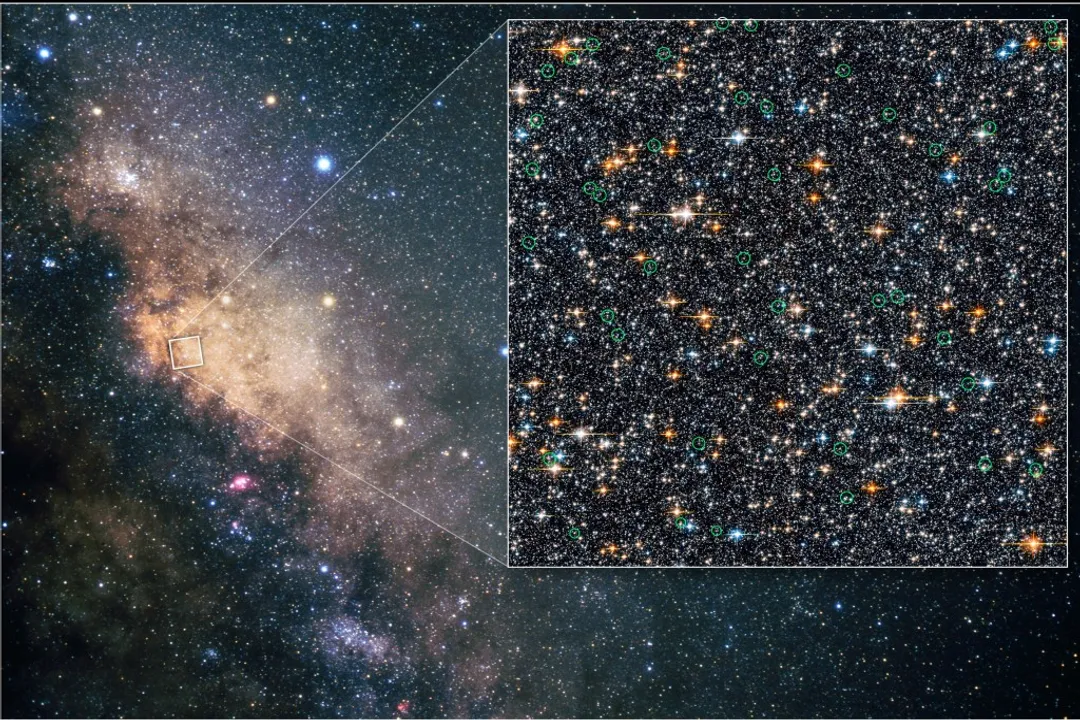
While the mass method works well for the entire galaxy, counting in specific regions often relies on direct sampling, especially when dealing with globular clusters or specific sections of the galactic disk. [7] In a dense stellar grouping, it is impossible to distinguish individual stars when looking through deep concentrations of light and dust. [7]
For such localized studies, astronomers count the number of stars within a small, well-defined volume or area—a 'patch'—of the sky or cluster. [2][7] They then estimate the total volume or area that the observed region represents within the larger structure. For instance, if you count $500$ stars in a $1$ square arcminute patch that is known to be representative of an entire section of the galactic bulge, and that bulge contains $100,000$ such arcminutes, the calculation becomes for that section alone. [2] This process is repeated across various sectors of the galaxy, creating a mosaic of localized counts that are then summed up. This technique must account for extinction, as interstellar dust absorbs and scatters starlight, making distant stars appear fainter or invisible altogether. [2]
The difficulty in applying this sampling method consistently across the entire galaxy lies in the fact that star density is not uniform. A sample taken in the sparse outer halo will yield a very different result than a sample taken near the galactic center. [7]
# Cosmic Totals
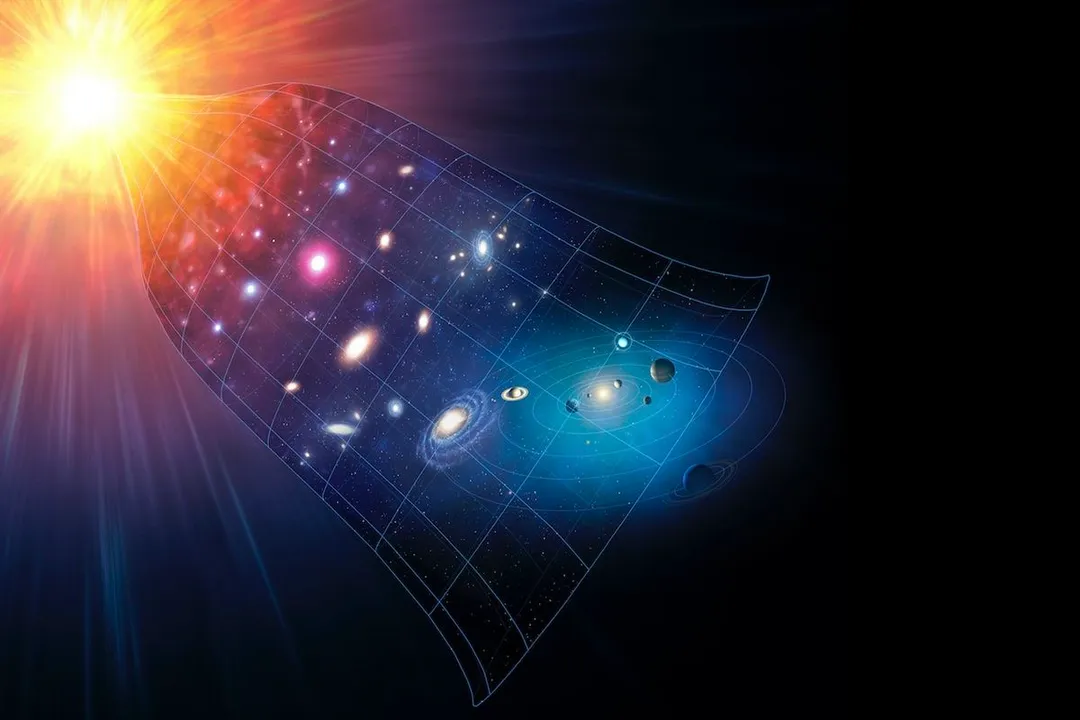
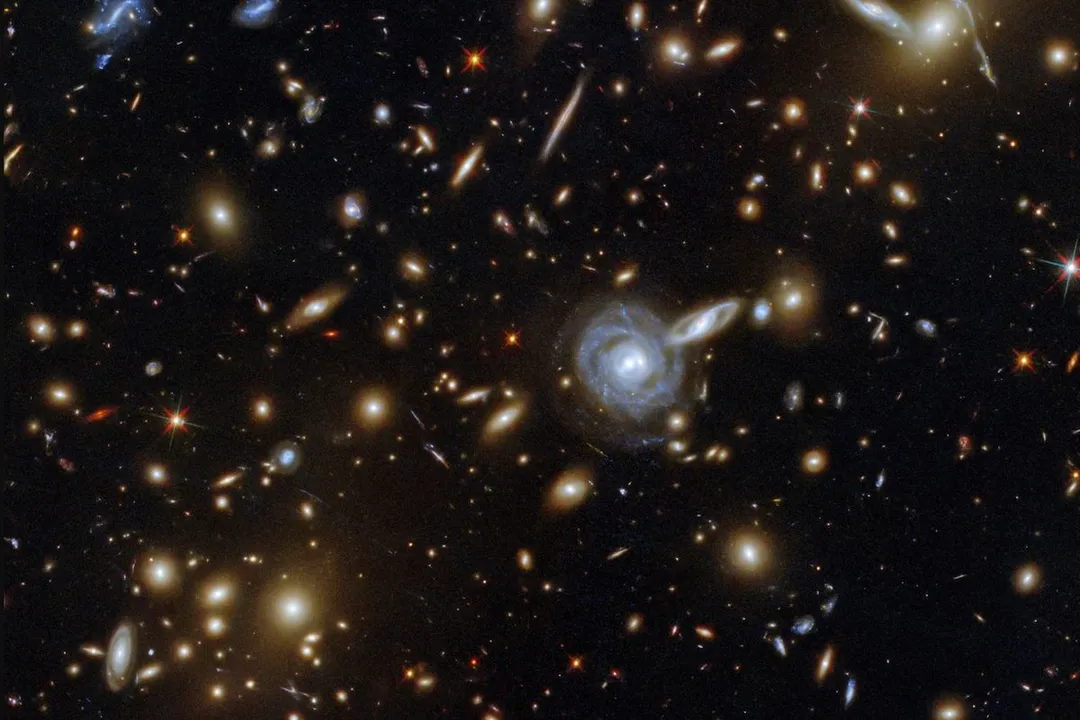
Moving from the local scale of the Milky Way to the entire observable universe requires multiplying the average galaxy count by the estimated number of galaxies. Astronomers use deep-field surveys, such as those conducted by the Hubble Space Telescope, to stare at tiny patches of seemingly empty sky for extended periods. [6] By counting the galaxies in these representative, small fields, they can extrapolate to estimate the total number of galaxies in the entire sky. Current estimates often place this number in the hundreds of billions of galaxies. [6]
When these galaxy estimates are combined with the star estimates for a typical galaxy, the resulting number for the universe is astronomical, frequently cited in the septillions—a $1$ followed by $24$ zeros, or . [9]
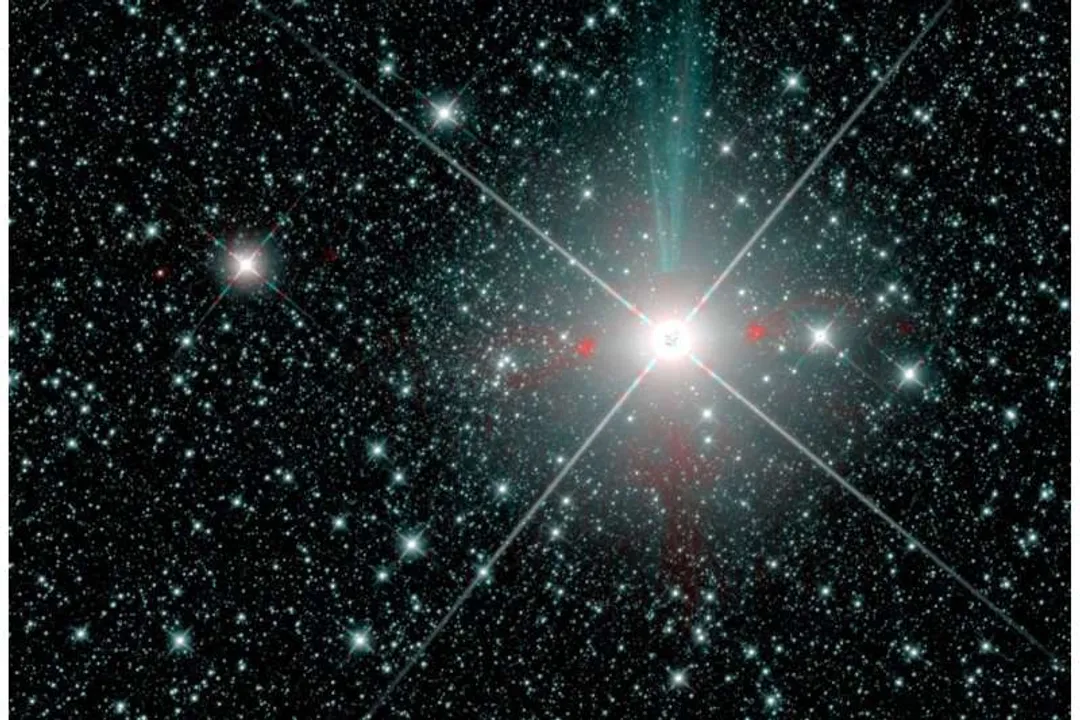
It is important to note that the number of galaxies itself is subject to change as technology improves. For example, observations that look further back in time reveal galaxies that may eventually merge or appear different, constantly refining the baseline number we use for our calculations. [8] The light from extremely distant galaxies can also be subtly affected by intervening phenomena. For instance, observations of highly energetic active galaxies, called blazars, show that their intense central light source can sometimes overwhelm the light of the surrounding galaxy, requiring careful subtraction to isolate the true stellar background. [8]

# Error Propagation
The entire counting process rests heavily on the accuracy of the initial assumptions, particularly the mass-to-light ratio and the average stellar mass. [2] This reliance means that even small errors in the foundational models can lead to huge errors in the final count.
Consider the average stellar mass. If scientists estimate the average mass of a star in a galaxy to be $0.4$ solar masses based on spectroscopic data from bright stars, but the true average, including fainter stars, is actually $0.3$ solar masses (a $25%$ difference), this error propagates directly. When that slightly higher average mass is used to divide the total stellar mass, the resulting star count will be $25%$ too low. When this is multiplied by the hundreds of billions of galaxies, the final cosmic estimate could be off by hundreds of sextillions of stars, purely because the small, dim stars were not adequately weighted in the initial IMF model. [2] This highlights an ongoing tension in astrophysics: the need to model what cannot be directly seen versus the need for precise observational data of the most numerous, yet least visible, objects.
Related Questions
#Citations
How do scientists know there are about 300 billion stars in a galaxy ...
How do scientists count the stars? - Quora
Counting Stars: A Fun Look at Math in Astronomy for Stargazing Nights
How are astronomers able to measure how far away a star is?
Learn how many stars there are in the Milky Way, and ... - Facebook
How Many Stars in the Milky Way? | NASA Blueshift
How do you find a star cluster? Easy, simply count the stars - Phys.org
How Scientists Measured All the Starlight in the Universe - The Atlantic
How many stars are in the universe? - Space