How do we know stars are billions of years old?
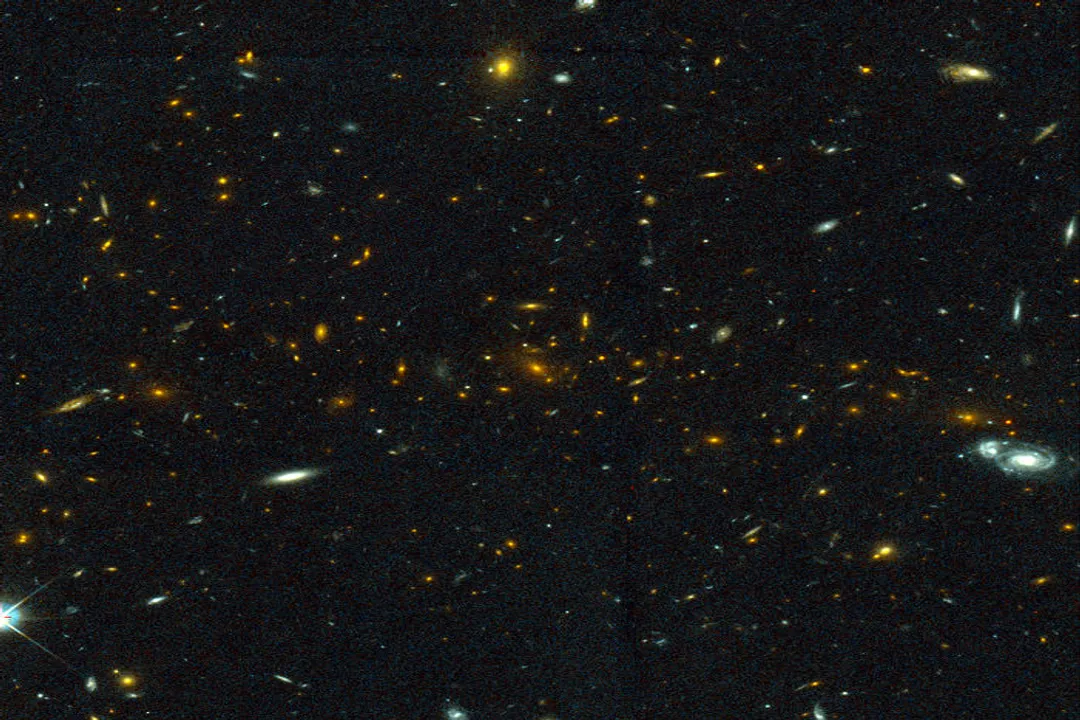
Determining the age of a star is one of the profound achievements of modern astrophysics, relying not on direct observation of a birth certificate, but on understanding the fundamental physics governing how these celestial furnaces operate and evolve over time. While a star's light reaching us today might have traveled for millennia, telling us about its past state, its true age—how long it has been fusing hydrogen in its core—is calculated by looking at its characteristics in the context of our physical models of stellar life cycles.
# Stellar Lifespan Mathematics
The lifespan of a star is profoundly dependent on a single, massive factor: its initial mass. Think of a star as a giant nuclear engine. The more fuel it has (its mass), the more intense the fusion reaction in its core needs to be to support its own immense gravity. More mass means a faster burn rate, which translates directly into a shorter life.
For instance, a star like our Sun, a relatively average-sized star, is expected to shine for about 10 billion years. Stars significantly larger and brighter than the Sun burn through their hydrogen fuel at an astonishing rate, perhaps lasting only a few tens of millions of years. Conversely, the smallest, dimmest red dwarf stars sip their fuel so slowly that they can potentially shine for trillions of years, far exceeding the current age of the universe itself.
Scientists estimate these lifespans by creating sophisticated computer models of stellar structure and evolution. These models track how a star changes as it exhausts the hydrogen in its core, swells into a giant, and eventually dies. By observing a star's current color, temperature, and luminosity—properties which correlate directly with its mass—scientists can plug those observed parameters into these physics-based life-cycle models to calculate how much time has elapsed since its birth. This process requires expertise in nuclear physics, gravity, and thermodynamics applied on a cosmic scale.
# Dating Clusters
While dating a single, isolated star is challenging, the task becomes much clearer when observing a star cluster. A cluster is a group of hundreds or thousands of stars that all formed from the same cloud of gas and dust at nearly the exact same moment in time. Because all stars in the cluster share the same age, their differences in color and brightness reveal their different masses and, therefore, their different stages of life.
Astronomers use a tool called the Hertzsprung-Russell (H-R) diagram, which plots a star's luminosity against its temperature (or color). For a young cluster, most stars will be aligned along the main sequence, the life phase where they fuse hydrogen. As the cluster ages, the most massive stars—the ones that burn fastest—begin to exhaust their fuel and evolve off the main sequence, moving toward the red giant branch.
The key to cluster dating lies in finding the main-sequence turnoff point. This is the spot on the H-R diagram where the cluster’s most massive remaining stars are just beginning to leave the main sequence. By calculating the theoretical lifespan of a star at that exact turnoff mass, astronomers determine the age of the entire cluster. If the most massive stars are gone, the cluster must be old; if only the very smallest stars are starting to turn off, the cluster is relatively young. This method provides a solid age benchmark for a large population of stars simultaneously.
If we look at the oldest, most metal-poor globular clusters, their age derived from this turnoff point method consistently points toward ages in the billions of years, reinforcing the billion-year timescales we see elsewhere in the cosmos.
# Cosmic Chronology
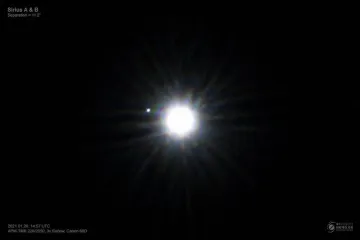
The age of stars cannot logically exceed the age of the universe itself. Current cosmological models, supported by multiple independent lines of evidence such as the cosmic microwave background radiation and the expansion rate of the universe, place the age of the cosmos at approximately 13.8 billion years. Therefore, any star we observe must be younger than this number.
This provides a crucial upper limit for stellar dating. If a scientifically derived stellar age—even from a globular cluster—came out to, say, 20 billion years, it would signal a serious problem with either the stellar evolution models or the cosmological models, necessitating a major revision in physics. The fact that the ages derived from the oldest observable star clusters align neatly with, but do not exceed, the age derived from measuring the universe's expansion—which itself relies on physics that predicts stellar lifespans—creates a strong internal consistency in our understanding of cosmic timescales.
This consistency is a powerful tool. For instance, when estimating the age of planetary systems, scientists often look at the age of the star they orbit, sometimes cross-referencing with radioactive dating of meteorites found on planets, which can give dates for the formation of solid bodies in that system. If the star model suggests 4.6 billion years, and the meteorites date to 4.57 billion years, the confidence in the overall timeline increases significantly.
# Distinguishing Distance from Duration
A common point of confusion is the vast distance light travels versus the star's actual age. A star whose light takes 500 million years to reach us is indeed being observed as it was 500 million years ago. However, this light-travel time is not the star's age. The star itself was already formed and burning hydrogen long before that light even began its journey toward Earth.
When we calculate the star's age, we are calculating the duration since its birth, regardless of when its photons arrived here. For example, even if a star is 10 billion light-years away, its internal physical processes—the rate at which it consumes its nuclear fuel—still follow the same physical laws that dictate a 10-billion-year lifespan for a star of its specific mass. The light-travel time only tells us when the light left the star, not how long the star has existed in total.
A helpful conceptual comparison arises when we consider the oldest known objects. If the universe is 13.8 billion years old, we expect the oldest stars to be very close to that age. If we find a star whose model-dependent age is 13.5 billion years, we gain confidence in the physics because the star formed shortly after the Big Bang. Finding a star that is only 100 million years old simply means it formed much, much later in the universe's history, an event that is entirely plausible for a star formed in a relatively young molecular cloud.
The fact that we can look out into the universe and see galaxies whose light is ancient, yet the stars within them—when analyzed via cluster turnoff points or spectroscopic mass estimates—fall within the 13.8-billion-year cosmic boundary, confirms that the physics governing stellar death and birth operates consistently across vast epochs of time. We do not see objects that are demonstrably older than the universe that created them.
# Refining the Models
The ongoing process of determining stellar ages is subject to refinement, not complete overhaul. For example, early attempts at dating might have used simplified models that didn't fully account for the initial metallicity (the abundance of elements heavier than hydrogen and helium) of the gas cloud from which the star formed. Stars formed early in the universe were nearly pure hydrogen and helium, while stars forming today contain heavier elements recycled from past stellar deaths. This difference in composition subtly affects the opacity and structure of the star, slightly altering its predicted lifespan.
Modern astrophysical research continually refines these input parameters, leading to more precise age estimates, often quoted with uncertainties measured in millions or hundreds of millions of years for Sun-like stars, rather than billions. This precision is what allows us to differentiate between, say, a 5-billion-year-old star and a 7-billion-year-old star by comparing their surface temperatures and luminosity against the most advanced theoretical H-R diagrams.
When observing a star with a known mass, the primary unknown becomes the duration of its life so far. The relationship is highly non-linear: a small error in measuring mass translates to a much larger error in the calculated age for lower-mass stars, whereas the massive stars, due to their rapid evolution, have more immediate and trackable changes in their observable properties that aid aging. This difference means we are often more certain of the general age range for very old, massive stars than for a very old, low-mass red dwarf whose life spans multiple cosmic eras.
#Videos
How Do We Measure the Ages of Stars? With Astrophysicist Ruth ...
Related Questions
#Citations
eli5: How does scientist know the age of planets and stars that are ...
How do we measure the size and the age of the Universe?
How Do We Measure the Ages of Stars? With Astrophysicist Ruth ...
How do we know that stars are billions of years old? - Quora
How do scientists determine the ages of stars? Is the technique ...
Position Statement: Age of the Earth and Universe
Since a star's light takes so long to reach us, how do we know that ...
Ask Ethan: How do we know the Universe is 13.8 billion years old?
What would evidence of stars and galaxies significantly older than ...