How do we know the mass of stars?
The mass of a star is arguably its single most important property, dictating its temperature, luminosity, lifespan, and eventual fate as a white dwarf, neutron star, or black hole. [7][10] Despite the apparent simplicity of this characteristic, directly measuring the mass of a star millions of light-years away is a monumental task, as we cannot place it on a cosmic scale. Instead, astronomers rely on the foundational laws of physics, primarily gravity, combined with ingenious observational techniques that often require the star not to be alone. [5][7] When a star is isolated, its mass must be estimated indirectly, but when stars are found in pairs or clusters, direct calculation becomes feasible, providing the bedrock for calibrating all other stellar mass measurements. [1][4]
# Orbital Clues
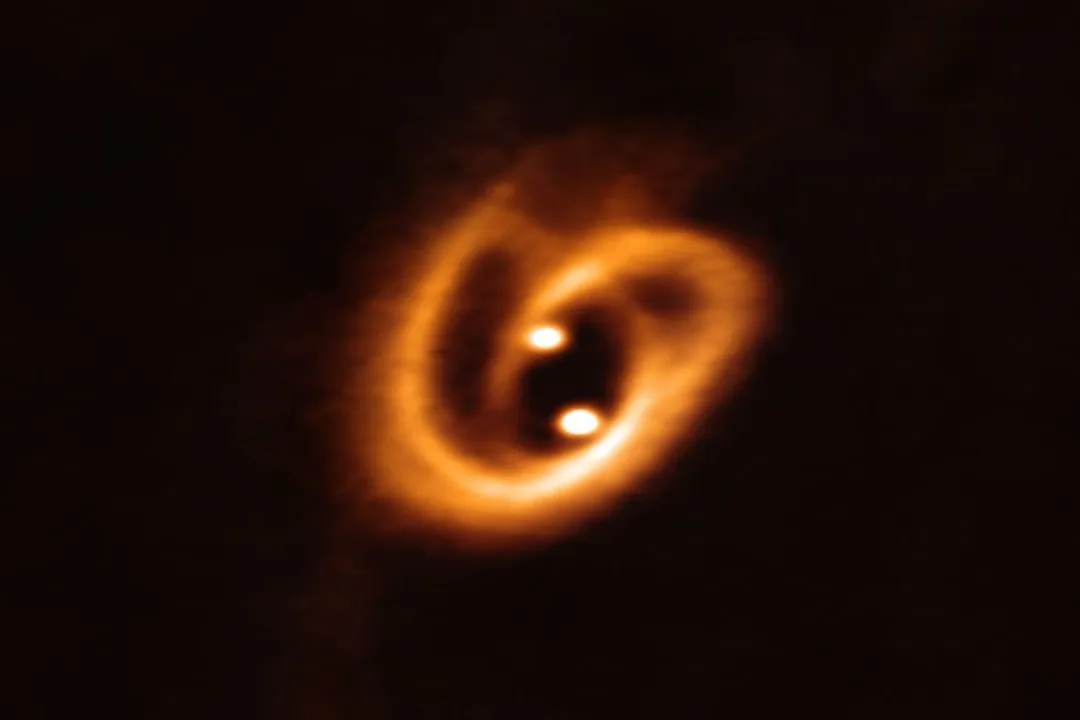
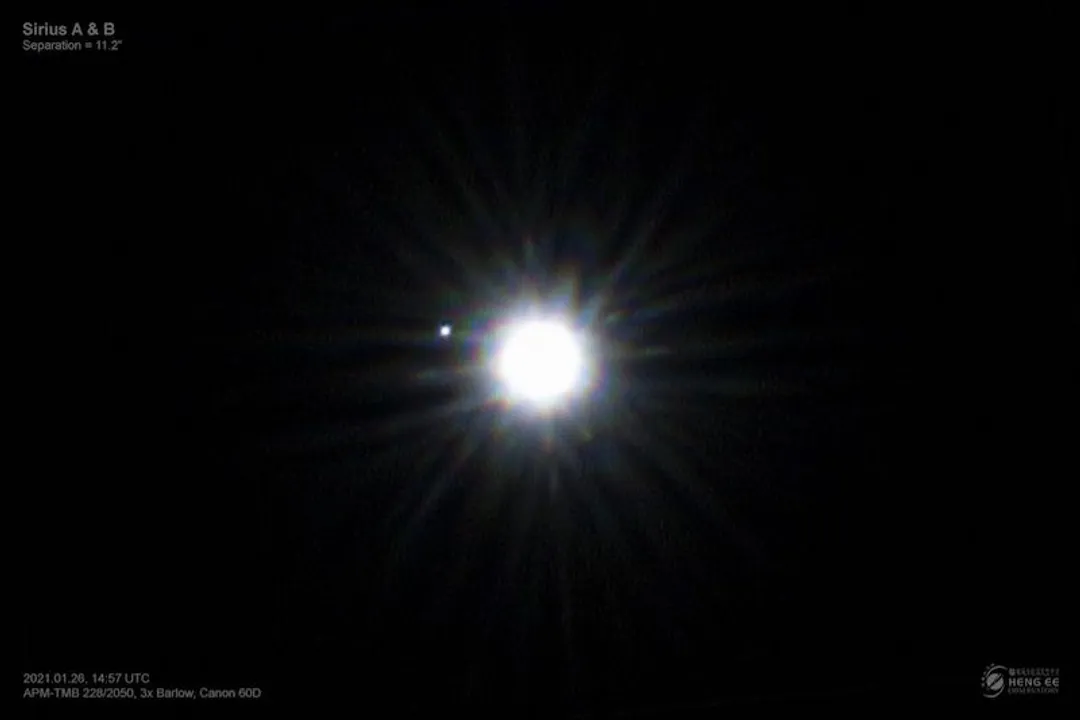
The most reliable method for determining stellar mass comes from observing binary star systems, where two stars orbit a common center of mass. [1][4] This method transforms an intractable problem into a solvable application of classical mechanics, particularly Kepler's Third Law of Planetary Motion, refined by Isaac Newton. [1][2][3] Newton's version of Kepler's Third Law relates the orbital period () of the two bodies, the distance () separating them (the semi-major axis), and the sum of their masses (). [1][3] The relationship looks something like this: , where is the gravitational constant. [3][8]
To use this equation, astronomers need two key observational inputs: the orbital period and the semi-major axis. [1] Determining the period is relatively straightforward; it involves tracking the stars' positions over many orbits, which could take anywhere from a few days to many decades, depending on the system’s configuration. [1][4] Measuring the separation, , is more complex because we only see the stars projected onto a two-dimensional plane (the sky). The true separation requires knowing the distance to the system, a value often derived independently through parallax measurements. [1][4] Furthermore, to know the individual masses ( and ), one must also measure the location of the system's center of mass, which dictates the ratio of the masses (, where and are the distances of the stars from the center of mass). [1][3]
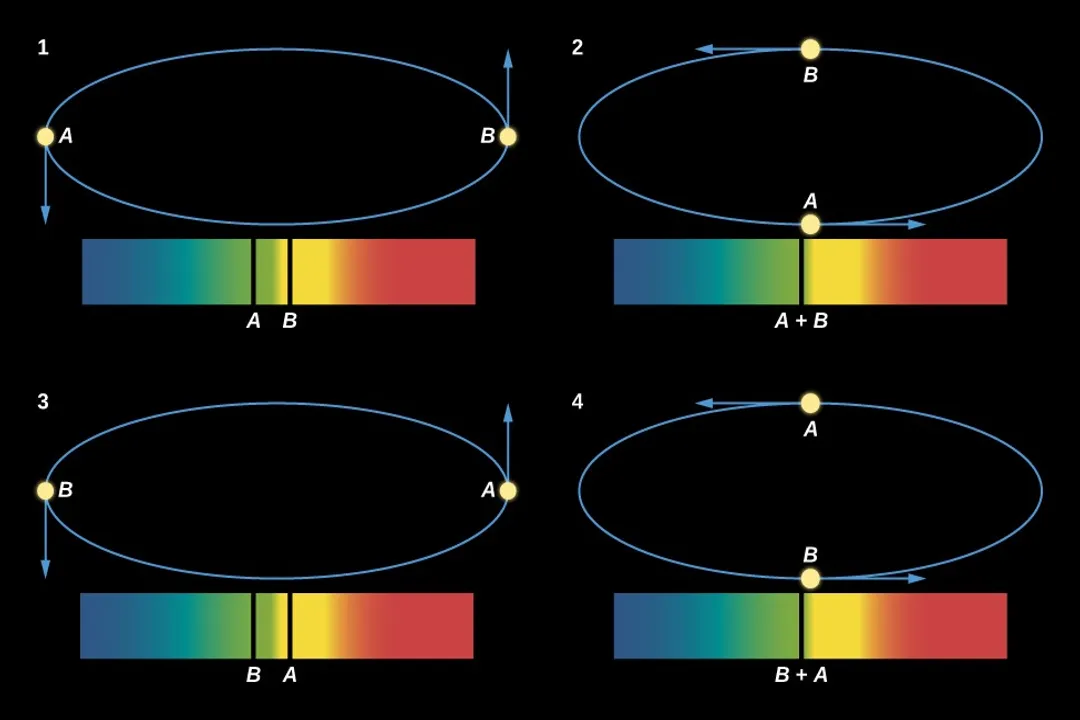
The type of binary system dictates how these measurements are obtained. Visual binaries, where both stars can be seen through a telescope, allow for direct measurement of the separation and period over time. [1] Spectroscopic binaries are systems where the stars are too close to resolve individually, but their orbital motion causes their light spectra to shift back and forth—the familiar Doppler shift—as they move toward and away from Earth, allowing measurement of their radial velocities and thus the orbital parameters. [1][3] Eclipsing binaries, perhaps the most informative type, are those oriented nearly edge-on to our line of sight, causing the stars to periodically pass in front of each other. [1][4] The duration and depth of these eclipses provide critical data, often yielding not only the orbital period but also the stars' radii and, when combined with radial velocity data, highly accurate individual masses. [1][4]
# Single Star Estimation
While binary systems offer a direct measurement based on gravity, the vast majority of stars are not in binary pairs, or their companions are too faint or distant to measure easily. [3][5] For these single stars, astronomers must turn to indirect methods, which rely on finding correlations between mass and other observable properties. [3][10] The most successful of these is the Mass-Luminosity Relation. [5]
This empirical relationship states that a star's mass is strongly correlated with its intrinsic brightness, or luminosity. More massive stars burn through their nuclear fuel much faster and are far more luminous than less massive stars. [3][5] Generally, for main-sequence stars (the phase where stars spend most of their lives), the luminosity () is proportional to the mass () raised to a power, often approximated as . [3][5] If an astronomer can accurately determine a star's luminosity—by measuring its apparent brightness and knowing its distance—they can use this established relationship to estimate its mass. [3][5][10]
However, this method has a critical dependency: the star must be on the main sequence. [5] A star that has evolved off the main sequence, such as a red giant or a white dwarf, will not obey the standard mass-luminosity relation, making the estimate inaccurate. [5][10] To increase confidence, other properties are considered, such as the star's spectral type, which relates to its surface temperature. [3] The spectral type, determined by analyzing the absorption lines in the star's light spectrum, provides an independent check on where the star sits on the Hertzsprung-Russell (H-R) diagram, confirming its evolutionary stage and thus validating the use of the main-sequence mass-luminosity estimate. [3] The collective data from thousands of measured binary systems provide the foundational calibration points that allow the Mass-Luminosity relation to be trusted for single stars. [4][5]
# Core Physics
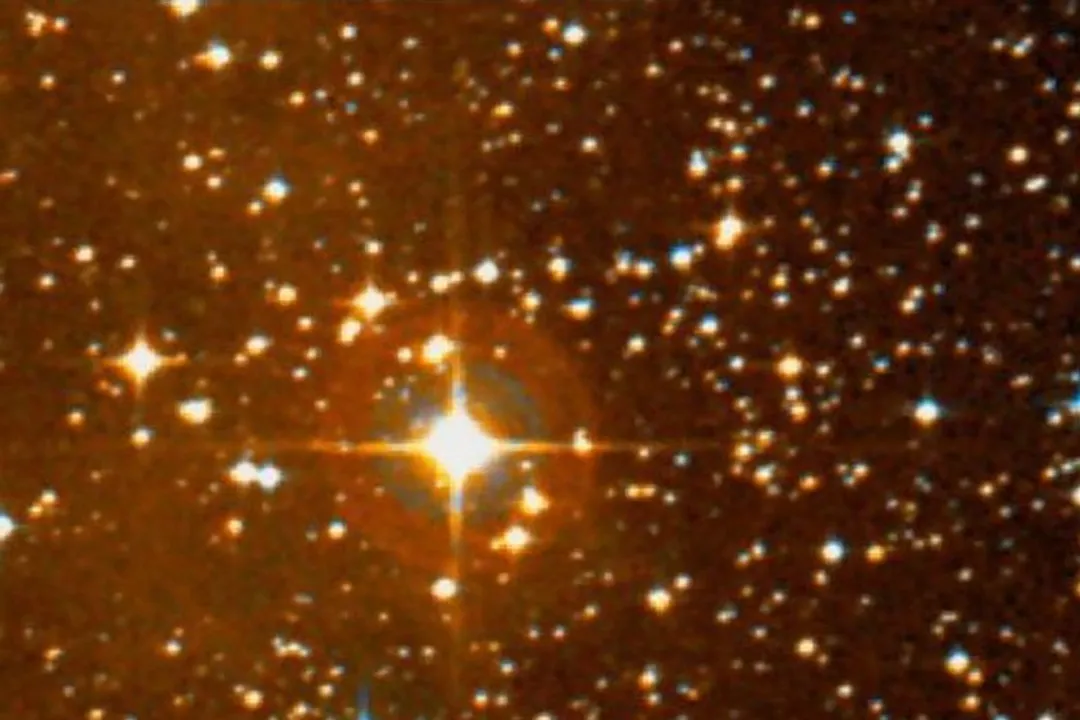
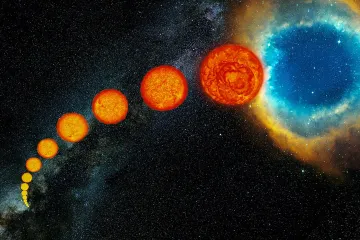
The common thread tying all these methods together is Newton’s Law of Universal Gravitation, which states that the attractive force between any two objects is proportional to the product of their masses and inversely proportional to the square of the distance between them. [3][8] In the context of a star, the mass dictates the immense gravitational pressure at its core, which in turn determines the rate of nuclear fusion occurring there. [7] This fusion rate is what generates the outward pressure and heat that keeps the star from collapsing under its own gravity—a state known as hydrostatic equilibrium. [7][8] Therefore, mass sets the entire life story of a star, from its birth in a molecular cloud to its final collapse or expansion. [7]
For binary systems, this physical principle is applied directly to orbital mechanics. The speeds at which the stars move are directly a function of the total mass they enclose gravitationally. [3][8] For single stars, the physics is internalized: the luminosity observed is a direct consequence of the fusion rate necessary to counteract that calculated mass via hydrostatic equilibrium. [7] Even examining the subtle shifts in a star’s spectral lines, which can sometimes hint at atmospheric activity related to magnetic fields, ultimately traces back to the star's total mass and internal structure. [2]
# Precision Nuances
When comparing the methods, the difference in uncertainty is striking. Binary star measurements, especially those involving eclipsing systems where orbital inclination is known, can often yield stellar masses with errors as low as a few percent. [1][4] These precisely determined masses serve as the anchor points for the entire field of stellar astrophysics. Conversely, a mass derived for a single star using the Mass-Luminosity relation might carry an uncertainty of 15 to 20 percent or more, even for a nearby, well-studied main-sequence star, simply because the relationship itself is a curve, not a perfect straight line, and there is scatter around the average. [5]
This difference highlights an interesting challenge for astronomers trying to build a complete stellar census. Consider a hypothetical main-sequence star that is a bit fainter than the standard prediction for its estimated temperature. If we only have its spectrum, we might lean toward a lower mass based on the standard curve. However, if we consider that some low-mass stars, particularly those that are slightly younger or have different chemical compositions than the average sample used to create the initial calibration, can exhibit small deviations from the rule, we must apply a degree of caution. [5] It suggests that the "standard" mass-luminosity curve should perhaps be viewed less as a rigid law and more as a tight envelope defining the expected range of behavior for a typical star of a given age. This necessitates continuous refinement of the calibration binaries to better account for metallicity and age effects, which influence luminosity independent of mass alone.
Another critical factor is the orbital separation in binary systems. If two stars orbit extremely far apart—say, with a semi-major axis of $100$ Astronomical Units (AU)—their orbital period could easily exceed a century, requiring patience to measure accurately. [1] If they orbit very closely, perhaps $0.1$ AU apart, the orbital period might be just a few days, making the mass calculation quicker but subjecting it to greater observational error from the slight Doppler shifts or the difficulty in resolving the orbits precisely. [4] The sensitivity of the mass calculation to the inverse cube of the separation means that a small error in determining that separation for a wide orbit can quickly balloon into a large error in the final mass, emphasizing why systems where the inclination is known precisely are so prized.

# Further Measurement Avenues
While binary dynamics and the Mass-Luminosity relation are the workhorses, other specialized techniques are being developed or applied to specific stellar types. For stars that are highly evolved, like white dwarfs, their masses can sometimes be constrained by analyzing the subtle gravitational redshifts in their light, though this requires extreme precision. [8] For extremely massive stars, rotational velocities inferred from spectral broadening can place upper limits on mass, as a star spinning too fast would tear itself apart. [2]
Even for single stars, advances in asteroseismology—the study of the internal structure of stars through their natural oscillations or "starquakes"—are beginning to provide more direct mass constraints, independent of luminosity. [9] By analyzing the precise frequencies of these sound waves traveling through the star, scientists can map out the internal density profile, which is intimately linked to the total mass and the physics of fusion occurring deep inside. [9] This technique, still relatively young compared to the Keplerian methods, promises to break some of the reliance on the older, less direct relationships, adding a layer of independent verification that bolsters the overall trustworthiness of our stellar catalog. [9]
In essence, knowing the mass of a star is a testament to the power of applying universal physical laws—chiefly gravity—to distant, untouchable objects. [8] Whether through charting an intricate celestial dance or by placing a star on a standardized chart calibrated by those dancers, the calculated mass remains the cornerstone upon which our understanding of stellar evolution and the lifecycle of the cosmos is built. [7][10]
#Videos
How To Calculate The Mass Of A Star - YouTube
Related Questions
#Citations
The mass of a star is determined from binary star systems - EarthSky
How do we determine the mass of stars? (Is it accurate?) - Reddit
How do we know the masses of single stars?
Measuring Stellar Masses | Astronomy - Lumen Learning
How do astronomers measure the size and mass of stars?
How To Calculate The Mass Of A Star - YouTube
Measuring the Masses of Stars - PY 123
Star Basics - NASA Science
Stars determine their own masses - NSF
How to Figure out the Mass of a Star - ThoughtCo