How do scientists discover other planets around their own stars?
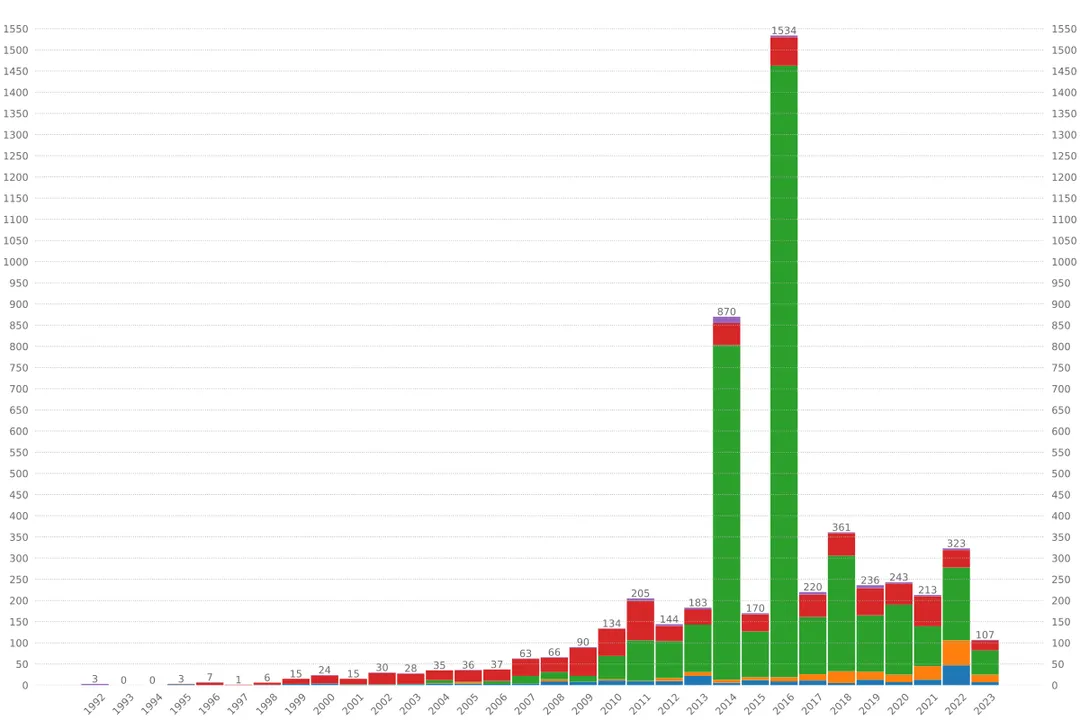
This is how astronomers manage to find worlds orbiting stars light-years away, sometimes even discovering several worlds circling a single sun. The sheer scale of the cosmos makes this task seem impossible, yet through ingenuity and the patient application of physics, thousands of these distant planets, dubbed exoplanets, have been confirmed since the first detections in the early 1990s. The challenge lies not in the fact that they exist—scientists now assume planets are the rule, not the exception, around most stars—but in the overwhelming contrast in brightness and proximity to their host stars. Imagine trying to spot a tiny firefly hovering near a stadium floodlight from miles away; that is the basic difficulty astronomers face. To overcome this, they rely on indirect observation methods that detect the planet's effect on its star, rather than seeing the planet itself.
# Shadow Dips
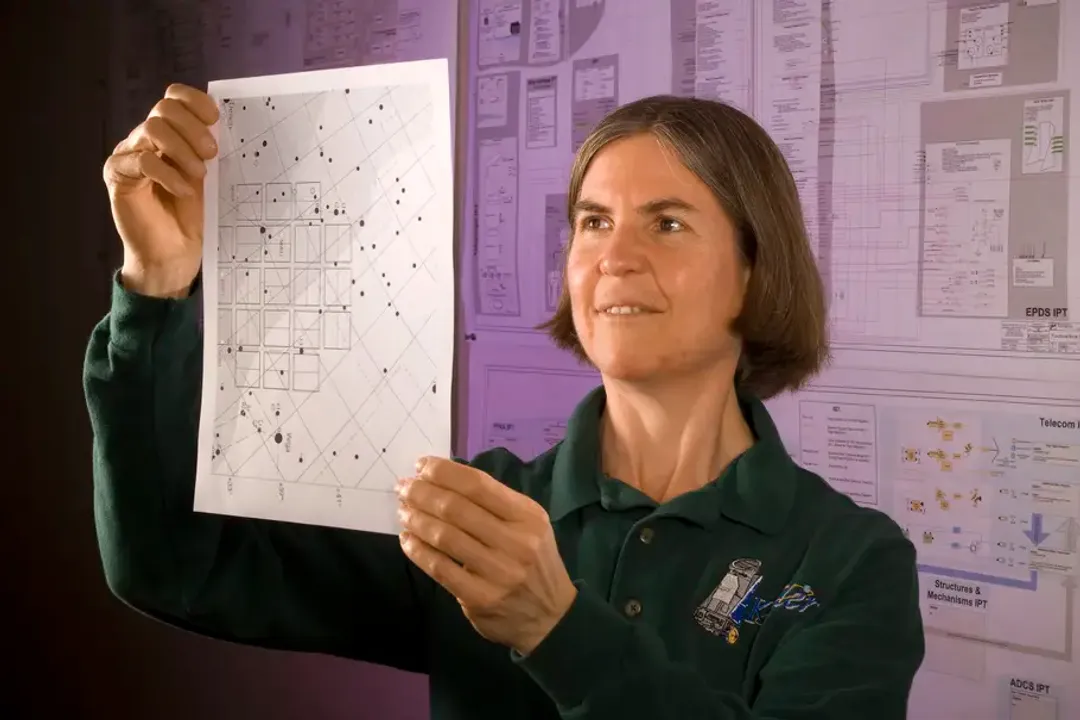
The most successful technique, responsible for the largest number of confirmed discoveries, relies on watching a star’s light curve for tiny, periodic dips. This is known as the transit method.
# Monitoring Starlight
When an exoplanet happens to pass directly between its host star and our line of sight from Earth, it blocks a minuscule fraction of the star's light. This momentary dimming, or transit, is what detectors on powerful telescopes look for. The amount of light blocked is incredibly small—for a Jupiter-sized planet transiting a Sun-like star, the dip is only about one percent, and for an Earth-sized planet, it's less than one-hundredth of one percent.
The key to confirming a transit is repetition. Scientists must observe the same specific, small drop in brightness occurring at regular intervals. This interval corresponds precisely to the planet's orbital period—how long it takes to circle its star.
# Size Measurement
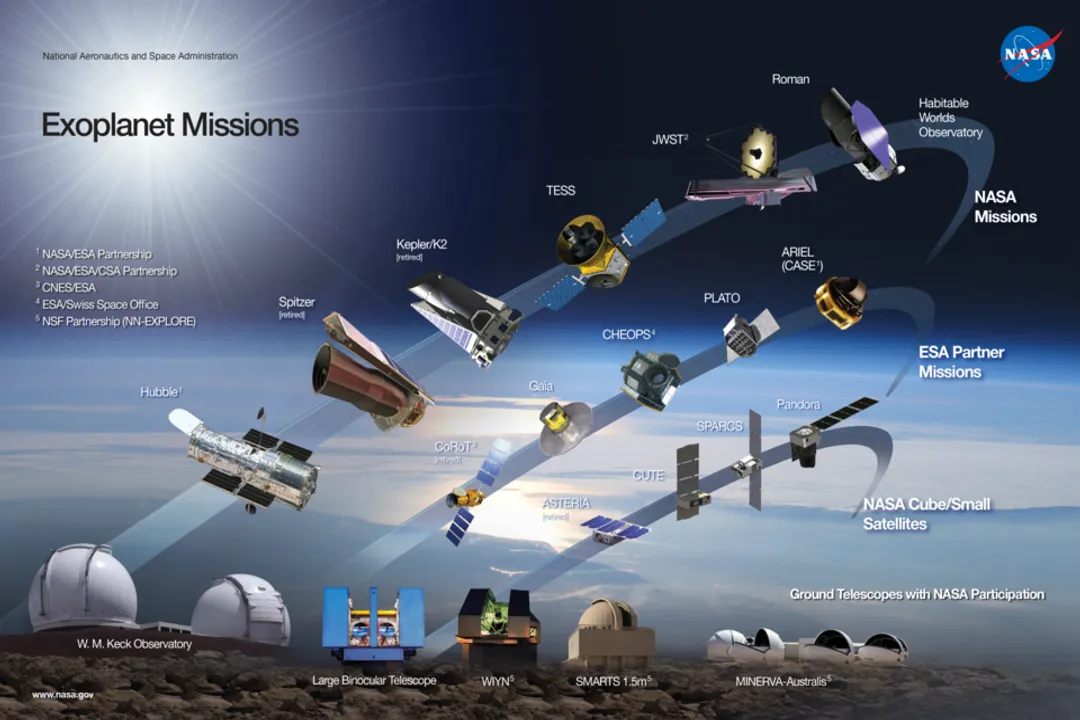
The transit method provides immediate, valuable information: the planet's size, or its radius. The larger the planet, the more starlight it obscures, resulting in a deeper dip. Many of the initial discoveries made by missions like NASA’s Kepler Space Telescope were found using this technique. These telescopes are often placed in space to escape the distortion caused by Earth's atmosphere, allowing them to achieve the necessary precision for these subtle measurements.
It is important to note the inherent bias this method creates. It is far easier to detect large planets orbiting very close to their stars because they cause a deeper dip and transit much more frequently. Therefore, the early census of exoplanets heavily favored what are sometimes called "Hot Jupiters"—massive worlds zipping around their suns in just a few days.
# Stellar Wobble
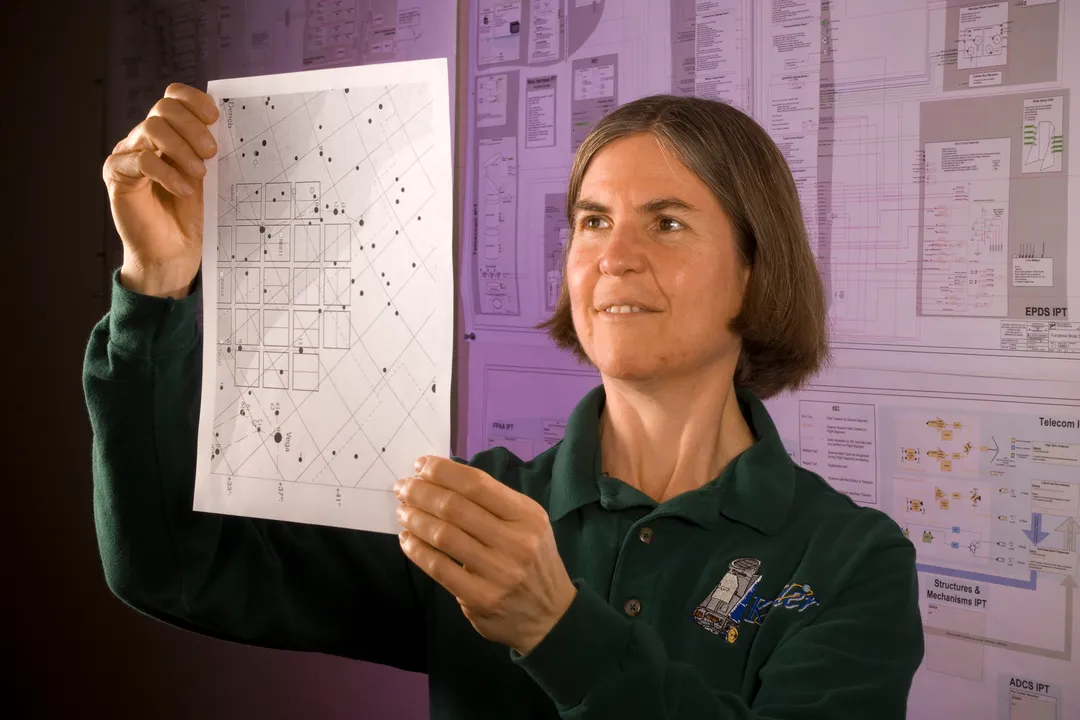
Before the transit method dominated, the radial velocity method, also called the Doppler spectroscopy method, was the first to successfully confirm planets orbiting Sun-like stars. This technique doesn't look at the light blocking; instead, it detects the gravitational interaction between the star and its orbiting planet.
# The Gravitational Tug
A star does not sit perfectly still while a planet orbits it. Both bodies orbit a common center of mass, which means the star itself performs a slight "wobble" in response to the gravitational tug of the orbiting planet. This wobble causes the star's light spectrum to shift minutely over time, a phenomenon detectable using the Doppler effect.
When the star moves toward Earth in its orbit, its light waves are compressed, causing a shift toward the blue end of the spectrum (blueshift). When it moves away from Earth, the waves are stretched, causing a shift toward the red end (redshift). By meticulously tracking these back-and-forth shifts, astronomers can infer the presence of an unseen companion.
# Mass Determination
Unlike the transit method, which yields size, the radial velocity method primarily gives us the planet's minimum mass. The more massive the planet, the stronger its gravitational pull, and the larger the star's resulting wobble. Because this wobble is measured based on the Doppler shift, which depends on the velocity of the star along our line of sight, this method only provides a lower limit on the mass unless the orbital inclination (the tilt of the orbit relative to us) is also known.
Combining the two primary methods offers profound insight. If a planet transits its star (giving us its radius) and causes a measurable stellar wobble (giving us its minimum mass), scientists can calculate the planet's density. This density is the key indicator of composition. A low-density world is likely a gas or ice giant, while a high-density world points toward a rocky, terrestrial composition, similar to Earth or Mars. This combination of data transforms a mere discovery into a meaningful characterization, a step vital for the search for habitable environments.
# Seeing Worlds Directly
While the indirect methods dominate the statistical count, the most intuitive way to find an exoplanet is to simply take its picture. This is direct imaging.
# Overcoming Stellar Glare
Directly imaging an exoplanet is extraordinarily challenging because stars are billions of times brighter than the planets orbiting them. To succeed, astronomers must block out almost all the overwhelming light coming from the parent star. This is often achieved using an occulting mask or an external occulter—a device placed in space designed to physically block the starlight, similar to how the Moon blocks the Sun during a total solar eclipse. Specialized instruments on telescopes called coronagraphs perform this function internally by precisely shaping the light path.
This technique is most successful when the planet is:
- Very large, reflecting a significant amount of light.
- Orbiting very far away from its star, providing greater angular separation.
- Relatively young, as younger planets are often still hot and emit more infrared light.
Direct imaging is a powerful confirmation tool, but due to its technical difficulty, it has only confirmed a small fraction of known exoplanets.
# Celestial Movements
Two other, less frequent but equally fascinating techniques complete the core toolkit for exoplanet hunters.
# Measuring Wiggle in Space
The astrometry method is closely related to radial velocity, but instead of measuring light shifts, it measures the actual, tiny positional shift of a star in the sky over time. As the star wobbles due to its planet's gravity, its position appears to trace a minute, back-and-forth path across the background stars. This shift is incredibly small—for a Jupiter-sized planet orbiting a Sun-like star at the distance of Alpha Centauri, the angular shift would be only about one-millionth of a degree. This requires extreme precision, making it very difficult to apply, though future space missions are designed specifically to map these stellar movements with greater accuracy.
# Light Bending
The gravitational microlensing method relies on Einstein's theory of General Relativity. This occurs when a star system (the "lens") passes almost perfectly in front of a more distant background star, acting like a natural magnifying glass. The foreground star's gravity bends the light from the background star, causing its brightness to increase temporarily. If the foreground star has an orbiting planet, the planet's gravity creates a secondary, brief spike in brightness on top of the main brightening curve. This method is particularly valuable because it can detect planets that are far from their host stars—even free-floating planets not bound to any star—and can find small, low-mass planets. However, the alignment needed is so rare that a specific star system can only be observed this way once, making follow-up impossible.
# Synthesis and Future Work
The sheer number of confirmed worlds—currently numbering in the thousands—is a testament to the power of these varied detection strategies. No single technique is perfect; each has inherent blind spots based on orbital geometry, planet mass, or orbital distance.
| Method | Measured Property | Best Suited For | Key Limitation |
|---|---|---|---|
| Transit | Radius (Size) | Planets close to their star | Requires edge-on orbit; yields minimum mass only if combined |
| Radial Velocity | Minimum Mass (via wobble) | Massive planets close to their star | Requires detectable stellar wobble; yields minimum mass |
| Direct Imaging | Direct Light/Heat | Large, young planets far from their star | Extremely difficult due to star glare |
| Astrometry | Positional Shift | Massive planets orbiting further out | Requires extreme angular measurement precision |
| Microlensing | Light Distortion | Planets far from their star or rogue planets | Non-repeatable event |
When considering the search for life, one must appreciate the necessary progression of discovery. Initial surveys often employ the transit or radial velocity methods because they are statistically more productive for finding any planet. Once a candidate is found, say, by transit, scientists will then attempt to use radial velocity on that same star to get a mass estimate. The failure to find a radial velocity signal for a transiting planet doesn't mean the planet isn't there; it simply means the orbit is likely too highly inclined for the star's wobble to be visible to us, or that the planet is too small to exert a strong enough tug. This points to an essential, though often unstated, scientific reality: The current catalog of known exoplanets is heavily weighted toward worlds whose orbits are oriented perfectly for us to observe them via transit, not necessarily a perfect reflection of the galaxy’s true planetary population.
The next generation of instruments and space telescopes are being designed with these limitations in mind. They aim to improve astrometry precision and enhance coronagraph capabilities to make direct imaging more common, moving the field toward characterizing the atmospheres of these worlds. Analyzing the light that passes through an exoplanet’s atmosphere during a transit can reveal the chemical fingerprints of gases like water vapor, methane, or oxygen—the real clues in the hunt for extraterrestrial biology. Discovering a planet is the first monumental step; deciphering its actual environment is the one that truly captivates the imagination.
Related Questions
#Citations
Exoplanets - NASA Science
Methods of detecting exoplanets - Wikipedia
Extrasolar Planets
ESA - How to find an exoplanet - European Space Agency
7.3. How do we discover worlds around other stars? | Education
How do astronomers know so much about a distant space object just ...
4 Ways We Have Explored Our Planets
This is how astronomers discovered thousands of planets beyond ...
Exoplanets, explained | University of Chicago News