How was Jupiter discovered and who discovered it?
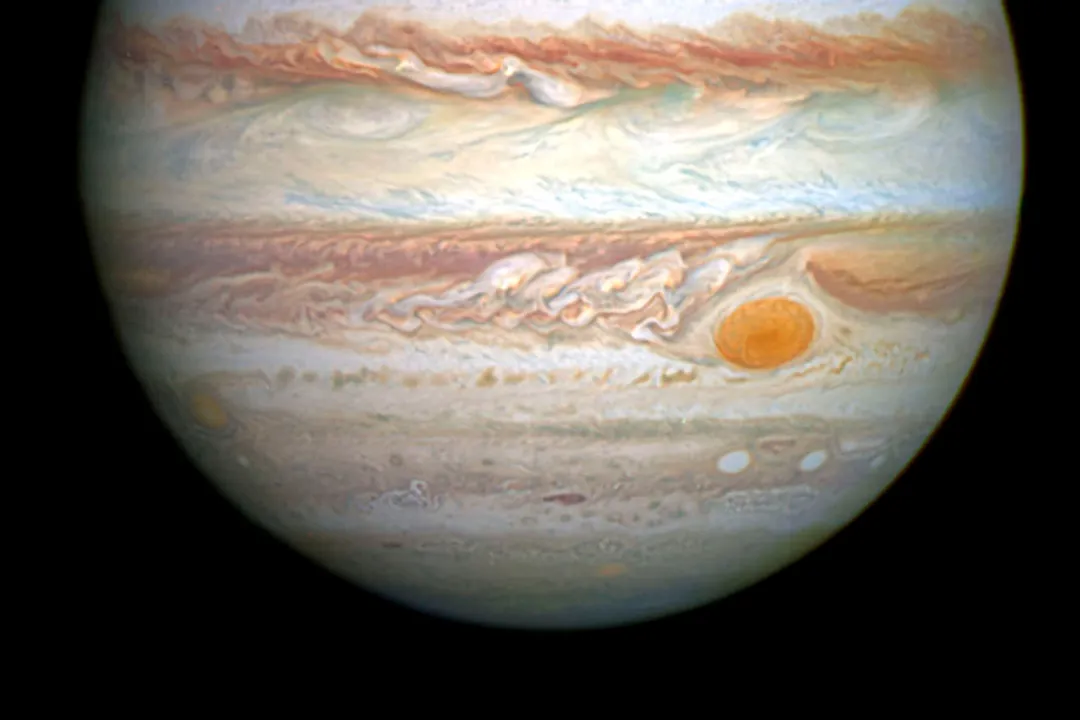
The giant world of Jupiter has captivated human attention for millennia, visible in the night sky as one of the brightest "stars" besides Venus. [3] Because it is so easily seen without aid, its "discovery" is fundamentally different from that of the outer planets like Uranus or Neptune; it was known to virtually every ancient civilization that tracked celestial movements. [9] Mesopotamian astronomers were already tracking its path across the sky around the 7th or 8th century BC, recording it as a distinct wanderer distinct from the fixed stars. [3][9] The challenge for early observers was not seeing Jupiter, but correctly understanding what it was and where it sat in relation to the Earth and the Sun. [3]
# Ancient Visibility
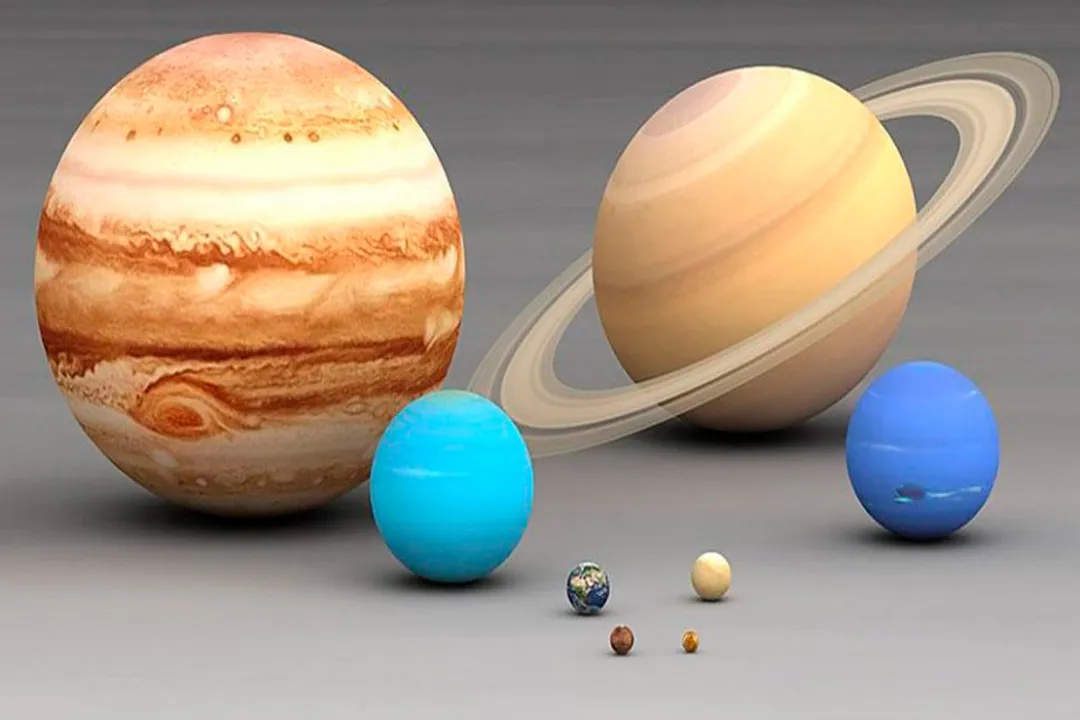
Jupiter holds a unique place among the classical planets known to antiquity. It is the fourth brightest natural object in the sky after the Sun, the Moon, and Venus. [3] This intrinsic brightness meant that civilizations such as the Babylonians and Greeks incorporated it into their earliest astronomical records, recognizing it as a planet—a "wanderer" moving against the background constellations. [3][9] These early observations, which spanned hundreds of years, established its orbital period relative to Earth, although the underlying model remained geocentric for centuries. [9] For the ancients, Jupiter was associated with great power and kingship, often named after their chief deity, such as Jove in Roman tradition. [3][9] The key historical turning point, however, did not involve confirming its existence, but rather confirming its structure and motion relative to Earth's position in the cosmos.
It is interesting to consider that because Jupiter is so bright, it was likely never truly undiscovered by intelligent observers tracking the heavens. Unlike the dimmer planets that required telescopes, Jupiter's existence was an established fact of the terrestrial sky, serving as one of the primary anchors for early models of the solar system. The real credit goes not to the first person to see it, but to the first person to definitively prove it was a world orbiting the Sun, not just a light orbiting Earth.
# Telescopic View
The crucial moment that shifted Jupiter from an ancient mystery to a scientifically understood world occurred in the early 17th century with the advent of the telescope. [3] The individual most credited with this monumental shift is the Italian astronomer Galileo Galilei. [8] Around January 1610, while observing the heavens with his newly improved telescope, Galileo noticed three tiny, bright stars situated near Jupiter. [4][8] He initially cataloged them, but through subsequent nightly observations, he realized something extraordinary: these "stars" were moving in relation to Jupiter itself. [8]
Specifically, Galileo noted that these points of light seemed to orbit the planet, appearing and disappearing as they passed either in front of or behind Jupiter, or as Jupiter itself moved. [8] He meticulously documented these sightings, noting the changing positions of what would become known as the four largest moons. [4][8] The initial observations in January 1610 revealed three, and soon after, a fourth was found, completing the set we now call the Galilean satellites: Io, Europa, Ganymede, and Callisto. [8] One primary source pinpoints the very first observation date of these companions to January 7, 1610. [4]
# Orbital Proof
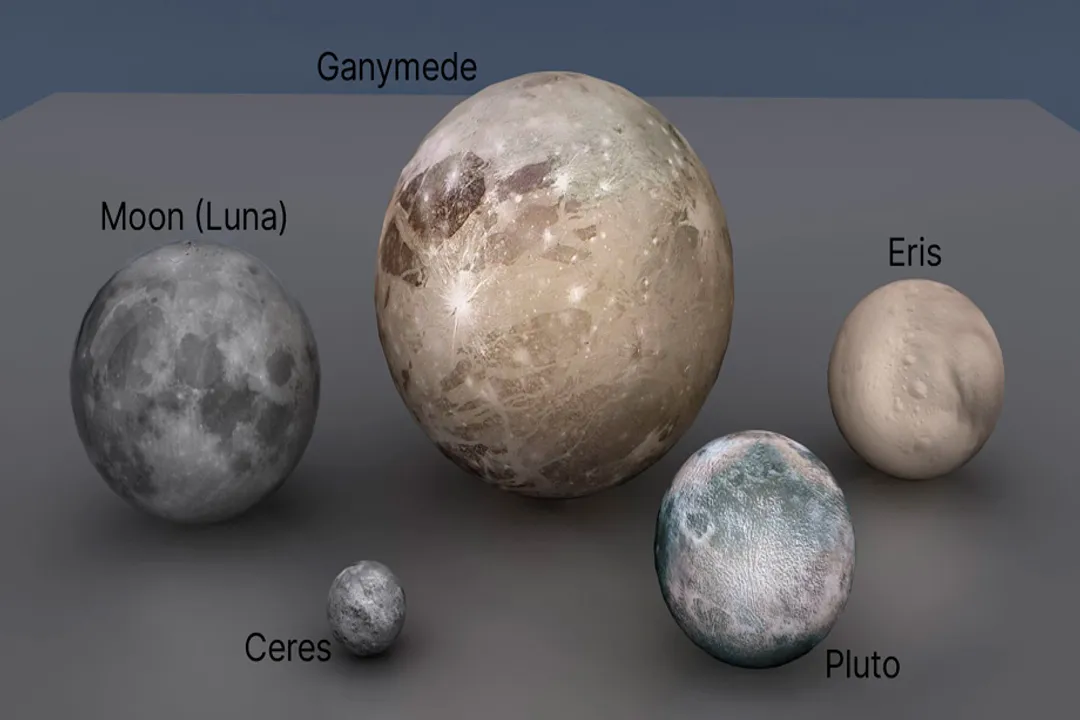
Galileo’s discovery of these celestial companions was profoundly significant, extending beyond the simple cataloging of new objects. [3] Before this observation, the prevailing Ptolemaic, Earth-centered (geocentric) model held that everything in the heavens revolved around our planet. [3] The existence of four moons clearly orbiting Jupiter demonstrated that not every heavenly body orbited the Earth. [3][8]
This observational evidence provided powerful support for the Copernican model, which placed the Sun at the center of the solar system (heliocentric). [3] If Jupiter could have its own system of satellites, it logically suggested that Earth was not the unique center of all motion in the heavens. [3] It confirmed that Jupiter itself was a massive body, capable of gravitationally binding its own retinue of worlds. The implications were staggering, representing a definitive break from classical cosmology and establishing a new astronomical reality. [8] The planet Jupiter, already known for millennia, was finally understood in its true context as a major world within a larger solar system structure. [3]
# Historical Timeline
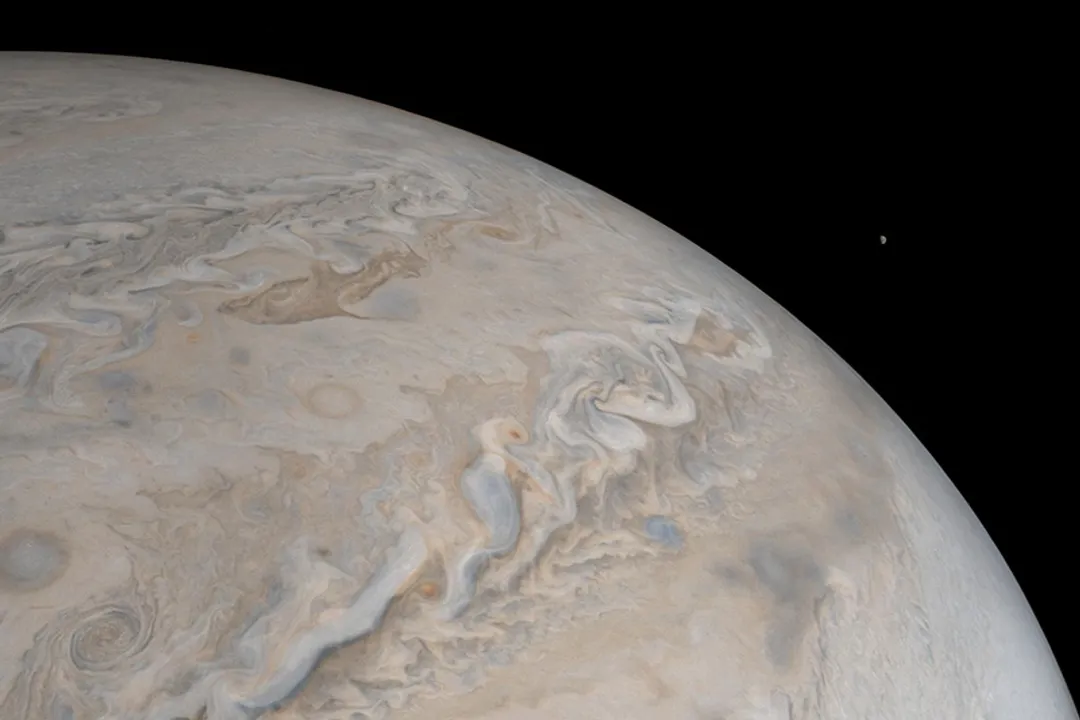
The understanding and study of Jupiter evolved over time, marked by key dates that showcase the progression from naked-eye observation to space travel. [5] While the ancient recognition is vague, the history of precise study starts with the telescopic age. [4]
| Date Range | Event | Significance |
|---|---|---|
| Antiquity | Naked-eye observation | Recognized as a bright, wandering celestial body. [3][9] |
| 1610 | Galileo observes the four largest moons | Provides empirical evidence against the geocentric model. [3][8] |
| 1973 | Pioneer 10 encounter | First spacecraft to visit Jupiter. [1][7] |
| 1979 | Voyager 1 and 2 encounters | First close-up imaging and data collection, discovering faint rings. [7] |
| 1989-2003 | Galileo mission | First orbiter; studied the atmosphere and magnetic field extensively. [1][7] |
| 2016-Present | Juno mission | Currently orbiting to study the planet's deep interior and origins. [1] |
This timeline shows that while the object itself has been known for thousands of years, the detailed scientific investigation using probes began relatively recently, largely within the last half-century. [1][7] This progression illustrates how technological capability dictates the depth of astronomical knowledge we possess.
# Spacecraft Visits
Once Galileo established Jupiter as a true planet, the next step was sending explorers to confirm its scale and composition. [7] The first successful physical encounter occurred in December 1973, when NASA's Pioneer 10 became the first human-made object to fly past Jupiter. [1][7] This initial pass provided the first close-up images and direct measurements of the planet's intense radiation environment. [7]
Following Pioneer 10, the Voyager 1 and Voyager 2 probes made crucial flybys in 1979. [7] These missions returned breathtaking, detailed photographs of Jupiter's swirling atmosphere and iconic Great Red Spot. [7] Voyager 1, in particular, was instrumental in discovering the faint, dark ring system surrounding the planet, something ancient observers could never have detected. [7]
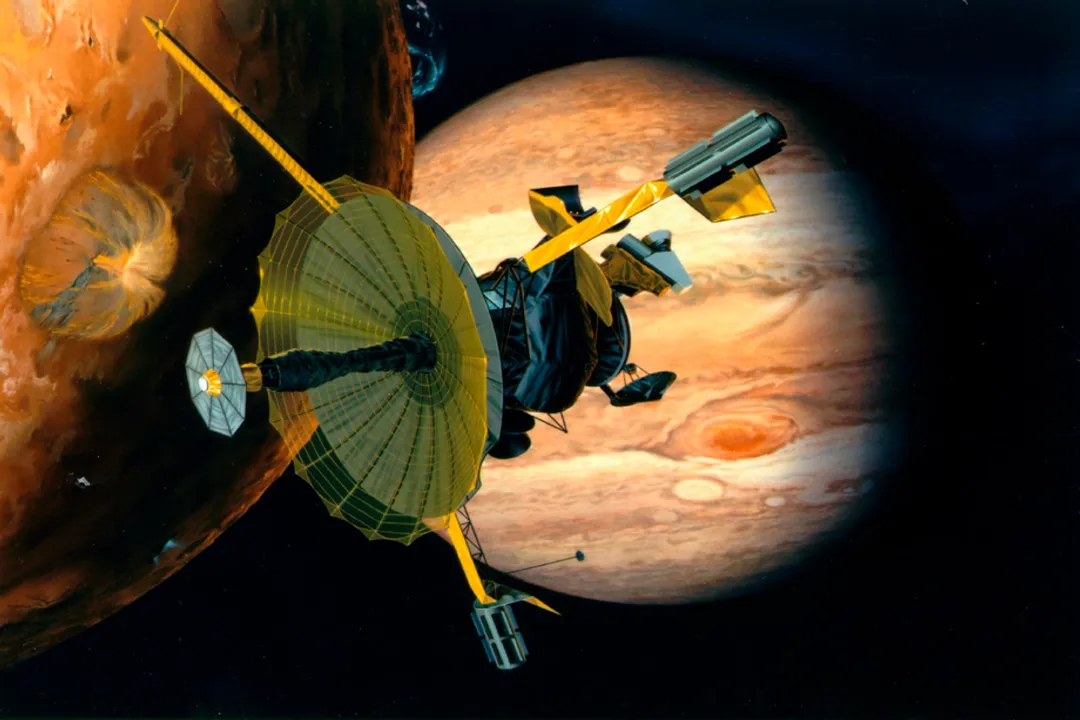
Later missions moved into orbital phases to study the planet over longer periods. The Galileo spacecraft arrived in 1995 and orbited for eight years, deploying a probe into the atmosphere and studying the Jovian system, including Ganymede, the largest moon in the solar system. [1][7] Currently, NASA’s Juno mission, which arrived in 2016, is focused on understanding Jupiter's deep structure, magnetic field, and the origin of its powerful auroras, looking beneath the visible cloud tops. [1] Furthermore, the European Space Agency (ESA) is currently engaged in the Juice mission, which is en route to study the icy moons like Europa, Ganymede, and Callisto, looking for signs of subsurface oceans. [7] This continued exploration highlights a major contemporary shift: modern study is less about discovering Jupiter itself, and more about understanding the vast, complex system it commands. [7]
Related Questions
#Citations
Jupiter Exploration
Discovery of Jupiter
Jupiter
7 Important Dates in Jupiter History
Meet our Solar System: Jupiter
A history of Jupiter exploration: the journey to Juice
Galileo Discovers Jupiter's Moons
The history of the study of Jupiter - Max Polyakov