How were nebulas discovered?
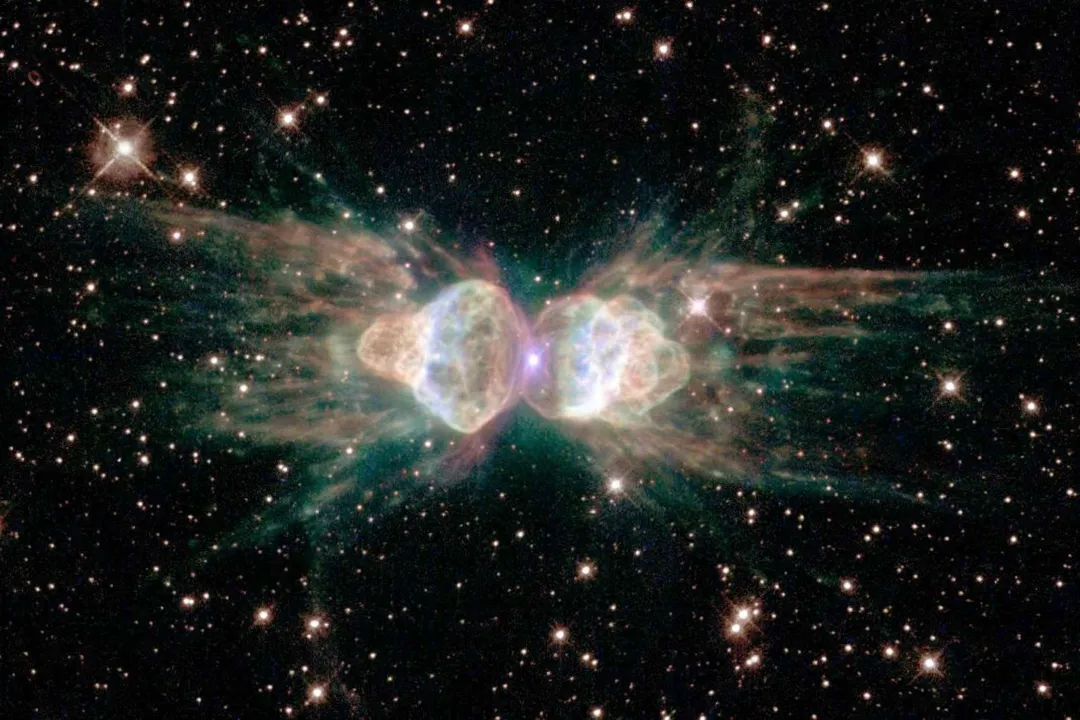
The first glimpses of what we now call nebulae were confusing smudges in the eyepiece of early telescopes. Before powerful instruments allowed us to discern structure, these faint, fuzzy patches in the night sky were simply grouped together under the Latin term nebula, meaning cloud. [1][7] The real story of their discovery isn't a single moment but a long, slow process of elimination, description, and the gradual realization that one word was being used to describe two profoundly different classes of astronomical objects: vast clouds of gas and dust within our own galaxy, and entire systems of stars lying far beyond it. [2]
# Early Fuzziness
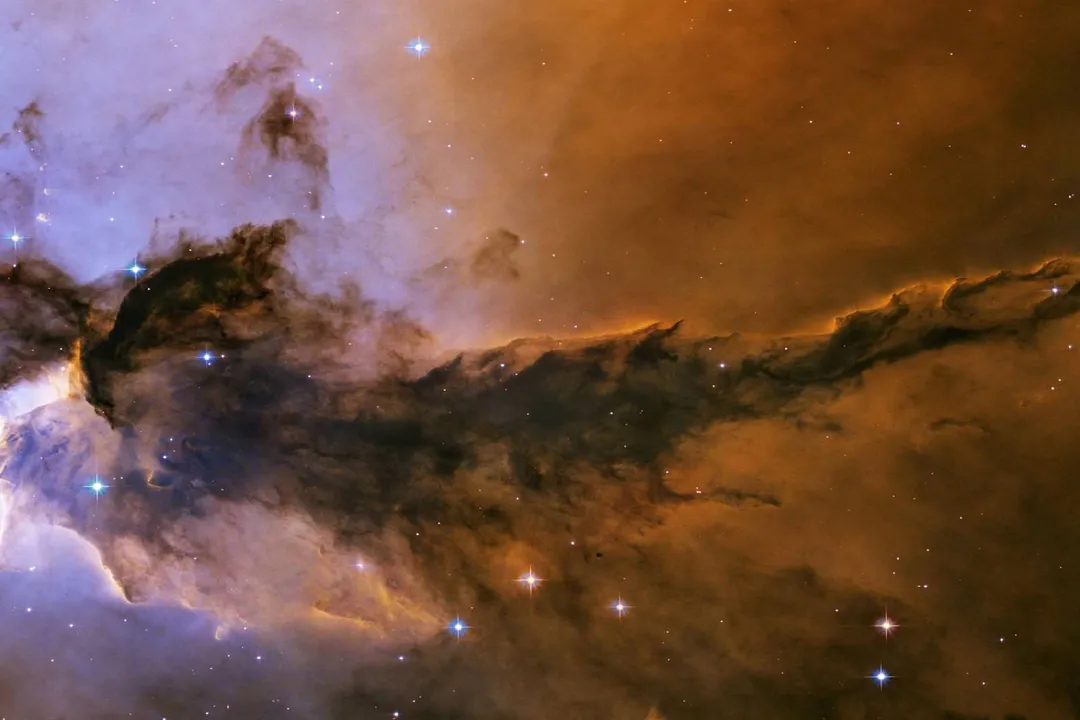
For many early observers equipped with modest telescopes, the main challenge was distinguishing something truly new from something merely faint. The work done by French astronomer Charles Messier in the mid-18th century provides the essential backbone for understanding these early discoveries. [4] Messier was not primarily searching for nebulae; quite the opposite. He was intensely focused on cataloging stationary deep-sky objects so he would not mistake them for the comets he actively tracked. [4][5] This pragmatic goal led to the creation of the famous Messier Catalog, which lists many of the most recognizable nebulae visible from the Northern Hemisphere. [4]
The observation of Messier 1 (M1), the Crab Nebula, is a prime example of this cataloging process. Messier recorded it in 1758, noting its faint, nebulous appearance. [4] He was cataloging a supernova remnant, a cloud of expanding gas left over from a star that violently exploded centuries earlier. [1][4] The fact that Messier's primary motivation was to avoid confusion highlights a subtle but critical aspect of early astronomical record-keeping: the initial "discovery" was often just the classification of an object that didn't move like a planet or comet. [5] It is fascinating to consider that many of the most beautiful objects we study today were initially cataloged by an astronomer trying to ensure his primary quarry, comets, were not overlooked. [4]
# Spiral Structure

As telescopes improved, astronomers began to notice that some of these "nebulae" had distinct shapes, notably a spiral structure. [2] This observation kicked off one of the greatest astronomical debates of the 18th and 19th centuries: the so-called "Great Debate" concerning the nature of "spiral nebulae". [2] Were these spiral clouds merely gas clouds lying relatively close to us, perhaps within the confines of the Milky Way, or were they, in fact, entirely separate, massive star systems—other "island universes" that existed far outside the boundaries of our own galaxy?[2]
The initial data was inherently ambiguous. An observer could only gauge the object's angular size and brightness; measuring the actual distance to these faint, diffuse objects was impossible with the technology available at the time. [2] This resulted in two competing, yet equally plausible, models for reality. On one side were those who believed the universe was relatively small, contained within the Milky Way, and that these objects were local phenomena. [2] On the other were those, supporting the island universe hypothesis, who proposed a vast, limitless cosmos populated by countless galaxies. [2]
# Distinguishing Real Nebulae
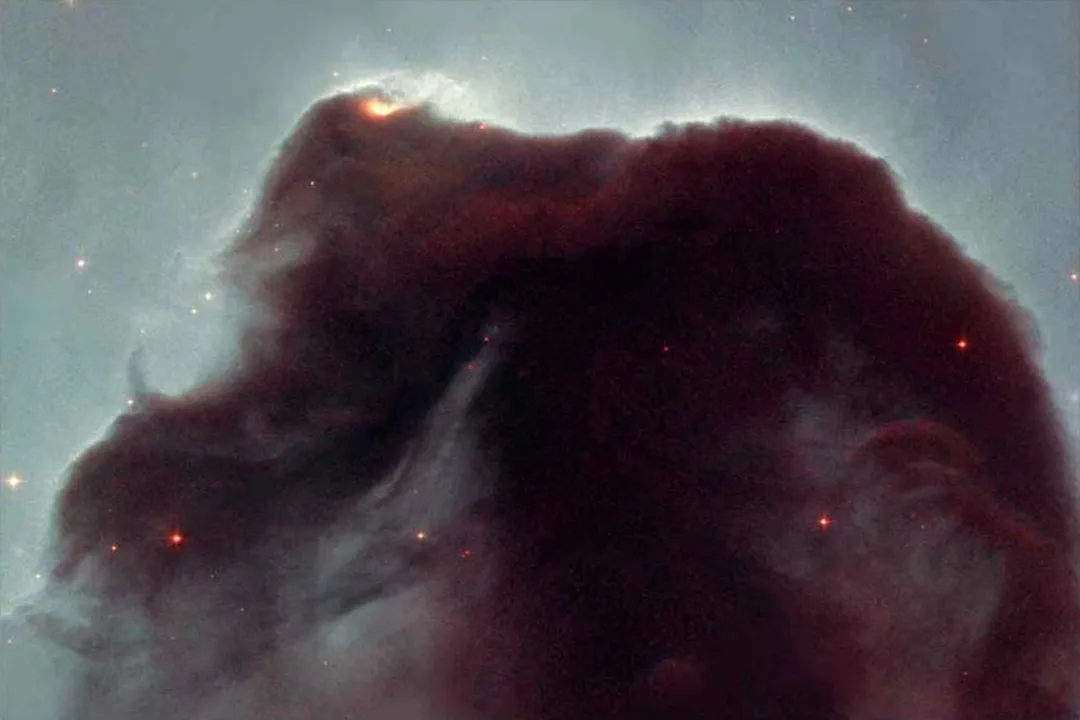
The resolution of this fundamental question required better instrumentation and a deeper understanding of stellar distances, specifically by identifying observable objects within those spiral patches that could serve as distance markers. Spectroscopic analysis became a game-changer. [2] By analyzing the light emitted or absorbed by the gas clouds, astronomers could determine their chemical composition and, critically, their radial velocity—how fast they were moving toward or away from Earth. [2]
Once better measurements were established, the true nature of the nebulae (the non-spiral clouds) versus the spiral nebulae (which we now identify as galaxies) began to separate. [2] The objects that remained classified as true nebulae were found to be composed of gas and dust clouds associated with star formation or stellar death, lying comparatively near in astronomical terms. [1][6] For instance, the Great Orion Nebula is recognized as a stellar nursery, a gigantic cloud where new stars are actively being born from the surrounding raw materials. [1][7]
# Stellar Remnants
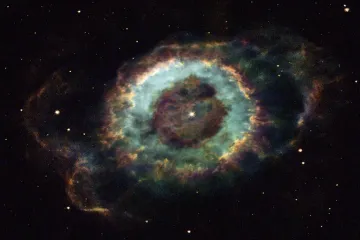
Within the category of true nebulae, further distinctions emerged based on origin. One significant group is the planetary nebulae. [3] Despite the misleading name—given because early observers often confused their round, greenish appearance with that of Uranus [3]—these objects have nothing to do with planets. [3][7] They represent the late evolutionary stage of a star similar in mass to our Sun. [3] When such a star exhausts the fuel in its core, it sheds its outer layers into space, creating a glowing shell of ionized gas that expands outward. [3][6] The central object left behind is a white dwarf. [3]
Modern astronomical surveys have revealed the extreme variety within this subclass alone. For example, recent observations have detailed a planetary nebula where the ejected material appears to be actively destroying the remaining solar system around the dying star, demonstrating the violent, dynamic nature of these late-stage events in ways that were unimaginable to the early catalogers. [9]
# Modern Observation
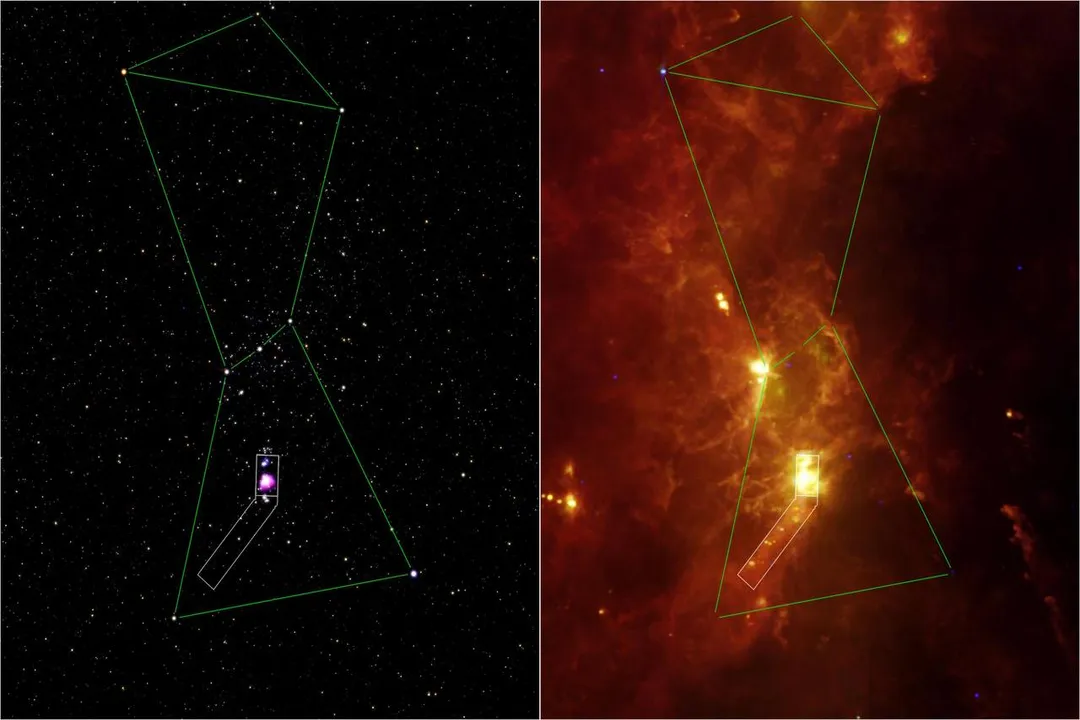
The discovery process didn't stop when the distinction between galaxy and nebula was made; it merely shifted from what the objects are to how they form and evolve. Today, the search for and detailed study of nebulae relies heavily on specialized instruments that can detect light across the entire electromagnetic spectrum. [8]
Telescopes designed to view infrared light, such as the now-retired Spitzer Space Telescope, are essential because they can peer through the thick, obscuring clouds of dust that make many star-forming regions optically opaque. [8] If an astronomer in the 18th century looked at a dark patch of sky, they saw nothing; today, we see these same regions teeming with protostars hidden behind the dust layers that only infrared light can penetrate. [8]
The Hubble Space Telescope, famous for its stunning visible-light images, provided unprecedented clarity on the structures within existing nebulae, showing intricate filaments, pillars, and bubbles carved out by stellar winds and radiation. [4] The ability to map the structure of objects like M1 with such detail allows scientists to reverse-engineer the explosion that created them, linking the visible cloud back to the supernova event that initiated it. [4]
To grasp the progress made, consider the Messier catalog again. While M1 was described simply as a faint spot, [4] modern analysis allows for far more specific classification. A researcher today doesn't just "discover" a nebula; they discover what kind of nebula it is, what specific elements are glowing within it, and how long ago its progenitor star met its end, often constrained by high-precision data. [3][9] The shift in discovery focus has moved from mere identification to deep physical characterization.
# Summary of Key Objects
The historical study of nebulae is best understood through the objects that defined the evolving understanding:
| Object Type | Defining Characteristic | Discovery Significance |
|---|---|---|
| Spiral Nebulae | Distinct spiral arms | Initially confused with true nebulae; later identified as external galaxies. [2] |
| Supernova Remnants | Expanding gas cloud from stellar explosion (e.g., M1) | Proved some nebulae were remnants of violent, short-lived events within the Milky Way. [4] |
| Emission/Reflection Nebulae | Clouds of gas/dust illuminated by nearby hot stars (Stellar Nurseries) | Revealed nebulae as sites of active star formation. [1][7] |
| Planetary Nebulae | Shell of gas ejected by a dying Sun-like star | Demonstrated that some nebulae signal the end of a star's life cycle. [3] |
Ultimately, the discovery of nebulae was less about finding new points of light and more about correctly identifying what those lights were relative to our own location in space. The early catalogers found objects; later generations, equipped with better physics and larger instruments, finally sorted those objects into their correct cosmic addresses—some close, some incomprehensibly far away. [2]
Related Questions
#Citations
What is a nebula? - Space Center Houston
Nebula - Astronomy, Formation, Gas & Dust - Britannica
Planetary Nebulas - Center for Astrophysics | Harvard & Smithsonian
Messier 1 (The Crab Nebula) - NASA Science
How did astronomers discover galaxy's and nebulae in the past ...
The Spiral Nebulae and the Great Debate | ASTRO 801
Nebulae: What Are They And Where Do They Come From?
Stars and Nebulae - Spitzer - Caltech
The IAC discovers a planetary nebula that destroyed its solar system