Who discovered the ghost nebula?
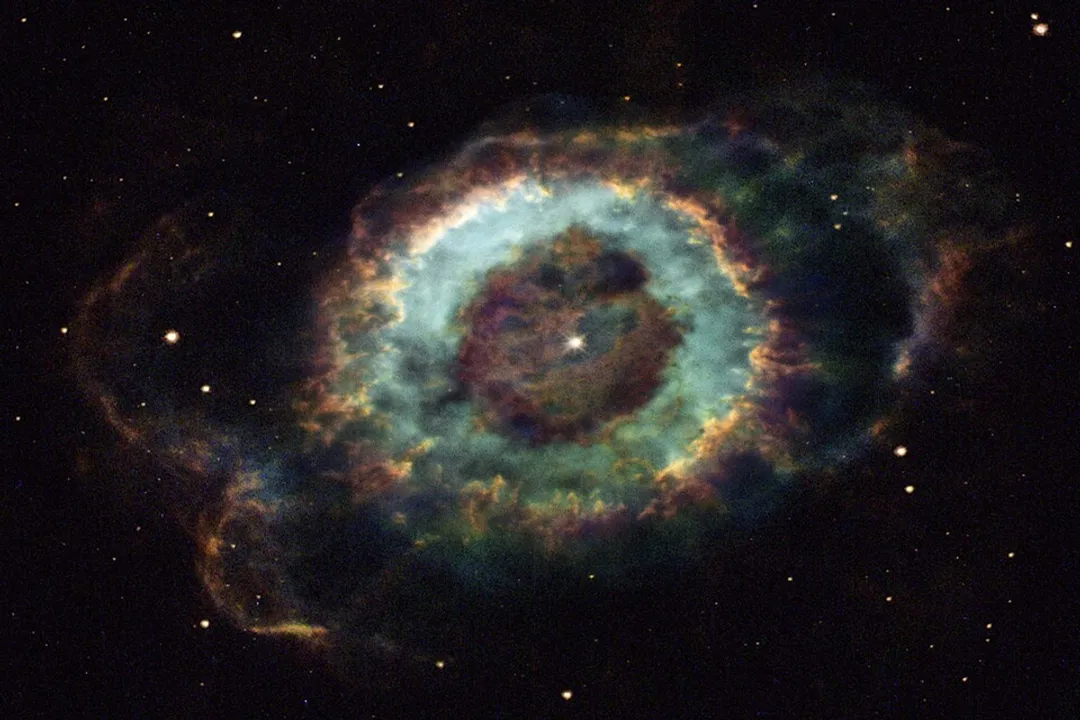
The identity behind the discovery of a celestial object often gets obscured by popular nicknames, and the "Ghost Nebula" is a prime example of this cosmic confusion. To properly answer who made the initial find, we must first distinguish between the primary candidates that share spectral or descriptive kinship: the Little Ghost Nebula and the Ghost Head Nebula. While the term "Ghost Nebula" alone is sometimes assigned to Sh2-136, the objects most frequently detailed in astronomical records that carry the "ghost" moniker are NGC 6369 (The Little Ghost Nebula) and NGC 2080 (The Ghost Head Nebula). The question of discovery, therefore, has two primary answers, depending on which ethereal entity one is observing.
# The Little Ghost's Discoverer
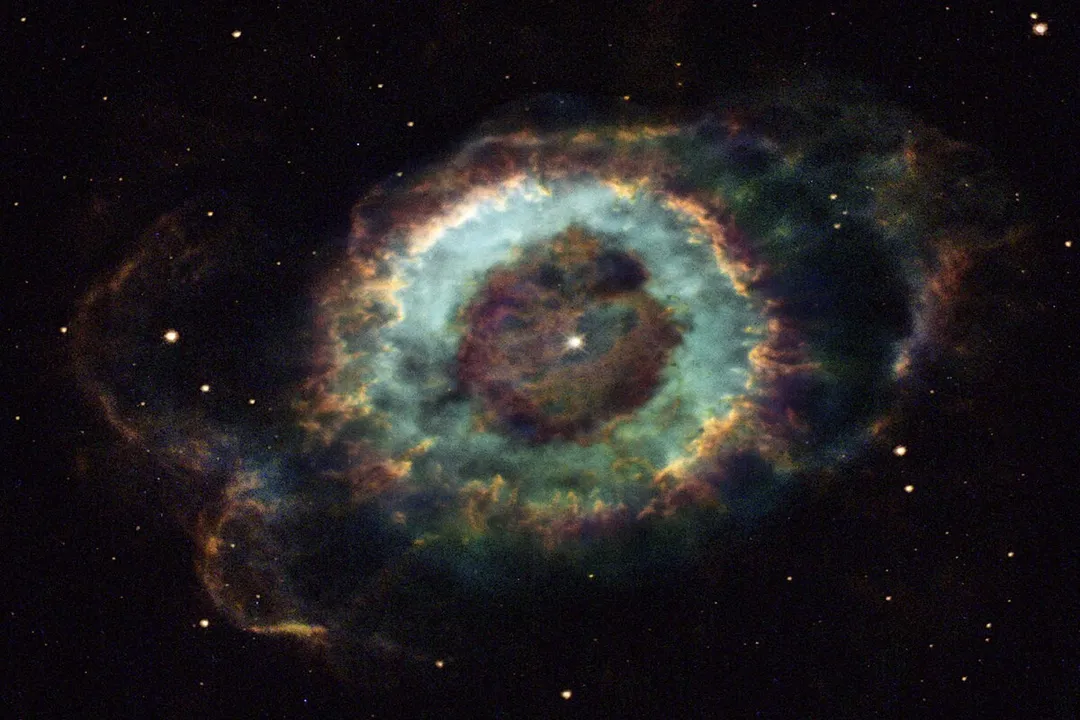
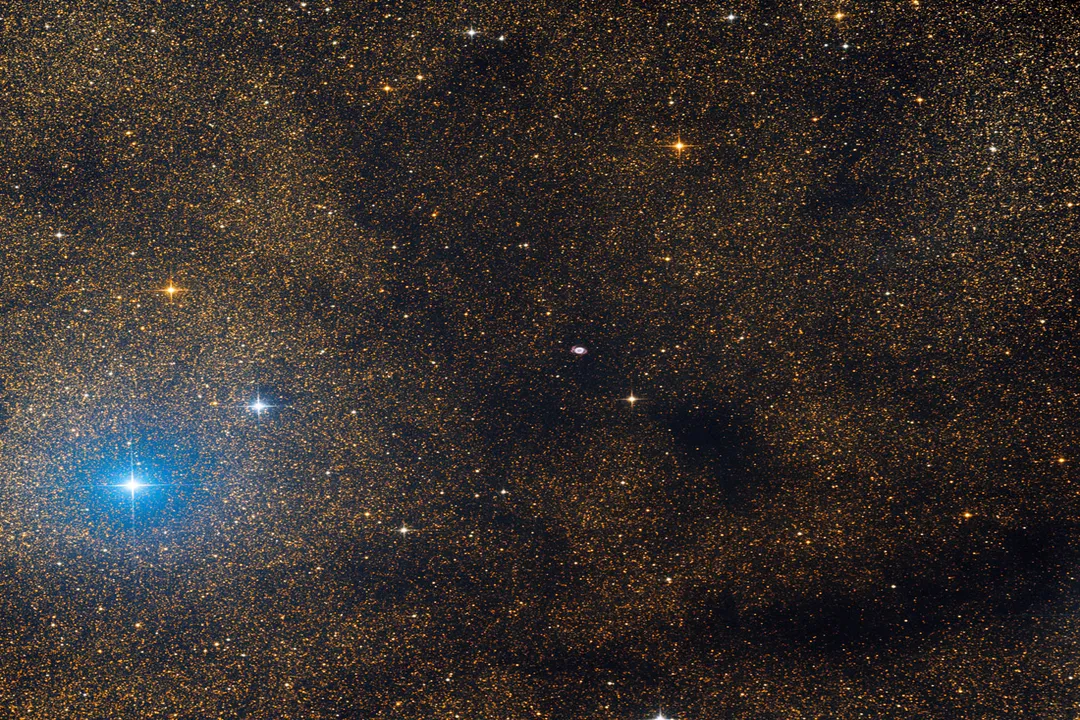
The entity most commonly referred to in detail within these records, the Little Ghost Nebula (NGC 6369), has a clear discoverer tied to the late 18th century: Sir William Herschel. Herschel cataloged this faint, round, and planet-shaped object in 1784. This pinpointing of NGC 6369 happened while Herschel was conducting his extensive surveys of the deep sky.
William Herschel made this significant observation using his powerful reflecting telescope, one boasting a 20-foot length and an 18.7-inch mirror diameter. On May 21, 1784, he formally recorded the object, assigning it the designation IV 11 and noting its appearance as a "Pretty bright, round, pretty well defined planetary disk, 30 or 40" diameter". At that time, William Herschel was diligently mapping the heavens from his base in England, building a reputation as perhaps the most methodical deep-sky observer of his era. His work systematically identified hundreds of nebulae, which laid the foundation for modern catalogs. The Little Ghost Nebula resides in the constellation Ophiuchus.
The very fact that William Herschel could resolve this object, which appears as a pale ring with a darker center even through large amateur instruments today, speaks volumes about the quality of his construction and observation skills for the time. It is remarkable to consider that the very star that powered this glowing gas shroud—a pulsating white dwarf now known as V2310 Ophiuchi—was not clearly understood as the source of the illumination until later analysis. Herschel was merely seeing the light emission caused by the star's intense ultraviolet radiation ionizing the expelled gas shell.
# Cataloging and Confirmation
The initial classification by William Herschel was just the first step in the object's formal documentation process. His son, John Frederick William Herschel, later added the nebula to his own records, cataloging it as h 1981. This continued the family tradition of systematic sky mapping.
The designation that stuck, NGC 6369, arrived much later, thanks to John L. E. Dreyer. Dreyer compiled the New General Catalogue of nebulae and star clusters in 1888. In that definitive work, Dreyer described NGC 6369 as a "very remarkable annular planetary, pretty bright, small, round". This confirmed the object's planetary nebula status, setting it apart from true gaseous nebulae or galaxies.
For those looking to find this object today, the naming convention is crucial. While NGC 6369 is the "Little Ghost Nebula," it is essential to remember that its structure is intricate, involving a bright inner ring with fainter bipolar extensions, and it is estimated to be between 2,000 and 5,000 light-years away. The light we see is colored by glowing oxygen (blue), hydrogen (red), and nitrogen (green).
| Descriptor | Little Ghost Nebula (NGC 6369) | Ghost Head Nebula (NGC 2080) |
|---|---|---|
| Discoverer | William Herschel | John Frederick William Herschel |
| Discovery Year | 1784 | 1834 |
| Object Type | Planetary Nebula | Star-forming Region / Emission Nebula |
| Location | Constellation Ophiuchus | Large Magellanic Cloud (Dorado) |
Observational astronomy often features these layered discoveries. It is an interesting consequence of astronomical cataloging that the son would discover a different object that later received a similar, though distinct, name, while the father found the one known as the "Little Ghost" decades earlier. William Herschel, the father, identified NGC 6369 in the 1780s, whereas his son, John Herschel, discovered NGC 2080 in 1834. This overlapping history of discovery involving both Herschels underscores a key aspect of 19th-century astronomy: the systematic mapping efforts were a family endeavor, leading to inevitable naming overlaps across different catalogs and celestial territories.
# The Ghost Head Nebula Finder
To fully address the "who discovered the ghost nebula" query, we must examine the Ghost Head Nebula (NGC 2080), as this is the other major candidate sharing a similar moniker. This object is not a planetary nebula, which forms from a dying Sun-like star, but rather a dynamic star-forming region located within the Large Magellanic Cloud (LMC).
The discoverer of NGC 2080 was John Frederick William Herschel—William's son—nearly fifty years after his father's initial find. John Herschel cataloged this object in 1834. It is situated in the southern constellation Dorado, far outside our Milky Way galaxy, at a distance of about 168,000 light-years. The namesake for this object comes from its two prominent white patches, known as the "eyes of the ghost". These "eyes" (A1 and A2) are areas where young, massive stars have recently formed and are beginning to carve out bubbles with their stellar winds, yet the surrounding dust has not yet dissipated—a sign that the star formation event is relatively recent, perhaps within the last 10,000 years.
This contrast in object type is fundamental to understanding the nomenclature. William Herschel spotted a Planetary Nebula (NGC 6369), the final gasp of a single star. John Herschel found a Stellar Nursery (NGC 2080), a cradle of new stars. Even though the younger Herschel found his object later, he also established a significant cataloging precedent, particularly during his time observing from the Cape of Good Hope in South Africa.
# Post-Discovery Observations
Following the initial discovery of NGC 6369 by William Herschel, other astronomers continued to refine our view of the Little Ghost Nebula. In 1851, William Parsons, the 3rd Earl of Rosse, turned his massive six-foot reflector, the "Leviathan of Parsonstown," upon the nebula. Rosse was instrumental in noticing its annular shape and specifically pointed out a brighter edge on the northern side. This kind of follow-up observation, using ever-improving terrestrial technology, shows how the first generation of catalogers provided the foundation, but the next generation added essential structural details.
Modern imaging, such as that from the Hubble Space Telescope, reveals even greater complexity, showing a structure of ionized oxygen, hydrogen, and nitrogen creating the blue, red, and green hues, respectively. The analysis now suggests the central star might even be part of a binary system. This evolution of knowledge, from a faint disk seen through an early reflector to high-resolution images revealing chemical composition and possible stellar companions, illustrates the continuous process of astronomical discovery, built directly upon the initial sightings made by pioneers like Herschel.
To summarize the primary discovery: the object most often called the Little Ghost Nebula (NGC 6369) was discovered by William Herschel in 1784. If the reference is to the Ghost Head Nebula (NGC 2080), the discoverer was his son, John Frederick William Herschel, in 1834. The distinction between a stellar death-shroud and a stellar birthplace, first made by two generations of the same astronomical family, remains a key piece of celestial trivia.
Related Questions
#Citations
Little Ghost Nebula - Wikipedia
Little Ghost Nebula (NGC 6369) - Deep⋆Sky Corner
NGC 6369 - IRIDA Observatory
NGC 6369: The Little Ghost Nebula - ISS Tracker
Little Ghost Nebula - Elite Galactic Wiki - ED-Board
Little Ghost Nebula [NGC-6369] Looks More Like A Turtle! I ... - Reddit