Can we see planets around other stars?
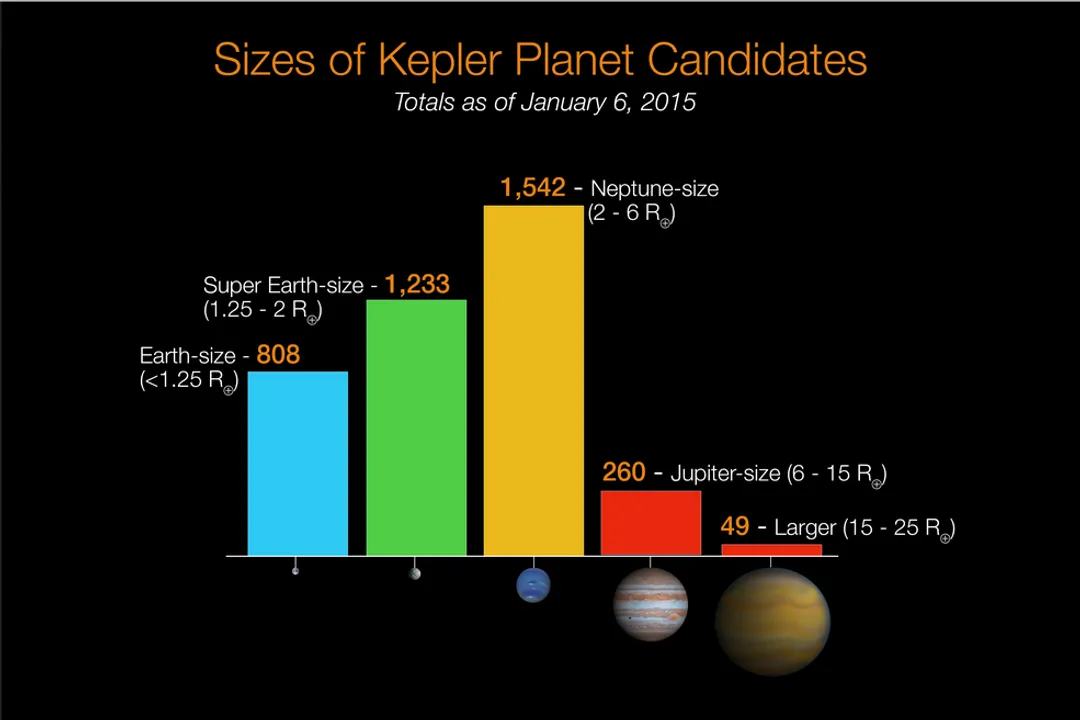
The universe has captivated us with its sheer scale, leading naturally to the question of whether the worlds we know in our own Solar System are singularities—or merely the local representatives of a galactic norm. Astronomers long suspected that other stars must host planets, given that our own system formed as a natural byproduct of the Sun's birth from a contracting cloud of gas and dust. Today, we have moved past speculation; we know for certain that planets orbit stars other than our Sun. These worlds, called exoplanets, are now confirmed in the thousands, with the running tally standing well over six thousand verified worlds discovered in just a few decades.
# Defining Worlds
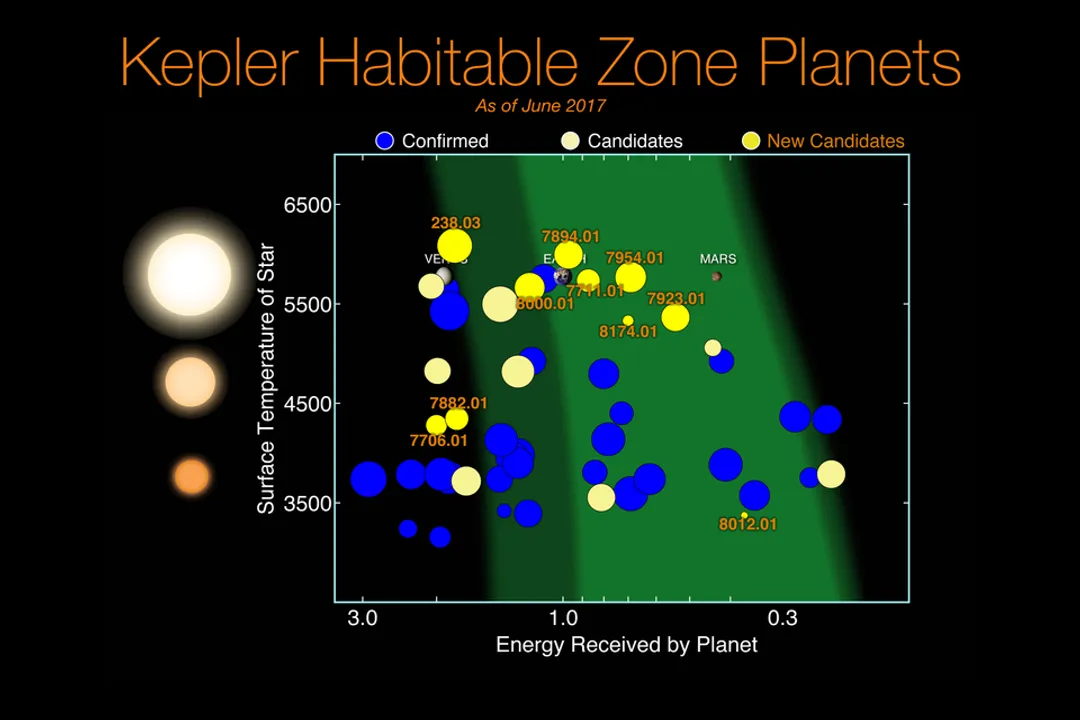
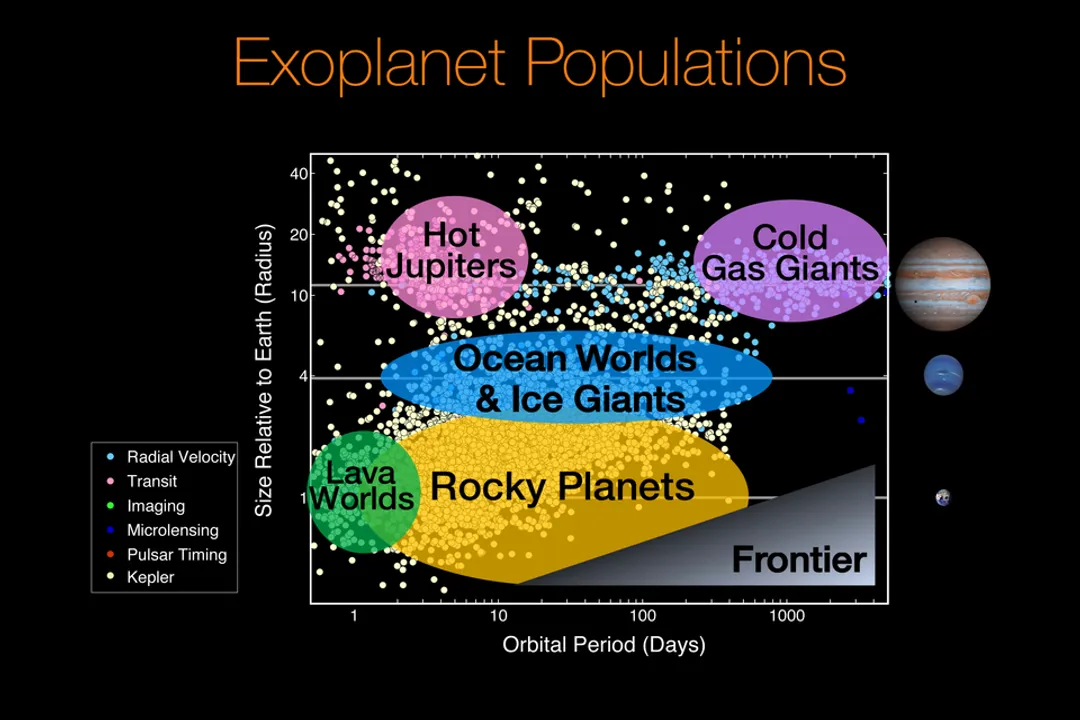
An exoplanet is simply defined as a planet that exists outside of our Solar System. While our immediate neighborhood has eight major worlds (plus smaller bodies), the population of detected exoplanets is accelerating rapidly, suggesting that planets are, in fact, extremely common; evidence is accumulating that there may be, on average, at least one planet per star in the Milky Way. The discoveries range from the closest neighbors, orbiting Proxima Centauri just 4.2 light-years away, to candidates in distant galaxies. These alien worlds exhibit astonishing diversity, forcing us to rethink the planet formation theories derived solely from our solar system. We have found gas giants orbiting incredibly close to their stars—so close they are superheated—earning them the name "hot Jupiters". We’ve also found rocky worlds, water worlds, and planets that appear to be dark as coal.
# Indirect Detection
If these worlds are so plentiful, why can’t we simply point a telescope at them and see them the way we see Mars or Jupiter? The primary hurdle is a devastating combination of distance and contrast. Imagine holding a grain of rice next to a powerful 100-Watt light bulb; someone far down a dark hall will see only the bulb, not the rice. An exoplanet is like that grain of rice. Even the mightiest planet, like Jupiter, would appear as a billionth of the brightness of its host star when viewed from the nearest star system, Alpha Centauri. This overwhelming glare makes direct observation nearly impossible; even our largest instruments can generally only capture a planet as a faint, unresolved dot of light. The reason we have confirmed thousands of them is that astronomers became experts at detecting the effects a planet has on its star, rather than seeing the planet itself.
The effectiveness of these indirect methods is apparent when considering the data: observing a planet cross the face of its star causes a dimming of only a tiny fraction of one percent. Contrast this with direct imaging, which must contend with the star being roughly a billion times brighter than the planet's reflected light. This difference in required sensitivity explains the reliance on clever gravitational and orbital mechanics.
# Measuring the Stellar Tug
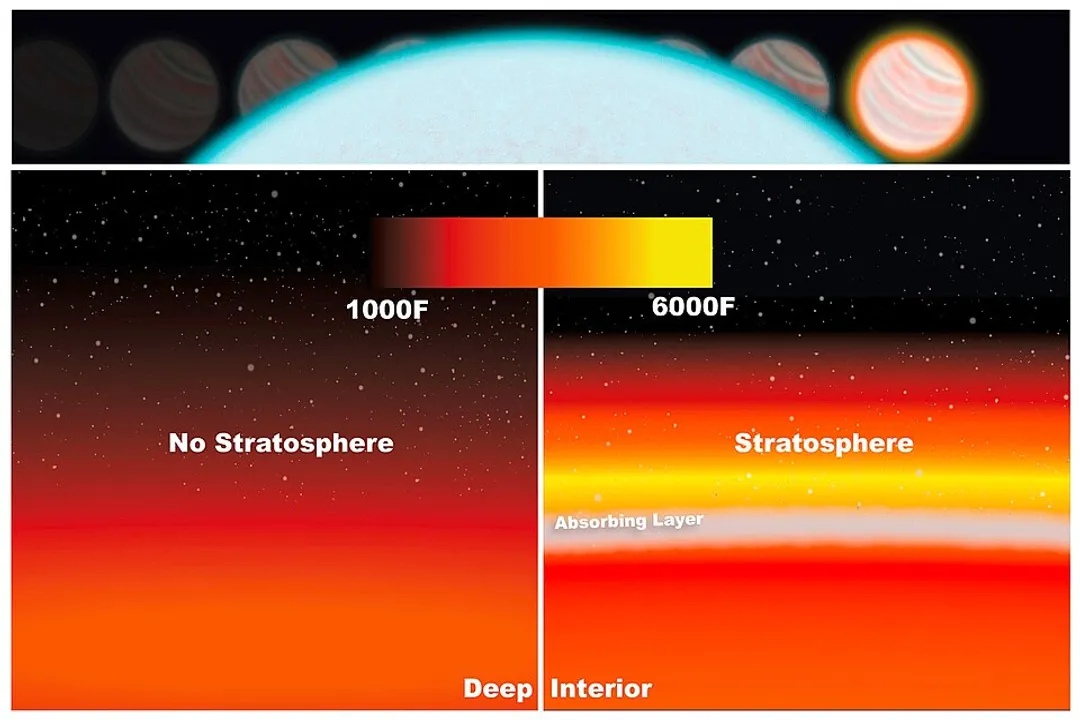
One of the most successful techniques is the radial velocity method, often called the Doppler technique. This method relies on the fact that a planet and its star orbit a common center of mass—the balance point of a seesaw between the two bodies. Because the star is much more massive, this center of mass usually lies inside the star, but the star still executes a slight "wobble" around that point. As the star moves toward Earth in its orbit, its light spectrum is slightly shifted toward the blue end (blueshifted); as it moves away, the light shifts toward the red (redshifted). This subtle spectral change, analogous to the changing pitch of a passing siren, can be measured with highly sensitive instruments.
| Feature | Radial Velocity (Doppler) Method | Transit Method (Photometry) |
|---|---|---|
| What is measured? | A star’s back-and-forth motion toward/away from Earth (Doppler shift) | A star’s temporary dimming when a planet passes in front |
| Preferred Target | Massive planets close to their star (Hot Jupiters) because they create the largest wobble | Planets whose orbits are perfectly aligned edge-on relative to Earth |
| Primary Result | Planet’s minimum mass and orbital period | Planet’s diameter (size) and orbital period |
This method excels at finding massive planets orbiting near their stars, as their gravitational influence causes the largest, most easily detectable Doppler shift. While older claims involving Barnard's Star in the 1960s were highly controversial and ultimately doubted due to observational difficulties, modern versions of this technique have confirmed many worlds.
# The Shadow Trick
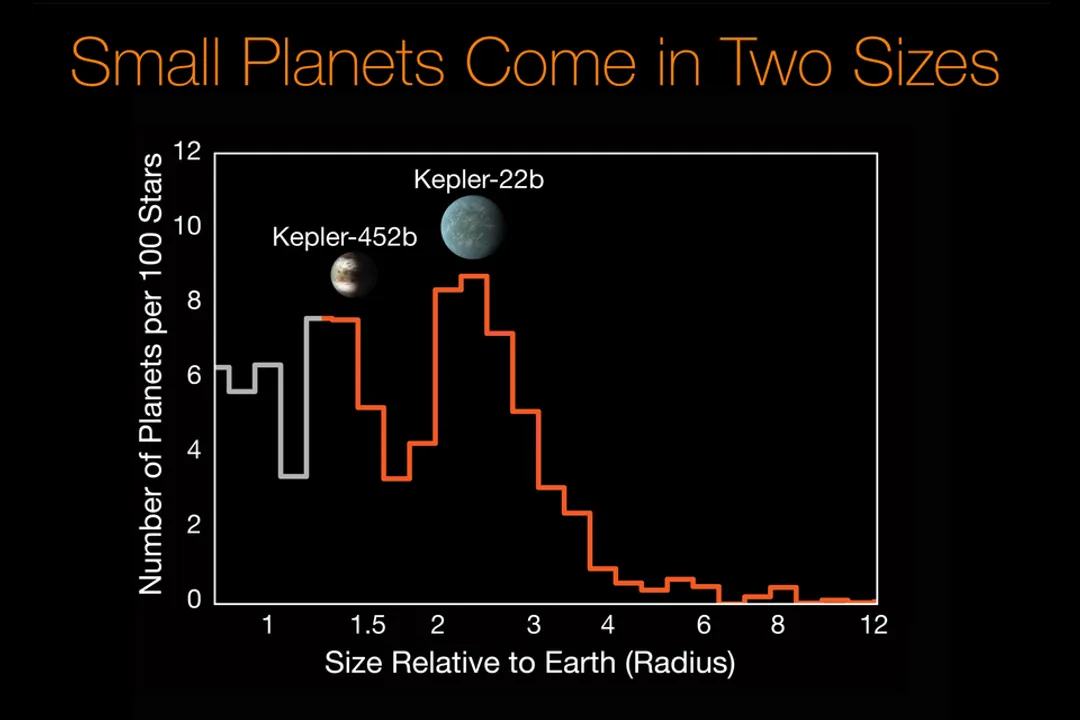
The other powerhouse technique is the transit method. This happens when the planet’s orbit is aligned precisely so that it crosses directly in front of its star from our perspective—a mini-eclipse. This event causes a measurable, fractional reduction in the star’s apparent brightness. While the dimming is minute, it is measurable and periodic, which confirms the planet’s existence. This method is biased toward finding planets with small orbits or those whose orbital plane is perfectly oriented toward us, but it has been the workhorse for missions like Kepler, allowing astronomers to estimate the planet’s diameter and the length of its year.
# Direct Light
True "seeing"—capturing the reflected light of the planet itself—is the ultimate goal, as it provides information about the planet’s color, temperature, and atmosphere. Direct imaging is possible, but it is limited to large planets orbiting far away from their host stars, making the spatial separation large enough for current optics to physically block the star's light using an accessory called a coronagraph. Even with these techniques, the resulting image is merely a point of light, not a resolved world. For instance, the James Webb Space Telescope (JWST) has taken direct images, but these are generally of gas giants and tell us about their emitted thermal light or reflected light, not surface features.
# Resolving Surfaces
The step from seeing a point of light to discerning surface features like continents, oceans, or weather patterns demands an almost incomprehensible leap in angular resolution. If we could resolve features the size of Earth’s continents, we might gain significant insight into habitability. However, the resolution required to see a 1,000-kilometer feature on a planet light-years away requires a telescope significantly larger than anything currently operational or even under construction. The limitation stems from the physics of light diffraction: to achieve the necessary sharpness, one would theoretically need a single mirror on the scale of kilometers across, a feat far beyond current engineering practice.
While some concepts involve combining light from multiple telescopes (interferometry) separated by tens of thousands of kilometers, achieving the necessary stability and synchronization in the optical regime is immensely difficult compared to radio waves. An alternative, truly grand idea involves using the Sun’s own gravity as a giant lens, but this requires placing a receiver telescope far beyond Pluto, demanding decades just for travel time. Even if we could collect enough photons via very long exposures, the planet’s rotation would smear any surface features into an uninterpretable blur unless observations were timed precisely with the planet’s rotation—a massive undertaking. For now, the ability to see surface features remains firmly in the realm of future technology, perhaps decades away. Current efforts focus instead on analyzing the light filtered through the planet’s atmosphere as it transits, allowing us to catalog gases and estimate temperatures.
Related Questions
#Citations
Planets Around Other Stars - NASA Science
Exoplanet - Wikipedia
Can we see surface of planets outside of solar system? : r/askscience
[PDF] The Search for Planets Around Other Stars
Seeing in the Dark . Astronomy Topics . Extrasolar Planets | PBS
Extrasolar Planets