Why can't we always see the stars that are all around us?
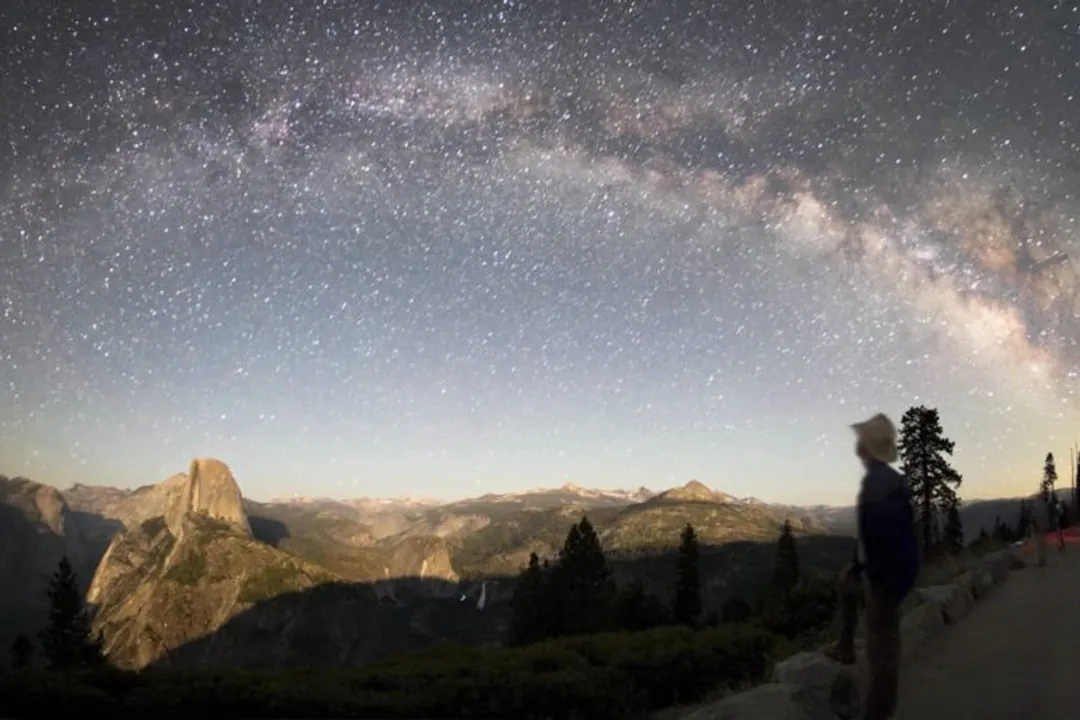
The night sky, in theory, should be absolutely blazing. We are situated in one spiral arm of a galaxy containing hundreds of billions of stars, and yet, when we step outside away from a city, we might only count a few thousand visible points of light overhead. The simple fact is that the stars are always there, surrounding us in three-dimensional space, but numerous factors conspire to keep the vast majority invisible to our unaided eyes. [2] To understand why the cosmos often appears sparsely populated, we must look at what is happening between those distant suns and our retinas, starting with the biggest interruption of all.
# Daytime Blockade
The most immediate and obvious reason we cannot see the stars during the day is the Sun. [7] Our own star is so immensely bright and so close, relatively speaking, that its light completely overwhelms the faint light arriving from other stars. [2] Think of trying to see a small candle flame from across a football field while standing directly next to a stadium floodlight—the comparison is not far off. The Sun’s brilliance scatters through our atmosphere, creating the blue sky we see, which acts as a pervasive, brilliant background veil that washes out anything dimmer. [7]
This highlights a crucial aspect of stellar observation: visibility is always a battle against contrast. The stars are still in the sky during the day; we just lack the contrast necessary to detect their light above the background brightness caused by our nearest star. [2]
# Terrestrial Veil
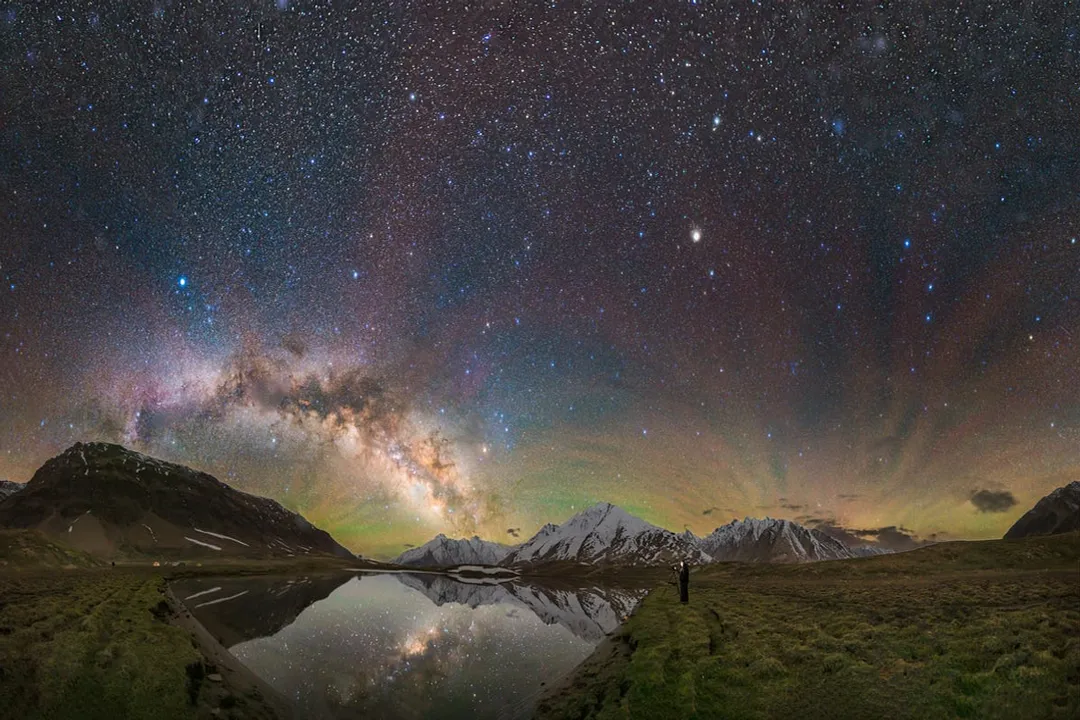
Once the Sun sets, the primary obstacle is removed, but the sky is rarely perfectly dark. The two main terrestrial obstructions are the atmosphere itself and the light we generate. [6]
# Atmospheric Interference
Even on a clear, moonless night, the Earth's atmosphere affects what we see. Gases, dust particles, and water vapor scatter starlight as it passes through the air above us, slightly dimming everything. [6] While this effect is usually minor compared to light pollution, it becomes significant when dealing with the faintest stars, those barely at the limit of human perception. Heavy clouds, fog, or thick haze will, of course, block almost everything from view, similar to how heavy curtains stop light from entering a room. [2]
# Light Pollution
The greatest modern threat to stargazing is artificial skyglow, commonly called light pollution. [3] This occurs when excessive, misdirected, or unnecessary artificial lighting escapes upward into the atmosphere, where it scatters off air molecules and airborne particles, creating a luminous dome over populated areas. [3]
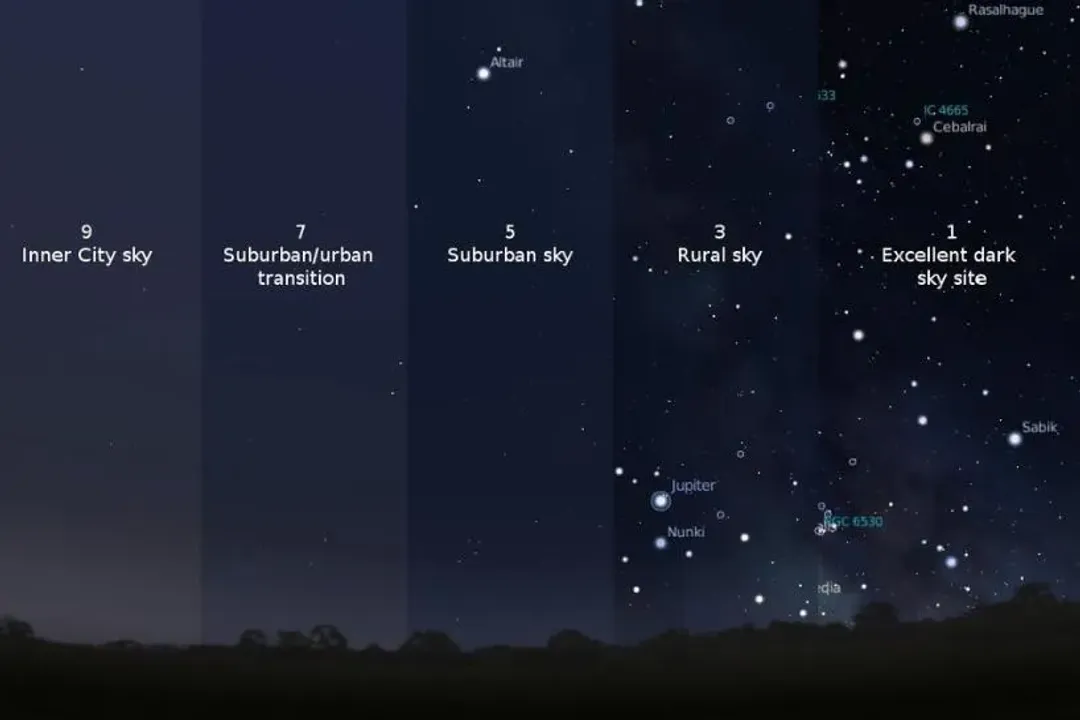
To put the effect of light pollution into context, imagine you are trying to hear a whisper (a faint star) from across a crowded room (the dark sky). Light pollution is like turning up the background music in that room. A star of apparent magnitude 8, which might be visible on a truly dark mountain top, could be completely lost in the glare of a typical suburban sky, where light pollution elevates the background sky brightness by a factor of ten or more compared to a truly dark location. [3] This isn't just about blocking the light; it's about drowning out the signal entirely. In many urban environments, the effective sky background is so bright that only the brightest handful of stars, perhaps the planets, and the Moon are visible, hiding potentially millions of stars that are physically present overhead. [3]
# Distance Fading
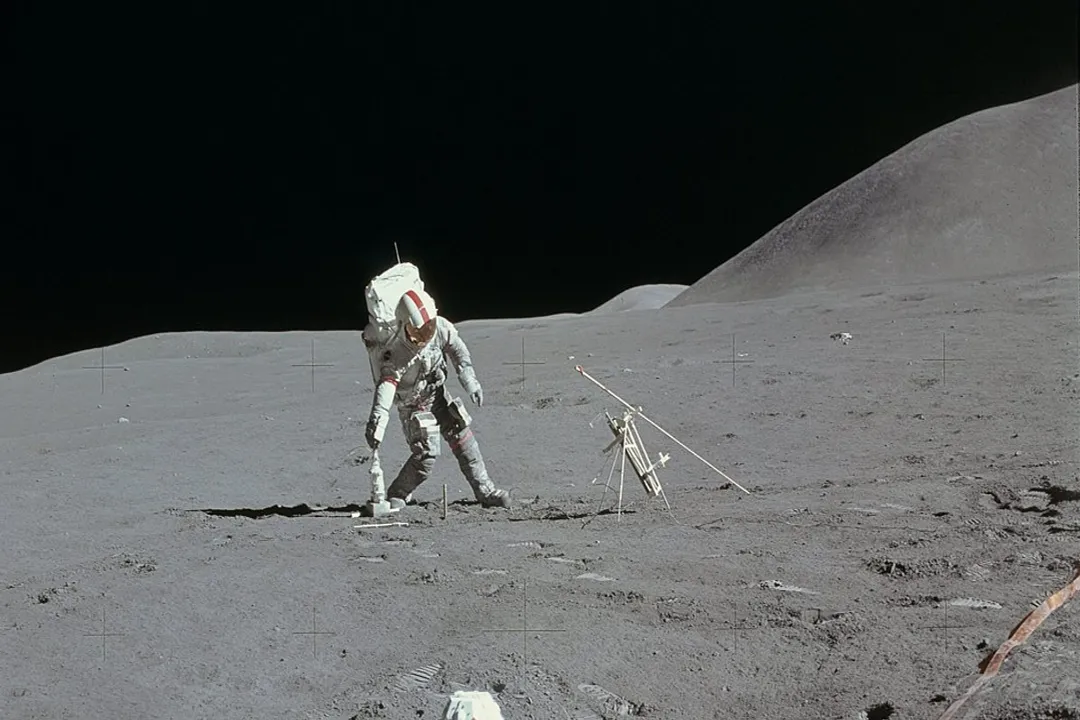
Even if we could place an observer in a perfectly dark location, far from any terrestrial light source, and ensure the atmosphere was crystal clear, we would still only see a tiny fraction of the stars that technically surround us. This is a matter of sheer, astronomical distance and the physics of light.
The light we see from other stars has traveled for years, decades, centuries, or millennia to reach us. [2] Light intensity follows the inverse-square law; the farther away a light source is, the rapidly dimmer it appears. Because the stars are incredibly distant, the light they emit, even from massive, bright stars, spreads out so much that only the very closest or intrinsically most luminous ones can overcome the visual threshold of the human eye. [2]
If you look at the sky, the stars that are visible are those whose intrinsic brightness, combined with their distance, results in an apparent magnitude bright enough for your eye to register, usually around magnitude +6.5 under ideal conditions. [7] The vast majority of stars are simply too far away to appear as anything more than a point of light, or more often, they are simply too faint to detect against the darkness. [2]
# Earth's Orbit
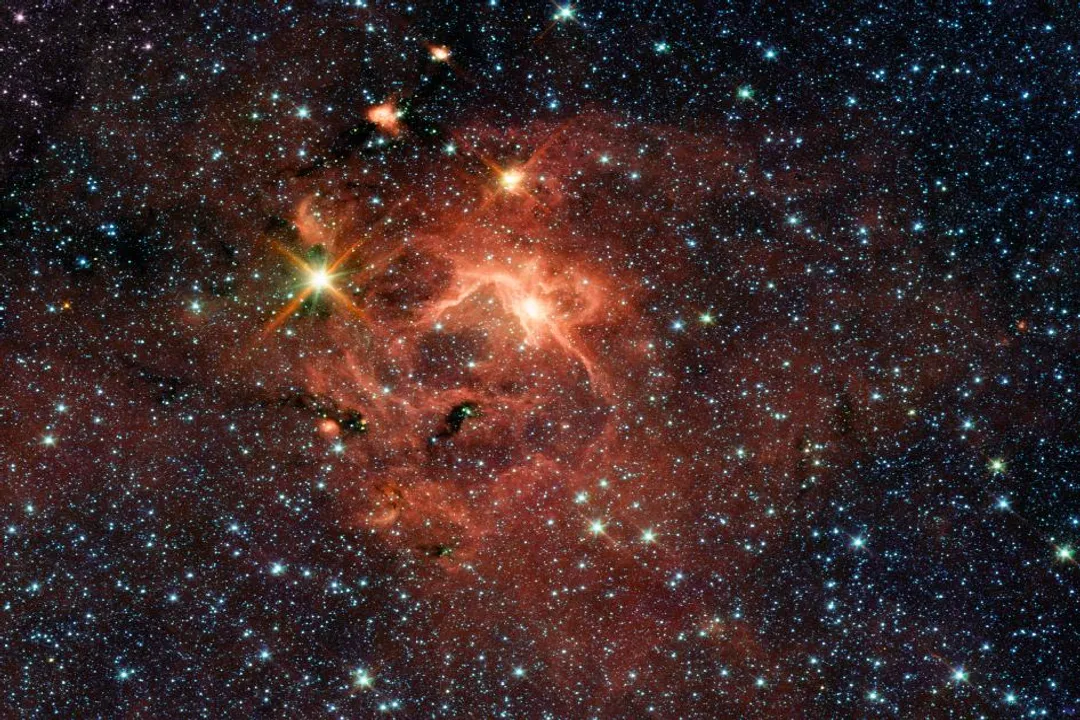
Another critical factor limiting the number of stars visible at any one time is our planet’s position in space. We do not hover in a fixed spot relative to the galaxy; we are orbiting the Sun. [1] This orbital motion means that our view of the distant cosmos is constantly changing throughout the year.
The Earth itself blocks half of the entire universe from view at any moment. While you are facing the night sky, the stars on the other side of our planet are blocked by the Earth beneath your feet. [1] Furthermore, as the Earth travels around the Sun, the direction we face at midnight changes systematically over six months. The stars visible in the winter sky are different from those visible in the summer sky because our planet is looking in opposite directions in its orbit at those times. [1] This means that even if you had perfect viewing conditions every night, you would only ever see roughly half of the celestial sphere in a single night, and over the course of a year, you would eventually see all the stars in your hemisphere, but never all the stars in the entire galaxy from one spot on Earth. [1]
# Apparent Fixity
When looking up, the stars seem to stay in the same patterns night after night, month after month, forming constellations like Orion or the Big Dipper. This apparent fixity suggests they are not moving relative to each other. [9] However, this stability is an illusion created by their incomprehensible distance.
The stars are moving through space at tremendous speeds, often hundreds of thousands of miles per hour. [9] Because they are so far away, the slight angular change in their position over human timescales is negligible. It takes thousands of years for these proper motions to result in a noticeable shift in the constellations we observe. [9] So, while the stars around us are constantly in motion, their relative positions appear unchanged over the span of a human lifetime, reinforcing the idea that the visible few are a constant backdrop rather than part of a dynamic, unseen population.
# Maximizing Visibility
Given these constraints—daylight, light pollution, atmospheric distortion, and orbital perspective—it becomes clear that seeing the full glory of the night sky requires careful planning and the right environment.
One vital step is accepting that true darkness is rare near civilization. If you live in a major metropolitan area, you are fighting an uphill battle against skyglow. [3] To see anything beyond the brightest objects, you must travel. Even moving ten miles away from a city center can dramatically decrease the background brightness and reveal fainter stars that were previously invisible. [3]
Planning a viewing session requires more than just checking the weather. Before heading out, use an online light pollution map to assess your viewing location's darkness rating, often presented on scales like the Bortle Scale. Furthermore, allow your eyes at least twenty minutes to fully adapt to the dark—this process, called dark adaptation, is critical. During this period, avoid any bright light, including the screen of your phone. If you must check notes, use a red-light flashlight, as the red spectrum light interferes least with the rods in your eyes responsible for low-light vision. This small adaptation window can reveal dozens more stars than you see in the first five minutes.
The takeaway is that the stars are not hiding from us through malice or any singular physical barrier, except the Sun during the day. They are rendered invisible by the vastness of space, the limitations of our sight, and the light we scatter back into the sky from our own world. [2][7] The thousands of stars we do see represent the very fortunate few whose light has managed to traverse unimaginable distances only to land right on our retina, unimpeded by local glare or atmospheric interference. [2]
#Videos
Why You'll Never See the Stars Again - YouTube
Why Can't We See The Stars Anymore? - YouTube
Related Questions
#Citations
Why don't we see different stars when we're at the opposite side of ...
Why are there no visible stars around us except for the Sun ... - Quora
Light pollution — why I cannot see as many stars in my night sky?
Why You'll Never See the Stars Again - YouTube
Why can't we see stars in the day time like we do at night?
Why are there no stars in most space images? - The Planetary Society
Why do we see the same stars every night - Facebook
Why are all the stars fixed in space? - West Texas A&M University