How are we able to see stars so far away?
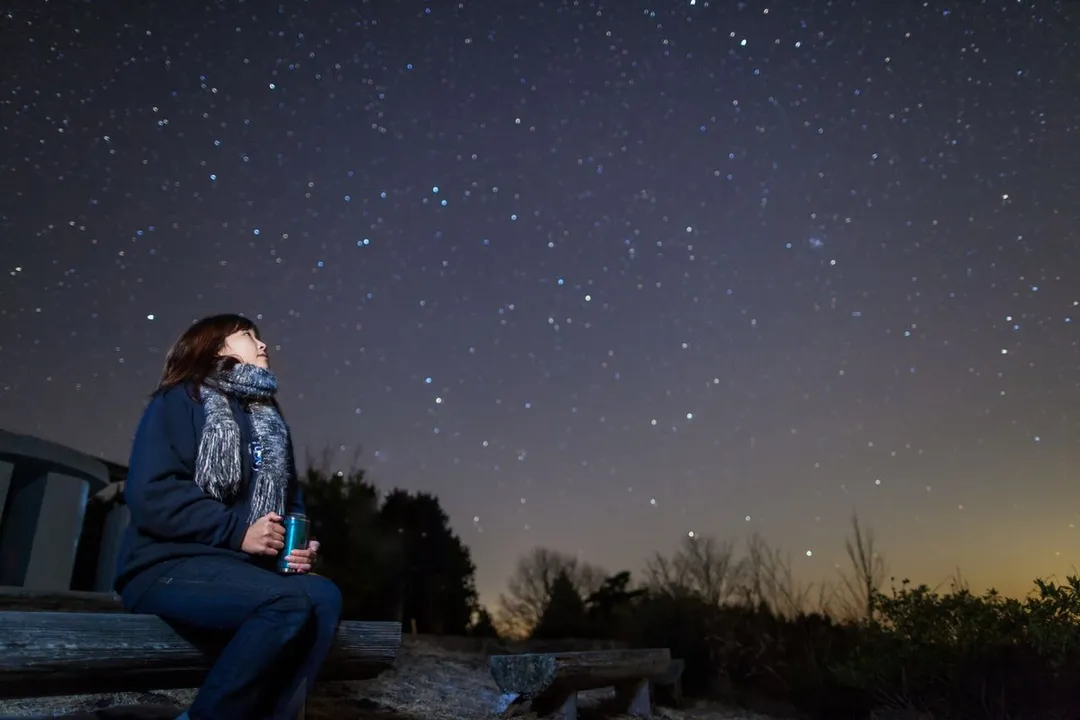
The sheer scale of the cosmos presents an immediate, almost incomprehensible puzzle: how does the faint glimmer from a star millions or even billions of light-years away manage to traverse that gulf and register on our eyes or in our instruments? This ability hinges on two primary factors: the unwavering speed of light and the incredible intrinsic luminosity of the stars themselves, compounded by our capacity to collect that ancient light. [2][5] It feels like magic, but it is purely physics operating across unimaginable distances.
# Speed Barrier

The fundamental principle allowing us to see anything beyond our immediate surroundings is that light travels very fast, though this speed is finite. [10] Light moves at approximately 299,792 kilometers per second in a vacuum. [10] While this speed is staggering from our everyday perspective—allowing us to circle the Earth about 7.5 times in a single second—it becomes profoundly slow when measured against interstellar and intergalactic space. [10]
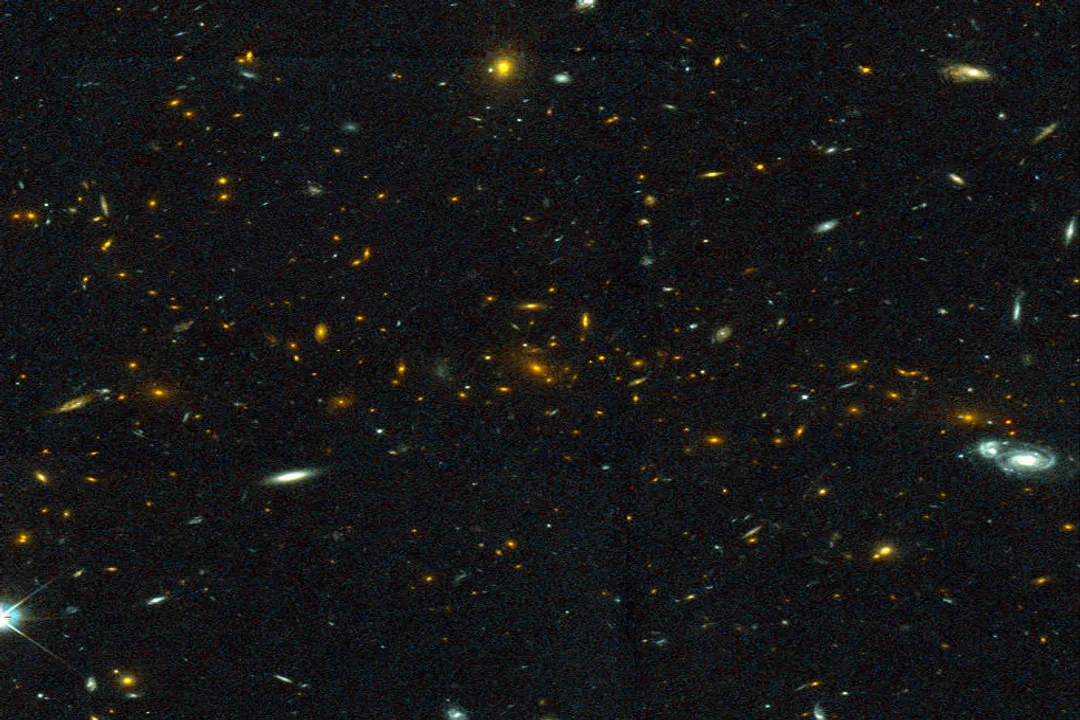
The unit we use to express these enormous distances is the light-year, which is the distance light travels in one Earth year, roughly $9.46$ trillion kilometers. [10] When we observe a star that is, say, $400$ light-years away, we are not seeing it as it is now, but as it was $400$ years ago, when that light left its surface. [7][3] The light we see from the most distant galaxies has been traveling for billions of years, offering us a direct window into the universe's remote past. [5]
# Stellar Luminosity
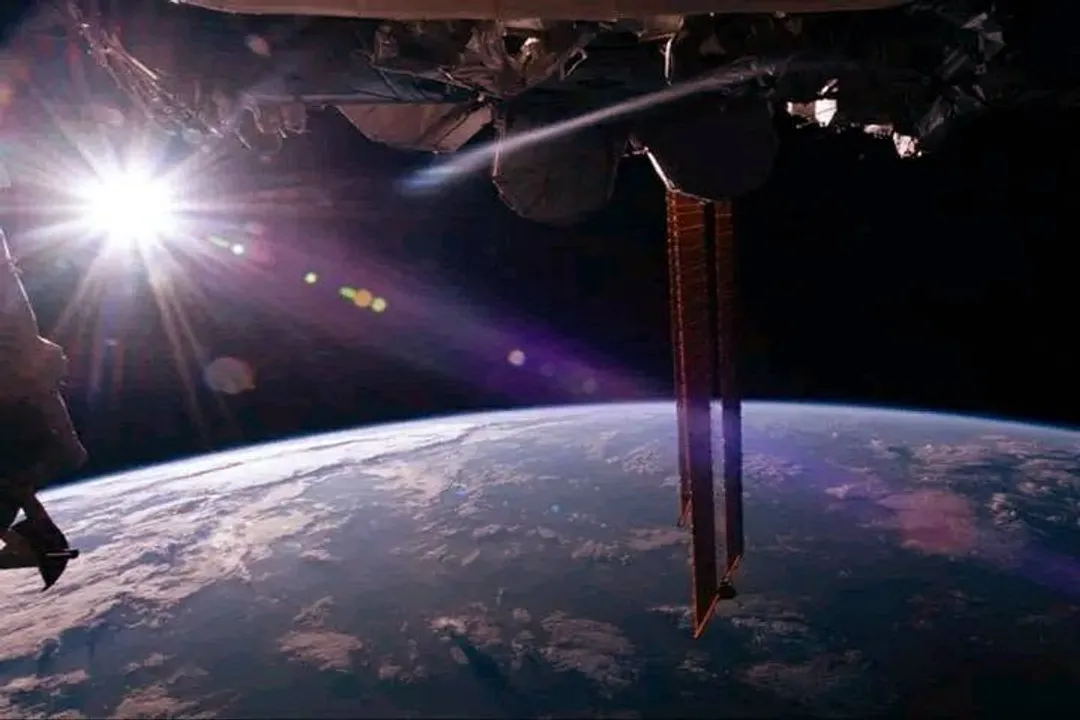
If light takes so long to arrive, the star must be incredibly bright to be visible at all after such a massive dilution of its photons. [2] Stars vary drastically in their actual energy output, known as luminosity. A star like our Sun is a mid-range performer, but many others put out vastly more energy. [2]
Consider the difference between the light reaching us from a nearby star and a very distant one. On Earth, the perceived brightness of an object follows the inverse-square law: if you double the distance to a light source, its apparent brightness drops to one-fourth of its original intensity. [2] For a star to remain visible across millions of light-years, it must possess an intrinsic luminosity far exceeding the Sun's. [2][4] Some stars, known as supergiants, are hundreds of thousands of times more luminous than the Sun. [2] It is these powerful objects, radiating immense energy, whose light can survive the cosmic journey to reach us.
The contrast between terrestrial visibility and celestial visibility is stark. If you stand on a clear night, you might only be able to see a few kilometers to the horizon or around the next bend in the road. [6] This is because ground-level objects are either too dim, too small, or their light is blocked by intervening matter and the Earth's curvature. [6] Stars, however, are essentially point sources of light, unimpeded by terrestrial obstacles, and their light beams are directed straight toward us, minimizing atmospheric scattering along the path relative to the sheer distance they cover. [6]
Here is a simplified comparison showing the difference in scale:
| Feature | Terrestrial Visibility (e.g., object on Earth) | Stellar Visibility (e.g., distant star) |
|---|---|---|
| Maximum Range (Unassisted Eye) | A few kilometers | Up to several thousand light-years (naked eye) |
| Limiting Factor | Obstruction, atmosphere, curvature, low luminosity | Intrinsic Luminosity, distance, atmospheric interference |
| Light Travel Time | Instantaneous (for practical purposes) | Years to Billions of Years |
# Gathering Faint Signals
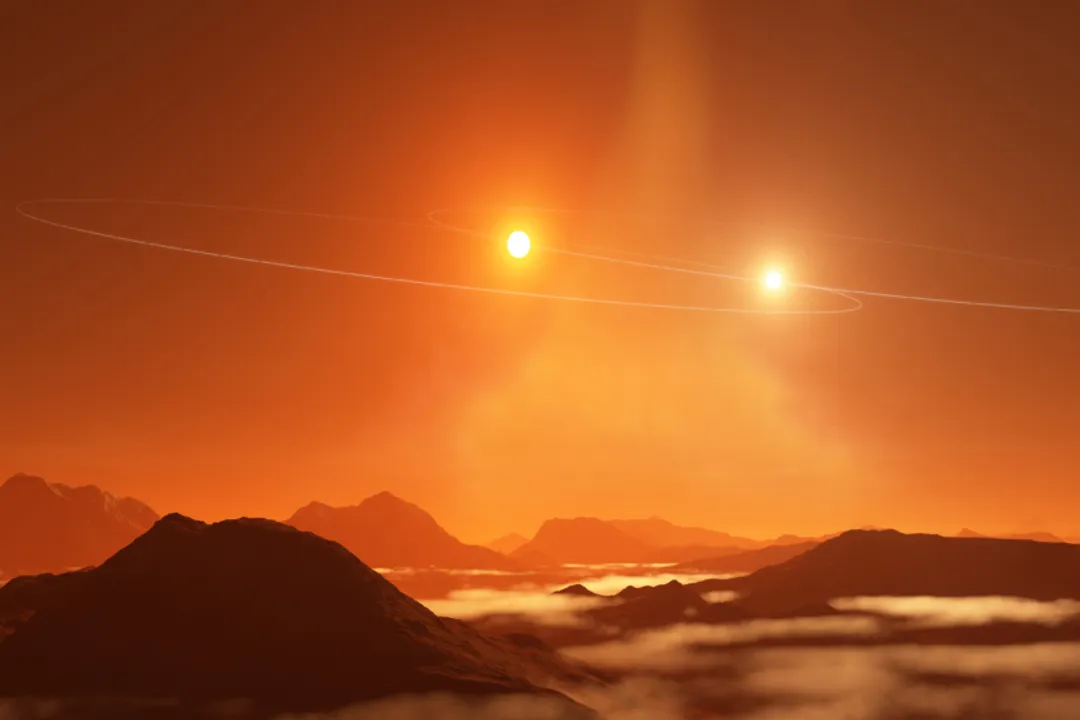
While a star's innate brightness is crucial, the human eye, even in perfect darkness, has physical limitations regarding how many photons it can collect. [1] For objects millions or billions of light-years away, the light collected by a single eye is woefully insufficient to trigger a visual sensation. [5]
This is where technology steps in, transforming the viewing experience from an act of mere sight into an act of data collection. Telescopes function as giant "light buckets." The larger the diameter of the primary mirror or lens, the more photons it can gather and focus onto a detector, like a camera sensor or an eyepiece. [5] A massive telescope might collect light millions of times more effectively than the human eye. [2] This increased light-gathering power allows astronomers to detect sources that are simply too faint to be seen otherwise, pushing the boundaries of visibility out to billions of light-years for the most powerful instruments. [5] The ability to see ancient, distant light is fundamentally an engineering triumph in photon collection.
If you are setting up a backyard telescope for the first time, remember that your primary goal isn't magnification; it's light capture. A larger aperture telescope, even at lower magnification, will reveal fainter, more distant objects than a small telescope cranked up to its highest power, because the bigger mirror collects more of that ancient, diluted starlight. [2]
# The Temporal Paradox
The fact that we are looking into the past raises a fascinating, practical question: how do we know the star is still there? If a star is $500$ light-years away, and it winked out of existence $100$ years ago, the light from that death event won't reach us for another $400$ years. [3]
The only way we know a star is currently shining is by observing it now and seeing the light it emitted some time ago, assuming it hasn't changed since that light left. [3] For relatively nearby stars, the time difference is small enough that this assumption is safe; if we see Sirius tonight, we are confident it is shining this morning, too. [3] When observing a galaxy billions of light-years away, however, we are indeed studying a snapshot of the universe from an era before Earth existed, a time when those stars were at a completely different stage of their lives. [5][3] We don't know they are there right now, but the physics governing stellar evolution is understood well enough to suggest that most stars in a galaxy are not all going to explode or fade simultaneously, so the statistical probability of the observed light originating from a currently existing object remains very high. [3]
# Distant Light Reality
The light reaching us from the cosmos is not just dim; it is also redshifted due to the expansion of space itself. [1] As space expands while the photons travel, the wavelength of the light gets stretched, shifting it toward the redder, lower-energy end of the spectrum. [1] For the very farthest objects, this effect is so pronounced that their visible light has been stretched all the way into the infrared or radio portions of the spectrum. [1] This means that while we can see those objects, it often requires instruments specifically tuned to detect these longer, stretched wavelengths, like the powerful radio telescopes operated by facilities such as the National Radio Astronomy Observatory. [1][5] Our eyes are limited to a narrow band of this spectrum, which is another reason sophisticated instruments are necessary to map the deepest reaches of the universe. [6]
Related Questions
#Citations
How can we see stars when they are so far away? - Reddit
How Can We See Stars in the Night Sky When They Are So Far Away?
Since a star's light takes so long to reach us, how do we know that ...
How is it possible to see stars-light, from stars millions of light years ...
Why can we see stars that are extremely far away from our earth, but ...
When we look at the night sky, we're looking back in time
How can we see stars if they are hundred years of light far from the ...
Why can we see stars from Earth but not in space? - Facebook
How are astronomers able to measure how far away a star is?