Why are there no stars near us?
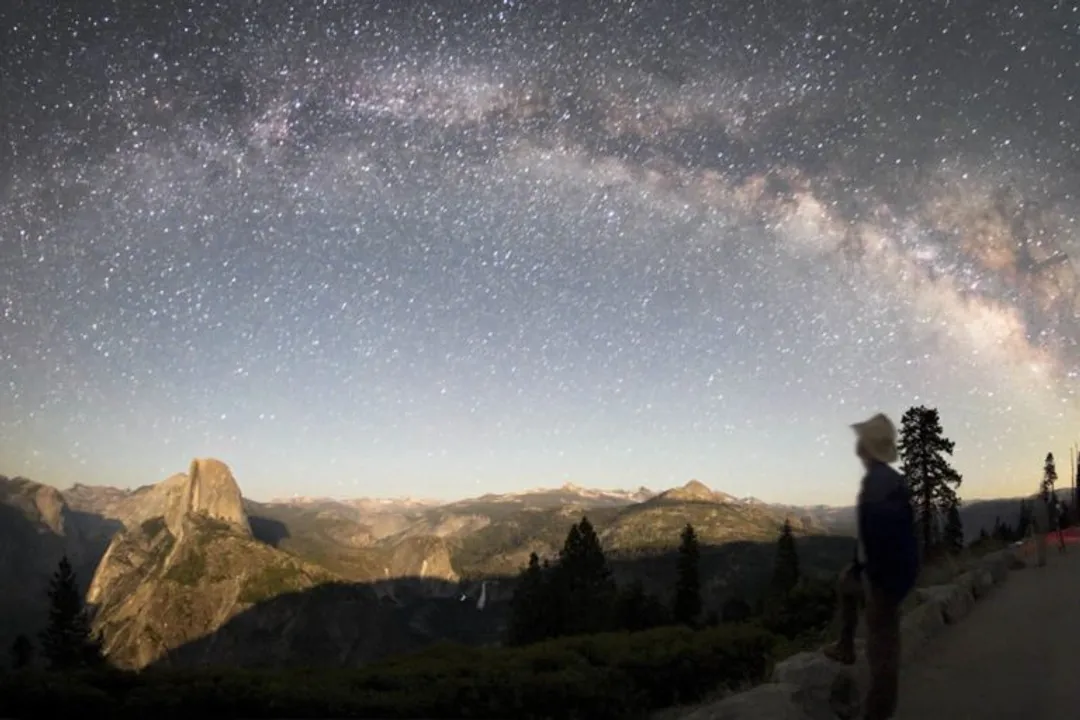
It seems counterintuitive that in the grand expanse of the night sky, filled with countless points of light, our immediate solar neighborhood is effectively empty save for our own Sun. If you look up at night, every single star you can see is unimaginably far away, and within the physical boundary of our own Solar System, there are no other stars present. This absence isn't a local failure or a strange cosmic accident specific to us; rather, it’s a consequence of how stars form, the immense scale of space, and the very definition of a solar system itself.
# System Bounds
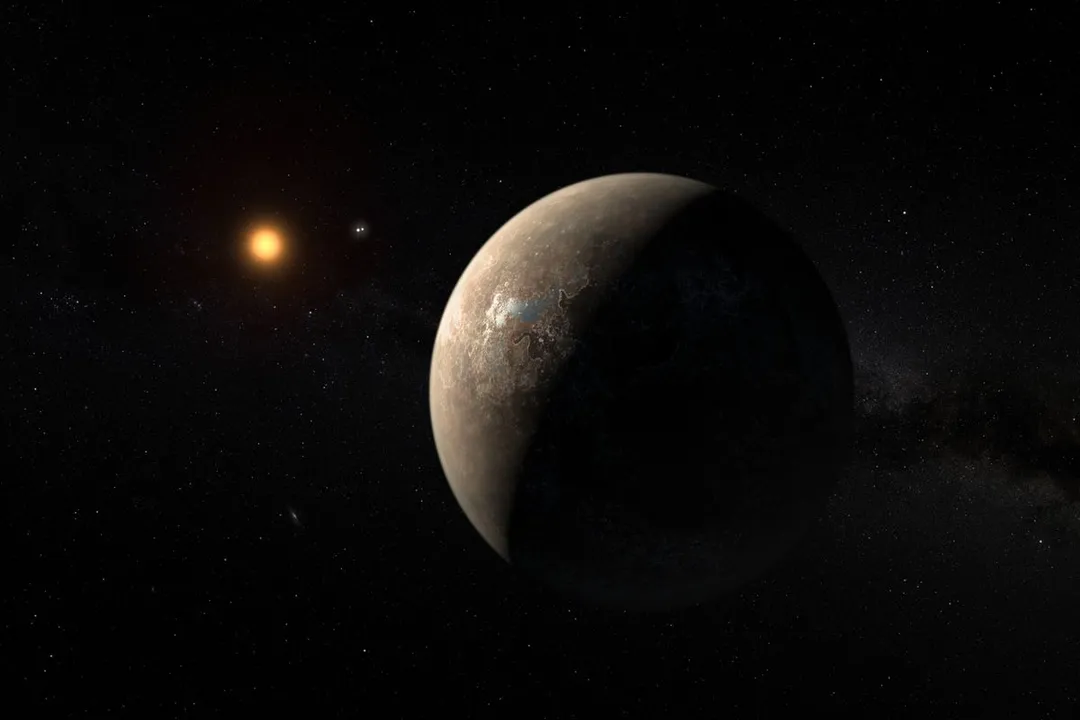
The concept of our Solar System is fundamentally defined by the gravitational dominance of the Sun. A solar system, by definition, is gravitationally bound to a single primary star. If another star were truly "near us"—meaning inside the region primarily controlled by the Sun's gravity—it would begin to significantly interfere with the orbits of the planets, including Earth.
The Sun’s gravitational sphere of influence extends far beyond Pluto and the Kuiper Belt, encompassing the Oort cloud, a theoretical shell of icy bodies orbiting the Sun at distances perhaps up to a light-year away. For a second star to be considered a stable resident of our system, it would need to orbit the Sun at a relatively close distance, much like the planets do, or at least orbit the Sun in a stable binary relationship. The formation process that created the Sun and the planets did not result in another star being born right next to it within that same initial cloud of gas and dust.
While stars can certainly exist in binary or multiple-star systems—where two or more stars orbit a common center of mass—our Sun appears to be a solitary entity in its immediate vicinity. In these multi-star configurations, the stars are often bound much closer together than our Sun is to the next star over. When other stars do interact with our local region, they generally pass by at distances so great that their gravitational effects on the outer Oort cloud are minimal over timescales relevant to planetary stability. The current arrangement reflects a relatively stable, single-star formation history for our corner of the galaxy.
# Nearest Neighbors
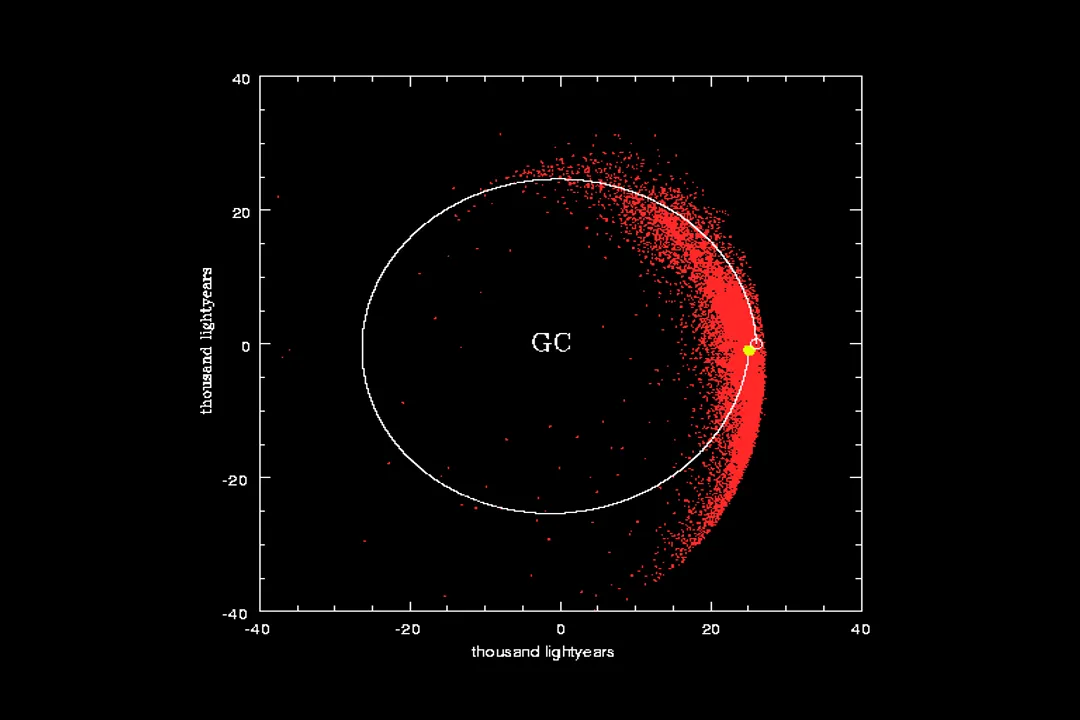
When we scan the sky, the nearest star system we can identify is Alpha Centauri. This system is exceptionally close by astronomical standards, yet it remains profoundly distant in human terms. The system is located approximately $4.37$ light-years away. To be more precise about the single closest point of light, Proxima Centauri holds that distinction, being the nearest known star to our Sun.
The sheer scale of this distance is difficult to grasp. A light-year is the distance light travels in one Earth year, equivalent to about $5.88$ trillion miles, or nearly $9.46$ trillion kilometers. Proxima Centauri, at about $4.24$ light-years away, means the light we see from it today actually left that star over four years ago.
Consider the context: if we were to try and travel there with our fastest existing spacecraft, the journey would take tens of thousands of years. The distance is not just a little bit more than what we are used to; it represents a fundamental separation dictated by the vastness of the interstellar medium.
Alpha Centauri is technically a triple-star system. It includes two main stars, Alpha Centauri A and Alpha Centauri B, which are similar to our Sun and orbit each other closely, and Proxima Centauri, which orbits the pair at a much greater distance.
Here is a brief look at the very closest stellar residents:
| Star System | Approximate Distance (Light-Years) | Component Stars |
|---|---|---|
| Alpha Centauri System | $4.37$ | A, B, Proxima |
| Barnard's Star | $5.96$ | Single Red Dwarf |
| WISE 0855−0714 | Sub-Brown Dwarf | |
| Luhman 16 | Binary Brown Dwarf System | |
| WISE 1049-5319 | Binary Brown Dwarf System | |
| [5][4] |
It is interesting to note that the absolute closest true stars are still four light-years away, but if we include sub-stellar objects like brown dwarfs, the list changes slightly, though these objects do not undergo sustained nuclear fusion like main-sequence stars.
# Cosmic Distances
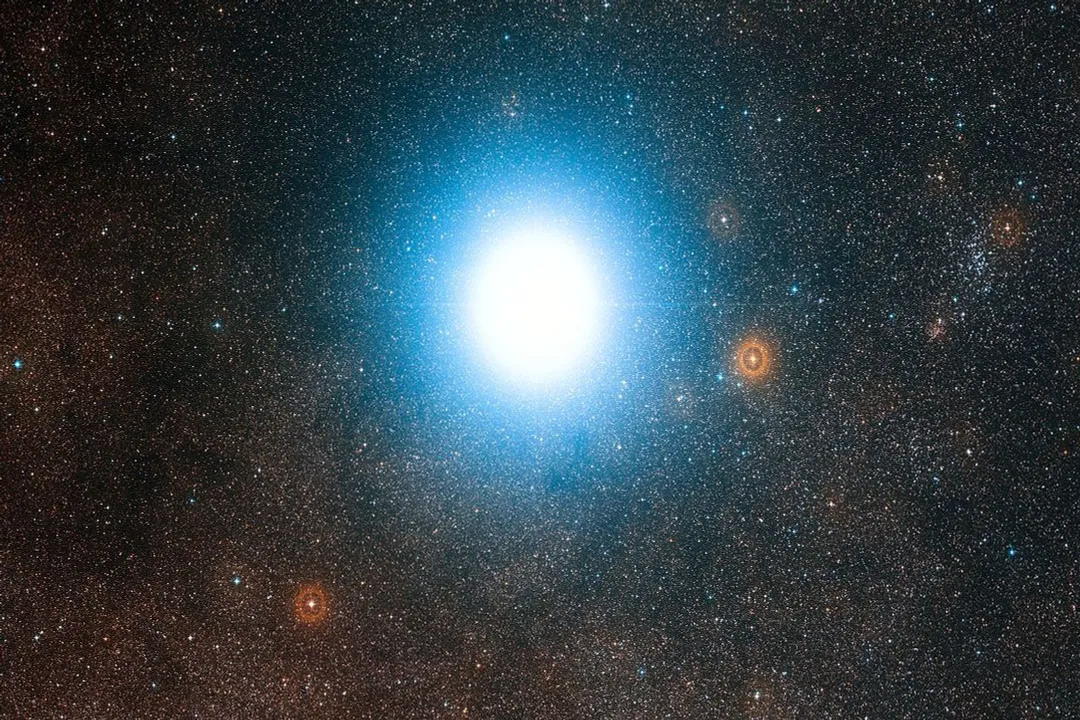
The relative emptiness around the Sun is typical, not exceptional, when considering the average spacing between stars in our region of the Milky Way galaxy. Our galaxy contains hundreds of billions of stars, but the volume of space they inhabit is enormous, leading to significant gaps between them.
If you were to shrink the entire Solar System down so that the Earth was the size of a grain of sand, the nearest star, Proxima Centauri, would still be several football fields away. This is not an anomaly; most of the galaxy is empty space.
For perspective on the scale:
- Within our Solar System: The distance from the Sun to Neptune is measured in billions of miles, but light still takes only about four hours to cross this range.
- To the Nearest Star: Traveling that same distance (Sun to Neptune) in terms of light-years to the nearest star would only cover about $0.0005$ light-years. This illustrates just how much farther interstellar space is compared to interplanetary space.
While star systems cluster more densely toward the galactic center, even there, the space between stars is vast. The Solar System is situated in one of the spiral arms of the Milky Way, an area where the stellar density is lower compared to the central bulge. Our feeling of isolation is validated by the reality of interstellar separation.
# Atmospheric Effects
Sometimes the question "Why are there no stars near us?" refers to the immediate visual experience when observing the night sky from Earth. In this context, the issue isn't the distance to the stars, but rather why we see fewer stars when we look toward the horizon compared to looking straight up.
The main culprits involve the Earth's atmosphere, which acts as a complex filter.
# Atmospheric Extinction
When you look directly overhead (the zenith), you are looking through the thinnest possible layer of the Earth’s atmosphere. Light rays from those stars travel the shortest path through the air to reach your eyes.
However, when you look near the horizon, the starlight must pass through a much thicker column of air. This increased atmospheric path length causes a phenomenon called extinction. The air molecules, dust, water vapor, and aerosols scatter the starlight, effectively dimming the stars that are near the horizon. This scattering disproportionately affects shorter, bluer wavelengths of light, which is why the sky appears blue during the day, but near the horizon at night, it simply makes the fainter stars invisible to the naked eye.
# Light Pollution and Turbulence
Beyond simple scattering, local conditions worsen the effect near the horizon.
- Artificial Light: City lights or any ground-based illumination scatter off the lower atmosphere, creating a significant "sky glow" that washes out all but the brightest celestial objects near the horizon.
- Seeing: Atmospheric turbulence, or "seeing," causes stars to twinkle. This effect is far more pronounced near the horizon because the light path is longer and passes through more turbulent layers of air. The constant distortion can make faint points of light completely disappear against the background sky, even if the air is clear.
This visual phenomenon explains why, even though stars are physically in the direction of the horizon, they appear absent or far less numerous than those directly overhead.

# Stellar Neighborhood Context
To truly appreciate the lack of stars close by, one must consider the alternative: a highly dense stellar environment.
Imagine if our solar system did have a nearby stellar companion, perhaps within $1$ light-year, instead of $4.37$ light-years. Such proximity would have profound consequences. For instance, if a star were only half a light-year away, its gravitational influence would likely have ejected many of the outer, more loosely bound comets and objects from the Oort cloud long ago, drastically altering the long-term dynamics of the outer system. Furthermore, the radiation environment for the outer planets would be significantly different, potentially affecting the formation or stability of the entire planetary disk over billions of years.
The fact that the Sun appears to be relatively isolated in its immediate $100,000$ AU sphere suggests that while binary stars are common in the galaxy, the tight binaries (where the components are separated by only a few light-years) are not always the outcome of stellar formation. Our Sun seems to have formed in a relatively sparse pocket of the molecular cloud, allowing it to sweep up the material needed for the planets without a sibling star siphoning off too much mass or gravitationally disrupting the accretion disk. While many stars are born in clusters, over time, gravitational interactions tend to scatter those clusters apart, leaving behind isolated or widely separated pairs, like the Alpha Centauri system. Our Sun simply ended up on the wide end of that separation spectrum from its nearest kin.
When considering the visibility of stars, one practical observation is that while atmospheric extinction dims objects near the horizon, the effect is somewhat mitigated if you are observing from a very high altitude, like a mountaintop observatory, because you are physically above a substantial portion of the densest, most turbulent air layers. This is why professional telescopes are often built on high peaks—to gain a cleaner, less extincted view, which helps resolve the actual density of the star field away from the skyglow of the ground.
This entire situation—the empty space around us, the vast distances to the next system, and the visual interference near the ground—reinforces that our home system is defined by its solitude, a rare but not unique outcome of galactic star formation processes. The stars are there, but they are separated by gulfs of near-perfect vacuum, a testament to the sheer scale of the cosmos.
#Videos
Why You Can't See Stars in Space - YouTube
Related Questions
#Citations
Are there literally no stars in our solar system? Why aren't they ...
Why aren't there any closer stars? Is our solar system an exception ...
Why are fewer stars seen next to the horizon?
The Nearest Neighbor Star - Imagine the Universe! - NASA
List of nearest stars - Wikipedia
Alpha Centauri: Facts about the stars next door - Space
Why You Can't See Stars in Space - YouTube
Why are there no stars in most space images? - The Planetary Society
Scale of distance to closest stars (video) - Khan Academy