What is the estimated average planet population per star in the Milky Way galaxy according to accumulating evidence?
Answer
At least one planet per star.
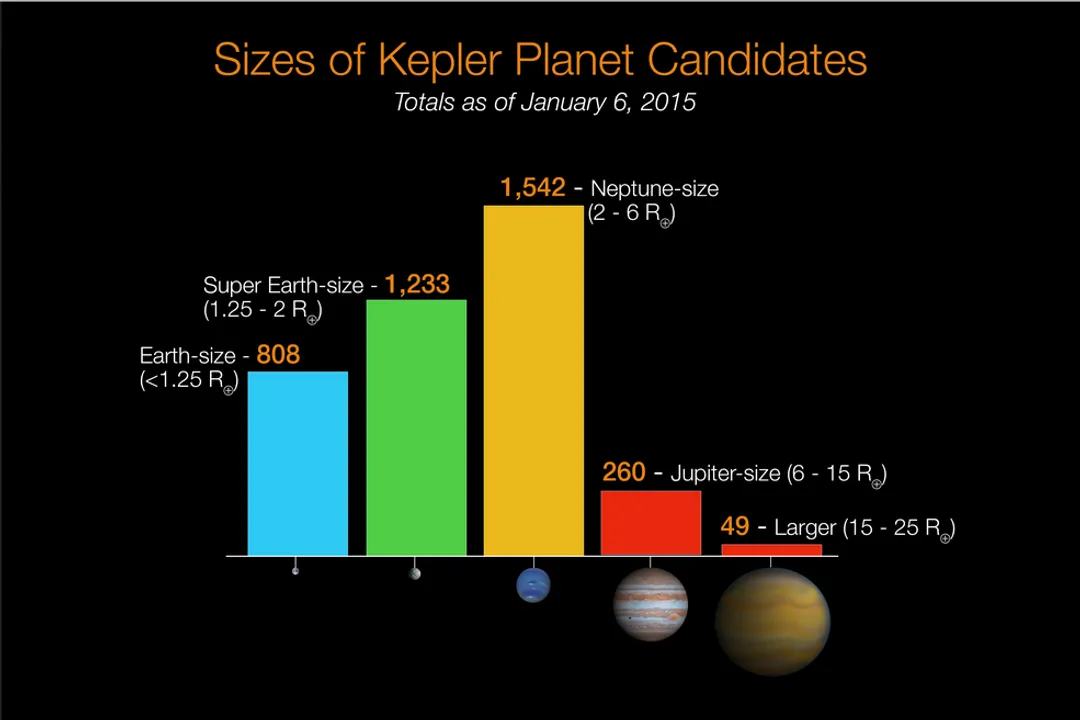
The extensive cataloging of exoplanets over recent decades has led to the accumulation of strong evidence suggesting that planets are not rare occurrences but are extremely common throughout the galaxy. This body of evidence leads astronomers to estimate that, on average, there is at least one planet associated with every single star in the Milky Way. This high prevalence explains why thousands of exoplanets have been confirmed and indicates that our Solar System is likely representative of a common galactic outcome rather than a singularity.
Related Questions
What is the precise definition of an exoplanet according to the text?What devastating combination of factors primarily hinders the direct observation of distant exoplanets?What specific stellar light shift is measured when applying the radial velocity method to detect orbiting planets?What primary result regarding an exoplanet is obtained using the radial velocity (Doppler) method?What physical event characterizes the transit method, enabling the measurement of an exoplanet's size?Which type of exoplanet, characterized by gas giants orbiting very close to their stars, are superheated?What accessory is specifically required to physically block a host star's light during direct imaging of an exoplanet?What is the theoretical minimum mirror size required to resolve surface features like Earth's continents on a planet light-years away?What does the transit method allow astronomers to estimate regarding an exoplanet's physical characteristics?What is the estimated average planet population per star in the Milky Way galaxy according to accumulating evidence?