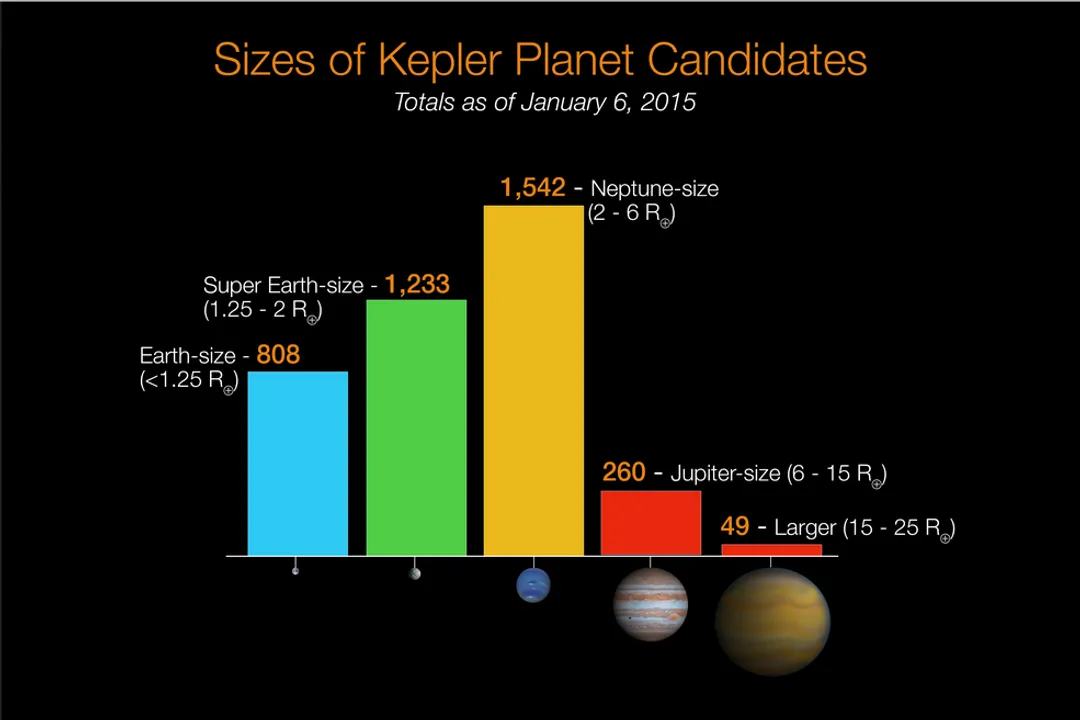
What physical event characterizes the transit method, enabling the measurement of an exoplanet's size?
A star’s temporary dimming when a planet passes in front.
The transit method relies on a geometric alignment where the exoplanet's orbital path crosses directly between its host star and the observer on Earth, creating a small, temporary eclipse. During this transit event, the amount of light reaching Earth from the star is measurably reduced by a tiny fraction of one percent. By precisely measuring the depth of this dimming—how much the star's apparent brightness drops—astronomers can calculate the ratio of the planet's cross-sectional area to the star's area, allowing them to derive the planet’s diameter or size, assuming the star's size is known. This periodic dimming confirms the planet's existence and allows for the estimation of its orbital period.