Why did I just see a line of stars moving?
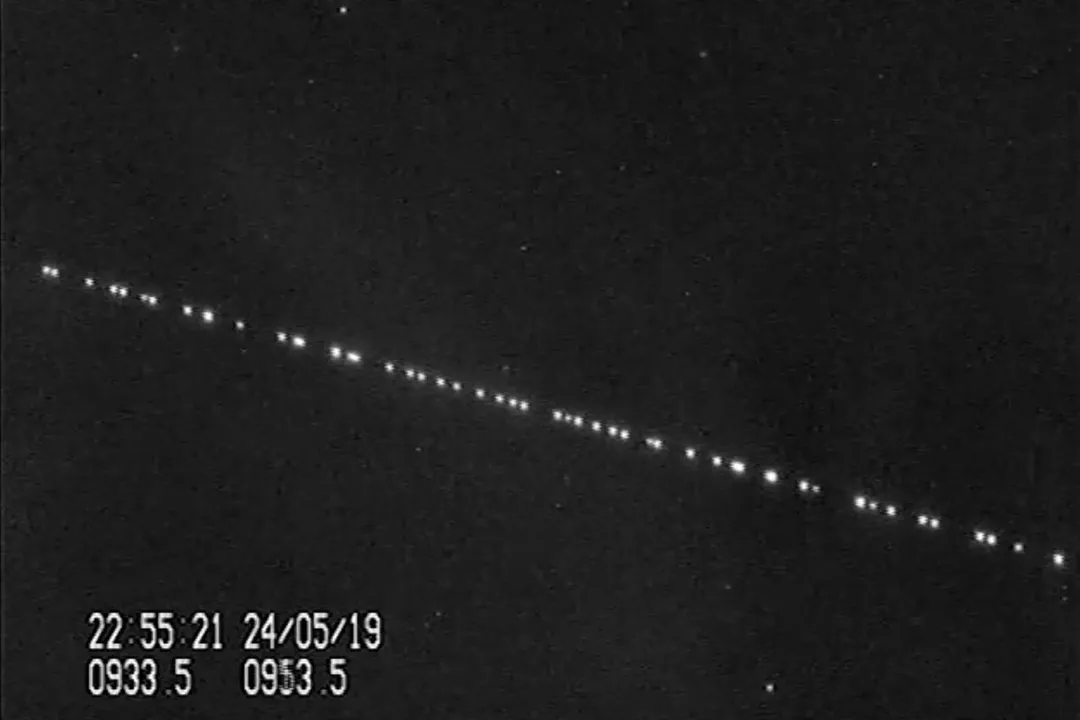
That sudden appearance of a perfectly straight, evenly spaced line of bright dots marching silently across the dark sky can certainly stop you in your tracks. It looks undeniably artificial, yet it possesses the serene, steady motion we usually associate with the fixed pinpricks of distant stars. This experience, which has become increasingly common in recent years, usually prompts an immediate scramble for a phone or a frantic search online asking what you just witnessed. [1][3][4]
When observers report seeing this, they frequently note several key characteristics: the objects maintain a consistent, uniform spacing, sometimes described as a "train" or a string of pearls, and they move together across the celestial sphere without deviating from their path. [1][6] Unlike an airplane, there are no flashing navigation lights, no sound, and the path is perfectly straight rather than arcing over the horizon like typical aircraft routes. [3]
# Common Reports
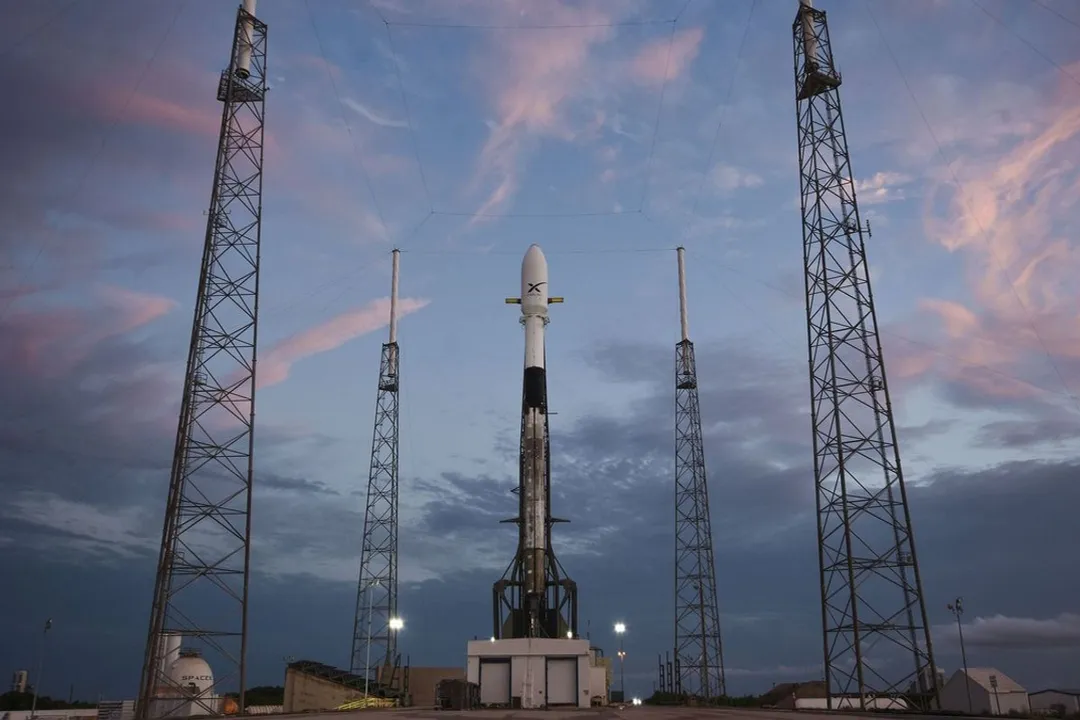
The confusion stems from the fact that the individual points of light strongly resemble stars. [8] The sudden realization that these "stars" are moving in unison is the hallmark of this phenomenon. [3] Many people report seeing a line of around 20 to 30 objects, though the precise number can vary widely depending on when the launch occurred and how long the observer watched. [1] Local news outlets and social media channels frequently light up with similar reports shortly after a deployment event, confirming that thousands of others saw the exact same strange sight in their local patch of sky. [2][9] For those unfamiliar with modern satellite deployments, the initial thought often drifts toward classified military hardware or, perhaps, extraterrestrial visitation, simply because the sight is so unusual compared to the familiar night sky. [3]
# Satellite Train

The vast majority of these recent sightings, characterized by a distinct line of identically bright objects moving coherently, are attributed to SpaceX's Starlink satellite constellation. [6][10] Starlink is a project involving the deployment of thousands of small satellites into low Earth orbit (LEO) to provide global internet coverage. [6]
What makes them appear as a line is the deployment process itself. When a batch of these satellites is launched, they are released from the rocket stage not all at once in a single clump, but sequentially, often spaced minutes apart. [6] They initially stay very close together as they unfold their solar panels and begin orbit-raising maneuvers. To an observer on the ground, this tight grouping appears as a single, distinct line of lights following the exact path the rocket took into orbit. [10] They are visible because they are still relatively low in LEO and their large, flat solar panels catch the sunlight, even when the observer on the ground is already experiencing night. [6]
This method of deployment creates an effect distinct from other orbiting objects. For instance, the International Space Station (ISS) is extremely bright but appears as a single, slow-moving star that usually fades rather than maintaining a strict, long string formation. [8]
# Orbital Mechanics
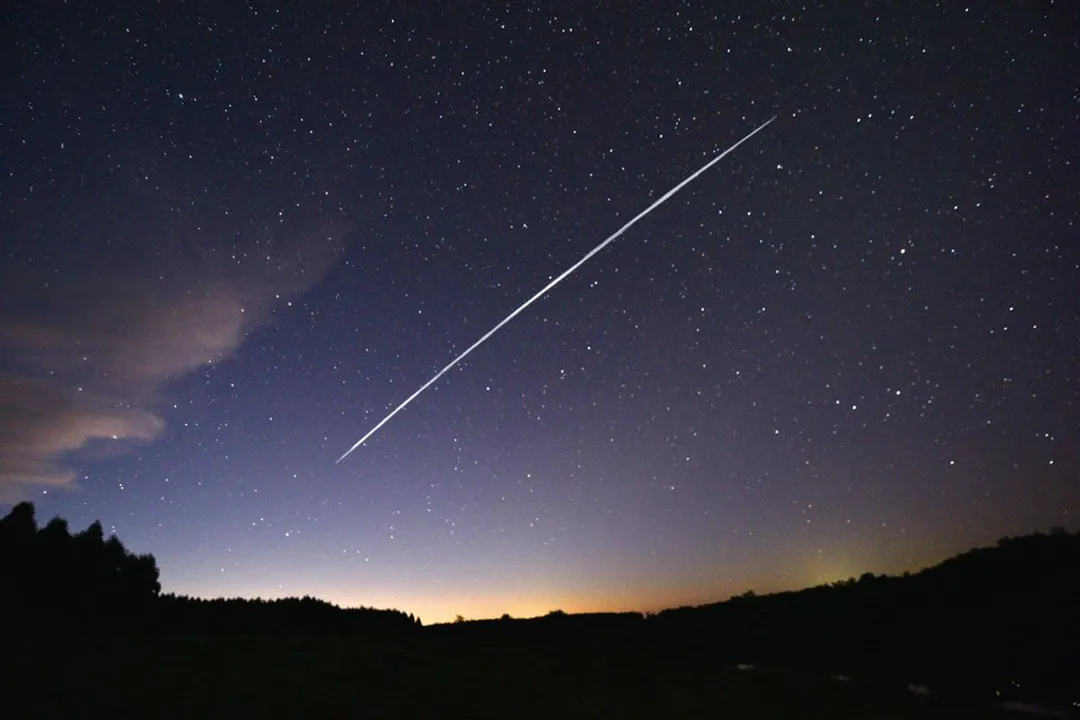
It is helpful to differentiate between the initial launch train and established satellites. When you see the line, you are witnessing a newly deployed "string" moving into its operational altitude. [6] These satellites are not yet in their final, operational orbits; they are performing "orbit-raising" maneuvers, using small onboard thrusters to gradually climb higher and spread apart. [10]
This gradual separation is a key part of what makes the sight so compelling for a short period. If you were lucky enough to track the same deployment string over several nights, you would notice the objects becoming slightly more staggered and less perfectly aligned as they slowly adjust their orbital periods relative to one another. [6] This behavior—moving together but slowly widening the gap—is the mechanical signature that separates them from aircraft or even random pieces of space debris, which generally do not move in such a predictable, unison pattern. [3]
As an interesting point of comparison, the older the satellite batch, the wider the visible dispersal. A line seen immediately after deployment might be just a few degrees long, whereas a string launched six months prior might have spread out enough that the dots appear scattered across a much larger patch of sky, making them harder to recognize as originating from the same event. [6]
# Identifying Other Objects
While Starlink is the usual suspect for a line of lights, other objects can appear to move across the sky, leading to confusion. [8]
| Phenomenon | Appearance | Duration | Key Differentiator |
|---|---|---|---|
| Starlink Train | Multiple, evenly spaced, steady lights in a line [1] | Several minutes | Uniform spacing and parallel movement [6] |
| Meteors/Fireballs | Single, fast streak of light that usually burns out | Seconds | Very fast, ephemeral, no coordinated group [8] |
| Aircraft | Single or multiple lights that flash red/green/white | Minutes to Hours | Flashing navigation lights, often changing altitude or direction [3] |
| ISS | Single, very bright, slow-moving point of light | Several minutes | Brightest object, no trailing line of objects [8] |
If the "stars" you saw were not in a perfectly straight line, or if they were flashing distinct colors, you were likely observing conventional aircraft or perhaps a meteor shower, although even major meteor events rarely produce many bright, slow-moving streaks simultaneously in a perfect line. [8]
# Confirming the Sighting
For those who want scientific confirmation beyond general consensus, the mystery can usually be solved with a little research specific to your time and location. Since the movement of these satellites is entirely predictable based on orbital mechanics and the laws of physics, there are specialized tools designed to track them. [2] If you recall the exact time and general direction you observed the line, you can use public satellite tracking resources. These tools use the latest orbital data to map where satellites like Starlink, OneWeb, or other constellations are expected to pass over your specific coordinates. [2]
A practical approach for the curious observer is to check current launch schedules. If you see the line shortly after sunset or just before sunrise, that timing is a major clue. Satellites are best seen when the ground observer is in darkness, but the satellites themselves are high enough to still be illuminated by the sun—a phenomenon sometimes called "sunlit passes." If you can cross-reference the time of your sighting with recent announcements of Starlink launches, you can often attribute your strange observation to a specific deployment batch. [6]
# Looking Ahead
The visibility of these trains is temporary, which is why some people might see them for a few weeks after a launch and then never again. As the satellites successfully raise their orbits, they spread out, making them much harder to spot as a distinct line. They become much fainter and appear as individual satellites, blending in with the natural background of other satellites and space junk. [6][10] If you missed the initial "train" but are interested in seeing the individual components later, you'll need to check tracking software for later passes when they are higher up and moving in their operational orbits, usually appearing as single, slowly moving dots. [10] For now, if you see that string of lights again, you can look up with confidence, knowing you are witnessing one of the most significant, if unexpected, contributions to modern space infrastructure traversing the night sky. [6]
#Videos
Explaining the straight line of lights in the night sky - YouTube
Related Questions
#Citations
I saw a line of around 30 “stars” moving in a straight line ... - Quora
People report line of lights in the night sky - WGAL
I keep seeing stars moving in the sky. Wondering whether it is a ...
Mysterious lights in night sky near Dodge City? - Facebook
Explaining the straight line of lights in the night sky - YouTube
What Are Those Strange Moving Lights In The Night Sky? Elon ...
California's Napa Valley on Instagram
Star like light moving in the sky, what could it be? [closed]
Starlink satellites: Facts, tracking and impact on astronomy - Space