How is a planet orbiting another star detected?

The sheer difficulty in locating worlds orbiting other stars stems from a fundamental cosmic imbalance: distance and brightness. [5] Imagine trying to spot a firefly next to a floodlight from across a country—that is the challenge astronomers face. Planets are incredibly faint, reflecting or emitting minuscule amounts of light compared to their parent stars, which can be billions of times brighter. [4][5] Since direct visual detection is nearly impossible for most, scientists have become masters of indirect evidence, searching for subtle clues that betray a planet's presence by its influence on its host star. [5][6]
# Initial Hurdles
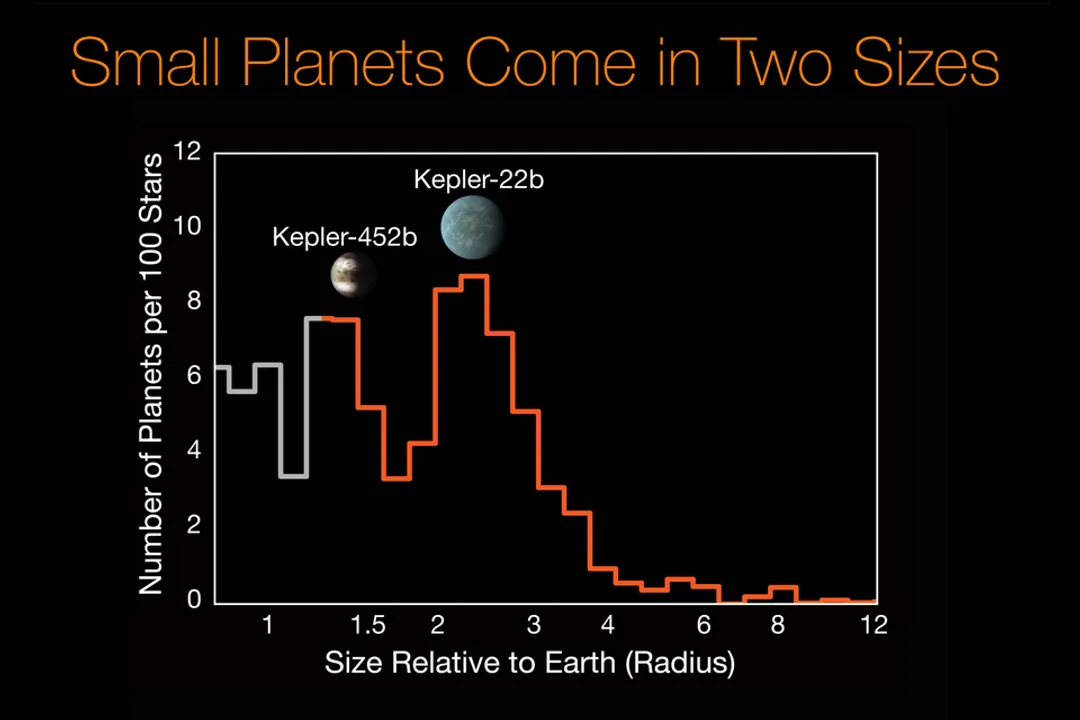
The primary obstacle in exoplanet hunting is overcoming the overwhelming glare of the host star. A direct photograph is only feasible for the rare cases where a planet is young, massive, and orbiting very far from its star, requiring specialized instruments to physically block the starlight. [4][6] For the vast majority of discoveries, astronomers must rely on detecting the planet's effects, which requires extremely high precision in measurement. Because planets orbit, their orbital period dictates how long an observation campaign must last; short orbits mean faster confirmation, but long orbits—like those comparable to our own Solar System—can demand continuous observation spanning years or even decades. [3] This inherent time requirement, coupled with the need for high-precision instruments, explains why the search is so arduous.
# Stellar Wobble

One of the earliest and most successful indirect techniques is the Radial Velocity (RV) method, often described as the Doppler technique or Doppler wobble. [5][6][7] A star and its orbiting planet do not orbit each other; instead, both circle a common center of mass, known as the barycenter. [2][8] Because the star is far more massive, this center of mass is usually located inside the star itself, causing the star to execute a small "wobble" as the planet tugs on it. [2][6][8]
This minuscule movement is detected using the Doppler effect on the star's light. [2][6] When the star moves toward an observer on Earth, its light waves are compressed, resulting in a blueshift in its spectral lines. When it moves away, the light waves are stretched, causing a redshift. [2][6] By repeatedly measuring these spectral shifts, astronomers can deduce the existence of an orbiting body and calculate its minimum mass. [2][5][6] A crucial limitation of the RV method is that it only measures the movement toward or away from us. Therefore, it is most effective when the planet’s orbital plane is nearly edge-on from our perspective. [3][7] This technique excels at finding massive planets orbiting close to their stars, often called "hot Jupiters," because the larger gravitational tug creates a larger, more easily detectable shift. [5][7]
# Light Blockage

The most numerous discoveries to date have come from the Transit Method, sometimes called photometry. [4][5][8] This technique requires a fortunate alignment: the planet’s orbit must pass almost perfectly across the face of its host star from our line of sight. [2][5] When this occultation occurs, the planet blocks a tiny fraction of the star's light, causing a measurable, temporary dip in the star’s apparent brightness. [2][7][8]
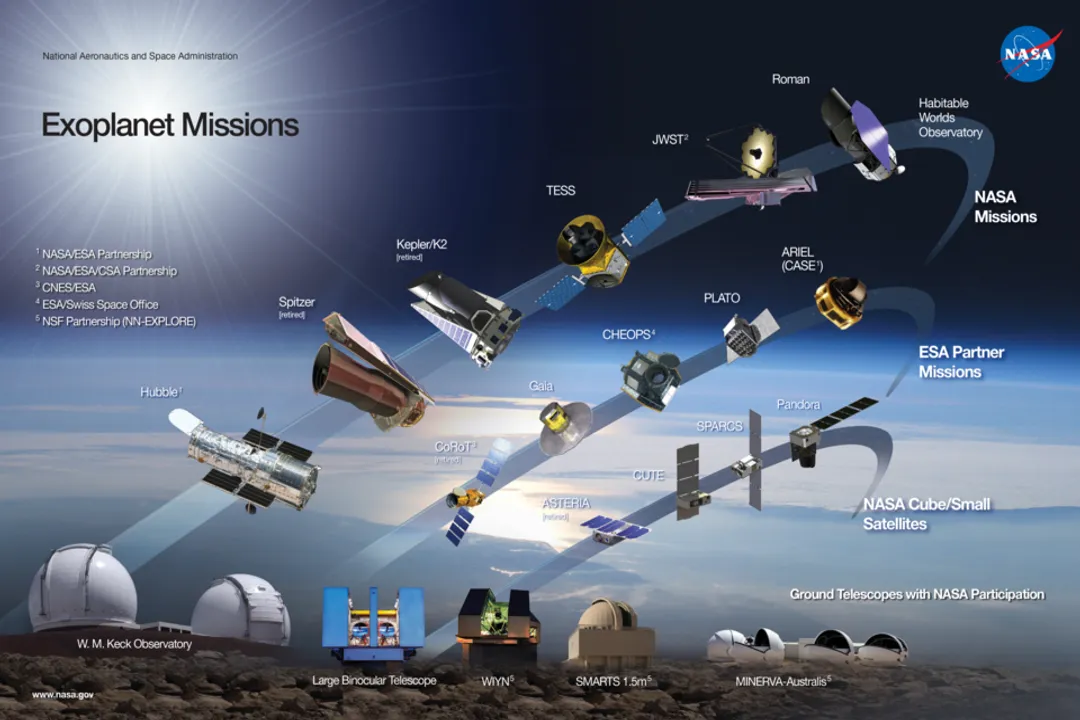
The depth of this dimming is directly related to the relative sizes of the planet and the star, allowing scientists to calculate the planet's diameter. [2][5][8] If the dimming repeats at regular intervals, it provides the planet’s orbital period. [2] Missions like NASA’s Kepler telescope and TESS were specifically designed to monitor tens of thousands of stars continuously to catch these brief events. [5][6] While this method is currently the most effective for sheer numbers, it suffers from a geometric bias—it can only find planets whose orbits happen to line up correctly. [4]
An exciting variation on this theme is Transit Timing Variation (TTV). When multiple planets are present in a system, their mutual gravitational pulls slightly perturb each other’s orbits. These tiny variations in the expected transit time or duration for one planet can reveal the presence of another, non-transiting companion. [4][6]
# Position Shift
A less productive but highly informative method is Astrometry. [4] Instead of measuring light shifts along the line of sight (like RV), astrometry is the science of precisely measuring a star’s position in the sky over time. [3] The gravitational pull of an orbiting planet causes the star to exhibit a side-to-side or up-and-down shift in its celestial location, a subtle wobble relative to background stars. [3][5][6]
A major advantage of astrometry over the Doppler method is that it can provide an accurate estimate of the planet’s true mass, rather than just a minimum figure, because it measures the full displacement caused by the orbit. [3] Furthermore, the sensitivity of this method increases with the distance between the planet and its star, making it theoretically excellent for finding smaller, more distant, Earth-like worlds that short-period "hot Jupiters" favor in RV surveys. [3] However, the required precision is enormous, pushing the limits of current technology. [3] Furthermore, the method is confounded by stellar features like star spots, which can create apparent shifts in the star's photometric center that mimic a planetary tug. [3] The ESA’s Gaia mission is poised to revolutionize this field by creating the galaxy's most precise three-dimensional map, expected to yield tens of thousands of exoplanets via astrometry. [3][6]
It is fascinating to contrast Astrometry and Radial Velocity: one technique thrives when the orbit is nearly face-on (Astrometry, which measures sideways movement), while the other requires the orbit to be almost edge-on (Radial Velocity, which measures toward/away movement). [3] A planetary system perfectly face-on to us would be invisible to RV but ideal for astrometry, illustrating that different methods are needed to secure a complete picture of any given system. [3]
# Gravity Lens
The Gravitational Microlensing technique operates on a completely different principle rooted in Einstein’s theory of general relativity. [6] This method occurs when a foreground star system (the "lens") passes directly in front of a much more distant background star. [2][6] The intervening star’s gravity bends and magnifies the background star's light, causing a temporary, smooth brightening. [2][6] If a planet is orbiting the lensing star, its own gravity creates a small, brief enhancement or "bump" on this magnification curve. [2][6]
Microlensing is extremely sensitive and can theoretically detect smaller planets, even those farther from their host stars than other methods can reach. [2][4] Its major drawback is that the alignment required is a chance event that will not be repeated for the same system, meaning any discovery is a one-time observation. [6]
# Seeing Worlds
Direct Imaging is the most intuitive method: attempting to take a picture of the planet itself. [5] As noted, this is incredibly challenging because the star outshines the planet by a factor of a million or more. [4][5] While instruments employ techniques like coronagraphs to block the starlight, this is only successful for very large planets separated by wide orbits from relatively faint or distant host stars. [4][6] The first directly imaged planet was found in 2004. [6] Even with success, the resulting images are often highly processed, and many published "images" are composites or artist interpretations based on data. [5]
# Other Clues
The universe has also yielded planetary detections through more specialized means:
- Pulsar Timing: This yielded the very first confirmed exoplanet detections in 1992 around the pulsar PSR B1257+12. [4][6] A pulsar spins rapidly, emitting regular radio pulses. If planets orbit it, the small movement of the pulsar around the system's barycenter causes minute delays or advances in the arrival time of these pulses, known as a Roemer time delay. [4] This method has not been as productive since the initial breakthrough. [4]
- Atmospheric Signatures: Techniques like spectroscopy are not used to find planets primarily, but to characterize them once found. [5] By observing the starlight filtered through a planet's atmosphere during a transit, scientists can identify the chemical makeup of that atmosphere—detecting molecules like sodium, potassium, or water vapor. [2][5]
- Variations in Transit: Beyond TTV, Transit Duration Variation (TDV) can occur if a planet has moons or orbits multiple stars, causing changes in how long the light is blocked. [4]
The diversity in detection methods is vital because each one favors a different type of planet or orbital geometry. [5] A planet found via the transit method gives size, while RV gives mass. Combining these two data points allows astronomers to calculate density, offering the first real hint about whether a world is rocky, gaseous, or something entirely new, such as the common "Mini-Neptunes" which have no counterpart in our Solar System. [4][5] The fact that the most frequently discovered planets are "hot Jupiters"—gas giants orbiting extremely close to their stars—tells us as much about how we look as it does about how planets form. [4][5] Our current methods point heavily toward close-in, massive worlds, suggesting that many of these giants likely formed farther out and migrated inward over time, a process our original formation theories did not fully account for. [5][6] This continuous refinement of detection technology and analysis drives the ongoing rewrite of our understanding of planetary demographics. [5]
Related Questions
#Citations
Exoplanet - Wikipedia
Wobbly Stars: The Astrometry Method | The Planetary Society
Extrasolar Planets
Detecting exoplanets - Exeter Science Centre
Finding Exoplanets - Las Cumbres Observatory
Exoplanets, explained | University of Chicago News
Exoplanet detection methods - ESA Science & Technology
Why is it so hard to detect planets orbiting other stars? - Reddit