Can planets orbit other stars?
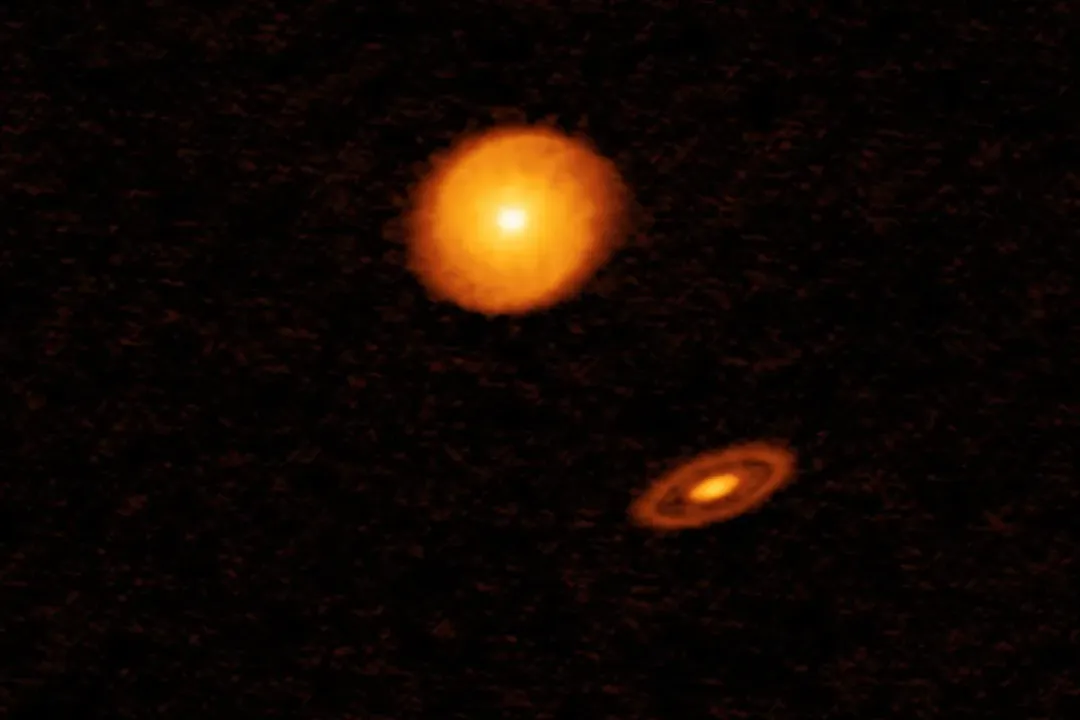
The reality of planets orbiting stars other than our Sun has moved from pure science fiction to established astronomical fact. We now know that the space around us is populated by countless worlds, collectively termed exoplanets, which orbit stars light-years away from Earth. This discovery has fundamentally reshaped our view of planetary formation and distribution in the Milky Way galaxy.
# Counting Worlds
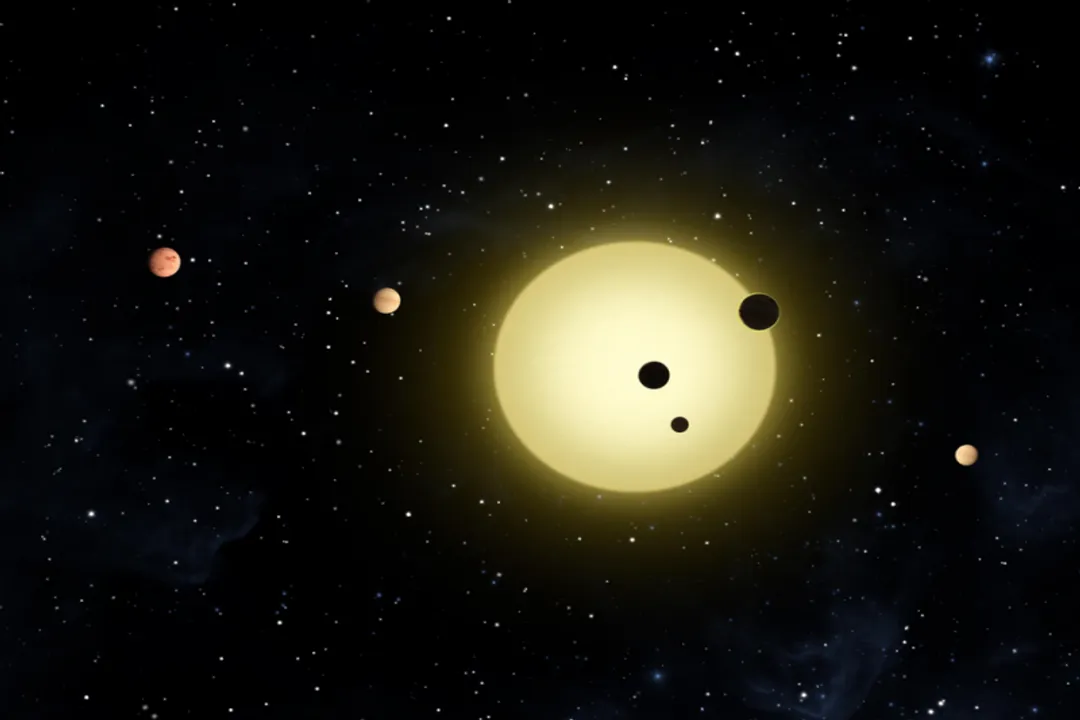
The search for these distant celestial bodies has become a major focus of modern astrophysics, with dedicated missions and powerful telescopes actively working to find and characterize them. We are no longer dealing in hypotheticals; astronomers have confirmed the existence of thousands of these alien worlds. While the initial discoveries were rare, our detection capabilities have improved dramatically, leading to an ever-growing catalog.
A natural question that arises when considering this vast population is whether every star hosts its own family of planets. The current evidence suggests that planets are incredibly common, but it is not yet definitively proven that every star in the universe possesses a planetary companion. However, considering the sheer number already cataloged, it seems more likely that the majority of stars have at least one planet than those that do not. These systems vary wildly in size, mass, and orbital configuration compared to our relatively orderly Solar System.
# Single Stars
The simplest configuration is analogous to our own system: a single star with planets orbiting it. However, these single-star exoplanetary systems exhibit remarkable diversity. We find planets much larger than Jupiter orbiting extremely close to their parent stars, completing an orbit in mere days, or perhaps ice giants orbiting much farther out than Neptune orbits our Sun.
This diversity pushes the boundaries of our planetary formation theories. For instance, finding gas giants orbiting small, cool M-dwarf stars challenges models that suggest massive planets need large, gas-rich protoplanetary disks, which are typically associated with more massive stars. The sheer variety found in these single-star systems suggests that the process that created Earth is just one of many possible outcomes when a star forms.
# Double Stars
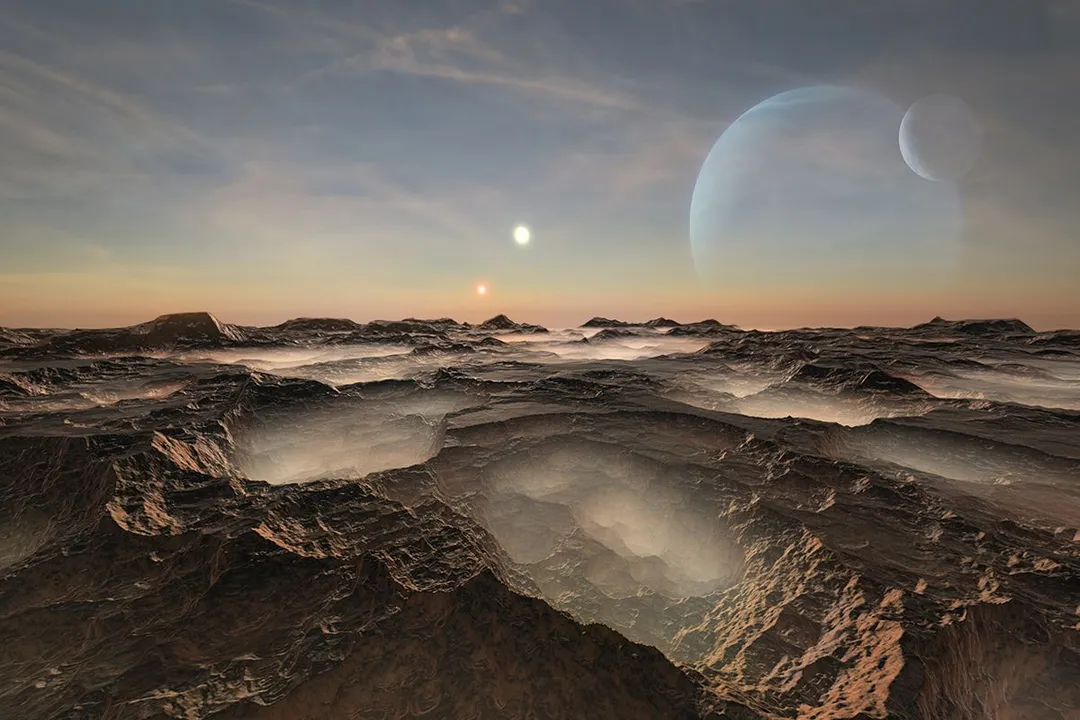
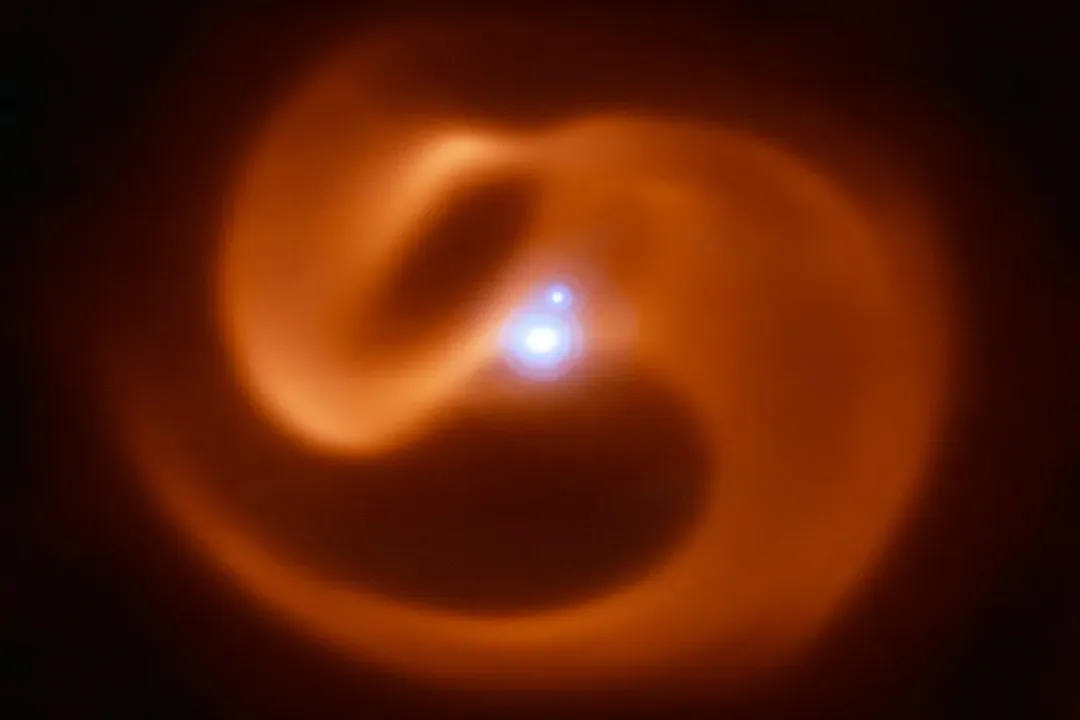
Where things become significantly more complex, and arguably more fascinating, is when a planet finds itself in a system dominated by two stars, known as a binary star system. If a planet orbits both stars in that system, it is called a circumbinary planet. This configuration is famous in fiction—think of Tatooine from Star Wars—but it is a genuine phenomenon observed by astronomers.
For a planet to maintain a stable orbit in a binary star setup, it must navigate the complex gravitational tug-of-war between its two suns. There are generally two ways this orbital stability can be achieved. The first, and perhaps more intuitively stable, way is for the planet to orbit both stars from a distance, with the distance being significantly larger than the separation between the two stars themselves. This large, wide orbit essentially treats the pair of stars as a single, combined gravitational center.
The second, more precarious arrangement involves the planet orbiting just one of the stars, while the second star orbits the primary star and the planet at a much greater distance. In this case, the planet is in a stable path around its primary star, but the gravitational influence of the distant second star must be mild enough not to destabilize the planet's path over billions of years.
While a single star can certainly orbit another star, forming binary or multiple star systems, the introduction of a planet into such a tightly interacting environment introduces unique stability constraints that single-star systems simply do not face.
# Orbital Dynamics Insights
When considering the dynamics of these systems, one subtle difference stands out compared to our relatively placid Solar System. In a single-star system, while planets can still experience gravitational interactions (like Jupiter influencing asteroids), the primary driver of the orbital architecture is one central mass. This often leads to systems where orbits are nearly circular and coplanar, or if eccentric, the eccentricity is largely determined by internal processes like migration or planet-planet scattering.
In contrast, a circumbinary planet, even one orbiting widely, is constantly being perturbed by the changing position of the secondary star. This leads to a phenomenon known as orbital resonance being far more likely, where the gravitational forcing from the second star can create stable, predictable patterns of acceleration and deceleration over vast timescales, or conversely, lead to chaos and ejection if the orbit is too close to the two stars. Understanding these chaotic yet predictable dynamics is key to determining how long such a world could remain habitable, if habitable conditions were present at all.

# Detection Challenges
The very methods we use to find exoplanets give us clues about which ones we are most likely to see. The transit method, where a planet passes in front of its star blocking a tiny fraction of light, has been incredibly successful. This method favors finding planets that are large and orbit very close to their star, because the closer the planet, the more frequently it transits, and the larger the dip in light.
This reliance on transit detection means that our current catalog is likely skewed towards the "hot Jupiters" and "super-Earths" in tight orbits, simply because they are the easiest to spot. Finding a "cold" Jupiter orbiting far out, similar to where Neptune is in our system, is much harder using this technique because its transit window occurs only once every few decades or centuries relative to our observation point.
This detection bias leads to an interesting practical consideration for amateur astronomers or citizen scientists looking at publicly available data. If you are analyzing light curves from a Kepler or TESS mission field, you might notice that systems with very short orbital periods (e.g., transits every 2-5 days) have been repeatedly confirmed, whereas a star that only shows a dip every 500 days requires much longer baseline observation and verification. A star exhibiting a transit signal that recurs precisely every 150 days, for instance, is already much more likely to have a confirmed, short-period world than a star showing only a single, unexplained dip years ago, due to the need for confirmation via repetition.
# Cosmic Context
The confirmation that planets orbit other stars doesn't just fill a gap in our knowledge; it changes the context of our own existence. It implies that the conditions necessary for planetary formation—dust, gas, and gravity—are common ingredients in the stellar cooking process across the galaxy. Furthermore, while we are actively searching for Earth-like worlds in habitable zones around single stars, the complexity of circumbinary systems opens up the possibility of life evolving under two suns—an environment where the "day" and "night" cycles, and thus temperature stability, could be vastly different from what we experience. The sheer variety suggests that the universe is far more creative in building its planetary systems than our initial, Sun-centric models allowed for. The ongoing exploration of these distant orbits promises to continually redefine what a "planet" can be.
Related Questions
#Citations
Planets Around Other Stars - NASA Science
Can a solar system orbit another solar system? : r/askastronomy
Circumbinary planet - Wikipedia
What happens when a planet orbits two stars at once
Do all stars have planets orbiting them, or just some? Which ones do ...
Is it possible for one star to orbit another?
Exoplanets: Worlds Beyond Our Solar System - Space
Exoplanets are worlds orbiting other stars - EarthSky