What was one of the surprising things about planets that was discovered along with the first exoplanets?
The search for worlds orbiting stars other than our Sun spanned centuries, a persistent question in astronomy: Are we alone? When the initial, definitive evidence of these extrasolar, or exoplanets, finally arrived, it didn't just confirm their existence; it immediately shattered the comfortable assumptions astronomers held about how planetary systems form and evolve. If one had to distill the most stunning revelation accompanying those first confirmed detections, it was the shocking appearance of planets that were utterly unlike anything in our own Solar System, particularly massive worlds orbiting incredibly close to their parent stars.
# First Discoveries
For decades, the primary methods for finding these distant worlds—like the transit method or radial velocity method—were most sensitive to large planets orbiting closely, simply because those planets cause the largest, most easily detectable wobble in their stars or the deepest, most frequent dips in starlight. Early confirmed finds, such as those around the star 51 Pegasi in the mid-1990s, confirmed that planets existed, but their properties were baffling.
Astronomers had built complex, well-reasoned models for planet formation based entirely on the architecture of our familiar Solar System. These models suggested that large, gaseous giants, like Jupiter and Saturn, could only form far from their host stars, past a certain distance known as the "snow line" or "ice line". Beyond this boundary, volatile compounds like water and methane condense into solid ice grains, providing the necessary abundant material for a large planetary core to rapidly accumulate a massive gas envelope before the star's intense radiation blows the remaining gas away. In our Solar System, Jupiter orbits at about five times the distance between the Earth and the Sun (5 AU).
# Hot Giants
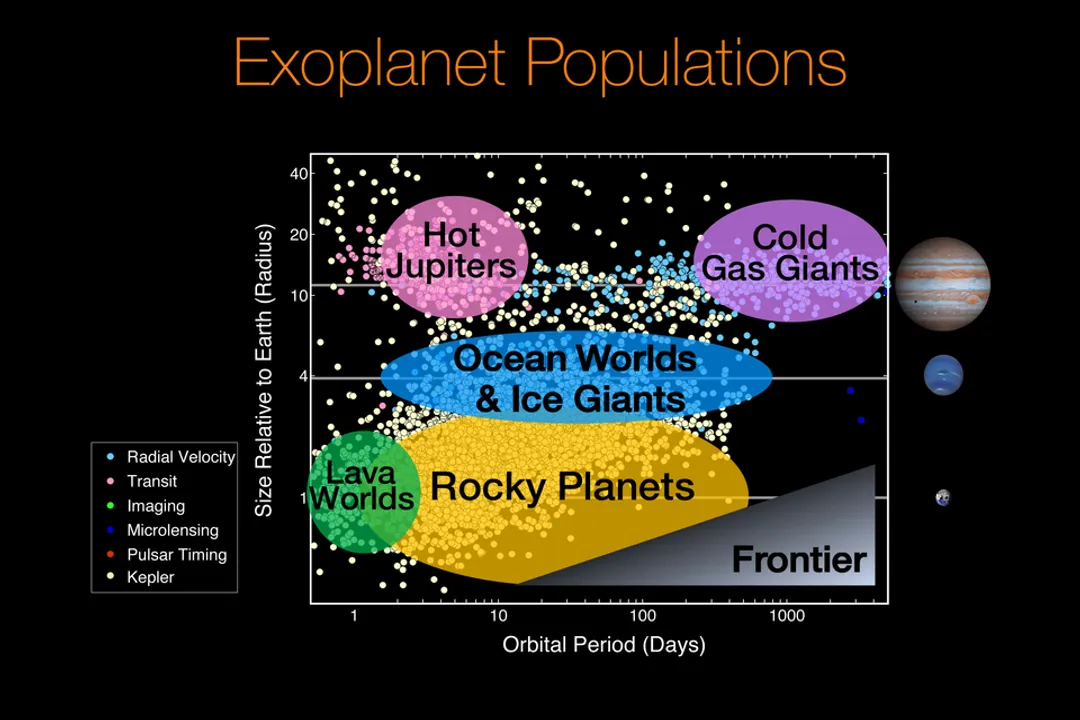
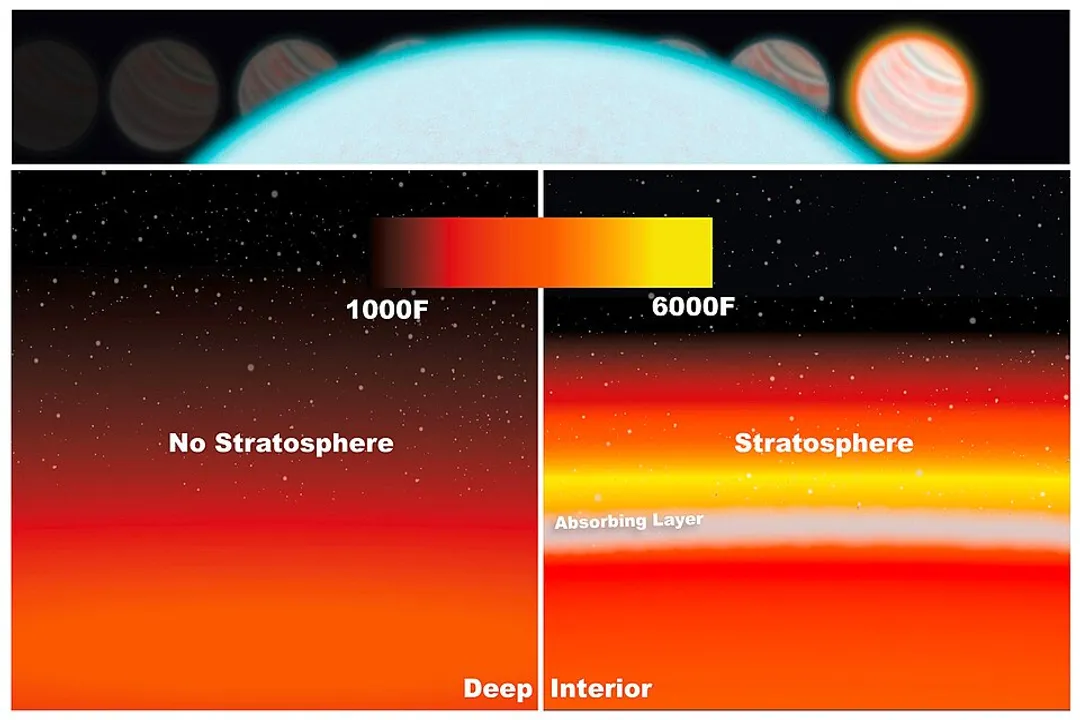
The surprise that hit the astronomical community was the discovery of Hot Jupiters. These were gas giants, possessing masses comparable to or even exceeding Jupiter's, yet they completed orbits in just a few Earth days, sometimes even less than four. Instead of being cold, distant behemoths residing beyond the hypothetical snow line, they were scorching, searingly close companions to their stars, enduring temperatures high enough to vaporize rock.
The presence of a Jupiter-sized planet just a fraction of an Astronomical Unit (AU) away from its star presented a direct contradiction to the core accretion theory as it was then understood. Where did all that gas and mass come from? Giant planets were not supposed to have formed so near the stellar furnace, as the heat and stellar wind would have stripped away the protoplanetary disk material needed for their formation before they could reach critical mass. Early searches had effectively been looking for Solar System analogs, and the first successful finds mocked that expectation. This immediate contradiction forced scientists to confront a fundamental flaw in their understanding of how planets assemble themselves across the galaxy.
# Model Breakage
This initial observational bias—that the easiest planets to find were the most unlike our own—created a skewed first impression of the galactic planetary population. We were, in effect, using the wrong tools to find the right answer initially. Imagine trying to understand the diversity of mammals by only building traps effective at catching very large, slow-moving ground animals; you might conclude that all mammals are slow and massive, only later realizing that fast, small, flying creatures exist once you build a different net.
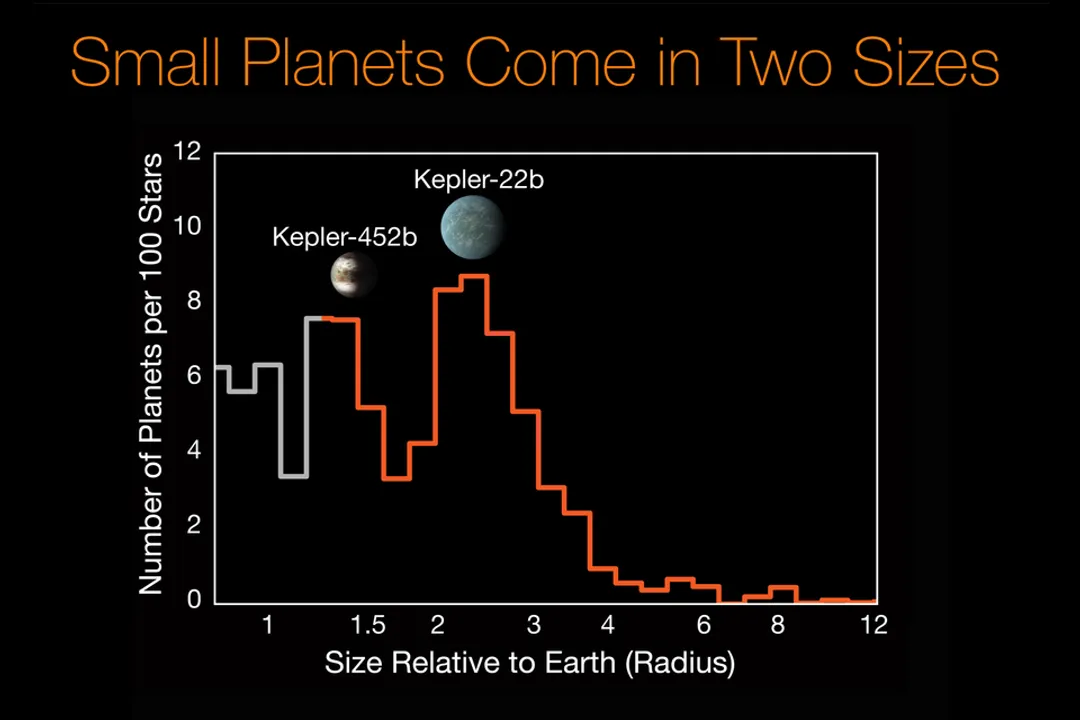
A fascinating aspect of this paradigm shift is how frequently the observed planets defied simple classification. While the Hot Jupiters provided the major shock, the growing census revealed other oddities. We started finding planets with highly eccentric orbits—paths that were elongated or oval-shaped rather than nearly circular like those in our Solar System. These eccentric orbits suggested violent gravitational interactions or dynamic instabilities occurred within the system after the planets formed, something rarely seen in the orderly, near-circular paths of the eight major bodies orbiting the Sun. Furthermore, worlds known as "super-Earths"—planets larger than Earth but smaller than Neptune—turned out to be a very common class, yet one entirely absent from our own neighborhood. This revealed that the structure we see in our Solar System might be the exception, not the rule, for planetary system architecture.
To put the scale of the surprise into context, consider the initial observational limitations. When we look at the nearby stars, we are sampling a tiny fraction of the total volume of the Milky Way, and our first confirmed detections were heavily skewed toward worlds where the planet's transit blocked a significant amount of starlight or whose gravitational tug was strongest. The fact that the very first detectable, dominant feature of this new population was so alien highlights how cautious astronomers needed to be about generalizing from our local neighborhood. It took many more years and the refinement of techniques to reveal the truly abundant, smaller worlds that were simply harder to spot initially.
# Migration Theory
If Hot Jupiters could not form near their stars, they must have formed farther out and then moved inward. This necessity birthed the concept of planetary migration as a mainstream theory in astrophysics.
Planetary migration proposes several mechanisms by which a massive planet can shed angular momentum and spiral inward toward its star. One leading idea involves gravitational interactions with the remaining gas and dust in the young protoplanetary disk. As the planet pushes through the disk material, the drag can act like a continuous brake, causing the planet’s orbit to shrink over millions of years. Another possibility involves gravitational scattering events where an initial giant planet interacts with another massive body (perhaps a second giant planet or the formation of a distant ice giant), flinging the first planet inward while the second is flung outward, perhaps even being ejected from the system entirely.
The implications were vast. It meant that planetary systems are not necessarily static entities that form in place; they are dynamic environments shaped by violent, long-term evolution that can radically alter the orbital arrangement established in the first few million years. In fact, the study of these eccentricities and close-in giants led researchers to theorize that many of the gas giants we see today might have started their lives much farther out, perhaps even beyond where Neptune resides in our own system. If migration is common, it strongly suggests that if Jupiter had not been in its current orbit, or if another planet had been present to gravitationally jostle it, Earth’s environment could be drastically different, perhaps lacking the stabilizing influence of Jupiter to deflect incoming comets.
# Unseen Worlds
While the Hot Jupiters were the headline-grabbers, the ongoing study of exoplanets revealed that size alone isn't the only defining feature of a system's uniqueness. The sheer number of worlds detected means we are constantly revising what constitutes a "normal" planet. For instance, the existence of worlds orbiting two stars, or planets orbiting dead remnants like pulsars—which were among the very first exoplanets detected—shows the resilience and adaptability of planet formation processes.
Furthermore, the discovery of planets whose densities suggest they are composed primarily of exotic materials, like water worlds or carbon-rich planets, adds another layer of complexity beyond just size and orbit. These variations in bulk composition hint at very different initial conditions in the stellar nurseries where they formed, perhaps significantly different ratios of rock, ice, and gas compared to our Solar System's birthplace.
The biggest ongoing surprise, perhaps even larger than the Hot Jupiters, is the realization of how many planets there are. Current estimates suggest that, on average, there is at least one planet for every star in the Milky Way galaxy. This staggering statistic shifts the perspective: rather than planetary systems being a rare, fortunate accident centered around our Sun, the formation of planets appears to be a near-inevitable byproduct of star formation itself.
The discovery of the first exoplanets, and especially the strange Hot Jupiters, served as a critical recalibration moment for astronomy. It forced a shift from asking if planets exist to asking how diverse and chaotic their formation and evolution truly are. The initial shock of finding massive planets baking close to their suns revealed that the rules we thought governed planetary architecture were merely local customs, not universal laws. The universe, it turns out, is far more creative in building worlds than our early models ever allowed for.

Related Questions
#Citations
Solved What was one of the surprising things about planets - Chegg
Exoplanets - NASA Science
Exoplanets - Center for Astrophysics | Harvard & Smithsonian
Unexpected Classification of Exoplanets Discovered
Exoplanet - Wikipedia
Exoplanets, explained | University of Chicago News
ESA - Exoplanets in the spotlight - European Space Agency
Eccentric Exoplanets: The Smallest and the Speediest
Exoplanets - Cool Cosmos - Caltech