What is the fixed path along which a planet moves?
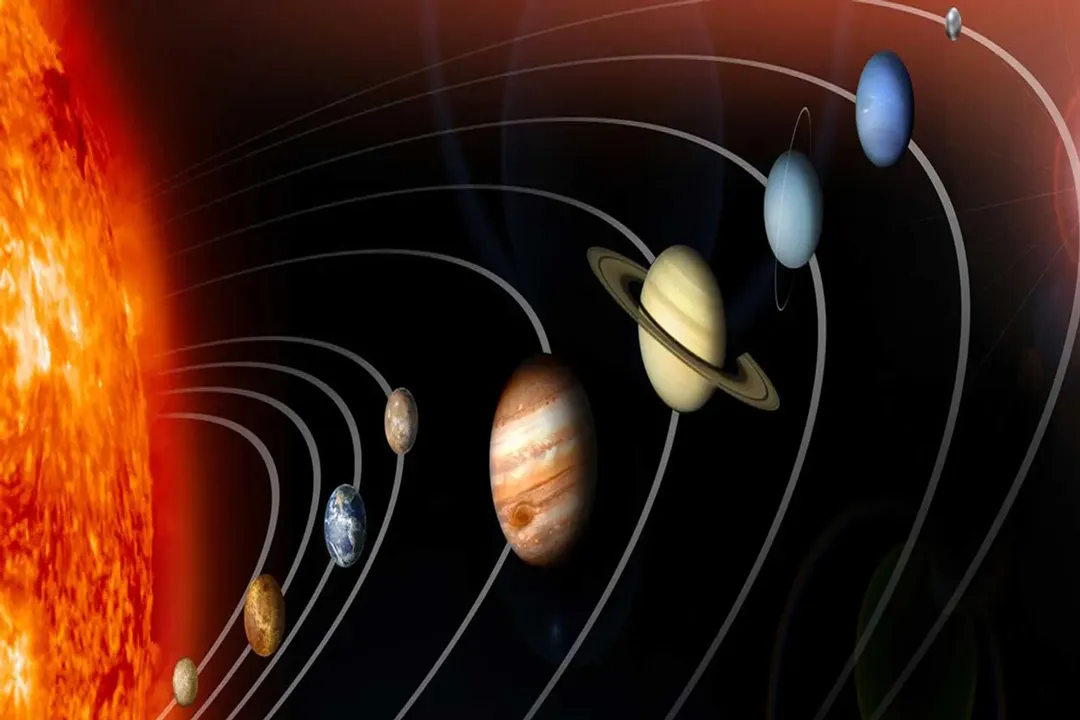
The definite, fixed path a celestial body like a planet traces as it travels around a star is one of the most fundamental concepts in astronomy and physics. This route isn't just a random curve but a mathematically precise shape governed by immutable laws of motion and gravity. The common term used to describe this grand circuit is the orbit. Understanding this path requires looking past the simple idea of a perfect circle and embracing the more accurate, slightly squashed shape that defines celestial mechanics.
# The Name

The scientific designation for the track a planet follows around the Sun is simply its orbit. When we discuss a planet moving around a central body, the proper term for that movement is revolution, differentiating it from rotation, which is the spinning of the body on its own axis. This orbital path is considered definite, meaning that over time, a planet maintains a predictable route based on its current velocity and the gravitational influence exerted upon it.
# Elliptical Shape
Early astronomical models often treated planetary paths as perfect circles. However, meticulous observation and subsequent theoretical work proved this assumption incorrect. The actual path along which a planet moves is an ellipse, a closed, oval-like curve. This realization was a significant breakthrough in understanding the cosmos, as it moved planetary description from an assumed perfect geometry to one that accurately mapped observational data.
In an ellipse, there is no single "center" of the path in the way there is in a circle. Instead, the central star—in our case, the Sun—occupies one of the two focal points, or foci, of that ellipse.
| Orbital Characteristic | Description |
|---|---|
| Shape | Ellipse (oval) |
| Center of Mass | Sun is located at one focus |
| Closest Approach | Perihelion |
| Farthest Distance | Aphelion |
# Kepler's Rules
The mathematical description of this elliptical orbit, and the variation in speed along it, is codified in the laws established by Johannes Kepler in the early 17th century. These laws describe how the planet moves along the fixed path, derived purely from observation before Newton provided the underlying physics of gravity.
# First Law
Kepler's First Law formalizes the shape itself: The orbit of every planet is an ellipse with the Sun at one of the two foci. This immediately explains why a planet's distance from the Sun is constantly changing throughout its yearly revolution.
# Second Law
The Second Law addresses the planet's velocity along that ellipse. It states that a line segment joining a planet and the Sun sweeps out equal areas during equal intervals of time. Think of the line connecting the planet and the Sun as a rotating paddle. This law mathematically ensures that the planet speeds up when it is closer to the Sun and slows down when it is farther away.
# Third Law
The Third Law establishes a relationship between the orbit's size and the time it takes to complete one circuit. It relates the planet’s orbital period (how long one revolution takes) to the size of its orbit, specifically its semi-major axis. In essence, planets farther from the Sun have proportionally longer years.
# Gravitational Anchor
The reason the path is an ellipse and not, for example, a straight line or a random squiggle, lies entirely with gravity. The gravitational attraction between the planet and the Sun acts as a continuous, centripetal force that constantly pulls the planet inward. This force balances the planet's forward momentum, resulting in the stable, curved path we observe. In the mathematical description of orbital mechanics, this is often simplified into the two-body problem—considering only the interaction between the Sun and the single planet.
The ellipse is the mathematically stable path in a vacuum when only two bodies interact via an inverse-square law of gravity. This inherent stability is what makes the orbit appear "fixed" over relatively short observational timescales.
If we were to remove the influence of all other celestial bodies, the elliptical path defined by Kepler's First Law would remain constant year after year. However, this ideal scenario is not what we see in the complex environment of the Solar System. The paths are not perfectly fixed in the most literal sense, as the gravitational influence of other large bodies, like Jupiter or Saturn, causes subtle but measurable shifts in the orbit over vast stretches of time. These tiny, continuous nudges are known as perturbations, meaning the actual path slightly deviates from the clean Keplerian ellipse. Therefore, the "fixed path" is best understood as the master orbit or the average path determined by the Sun, with minor, long-term adjustments dictated by planetary neighbors.
The elliptical nature has a direct, measurable impact on energy distribution across the planet's year. Consider Earth: because our orbit is an ellipse, our distance from the Sun varies by about 3 percent throughout the year. This small variation in distance means our orbital speed changes accordingly, as dictated by Kepler’s Second Law. We are moving at our maximum speed when we are closest to the Sun (perihelion, occurring in early January) and our slowest when farthest away (aphelion, occurring in early July). This velocity variance is a key physical consequence of the path being an ellipse rather than a circle, where speed would remain constant. For objects with highly elongated orbits, like comets, the speed differences between perihelion and aphelion become enormous, causing them to whip around the Sun rapidly before slowing down immensely in the distant reaches of their path.
# Orbital Parameters
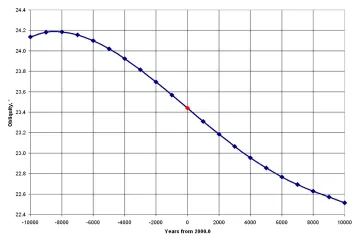
To truly define the fixed path, astronomers use a set of parameters that precisely map the ellipse in three-dimensional space relative to the orbital plane. While the shape is defined by the semi-major axis and eccentricity (how "squashed" the ellipse is), the orientation of that ellipse in space must also be specified.
For instance, we need to know:
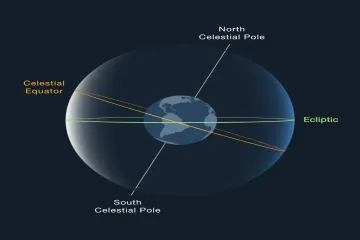
- Inclination: The tilt of the orbital plane relative to a reference plane, such as the Earth’s orbit around the Sun (the ecliptic).
- Longitude of the Ascending Node: Where the planet crosses the reference plane going from "south" to "north".
- Argument of Periapsis: The orientation of the ellipse within its own plane, pointing out from the central star to the planet's closest approach point.
These parameters, combined with the shape parameters (semi-major axis and eccentricity), provide a complete geometrical description of the orbit at any given moment. Even though perturbations cause these parameters to drift slowly over astronomical timescales, the resulting path remains fundamentally stable and predictable, securely binding the planet to its parent star through the force of gravity.
#Videos
Orbit of the Planets in the Solar System - YouTube
Related Questions
#Citations
the fixed path along which a planet moves - Brainly.in
Orbit - Wikipedia
What is the scientific name for the path of a planet around the Sun?
Orbits and Kepler's Laws - NASA Science
What's the actual path of the planets? - Physics Stack Exchange
Why do planets move in an elliptical path? | CK-12 Foundation
[Solved] Planets revolve around the Sun in a definite path. Arrange t
Orbit of the Planets in the Solar System - YouTube
Earth Rotation and Revolution - BYJU'S