Which of Kepler's Laws establishes the relationship between the size of an orbit and how long it takes to complete one revolution?
Answer
The Third Law
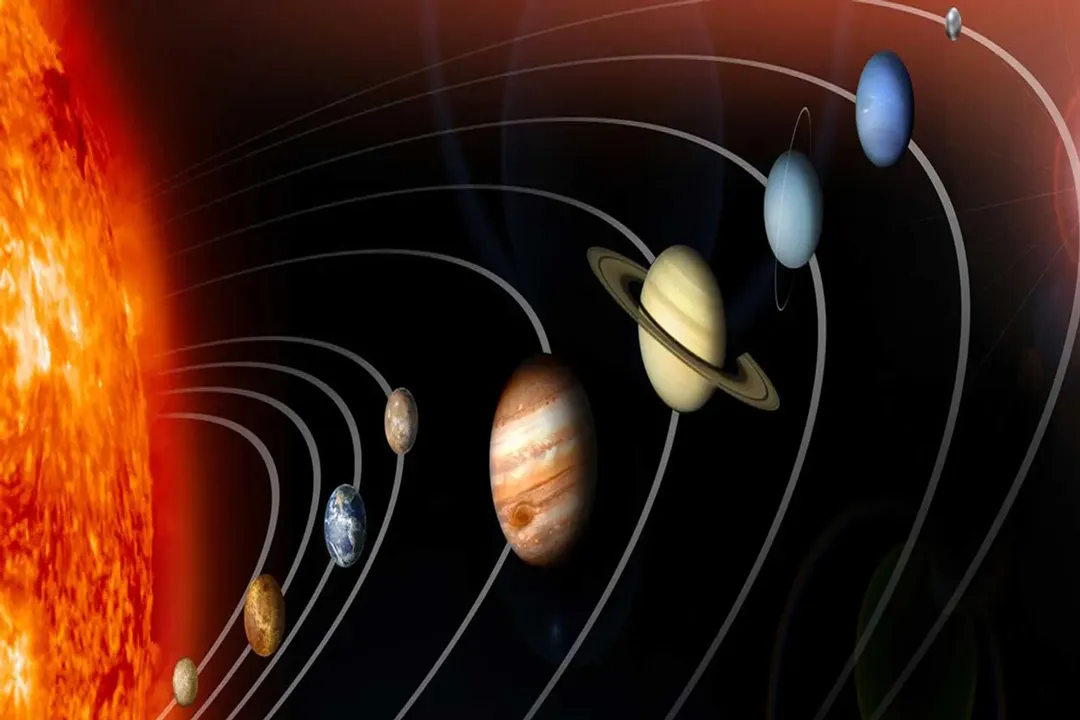
The Third Law specifically relates the planet’s orbital period (time for one revolution) to the size of its orbit, quantified by its semi-major axis.
#Videos
Orbit of the Planets in the Solar System - YouTube
Related Questions
What term describes the spinning of a celestial body on its own axis?What is the mathematically precise shape that defines the path a planet follows around a star?According to Kepler's First Law, where is the central star located relative to a planet's elliptical orbit?What is the specific term for the point where a planet is farthest away from the Sun during its orbit?What concept is described by Kepler's Second Law concerning the movement along the orbit?What fundamental force is responsible for keeping the planet in its curved, stable path around the Sun?What are the subtle, long-term deviations in a planet's path from a perfect Keplerian ellipse called?When does Earth move at its maximum orbital speed during its yearly revolution?Which of Kepler's Laws establishes the relationship between the size of an orbit and how long it takes to complete one revolution?What orbital parameter specifies the orientation of the ellipse within its own plane, pointing towards the planet's closest approach point?