What is the frozen ice in space?
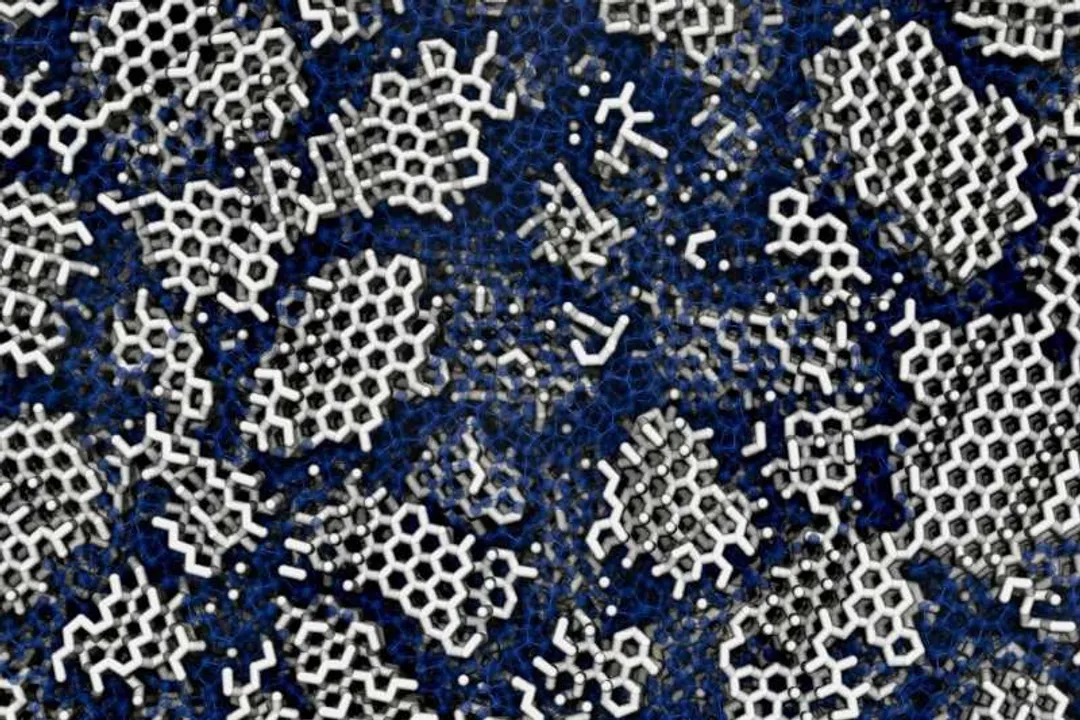
The frozen substances populating the cosmos are far more complex and varied than the familiar cubes we drop into a glass on Earth. When we talk about ice in space, we are discussing a vast collection of frozen volatiles—not just water—existing in environments of extreme cold and near-perfect vacuum, which fundamentally alters their physical state. This "space ice" is not a monolithic substance; rather, it represents a spectrum of structures and compositions found across the solar system and far beyond, often presenting surprises to the scientists studying it.
# Structure Differences
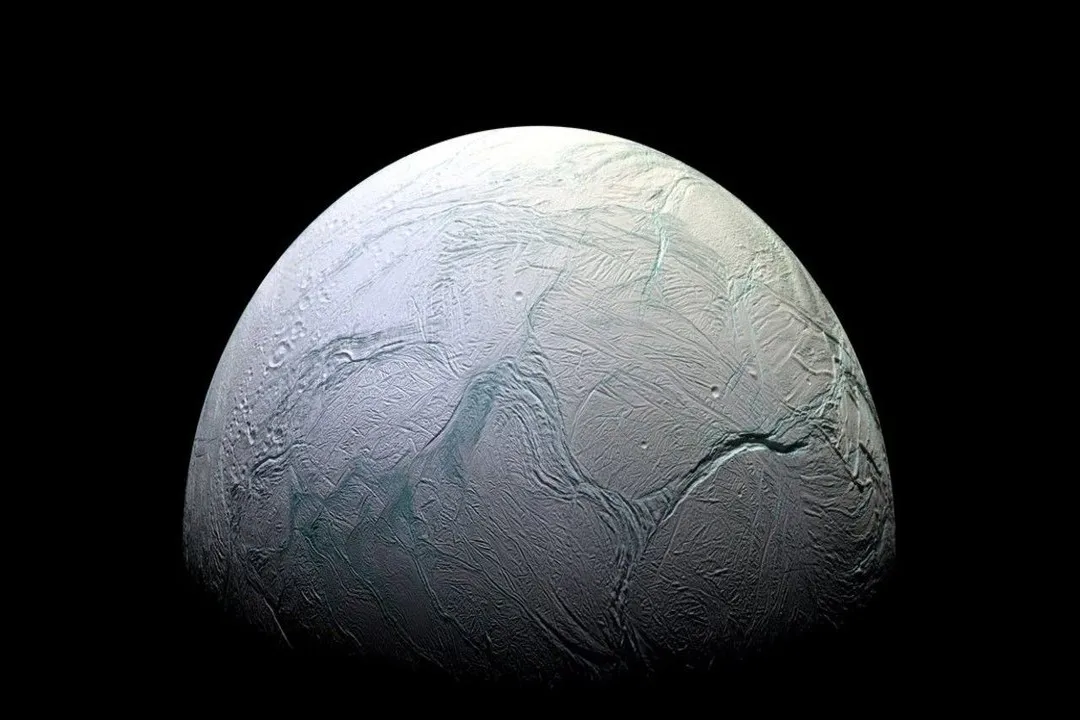
The ice we commonly encounter here on our home planet is almost exclusively crystalline water ice, specifically the hexagonal structure known as Ice . This arrangement is predictable because it forms under specific pressure and temperature conditions. However, the conditions in space—the incredibly low temperatures and the lack of atmospheric pressure—favor the formation of different structures, often making space ice structurally unfamiliar.
For decades, astronomical models often assumed that ice formed in the harsh vacuum of space, accumulating on surfaces like comets or interstellar dust grains, would be amorphous ice. Amorphous ice lacks the regular, repeating lattice structure of its crystalline cousin; it is essentially frozen chaos. This happens because the water molecules freeze so quickly in the vacuum that they don't have the time or energy to organize themselves into the lowest-energy, ordered crystalline state. This disorganized, glassy structure was thought to dominate cold, dark regions of space.
However, recent observational and laboratory work has forced a reassessment of this neat division. Researchers have confirmed the presence of crystalline water ice in locations where amorphous ice might have been expected, or they are finding structures that deviate significantly from terrestrial norms. This implies that either the formation process in certain space environments is capable of facilitating crystal growth, or that radiation and thermal processing over cosmic timescales transforms the initially amorphous ice into a more structured form. A useful way to visualize this contrast is to consider density; the crystalline forms are generally more compact and rigid than the fluffy, porous nature often associated with purely amorphous deposits, which impacts how quickly these materials sublimate when exposed to starlight.
# Crystalline Confirmation
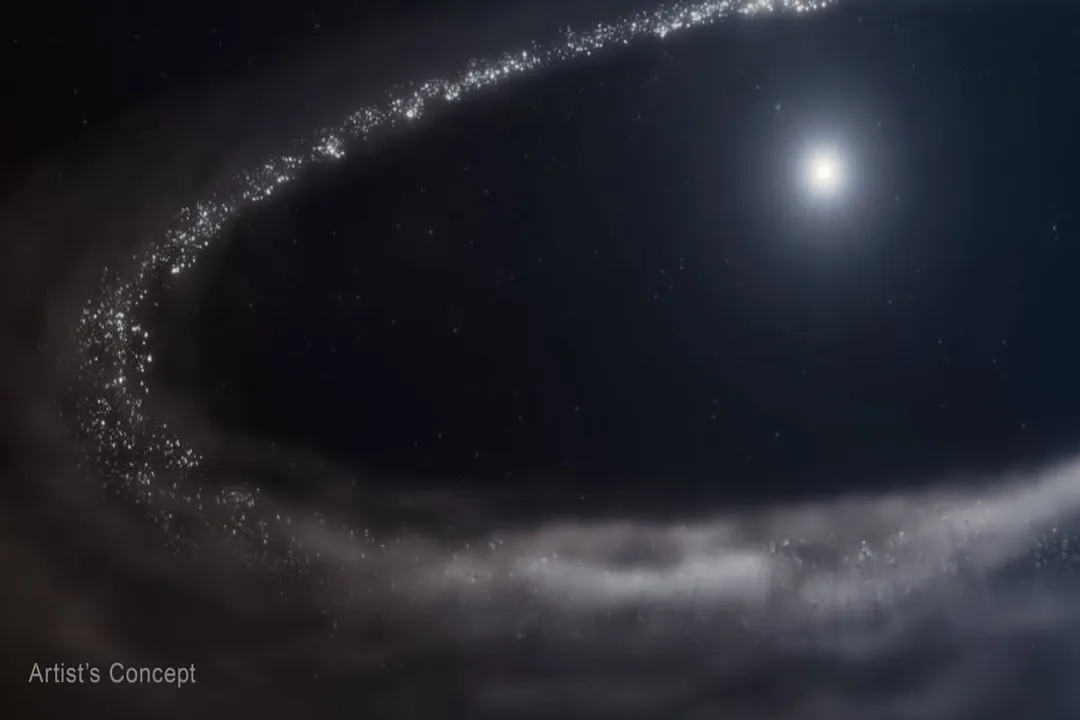
The findings challenging the "amorphous-only" model have been significant. For the first time, scientists have confirmed the presence of specific crystalline water ice states in space that are not the familiar terrestrial form. This confirmation suggests that space ice is often less like the ice we know than previously assumed, hinting at a wider variety of stable, solid water configurations in the universe than once thought.
When scientists simulate space conditions in labs, they are trying to replicate the slow, cold accretion process that builds comets and icy moons. They must carefully control the deposition rate and temperature to see what structure results. If the deposition is slow enough, or if the ice layer gets thick enough that internal heating or radiation allows some molecular mobility, those water molecules can settle into ordered patterns. The ability of ice to rearrange itself, even in the cold vacuum, suggests that the thermal history of an icy body—how long it sat slightly warmer before freezing solid—is as important as the initial freezing temperature itself.
# Vacuum Freezing
The primary difference between creating ice on Earth and creating it in space lies in the medium surrounding the water molecules. On Earth, even in a freezer, there is air pressure and a medium for nucleation. In space, water vapor deposits directly onto a cold surface in a vacuum. This process is incredibly efficient at trapping randomness, leading to the amorphous state.
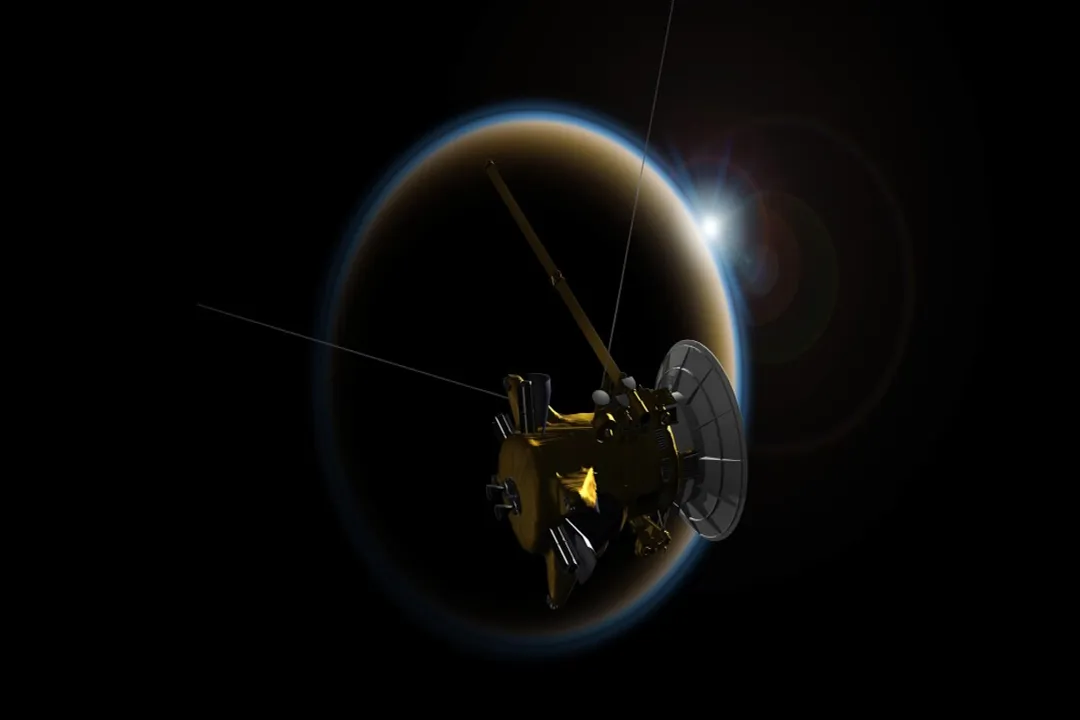
For a cosmic body like an asteroid or a moon, the process isn't just a single freezing event. It involves billions of years of accumulation from solar winds, micrometeoroid impacts, and the slow deposition of vaporized material from warmer parts of the system that then travels to colder zones. One insight that becomes clear when studying these environments is the sheer purity required for these processes to dominate. In deep space, far from the inner solar system, the ice is often nearly pure water, a stark contrast to terrestrial ice which is almost always mixed with dissolved minerals and gases that influence its structure and freezing point. On bodies like Saturn's moon Titan, this icy material is not merely a coating but forms the bulk of the landscape, described colorfully as the solar system’s largest slushie, mixing water ice with frozen hydrocarbons.
# Icy Realms
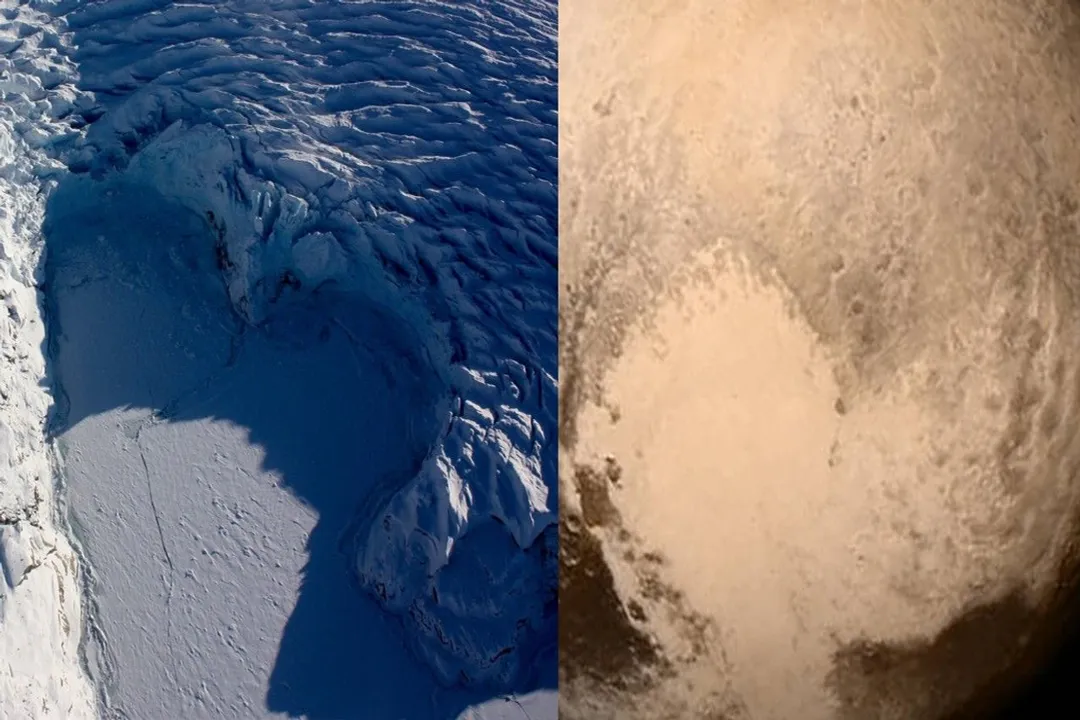
Frozen water and other volatiles are not confined to deep-freeze outer reaches; they exist throughout the solar system wherever temperatures permit.
- Comets and Asteroids: These bodies are primordial remnants, essentially massive balls of ice and rock that formed far from the Sun. Their composition is rich in frozen gases like carbon dioxide, methane, and ammonia, alongside water ice, which is released as the comet approaches the Sun, creating its characteristic tail.
- Outer Moons: Many moons orbiting Jupiter, Saturn, Uranus, and Neptune are giant, icy worlds. Europa, Ganymede, Enceladus, and others are believed to harbor vast subsurface oceans, meaning their interiors are dominated by ice of varying pressures and phases, covered by a surface crust of frozen water.
- Polar Caps: Even on worlds much closer to the Sun, like Mars, ice is present. Mars has water ice caps capped by seasonal frozen carbon dioxide.
When considering samples returned from space, understanding the native ice state becomes mission-critical. If a future mission retrieves a sample of low-density amorphous ice from a comet's interior and brings it back to Earth, the immediate introduction to higher pressure and warmer temperatures will cause it to rapidly transform into a denser crystalline form, potentially destroying any subtle structural clues about its formation environment. This means that when we design containment systems for potential extraterrestrial samples, we are not just trying to keep them cold; we must also manage the pressure differential to preserve the physical arrangement of the water molecules themselves, ensuring the samples remain chemically and physically analogous to their state millions of miles away. This structural preservation challenge is a major consideration for future sample-return science.
# Formation Processing
The structure of space ice is a function of formation history, but it is constantly being modified by the environment. Exposure to ultraviolet radiation from the Sun or cosmic rays can break chemical bonds within the ice structure. This process, called radiolysis, can create new molecules or defects within the ice lattice. Over eons, this radiation exposure can actually induce crystallization in previously amorphous ice, acting as a slow-motion cosmic oven that encourages the molecules to organize.
This leads to a complicated stratification within icy objects. The surface layers of a comet, exposed to direct solar bombardment, might be highly processed, partially sublimated, and potentially have more crystalline regions mixed with organic compounds. Deeper down, protected from the worst of the radiation, the ice might retain a structure closer to its initial, chaotic, amorphous deposition. The depth at which the transition from one state to the other occurs is dependent on the object's density, age, and proximity to an energy source, such as a nearby star or planet whose magnetosphere might be influencing the radiation field. For instance, ice shielded beneath a thick layer of dust or rock on a dwarf planet will have experienced a vastly different structural evolution than the tenuous layer of frost on a fast-moving asteroid.
# Scientific Investigation
The study of space ice is an active area of research, relying heavily on both laboratory experiments that recreate the vacuum environment and remote sensing of extraterrestrial objects. Instruments on orbiters or landers analyze reflected or emitted infrared light from these icy bodies; different ice structures (amorphous vs. crystalline) have slightly different spectral signatures, allowing scientists to infer the state of the ice below the surface.
Comparing the findings from these separate lines of evidence—lab simulation versus remote observation—is essential for building a complete picture. When lab experiments produce an unexpected crystalline structure under certain vacuum conditions, scientists then look for corresponding spectral evidence on a distant moon or comet to validate their understanding of the physical laws governing water in extreme environments. This constant verification loop helps refine models of how water, the essential ingredient for life as we know it, survives and transforms across the galaxy. The material science governing this frozen state dictates everything from the albedo (reflectivity) of icy worlds to the fundamental chemistry that might take place on their surfaces.
#Videos
What Is Amorphous Ice And Where Is It Found In Space? - YouTube
Related Questions
#Citations
Scientists discover ice in space isn't like water on Earth after all
Frozen: Ice on Earth and Well Beyond - NASA Science
The Structure of Ice in Space Is Neither Order nor Chaos—It's Both
Saturnian moon may be the solar system's biggest slushie - New Atlas
How does water freeze into asteroids in space? : r/scifiwriting - Reddit
What Is Amorphous Ice And Where Is It Found In Space? - YouTube
'Space ice' is less like water than previously thought - Phys.org
For the first time, researchers confirmed the presence of crystalline ...
'Space ice' is less like water than we thought