What's it called when rocks fall from the sky?
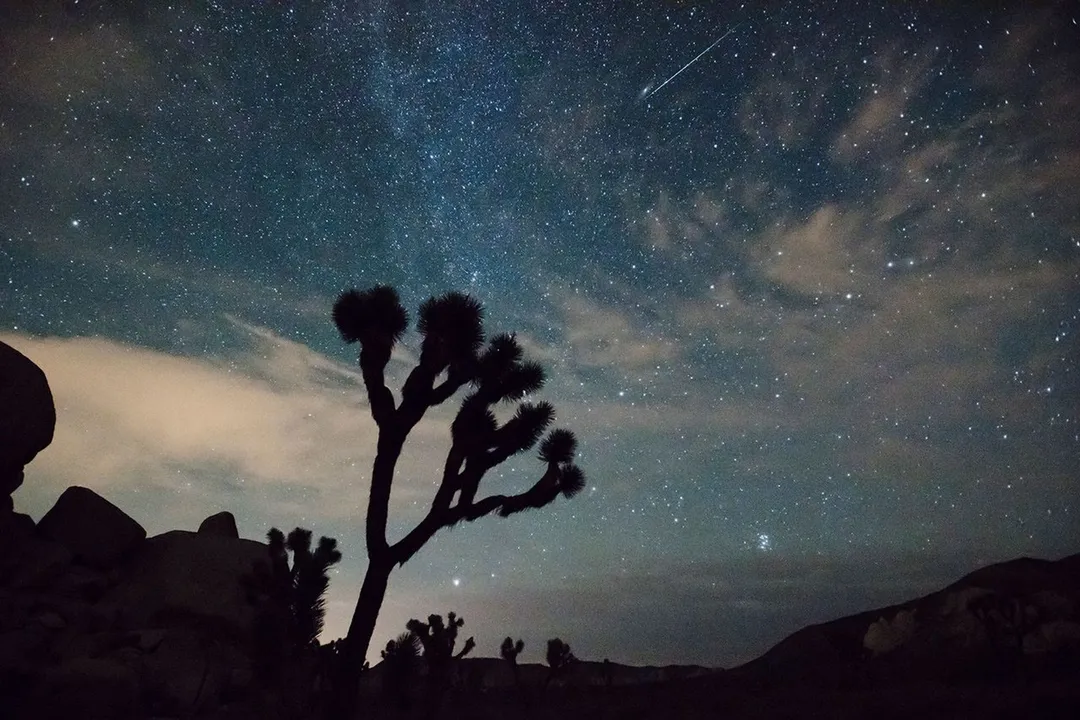
When an object made of rock or metal from space successfully navigates our atmosphere and strikes the ground, the general public often asks a simple question: what is that called? The correct terminology depends entirely on where the object is in its celestial journey. The initial object traversing space is called a meteoroid. [2][4] Once that meteoroid enters the Earth's atmosphere, friction causes it to heat up and glow, producing a visible streak of light across the sky; at this stage, it is correctly termed a meteor. [2][4] If that object survives the fiery passage through the air and lands on the planet’s surface, the remnant piece is then designated a meteorite. [1][2][3][4][6] This distinction between the three names—meteoroid, meteor, and meteorite—is essential for scientific clarity. [4]
# The Cosmic Traveler
A meteoroid is essentially a piece of debris orbiting the Sun, generally originating from asteroids or comets. [2][4] These space rocks vary dramatically in size, ranging from tiny grains of dust up to objects several meters across. [4] Anything larger than about one meter across that survives atmospheric entry is typically classified as a meteorite, though there is some definitional overlap depending on the source. [1] If a meteoroid is exceptionally large, it might be termed an asteroid, but once it becomes a meteor, it is burning up as it enters the air. [2]
The phenomenon of seeing these objects is common. NASA notes that Earth is constantly bombarded, with thousands of meteoroids entering the atmosphere daily. [4] Most are minuscule, burning up harmlessly high above the surface. [4]
# Atmospheric Fireball
The dazzling light show we witness is the meteor phase. When a meteoroid slams into the atmosphere at high speed—often tens of thousands of miles per hour—it compresses the air in front of it so intensely that the air heats up significantly. [6] This superheated air excites the material of the meteoroid itself, causing it to incandesce brightly. [6] This brief, brilliant flash is what we commonly call a "shooting star". [2]
Larger, brighter meteors are sometimes called fireballs. [2] When a fireball is exceptionally bright, sometimes outshining even Venus, it earns the specific designation of a bolide. [2] A bolide is essentially a very large meteor that often ends in an explosion. [2] Observing these events can be thrilling, and while the flash is instantaneous, the experience of witnessing a large one can be quite memorable; some reports from impacts suggest that the sound of the atmospheric entry can be significant, leading to confusion about where the object actually landed. [7]
A point worth noting for observers is that the visual location of the streak in the sky rarely corresponds exactly to the impact point on the ground, especially for very distant events. The light you see is a line projected across your field of view, not a direct map of the object's descent path relative to you on the ground. [6]

# Surface Relic
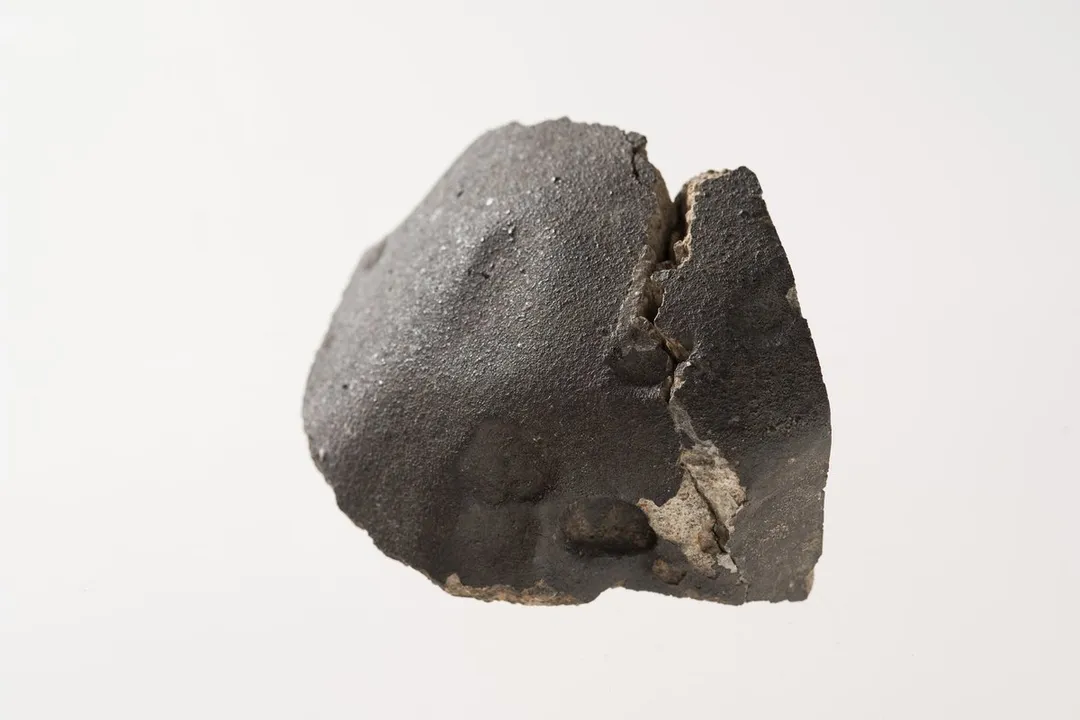
When the object survives its dramatic plunge and lands, it earns the title meteorite. [1][4] This surviving rock is a tangible piece of another celestial body—perhaps Mars, the Moon, or, most commonly, the asteroid belt—that has traveled through space for billions of years before reaching us. [6]
Meteorites that successfully make it to Earth are incredibly valuable to science because they offer direct samples of material from outside our planet, providing clues about the formation of the solar system. [6] Upon impact, the rock has often undergone significant heating and fragmentation, though the outer layers usually cool quickly. [6] A key feature of many freshly landed meteorites is the development of a dark, glassy rind called a fusion crust. [6] This crust is formed as the exterior melts during atmospheric passage. [6]
When considering whether a rock you find is a meteorite, it is important to remember that the fusion crust is temporary. Terrestrial weathering—rain, wind, and oxidation—will rapidly degrade this tell-tale sign. [6] A meteorite found decades after impact may look remarkably similar to a common Earth rock, often presenting a significant identification challenge unless specific internal characteristics are present. [1] For instance, an impact that creates a loud noise, like the one implied by reports of a "thud" from a falling object, means the object likely slowed down considerably before hitting the ground, potentially minimizing extreme surface melting but confirming its trajectory through the atmosphere. [7]
# Categorizing the Fallen Stones
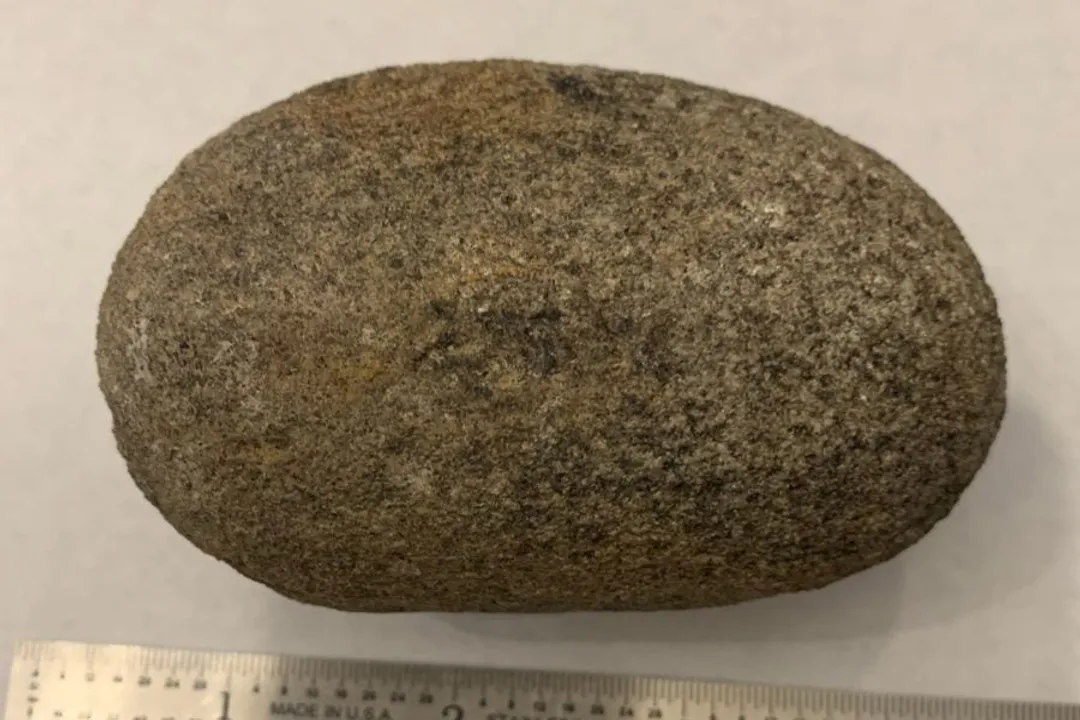
Meteorites are broadly categorized based on their composition, which reflects their origin within their parent bodies. [6] Scientists divide them into three main groups: stony, iron, and stony-iron. [1][6]
# Stony Types
The most common type found on the ground are stony meteorites, making up about 94% of falls. [6] These are primarily composed of silicate minerals. [1] Within this group are chondrites, which are the most primitive meteorites, containing materials that have not been significantly altered by melting or differentiation since the solar system formed. [6] They often appear as dark, ordinary rocks. [1] Another stony subset is the achondrites, which have experienced melting and differentiation, similar to terrestrial rocks, and are thought to come from larger bodies like the Moon or Mars. [6]
# Iron and Mixed Types
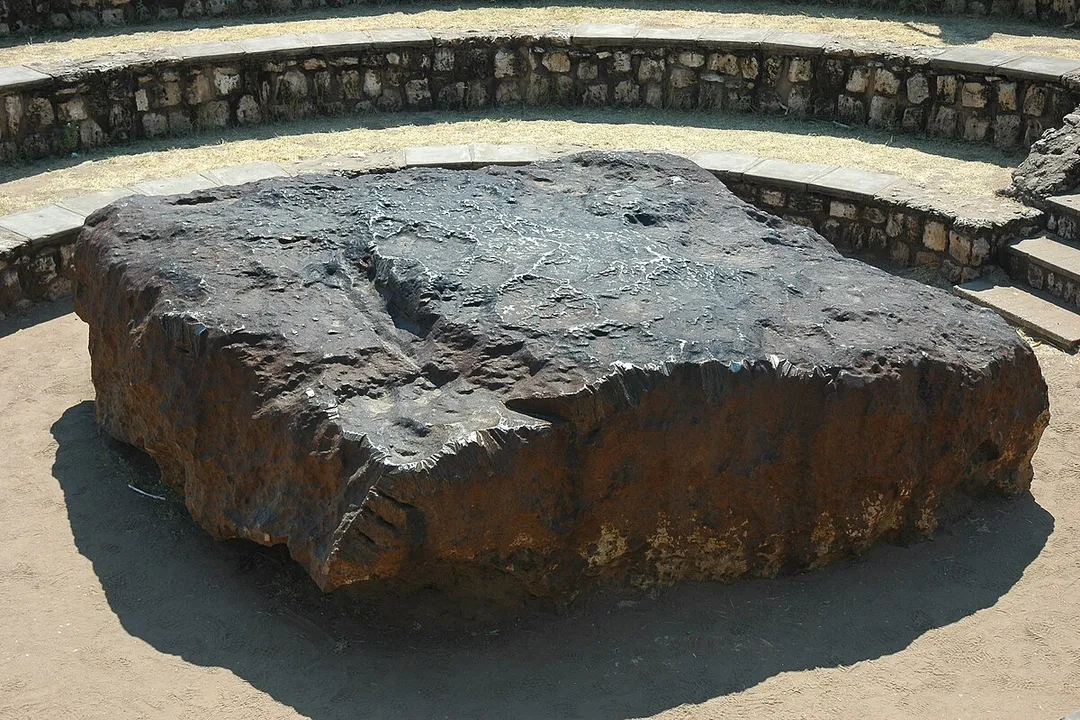
Iron meteorites are relatively rare finds on the surface but are common among meteorite finds because they are dense and survive erosion well. [6] They are composed mostly of an iron-nickel alloy. [1] When sliced and polished, these display a distinct intergrowth pattern of nickel-iron crystals called Widmanstätten patterns, a structure only achievable through extremely slow cooling deep within a parent body. [1]
Finally, stony-iron meteorites are an even rarer class, representing a mixture of silicate materials and nickel-iron metal. [6] These are thought to originate from the core-mantle boundary of a differentiated asteroid. [1]
| Meteorite Class | Primary Composition | Approximate Percentage of Falls | Origin Insight |
|---|---|---|---|
| Stony | Silicate minerals | [6] | Primitive (Chondrites) or differentiated (Achondrites) |
| Iron | Iron-nickel alloy | [6] | Differentiated core material |
| Stony-Iron | Silicates and Metal | [6] | Core-mantle boundary region |

# Searching for Space Rocks
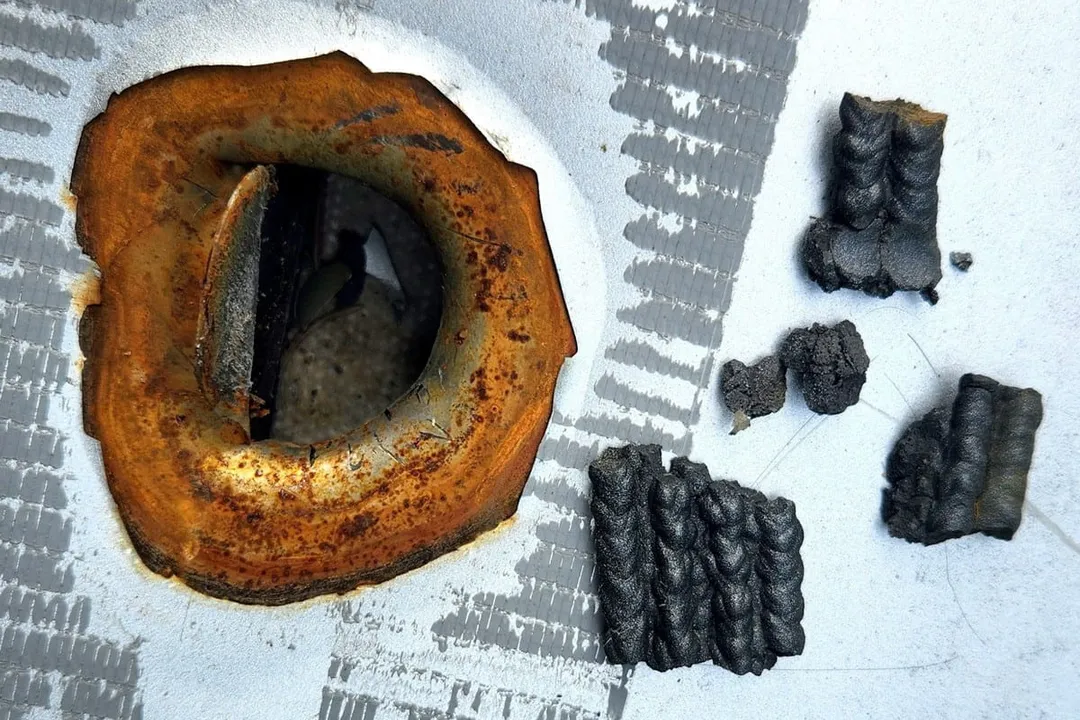
If someone witnesses a rock actually fall from the sky—perhaps seeing the flash and hearing a subsequent impact, as suggested by various reports of rocks striking objects like air conditioning units [5]—the search for the resulting meteorite begins. The key difference between a meteorite and terrestrial rock often lies in physical properties. Meteorites are typically denser than common Earth rocks due to the presence of iron and nickel. [6] They also often exhibit magnetism because of this metallic content. [6]
A practical way to initially screen a potential find, assuming you have the object in hand, is to check its density relative to common landscaping stones of the same size. A piece of granite that feels solid and normal, if it turns out to be a meteorite, will often feel surprisingly heavy for its volume. [6] Furthermore, if the finder has secured the object quickly, the presence of the dark, relatively smooth fusion crust provides a strong initial indicator, though one must be wary of terrestrial rocks that have been superficially heated or altered by ground fires. [6] If the rock is an iron meteorite, looking for pitting or slight irregularities on the surface caused by ablation (material loss) during atmospheric flight can also be helpful. [1]
Considering the sheer volume of material entering the atmosphere, one can make an interesting estimation: while thousands of meteoroids enter daily, the total mass landing on Earth annually is substantial, though dispersed globally. [4] For the average person in a populated area, the chance of witnessing a fall and finding the resulting meteorite remains statistically small, yet it does happen, sometimes spectacularly enough to be documented on community forums seeking identification. [5][9]
# Velocity and Fragmentation
The final velocity of a meteorite as it strikes the ground is much slower than its initial entry speed. While entry speeds can be between about 25,000 to 160,000 miles per hour, air resistance slows most fragments down considerably before they reach the surface. [6] Only the largest, most robust specimens retain enough momentum to cause significant craters or major impacts; most smaller meteorites drift down at terminal velocity, resulting in a sound upon impact that is often described as a "thud" rather than a shattering crash, unless the object was exceptionally massive. [7]
The fragmentation that occurs during atmospheric flight means that a single large meteoroid can sometimes break up into multiple pieces, resulting in a meteorite shower where several pieces from the same celestial event are found scattered over an area. [6] Analyzing the distribution pattern of these fragments can help scientists trace the trajectory and initial size of the original meteoroid as it entered the atmosphere. If an observer could accurately gauge the time delay between seeing the flash and hearing the resulting impact sound, they could potentially estimate their distance from the impact zone, assuming they know the approximate speed of sound—a useful but difficult calculation in a chaotic situation. [7]
#Videos
How To Identify a Meteorite - YouTube
Related Questions
#Citations
Meteorite - Wikipedia
Meteors and Meteorites - NASA Science
What is the term for rocks that fall from the sky? - Quora
Meteorite? A rock fell from the sky and hit my air conditioner ... - Reddit
Meteors and Meteorites - The Australian Museum
Not every rock that falls from the sky is a meteorite
How To Identify a Meteorite - YouTube
This fell from the sky. Does any one know what it is besides a ...