What is a rock that falls from space?
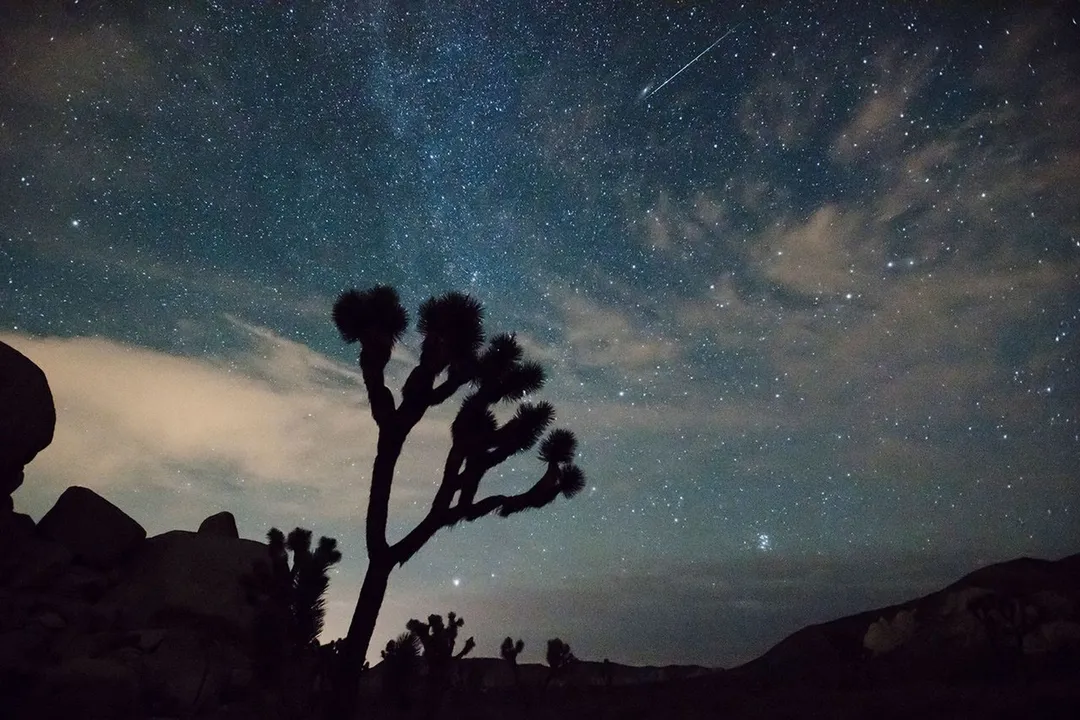
The object that completes its fiery voyage from the vacuum of space to the surface of our planet has several names depending on where it is in its journey. Before it even nears Earth, the chunk of rock or metal traveling through space is known as a meteoroid. [1][2] When that object encounters our atmosphere, the intense friction heats it to incandescence, creating the bright streak of light we often call a shooting star; at this stage, it is properly termed a meteor. [2][4][9] Only the portion of that original body that survives the atmospheric passage and actually lands on the ground earns the title of a meteorite. [1][2][4] These remnants are direct physical messengers from the solar system's formation billions of years ago. [3]
# Space Objects
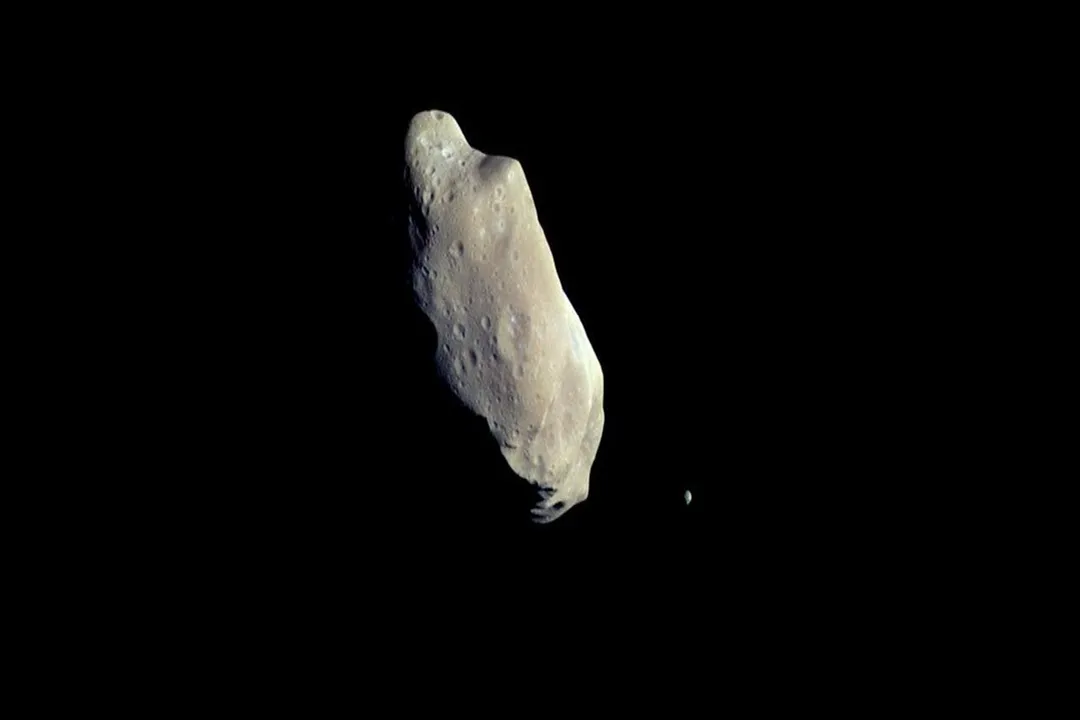
Understanding these distinctions is key to knowing what you are looking at, whether it is a faint glimmer overhead or a specimen sitting in a museum. A meteoroid itself is typically defined as a small rocky or metallic body orbiting the Sun. [1][2] They range dramatically in size, from dust grains up to objects about one meter wide. [2] Anything larger than that meter mark is generally categorized as an asteroid. [2] Therefore, when people discuss "rocks that fall from the sky," they are almost always referring to meteorites, the survivors of the meteoroid stage. [6] The visual phenomenon of the meteor occurs because the object slams into the atmosphere at incredible speed, compressing the air in front of it until it becomes superheated, causing the air and the meteoroid's surface to glow brightly. [9]
# Rock Composition
Meteorites are not monolithic; they represent the building blocks of the terrestrial planets and can be broadly divided into three major categories based on their chemical makeup: stony, iron, and stony-iron. [1][3][4]
Stony meteorites are by far the most common type recovered on Earth, accounting for about 94% of all finds. [1] These rocks are primarily composed of silicate minerals, much like common rocks found here, but they often contain inclusions called chondrules—small, spherical grains that are among the oldest materials in our solar system. [3] They are further divided, but the undifferentiated stony meteorites, known as chondrites, are particularly significant because they have not been altered by melting since they formed, offering a pristine glimpse into the nebula that created the Sun and planets. [3]
In contrast, iron meteorites consist mainly of an iron-nickel alloy. [1][4] These are the remnants of the cores of larger, ancient planetesimals that differentiated (separated into core and mantle) long ago. [3] When cut and polished, they often reveal intricate, intersecting crystalline patterns known as Widmanstätten patterns, a structure that can only form from slow cooling deep within a planetary body over millions of years. [3]
Stony-iron meteorites represent the rarest class, making up only about 1% of finds. [1] These objects contain roughly equal mixtures of silicate minerals and the iron-nickel metal, suggesting they originated near the boundary where the core met the mantle in their parent bodies. [3]
Here is a quick comparison of the primary types:
| Type | Primary Composition | Abundance (Approx.) | Key Feature |
|---|---|---|---|
| Stony | Silicates (Minerals) | 94% | Chondrules (in primitive types) [1][3] |
| Iron | Iron-Nickel Alloy | 5% | Widmanstätten Patterns [1][3] |
| Stony-Iron | Silicates & Metal | 1% | Core-Mantle Boundary origin [1][3] |
# Cosmic Origins

Where do these cosmic travelers originate? The vast majority of meteorites we find come from the asteroid belt, a region situated between the orbits of Mars and Jupiter. [3][2] Gravitational nudges, often from Jupiter, can knock these asteroid fragments out of stable orbits, sending them into trajectories that eventually cross Earth's path. [3] While the asteroid belt is the main source, researchers have identified a small but scientifically invaluable group of meteorites that originated elsewhere. A few specimens have been definitively traced back to the Moon, ejected by large impact events on our satellite, and even fewer have been identified as originating from Mars, blasted off its surface by impacts. [3] These non-asteroid meteorites are crucial, as they provide physical samples of other celestial bodies without needing to launch expensive retrieval missions.
# Atmospheric Passage
The dramatic transformation from a meteoroid to a meteorite is governed by the physics of atmospheric entry. When an object hits the top layer of our atmosphere, it is moving incredibly fast—often tens of thousands of miles per hour. [9] This extreme velocity causes massive friction and compression of the air, generating enormous heat that vaporizes the outer layers of the rock. [9] This vaporization is what creates the visible light we see as a meteor. [9]
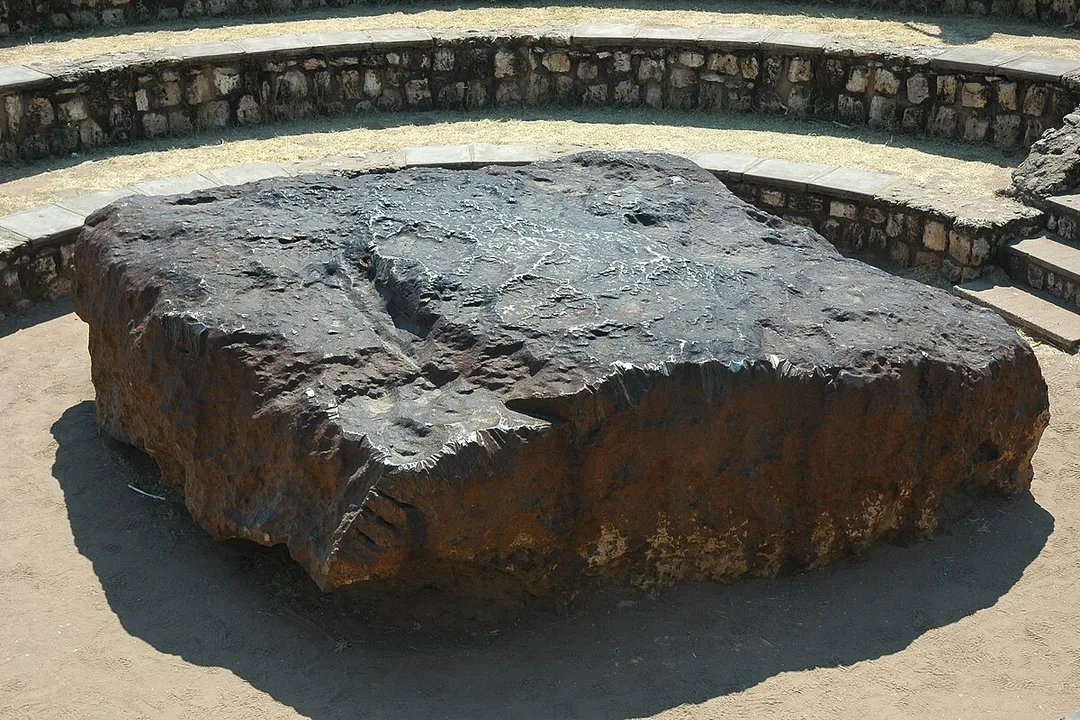
The survival of the object hinges on its initial size and atmospheric entry angle. Most meteoroids, even those many meters wide, completely disintegrate long before reaching the ground. [9] The atmosphere acts as a tremendous brake; it is the rapid deceleration, much more than just the heat itself, that determines whether a fragment survives to land. For instance, an object the size of a small car or truck, while capable of creating a spectacular fireball visible across continents, will often be shattered high up by aerodynamic forces, with only dust or small pebbles reaching the surface. [9] The surviving rock that does land is almost always coated in a dark, thin layer called a fusion crust, which forms when the surface melts during its final, slower descent through the thicker lower atmosphere. [4]
# Finding Samples
While countless meteoroids enter the atmosphere daily, finding the resulting meteorites on the ground is a matter of luck, patience, and knowing what to look for. [4] Terrestrial rocks are common, so a visitor might easily mistake a piece of slag or an ordinary stone for a visitor from space. Meteorites often stand out because they are denser than typical Earth rocks due to their high metal content. [4] If you were to walk through a grassy field and pick up a stone that feels significantly heavier than a normal rock of the same size—perhaps feeling more like a heavy piece of metal hardware than a piece of granite—that immediate tactile feedback concerning density is often the first clue to identifying an iron-rich specimen [Editorial Insight 1]. Furthermore, they usually possess a dark, often black or brown fusion crust from atmospheric melting, and they may feature shallow depressions called regmaglypts that look like thumbprints pressed into the cooling surface. [4]
The best places to find them are regions where terrestrial weathering is slow and the contrast between the dark meteorite and the background is high. [4] For this reason, large, flat, and desolate regions like hot, dry deserts (where erosion is minimal) or the vast, white expanses of Antarctica (where dark rocks stand out clearly against the ice) are prime hunting grounds. [4] In Antarctica, ice flow patterns often concentrate meteorites in specific "stranding zones" as the ice moves, effectively collecting space debris into small areas over millennia. [4]
# Historical Value
The study of meteorites is foundational to planetary science because these rocks are tangible pieces of other worlds. [3] They represent the oldest, most pristine materials available for laboratory study, offering direct evidence of the chemical composition and processes present when the solar system formed about 4.56 billion years ago. [3] Analyzing their isotopic ratios allows scientists to trace their lineage back to specific asteroids or even planets. [3] Moreover, meteorites have played a role in a much broader historical context. Some theories suggest that impacts delivered water and organic molecules—the chemical precursors to life—to the early Earth. [3] This concept moves meteorites from being just curious stones to being crucial documents detailing the environment that eventually gave rise to us. [3] For anyone interested in the formation of our solar system, holding a meteorite is akin to holding a billion-year-old piece of untouched solar system construction material. [3]
#Videos
This Space Rock is 4.5 Billion Years Old. Here's Its Secret... - YouTube
Related Questions
#Citations
Meteorite - Wikipedia
Meteors and Meteorites - NASA Science
Meteorites: Messengers From Outer Space
What Are Meteorites? Ancient Clues to Our Solar System | AMNH
This Space Rock is 4.5 Billion Years Old. Here's Its Secret... - YouTube
What is the term for rocks that fall from the sky? - Quora
It is a fragment of rock that survives,its fall to earth from space..
Meteorites: Stones from Heaven | Astronomy - Lumen Learning