What are the rocks that burn when entering the atmosphere?

The streak of light we occasionally see tearing across the night sky, often called a "shooting star," is caused by small pieces of space debris encountering our planet at incredible speeds. These fragments, which are essentially rocks or dust particles traveling through the vacuum of space, don't typically "burn" in the chemical sense of combustion; rather, they heat up intensely due to the extreme physics of atmospheric entry. This brilliant phenomenon marks the violent transition from space object to atmospheric event.
The language we use to describe these objects changes depending on where they are in their trajectory. When a fragment is still orbiting the Sun, it is referred to as a meteoroid. Once that meteoroid slams into Earth’s atmosphere and begins to glow, the streak of light itself is called a meteor. If the original object is large enough to survive the fiery passage and actually land on the Earth’s surface, the remaining piece we can hold in our hands is then classified as a meteorite. Understanding these three terms—meteoroid, meteor, and meteorite—is the first step in unraveling what happens to these extraterrestrial rocks as they meet the air of our world.
# Object Names

These cosmic visitors originate from various places, including the debris trails left by comets or fragments chipped off asteroids and occasionally even the Moon or Mars. The vast majority of meteoroids are quite small, ranging from the size of a grain of sand to a small pebble. Even these tiny bits of extraterrestrial material can produce spectacular visual effects when they encounter our atmosphere at speeds often exceeding 25,000 miles per hour.
The distinction between the object in space and the light in the sky is fundamental. A meteoroid is a solid body in space, typically smaller than an asteroid, though the dividing line between a very small asteroid and a large meteoroid isn't perfectly defined. When this body interacts with Earth’s atmosphere, the resultant phenomenon is the meteor, which is the light produced, not the rock itself. This glowing occurs at altitudes usually between 45 to 75 miles above the surface. Only the portion that survives down to the ground earns the final designation of meteorite.
# Heating Process
The common, intuitive explanation for why these rocks appear to burn is friction. However, the physics involved is slightly more complex and dramatic than simple rubbing against the air. When a meteoroid hits the atmosphere, the extreme speed means it compresses the air directly in front of it far faster than the air molecules have time to move out of the way.
This rapid compression creates an enormous shock wave, which dramatically increases the temperature of the air in the thin region immediately surrounding the rock—sometimes reaching thousands of degrees Fahrenheit. It is this superheated, ionized gas—the compressed air—that creates the brilliant light we see as a meteor. The rock material itself is ablating (vaporizing) due to this intense heat, and this vaporized material also contributes to the glow.
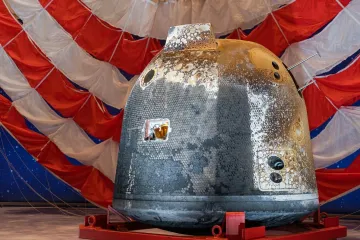
It is helpful to contrast this with objects designed for atmospheric entry, like spacecraft. A returning capsule is moving fast, but its trajectory and shape are often managed, and critically, it possesses a thermal protection system designed specifically to manage that superheated air layer. A random rock entering at an oblique, high-speed angle encounters the atmosphere like hitting a brick wall, leading to immediate, intense heating of the surrounding air rather than a gradual slowdown. The initial entry speed dictates the violence of this heating; the faster the object, the greater the pressure wave, and the brighter the resulting meteor.
# Survival Factors
Whether a piece of space rock becomes a meteorite seen by a collector or simply vaporizes entirely depends almost entirely on its starting size and its entry angle. Earth is constantly bombarded by debris, but most of it is micrometeoroids—dust-sized particles that burn up high in the atmosphere without anyone ever noticing. Meteoroids that are the size of a basketball or smaller usually disintegrate completely before reaching the ground.
The process of disintegration often happens in stages. Smaller fragments may cause a brief flash, while larger ones can create dramatic fireballs (sometimes called bolides) that can be visible even during daylight hours. If a meteoroid is substantial—perhaps starting out the size of a car or larger—it has a better chance of surviving the atmospheric gauntlet.
One interesting factor to consider involves the sheer volume of material hitting the planet. Estimates suggest that between 100 and 300 tons of space material drift down to Earth every single day, but the vast majority of this mass is in the form of fine dust that settles almost unnoticed. This means that while the sky frequently hosts meteors, finding an actual meteorite is rare because the initial mass needed to survive is quite significant compared to the average interplanetary dust grain. Furthermore, the angle matters; a shallow entry angle allows the object to spend more time decelerating in the upper layers of the atmosphere, effectively "burning off" mass slowly, whereas a steep, head-on plunge can lead to catastrophic fragmentation.
# Rock Types
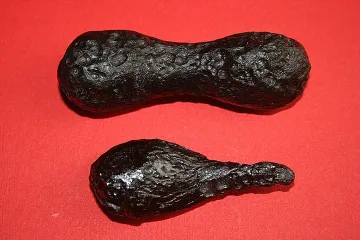
The survivors—the meteorites—offer scientists direct insight into the formation of the solar system. Meteorites are generally categorized into three primary groups based on their composition: stony, iron, and stony-iron.
Stony meteorites are the most common type found, making up about 94% of all documented falls. These look like terrestrial rocks and are primarily composed of silicate minerals. Within this group are chondrites, which are the most primitive type, often containing tiny mineral spheres called chondrules, giving them their name.
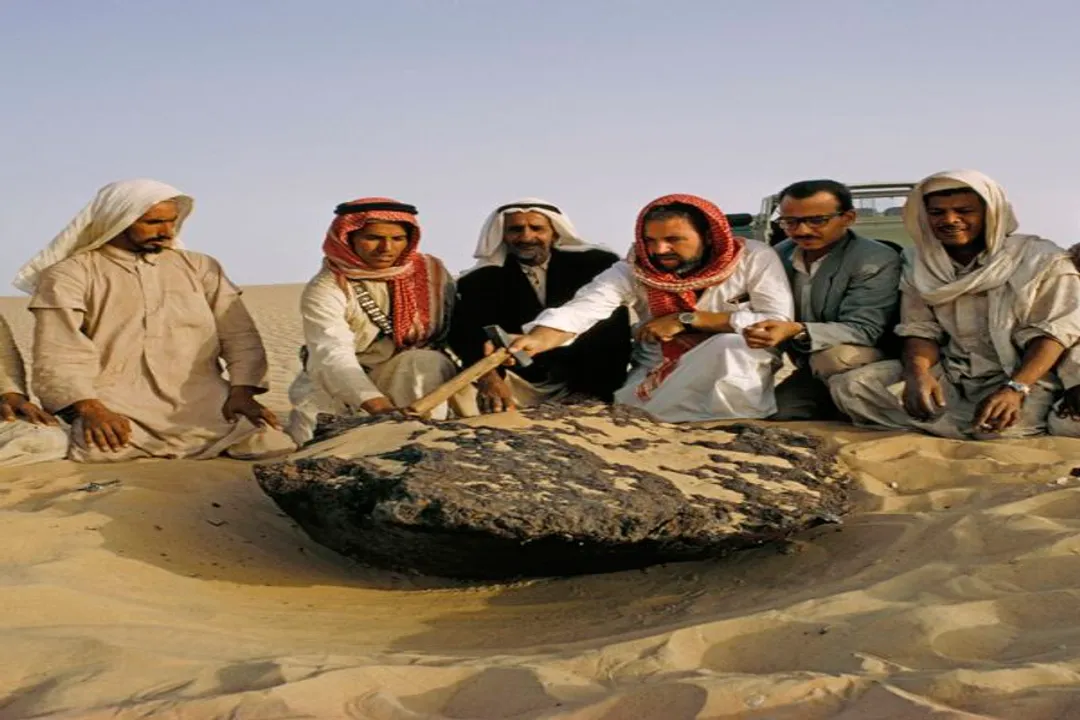
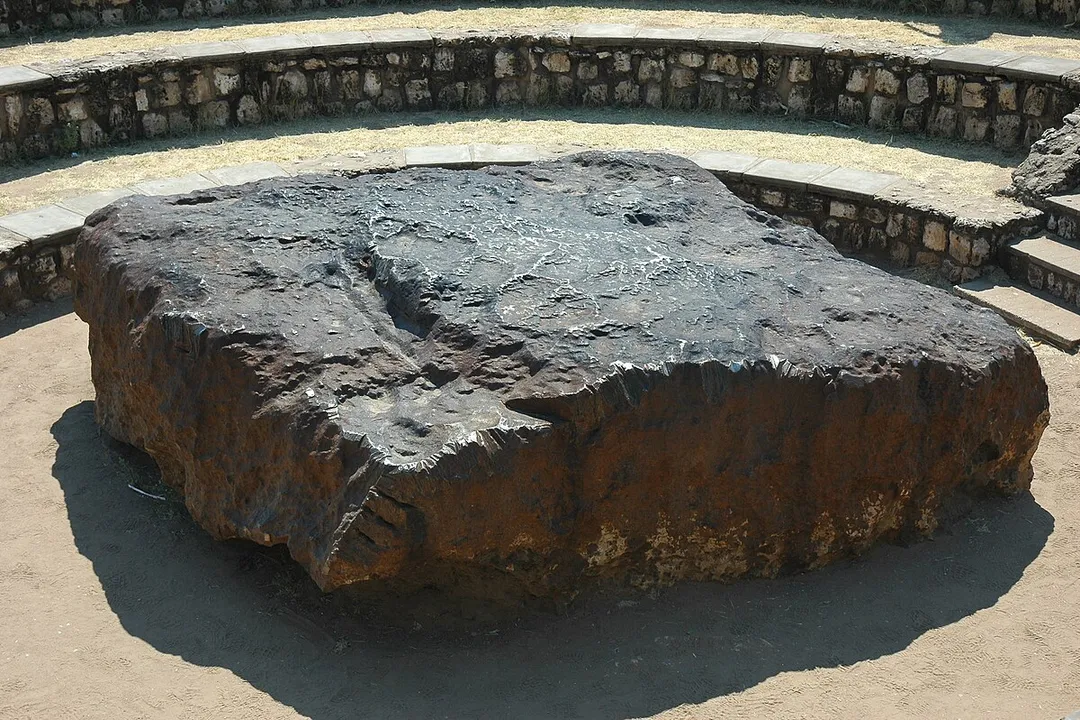
Iron meteorites are much denser and are composed mainly of iron and nickel alloys. While rarer in the general population of space debris, they are easily recognized once they land because they are significantly heavier than normal rocks and can be attracted to a magnet. Because of their density, iron meteorites are generally the most massive objects to survive entry intact.
Stony-iron meteorites are the rarest of all, comprising less than 1% of finds. As the name suggests, these fascinating objects contain a mixture of both silicate minerals and metal. Examining the structure of these survivors allows researchers to date events from billions of years ago, providing a tangible connection to the materials that formed the planets.
# Earth’s Shield
The Earth’s atmosphere serves as an extremely effective natural shield against catastrophic impacts from space debris. For instance, an object perhaps 10 to 20 meters across might create a very bright meteor, but the atmospheric drag is usually sufficient to slow it down so that only small fragments reach the surface, if any. It takes an object many tens of meters wide, sometimes hundreds of meters, to pose a genuine impact threat that results in a ground explosion or crater formation rather than just material slowing down.
When looking at the physics of entry, it becomes apparent why humans don't need specialized protection for every flight. While the air in front of a meteoroid is heated intensely by compression, the air around a human body or a relatively slow-moving airplane is not undergoing the same extreme pressure changes. The difference in velocity is key. Spacecraft re-entering from orbit are moving much slower than the average meteoroid traveling interstellar space, and their descent is managed, meaning the atmosphere has time to work on them without creating that instantaneous, catastrophic shock heating. This difference in entry mechanics—the initial velocity and the lack of a carefully managed trajectory—is why the small space rocks seem to instantly ignite while our technology requires heat shields.
When studying impact features, geologists often look for the remnants of these high-speed collisions. The evidence of a major impactor—one that didn't fully vaporize—can include a crater, shattered rock formations, and high-temperature minerals, which are definitive signs that an extraterrestrial body arrived with enough momentum to survive deceleration. The presence of impact melt sheets or breccias indicates that the incoming energy was so great it melted the local crust, a fate reserved for the largest survivors of the atmospheric screening process.
Related Questions
#Citations
Meteors and Meteorites - NASA Science
Meteorite - Wikipedia
Understanding Meteoroids, Meteors, and Fireballs in Space
Why do asteroids crumble and burn when entering the Earth's ...
Meteorites on Earth: how many fall per year and why don't we see ...
Why do asteroids burn up in the atmosphere? : r/NoStupidQuestions
Meteorites, Impacts, & Mass Extinction - Tulane University
Meteorite - National Geographic Education