What is a small piece of debris that burns up in the atmosphere?
That fleeting streak of light cutting across the night sky, often called a "shooting star," is a spectacular, brief performance orchestrated by something incredibly small traveling incredibly fast. This natural light show is the result of a tiny piece of space debris encountering our planet’s atmosphere. To truly appreciate this phenomenon, we must understand the cosmic vocabulary, which assigns different names to this material depending on its location: what we see as the flash is a meteor, but the object causing it starts life as a meteoroid while traveling in the void of space. [2][3] If it survives the fiery descent to make landfall, it earns a final designation: a meteorite. [1][2]
# Cosmic Travelers
Before anything becomes a visible streak, it exists as a meteoroid, which is essentially a small body adrift in outer space. [3] Astronomers define meteoroids as objects significantly smaller than the larger, more massive asteroids, with sizes ranging from mere grains of dust up to about one meter (3.28 feet) in width. [3] Anything smaller than a meteoroid falls into the category of micrometeoroids or simply space dust. [3] The sheer volume of this interplanetary population is staggering; scientists estimate that about 25 million meteoroids, micrometeoroids, and other bits of space debris pierce Earth’s upper atmosphere every single day. [3]
These travelers originate from various sources within the solar system. Many are fragments resulting from collisions that shattered larger asteroids or comets. [3][1] A significant portion of the material sweeping through our orbits comes from comets, as their volatile ices evaporate near the Sun, spraying rock and dust across their orbital path. Other particles are ejected material from larger impacts on bodies like the Moon or Mars. [3][1]
Compositionally, these pieces of space junk are not uniform. They are generally categorized into three main types based on what they are made of: iron, stone, or a mix of the two, known as stony-iron. [1][3] Stony meteoroids sometimes contain small, grain-like inclusions called chondrules, classifying them as chondrites. [3] Those without these features are achondrites, often originating from extraterrestrial volcanic activity and typically containing little or no iron. [3] Conversely, the iron types are dense and are commonly composed of about 90% iron and 9% nickel. [2] Understanding this composition is key to later identifying any survivors that reach the ground. [1]
# Atmospheric Inferno
The critical moment for a meteoroid destined to become a visible spectacle occurs when Earth’s gravity pulls it inward, causing it to plunge through the atmosphere at high velocity. [2] These speeds can be dramatic; when meeting Earth head-on, the combined speed with Earth’s own orbital velocity can approach about 71 kilometers per second (km/s). [3]
This entry is not a gentle glide; it is a high-speed collision with air molecules. The friction generated—or more accurately, the intense compression of the air in front of the object—causes the meteoroid to heat up rapidly and vaporize. [2] This event is what we call a meteor. [2][3] The light we witness isn't just the glowing object itself, but rather the much larger region of air surrounding the particle that has been superheated into a glowing gas.
Meteors typically burn up completely at altitudes between 60 miles (about 96 kilometers) or between 80 and 130 kilometers above the surface. [2] For the average, pea-sized particle, this destruction is total, leaving no physical trace on the ground. However, if the object is substantially larger, it might put on an even brighter show. A piece the size of a golf ball, for example, produces a much brighter trail known as a fireball. A still larger object, perhaps the size of a bowling ball, has a chance of survival, depending on its speed upon entry.
# Survival Rates and Remnants
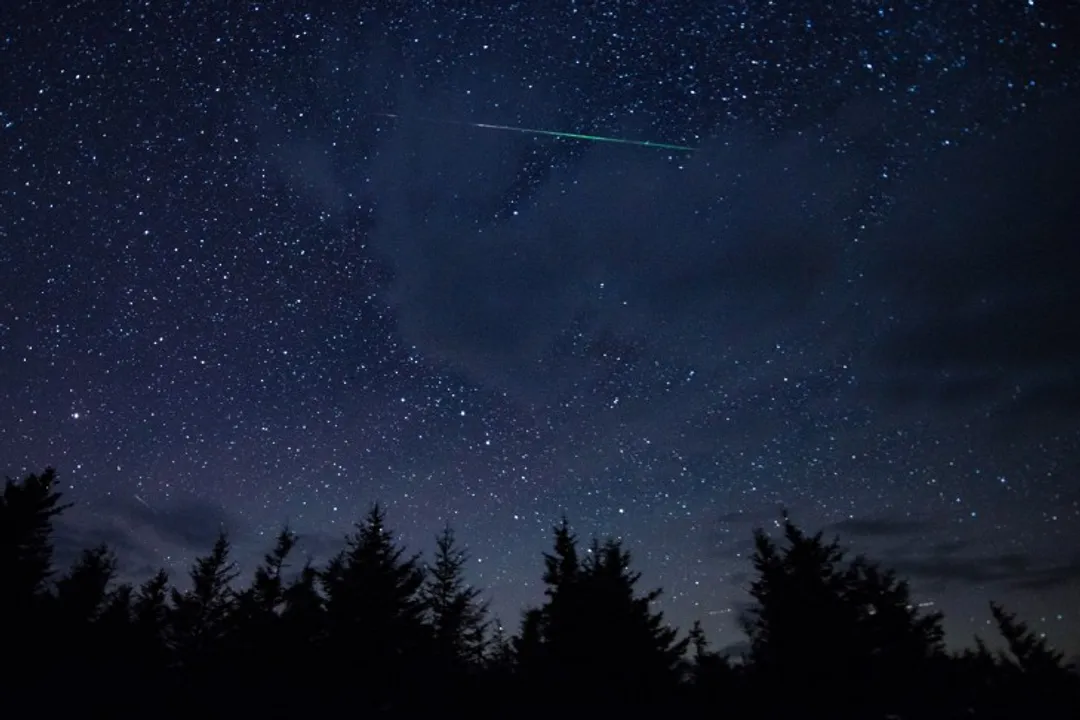
While billions of tiny particles enter daily, the vast majority disappear high above us. [2] Scientists estimate that while about 48.5 tons (44,000 kilograms) of material arrives on Earth daily, only a tiny fraction of that mass originates from objects large enough to survive the atmospheric gauntlet. [1]
The material associated with meteor showers, often coming from fragile, icy comets, is particularly susceptible to breakup. Most shower debris, which is often between the size of a grain of sand and a pea, burns up entirely. [1] It is exceptionally rare for a shower-related fragment to survive and be recovered for laboratory study.
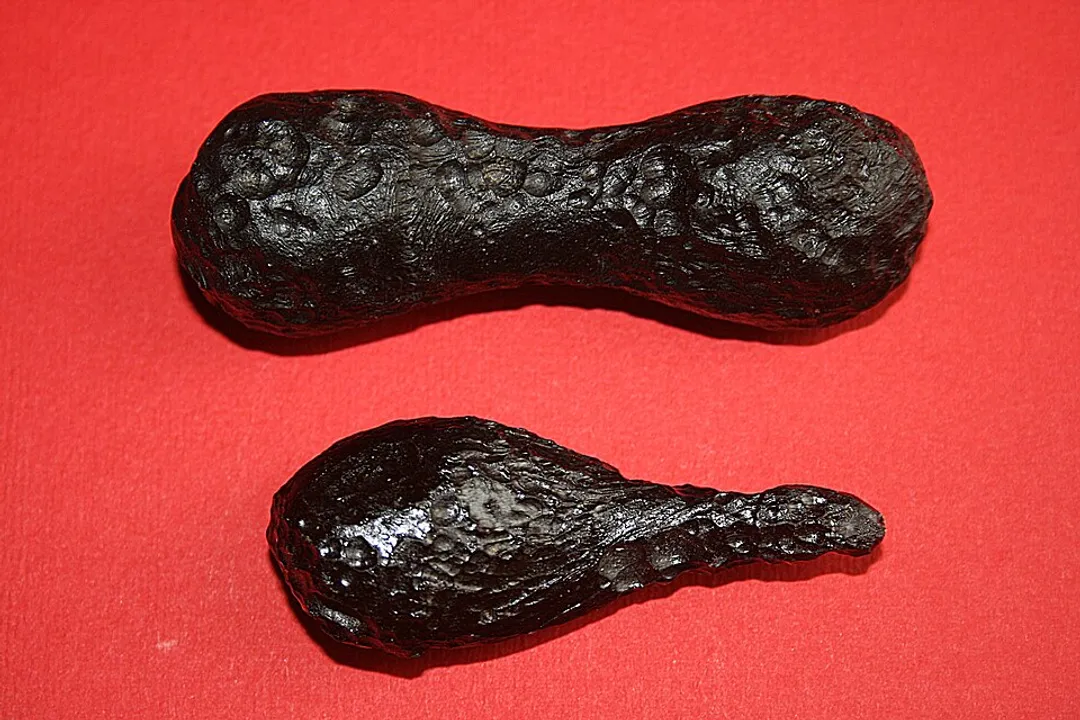
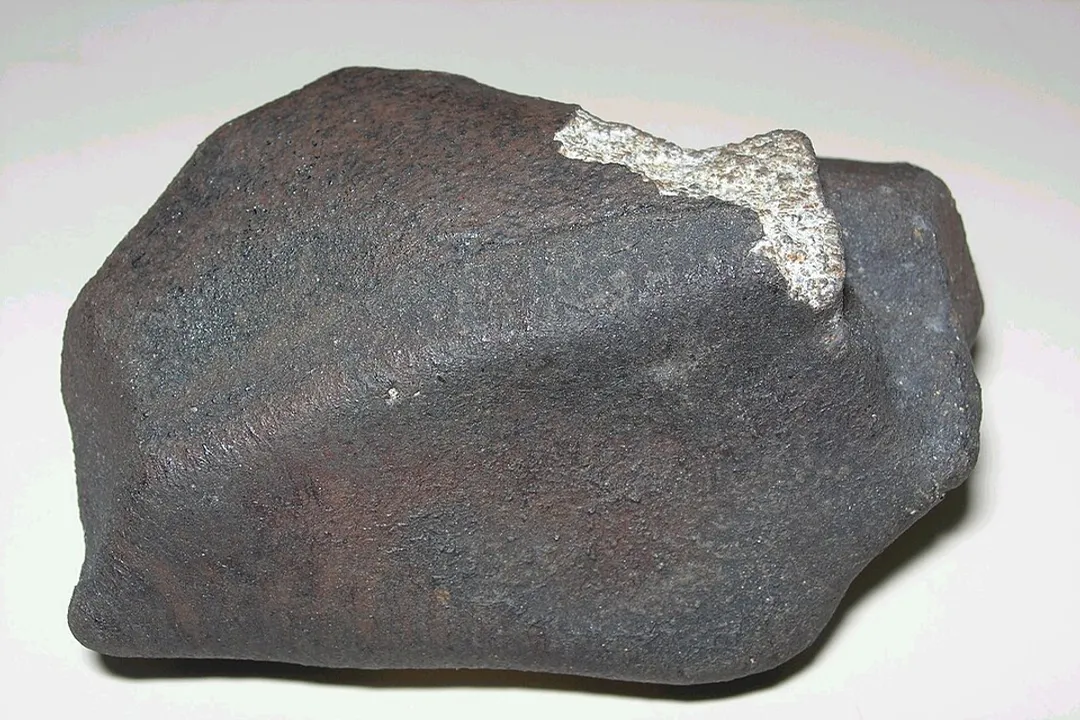
For a piece of rock to become a meteorite—the official term for a surviving chunk that impacts the ground—it must withstand the intense ablation (surface material being burned off) and pressure. [3] Meteorites generally range in size from a pebble up to that of a fist. [1] Because most space rocks smaller than a football field shatter during entry, less than 5% of the original object’s mass typically reaches the surface. [1]
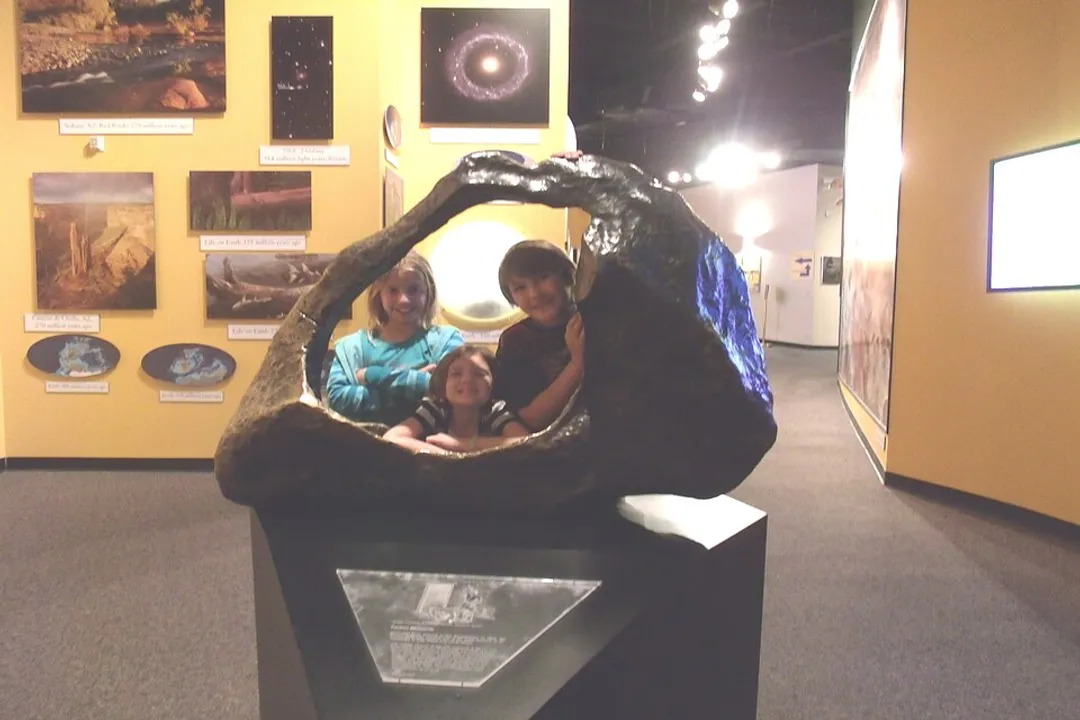
When you do find a remnant, it will likely possess a distinctive fusion crust, a burned exterior that often appears shiny, formed by the surface melting during passage through the atmosphere. [1] Interestingly, while stony meteorites are the most common type falling today, meteorites discovered long after they landed are most often the heavier, more visually distinct iron ones, as the stony varieties can be much harder to differentiate from terrestrial rocks on the surface. [1] If you are searching for fallen space rock, deserts—both sandy and icy Antarctica—offer the best viewing conditions because dark meteorites stand out sharply against the pale ground, and lighter ones contrast against the ice. [1] It is worth noting that material ejected from an impact event on Earth, called tektites, can sometimes be confused with true meteorites, as they are formed from terrestrial rock melted and ejected by the impact force. [3]
# Celestial Dust Streams
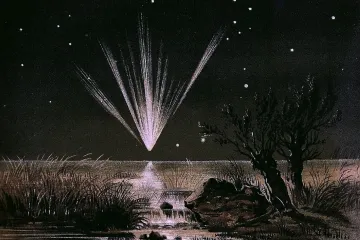
The seemingly random flashes of light we see on clear nights are called sporadic meteors. However, when the rate of visible meteors suddenly increases significantly, sometimes exceeding 60 per hour, we are witnessing a meteor shower. [2][1] These organized events occur because Earth, in its orbit around the Sun, crosses a stream of dust and debris left behind by a passing comet (or, less frequently, an asteroid). [1]
These dust particles maintain the comet's original orbital path, and as the Earth plows through that trail, we see a predictable annual display. Meteor showers are usually named after the constellation where the apparent point of origin, the radiant, is located. [1][2] Though the paths are parallel, perspective makes them look like they diverge from this single point, much like railroad tracks appearing to meet at a distant horizon.
The Perseids, associated with Comet Swift-Tuttle, are perhaps the most famous due to their reliable August appearance during warmer Northern Hemisphere nights. [1][2] The Geminids, linked to the asteroid Phaethon, often boast the highest rates, sometimes reaching 150 meteors per hour under perfect conditions. [1] The Eta Aquarids and Orionids are connected to the ancient Comet Halley. [1]
| Shower Name | Typical Peak Date | Estimated Hourly Rate | Associated Parent Body |
|---|---|---|---|
| Quadrantids | January 3–4 | ~120 (historically 40) | Asteroid 2003 EH1 |
| Perseids | August 12–13 | ~100 | Comet 109P/Swift-Tuttle |
| Geminids | December 12–13 | ~150 (highest rate) | Asteroid (3200) Phaethon |
| Leonids | November 16–17 | ~15 | Comet 55P/Tempel-Tuttle |
| [1][2] |
The distribution of this debris isn't always even. Comet trails can have dense "clumps" of material. When Earth passes through one of these denser sections, the result can be a meteor storm, as seen during past, spectacular Leonid displays where rates momentarily soared.
# Timing Observation
Observing meteors is best done with the naked eye; optical aid like binoculars is counterproductive as it restricts the field of view, and meteors are unpredictable in location. [2] A key factor in maximizing your count is when you look. Before midnight, you are on the trailing, or "back side," of Earth as it moves through space. You will only see the fastest particles that manage to catch up with our planet's motion. After midnight, however, you are facing forward in the direction of Earth's revolution, essentially running directly into the stream of debris, resulting in significantly higher visibility. Seasoned observers often suggest lying back in a dark location, letting their eyes adjust for about 15 minutes, and patiently scanning the entire sky.
# Mass Input and Planetary Scars
Considering that an estimated 15,000 tonnes (about 16,535 short tons) of meteoric material settles onto Earth every year, the continuous bombardment is immense. [3] While the vast majority of this mass comes from those tiny, disintegrating meteoroids, the occasional, larger object does survive.
For instance, the well-preserved Barringer Meteorite Crater in Arizona, about 1 kilometer across, was formed only about 50,000 years ago by a piece of iron-nickel metal estimated to be roughly 50 meters in diameter. [1] This event contrasts sharply with the daily dusting of fine debris. Another notable example is the 2013 Chelyabinsk event in Russia, where a house-sized meteoroid fragmented miles above the ground, releasing energy equivalent to 440,000 tons of TNT, injuring over 1,600 people, primarily from shattered glass. [1] This highlights the difference in consequence between the small piece that burns up (the focus of our observation) and the slightly larger object that creates a powerful airburst or impact. [1]
The study of the few surviving meteorites is vital, as they represent pristine building blocks from the early solar system, offering clues about planetary formation and history dating back nearly 4.6 billion years. [1] Even though the small piece of debris that burns up harmlessly every night is ephemeral, its collective input over eons has contributed significantly to the material coating our world. [1]
Related Questions
#Citations
Meteoroid - Wikipedia
Meteors and Meteorites: Facts - NASA Science
Meteors | Astronomy - Lumen Learning