What is a rock that fell from the sky?
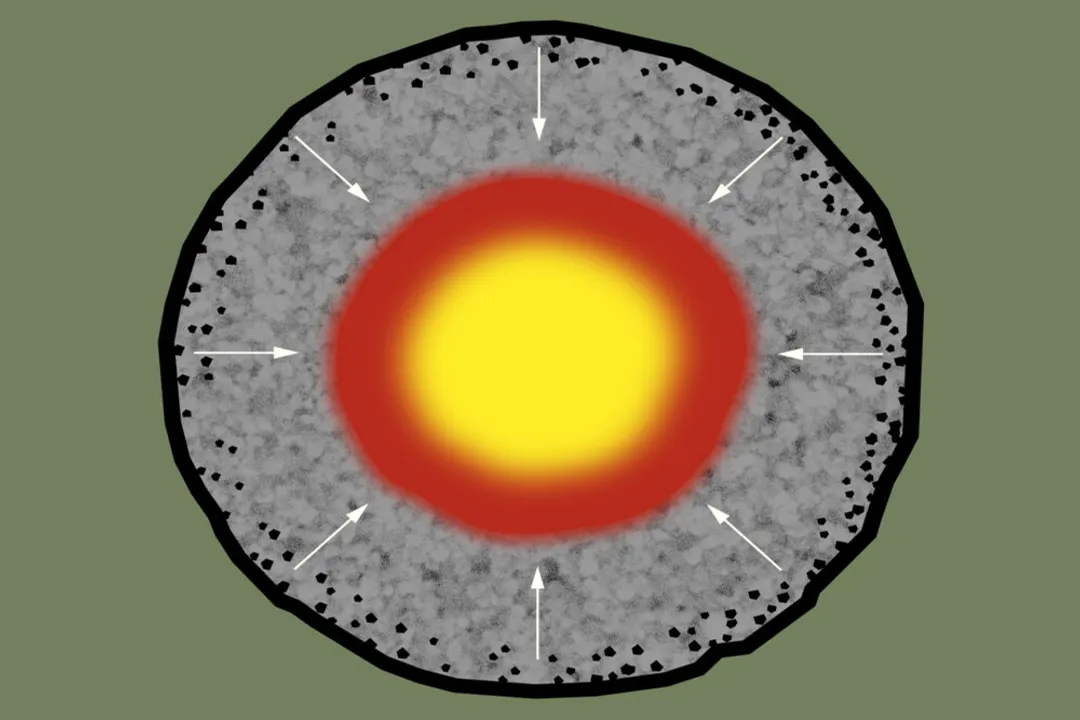
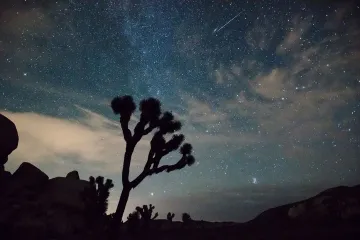
The question of what constitutes a rock that has journeyed across the vacuum of space to finally land on our planet involves several distinct classifications that describe its journey rather than just its final form. The celestial object begins its life as a meteoroid, which is essentially a small piece of rock or metal orbiting the Sun, typically ranging in size from a grain of sand up to about one meter across. When this meteoroid enters Earth's atmosphere at high velocity, the intense friction with the air causes it to heat up and glow, creating a streak of light we call a meteor, popularly known as a shooting star. If this object survives the fiery passage through the atmosphere and actually strikes the Earth's surface, then it earns the title of meteorite. Understanding this progression—meteoroid, meteor, meteorite—is the first step in classifying these visitors from the outer solar system.
# Rock Naming
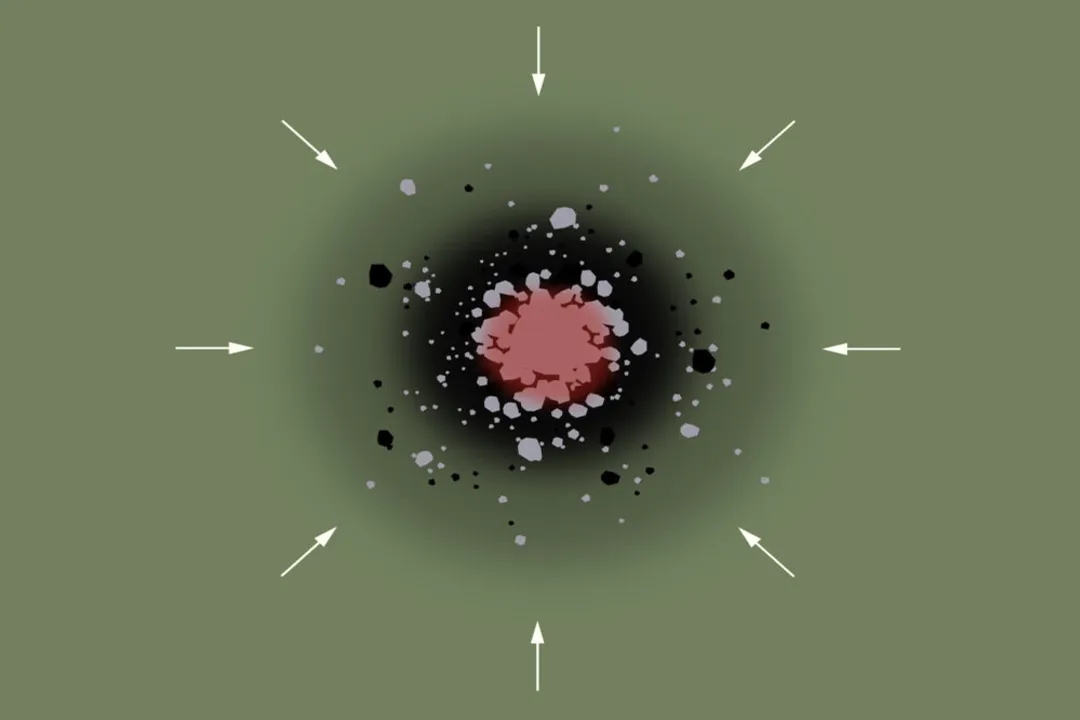
These visitors are fundamentally messengers from outer space, carrying physical records of the solar system's formation about 4.56 billion years ago. They are primarily classified based on their chemical composition, which dictates their structure and appearance. The main components found in these extraterrestrial rocks are iron, nickel, and silicate minerals, which are familiar components of Earth's own geology, yet their ratios and crystalline structures often betray their cosmic origin. The vast majority of meteorites originate from the asteroid belt located between Mars and Jupiter, but some originate from the Moon or even Mars itself.
# Space Material

Meteoroids originate from several sources within the solar system. The most common parent bodies are asteroids, which are rocky, airless remnants left over from the early formation of the solar system. Collisions within the asteroid belt fragment these larger bodies, creating the smaller meteoroids that eventually fall to Earth. In contrast, meteorites originating from the Moon or Mars are typically the result of a massive impact event on their surface that ejected material into space, some of which later crosses Earth's orbit.
The chemical makeup of a meteorite dictates its primary classification. For instance, stony meteorites are the most common group, comprising about 94% of all falls. These resemble terrestrial rocks, composed mainly of silicate minerals. They often contain small, rounded grains called chondrules, which are fascinating evidence of the very first stages of planetary accretion. A special type of stony meteorite, the achondrite, lacks these chondrules and is thought to represent material from the crusts or interiors of larger parent bodies that underwent melting and differentiation, similar to how Earth formed its layers.
Then there are the iron meteorites, which account for about 5% of falls. As the name suggests, these are predominantly composed of iron-nickel alloy. These space rocks are remnants of the cores of larger, early planetesimals that melted, allowing heavier metals like iron and nickel to sink to the center, separating from lighter silicate material. Finally, the rarest class, stony-iron meteorites, make up only about 1% of finds. These fascinating objects represent a mixture of the metallic core and the silicate mantle of their parent bodies, often displaying spectacular internal structures when cut and polished.
# Meteorite Classes
To better appreciate the differences, it is useful to compare the three major families:
| Class | Composition (Primary) | Approximate Abundance of Falls | Key Feature |
|---|---|---|---|
| Stony | Silicates (Olivine, Pyroxene) | ~94% | May contain chondrules |
| Iron | Iron-Nickel Alloy | ~5% | Often exhibits Widmanstätten patterns when etched |
| Stony-Iron | Mixture of Silicates and Metal | ~1% | Contains distinct metallic veins/nodules within a silicate matrix |
A particularly scientifically significant type of stony meteorite is the carbonaceous chondrite. These are among the most primitive materials known, having changed very little since the solar system began. They are dark, contain significant amounts of carbon, and can harbor complex organic molecules—the basic building blocks of life—offering clues about the chemical processes that preceded biology on Earth. Comparing an iron meteorite, representing a planetary core, with a carbonaceous chondrite, representing primordial solar nebula dust, provides a tangible snapshot of the different evolutionary paths taken by various objects in our solar neighborhood.
# Atmospheric Entry
The dramatic event of a rock falling from the sky is rarely witnessed in its entirety, but the consequences of its passage are visible on the surviving specimen. When a meteoroid enters the atmosphere, the extreme speed generates immense heat. This heat causes the outer layer of the object to melt and be blown away, a process known as ablation. The melted material that solidifies almost instantly on the surface forms a dark, often black or brown, exterior coating called the fusion crust. This crust is one of the most immediate and obvious identifiers of a true meteorite, though Earth processes can mimic it. The intense heating can also sometimes cause trapped gases within the rock to escape explosively, creating "regmaglypts"—thumbprint-like indentations on the surface.
It is important to note that while many people have witnessed a bright fireball or meteor, only a fraction of those objects actually survive the atmospheric transit to become a meteorite. The vast majority ablate completely or shatter into harmless dust high above the ground. This survival rate is extremely low, making any recovered specimen relatively rare.
# Finding Clues
Distinguishing a genuine meteorite from a common terrestrial rock that might look similar—perhaps an oxidized slag from an old foundry or a dark volcanic rock—is critical for collectors and scientists alike. Several key features differentiate true meteorites.
First, look for the fusion crust mentioned previously, a thin, dark outer layer. Second, true meteorites are generally denser than most Earth rocks because of their high iron content. If you have a scale, compare the weight of the suspicious rock to a common stone of the same size; meteorites often feel heavier than expected. Third, the presence of magnetism is a strong indicator. Since most meteorites contain iron or nickel-iron, a simple kitchen magnet will usually stick to them.
A less obvious, but crucial, characteristic is the presence of regmaglypts—the thumbprint shapes—or flow lines on the surface caused by atmospheric ablation. Furthermore, if you cut the rock open, iron meteorites will reveal crystalline structures known as Widmanstätten patterns when etched with a mild acid, intricate geometric patterns that can only form through the very slow cooling process that occurs deep within planetary cores.
Here is an insight for local context: When assessing a potential find in an area with historical industry, be cautious. Old slag heaps or discarded industrial byproducts, especially those rich in iron, can be highly magnetic and possess a dark, sometimes even pitted, exterior that closely mimics a meteorite's appearance to the untrained eye [This similarity often leads to false positives in densely populated, historic regions]. To be certain, a specimen must exhibit multiple characteristics, such as being dense, magnetic, and having a fusion crust, rather than just one.
# Recovery Steps
If you suspect you have found a piece of space rock, the process of preservation and authentication should begin immediately to protect the sample from terrestrial contamination. The correct first steps are important because weathering and handling can quickly destroy fragile features like the fusion crust or introduce chemical alterations.
The primary immediate action is to minimize handling and contamination. Do not attempt to clean the rock with water or chemicals, as this can speed up terrestrial weathering processes, rusting the metal components or obscuring diagnostic features. If you must move it, handle it as little as possible. If the object is found in soil or mud, gently brush off loose debris with a clean, soft cloth or brush, but avoid aggressive scraping.
The next crucial step is documentation. Record exactly where and when you found it. Taking photographs in situ (in its original location) is ideal, showing the immediate surroundings before moving it. If you must move it, store it in a clean, dry container, perhaps lined with acid-free paper or aluminum foil to prevent chemical reactions with plastic or other materials.
For authentication, you should seek expert advice. Institutions like scientific museums, university geology or planetary science departments, or specialized meteorite dealers can often provide initial assessments. The Lunar and Planetary Institute (LPI) advises that after initial documentation, the next best step is often to have a small piece tested or to send high-quality photographs to specialists for confirmation before submitting the entire specimen for potentially destructive analysis. This layered approach ensures that you do not damage a potentially valuable scientific specimen unnecessarily.
It is also worth understanding that the legal landscape regarding ownership can vary significantly. While many ordinary meteorite finds are treated as property of the finder, large, scientifically significant finds—especially those involving structures or private land—can sometimes fall under different jurisdiction, making initial expert consultation on procedure wise.
# Scientific Gain
Meteorites are far more than just interesting space debris; they are tangible links to the birth and evolution of our solar system, offering a time capsule unavailable through remote sensing alone. They provide direct, physical evidence about the physical and chemical conditions present during the condensation of the solar nebula. By studying them, planetary scientists can determine the temperatures, pressures, and chemical environments that existed before the Earth accreted into the planet we know today.
For example, analyzing the isotopic ratios within ancient stony meteorites allows scientists to trace the earliest chemical mixing that occurred in the protosolar cloud. The rare Martian meteorites, which may have been ejected from Mars by ancient impacts, offer scientists direct samples of Martian material to study without having to launch an expensive sample-return mission. Even the study of the metallic components in iron meteorites provides insight into core formation processes that occurred on planetary bodies billions of years ago. Every distinct find, whether a common chondrite or a rare stony-iron, contributes to a growing database that helps paint a more complete picture of cosmic history. The very existence of these relatively fragile rocks surviving passage through the atmosphere speaks to the persistence of ancient materials across immense spans of time and space.
#Videos
How To Identify a Meteorite - YouTube
Related Questions
#Citations
Meteorite - Wikipedia
Meteors and Meteorites: Facts - NASA Science
Meteorites: Messengers From Outer Space
Meteorites: Stones from Heaven | Astronomy - Lumen Learning
What to do if you think that you have found a meteorite
How To Identify a Meteorite - YouTube
Pieces of the Sky (Meteorites) - Griffith Observatory
Strange rock that fell from the sky while I was cleaning my yard. : r/WTF
XSPACE - Do you think you found a meteorite?