What is the rock thing in space?

When we talk about a "rock thing in space," we are usually referring to any small celestial body orbiting the Sun that isn't a planet or a comet. [1] These objects are the stuff of our solar system's history, often broken fragments from larger bodies like asteroids, or sometimes even remnants from the early formation of the planets themselves. [4][5] The term itself can be confusing because the description changes depending on where the rock is located in its life cycle—whether it's floating harmlessly between Mars and Jupiter, blazing across our sky, or resting on a museum floor. [4] The general consensus among scientists is that these space rocks have a better, more specific nomenclature than just "rock thing". [8]
# Naming Convention

The terminology used to describe these objects depends entirely on their location relative to Earth and whether they have survived an atmospheric trip. [1][4] It is helpful to think of the process as a three-stage journey for these cosmic travelers:
- Meteoroid: The rock while it is still out in space. [1][4]
- Meteor: The streak of light created when that rock enters Earth’s atmosphere and burns up. [1][4]
- Meteorite: The piece of rock that actually survives the fall and lands on Earth’s surface. [1][5][2]
This progression clearly outlines the life of an interplanetary visitor, moving from the vacuum of space to the incandescent light show in our sky, and finally to terrestrial study. [4]
# Asteroids and Meteoroids
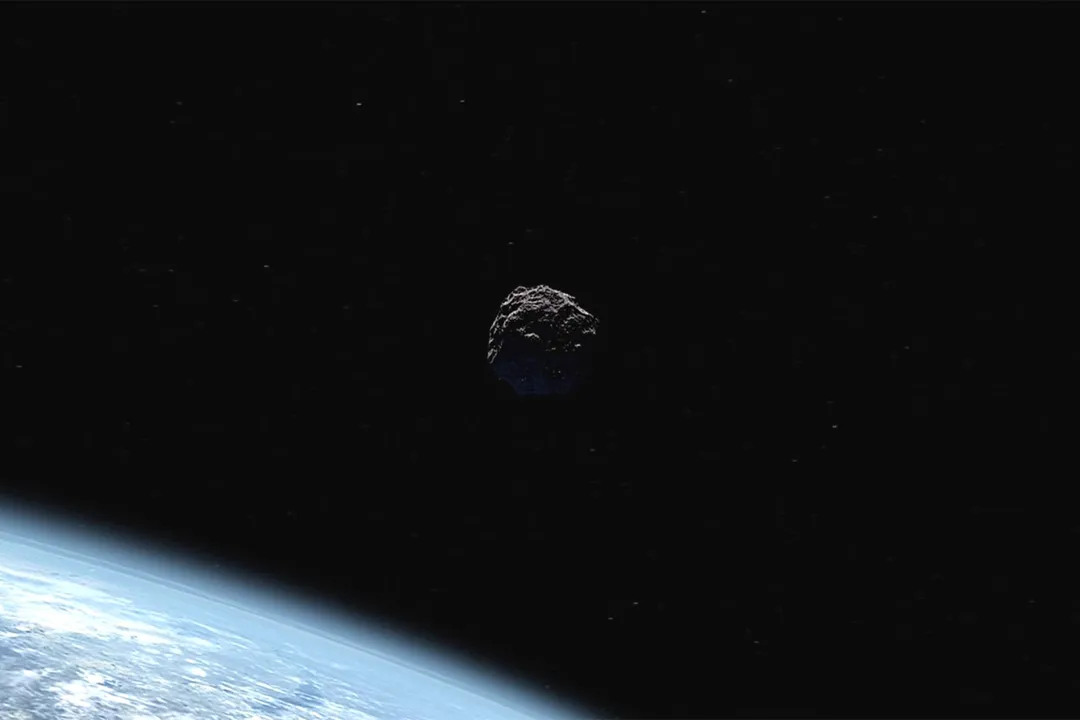
The largest of these space rocks are generally classified as asteroids, which are predominantly found orbiting the Sun in the main asteroid belt situated between Mars and Jupiter. [1] Asteroids can range drastically in size, from small boulders to bodies hundreds of miles across. [8] They are essentially the leftover building blocks from the formation of the solar system that never aggregated into a planet. [5]
When an asteroid fragment breaks off, or if the original object is just small to begin with—typically defined as being smaller than about one meter in diameter—it becomes a meteoroid. [1][8] Meteoroids are essentially small bits of rock or metal floating in interplanetary space. [5] Think of the entire population of space rocks as a cosmic debris field, with the biggest pieces being asteroids and the smallest being meteoroids. [4] While meteoroids are often thought of as being rocky, they can also be metallic, or a mixture of both rock and metal. [5]
It is important to note that the boundary between a large meteoroid and a small asteroid is somewhat fluid, relying heavily on observation and definition rather than a sharp physical difference. [8] Some sources suggest that anything less than 10 meters in diameter might be called a meteoroid, though size definitions can vary across different scientific groups. [1]
# Atmospheric Entry
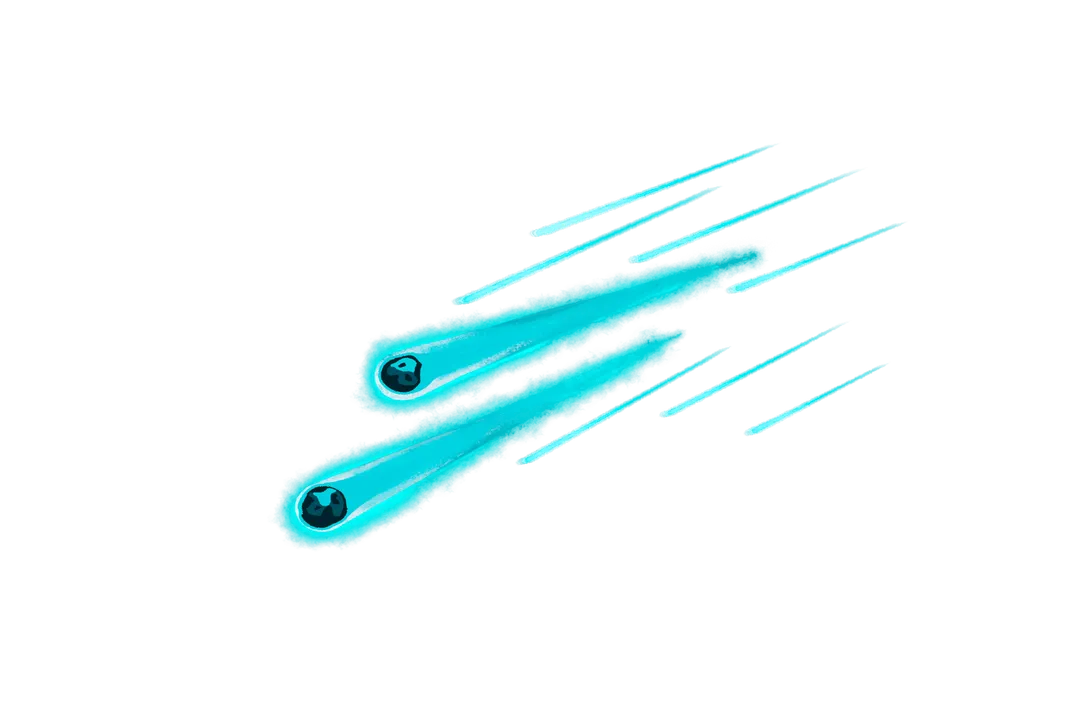
The transformation of a cold, dark meteoroid into a visible spectacle happens when its orbital path intersects with Earth’s atmosphere. [1] As the rock plunges into the upper atmosphere at incredibly high speeds—sometimes tens of thousands of miles per hour—the friction and compression of the air in front of it cause intense heating. [5][9]
This extreme heating causes the outer layers of the rock to vaporize and ionize the surrounding air, creating the bright streak of light we call a meteor. [1] This phenomenon is commonly known by the much more evocative name, a "shooting star" or "falling star". [5][1] Most meteors burn up entirely high in the atmosphere, vanishing before they pose any threat to the ground below. [1] The size threshold for a meteor to produce a detectable piece on the ground is surprisingly small; a meteoroid initially only a few meters across might produce a surviving specimen. [5] The light show itself is caused by the superheated air and the ablated material glowing intensely. [9]
There's a distinction to be made here regarding transient phenomena: extremely bright meteors, which are brighter than the planet Venus, are specifically called fireballs. [2] If a fireball explodes in the atmosphere, the resulting phenomenon is termed a bolide. [2] These events can be powerful enough to be observed across hundreds or even thousands of miles. [9]
# Surviving to the Surface
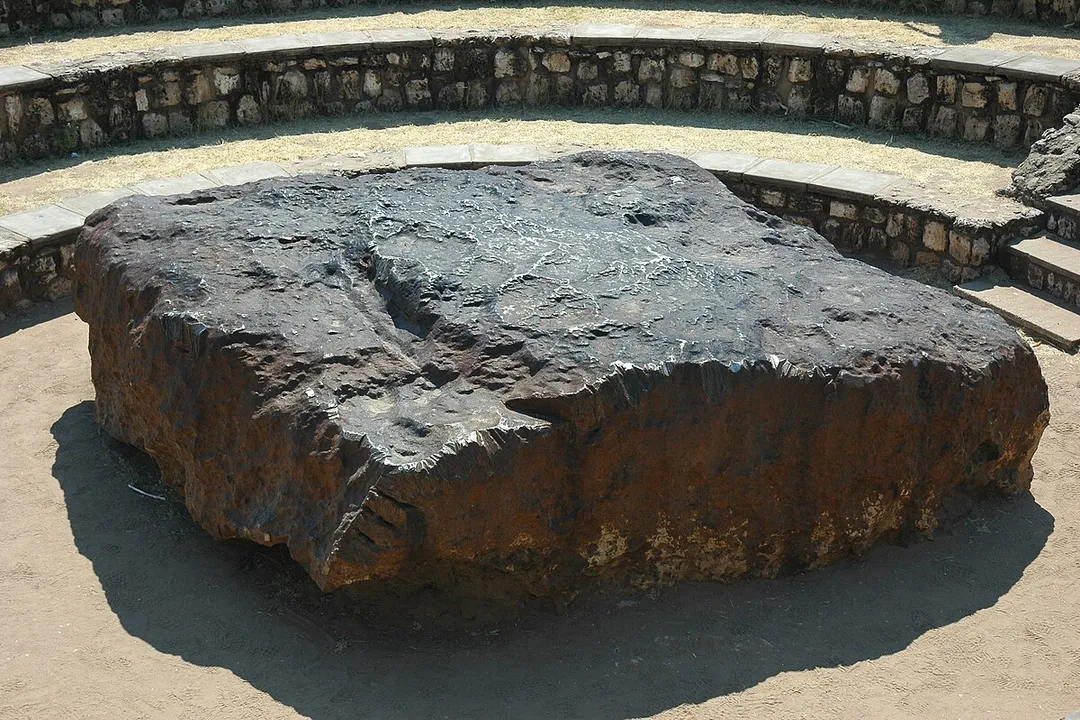
If the initial object is large enough, or dense enough, a portion of it can resist total vaporization during its fiery descent and impact the Earth’s surface. [5] The resulting object, the space rock fragment that has made it all the way down, is then officially categorized as a meteorite. [1][4]
Meteorites are invaluable scientific specimens because they represent physical material from outside our own planet, offering direct evidence about the formation of the solar system, the evolution of asteroids, and even the chemical composition of other celestial bodies. [5][4] For instance, some rare meteorites originate from the Moon or even Mars, having been ejected from those bodies by massive impacts long ago. [4]
The moment of impact is often marked by a distinctive fusion crust—a thin, dark layer on the exterior of the rock caused by the melting and rapid cooling of the surface during atmospheric passage. [5] The Smithsonian notes that a meteorite found on the ground, particularly if it is fresh, will often possess this crust, making it appear very different from terrestrial rocks. [5]
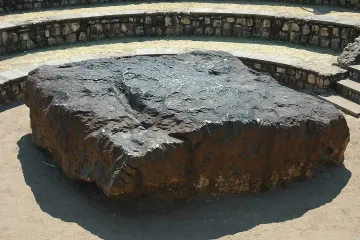
# Types of Meteorites
Meteorites are generally classified based on their bulk chemical composition, which directly reflects their parent body. [5] Scientists typically divide them into three primary groups: stony, iron, and stony-iron. [5]
# Stony Specimens
Stony meteorites are by far the most common type recovered on Earth, accounting for about 94% of all finds. [2] As their name suggests, they are composed primarily of silicate minerals, resembling terrestrial rocks. [5]
Within the stony category, there is a crucial distinction:
- Chondrites: These are the most primitive stony meteorites, essentially unaltered primordial material that has remained largely unchanged since the solar system first formed over 4.5 billion years ago. [5] They are incredibly important for understanding the initial chemical makeup of the cloud from which the Sun and planets condensed. [5]
- Achondrites: These meteorites have experienced differentiation or melting, meaning their parent bodies were large enough to undergo internal heating, much like Earth did. [4] These fragments often share mineral compositions with Earth’s own mantle rock. [5]
# Iron and Mixed Rocks
Iron meteorites are composed mostly of iron and nickel metal alloys. [5] They are thought to be the remnants of the cores of large, ancient asteroids that melted early in their history, allowing the denser metal to sink to the center. [5] When cut and polished, iron meteorites often display beautiful, crystalline patterns known as the Widmanstätten figures, which form only through the very slow cooling process that occurs deep within a parent body. [5]
Stony-iron meteorites are rarer still, representing a mixture of silicate minerals and metal. [2] These likely come from the core-mantle boundary regions of those same large, differentiated parent asteroids. [5] The most famous type of stony-iron is the pallasite, known for its stunning inclusions of the green mineral olivine embedded within a metallic matrix. [5]
| Meteorite Type | Composition Primary | Rarity (Approx.) | Likely Origin |
|---|---|---|---|
| Stony | Silicate Minerals (Rock) | ~94% [2] | Asteroid Crusts/Mantles [5] |
| Iron | Iron-Nickel Metal | ~5% [2] | Asteroid Cores [5] |
| Stony-Iron | Silicates and Metal | ~1% [2] | Asteroid Core-Mantle Boundary [5] |
If you are ever examining a rock you suspect might be a meteorite, its density is a major clue; iron meteorites will feel significantly heavier than an equivalent-sized terrestrial rock because of the heavy metals they contain. [5] Furthermore, a freshly fallen meteorite will have a dark fusion crust, but older ones found on Earth (called "weathered" meteorites) may blend in with local geology unless you check for other signs. [5]
# Discovering Celestial Fragments
The process of finding and identifying these space messengers is a specialized field. [7] While bright fireballs are rare, they offer the best chance for recovery because they signal a large object has just impacted the ground. [9] However, most meteorites found are older falls, discovered by chance. [7]
What it takes to find a small rock that has fallen from space involves a combination of luck, persistence, and knowing where to look. [7] Researchers often search in deserts or icy regions like Antarctica because the contrasting background—red sand or white ice—makes the dark fusion crusts of fresh meteorites much easier to spot. [7] In non-desert locations, finding a meteorite can be incredibly challenging, as natural terrestrial rocks weather and oxidize, slowly masking the tell-tale signs of atmospheric entry. [5]
One consideration for serious collectors or scientists when identifying a potential find is timing. A rock that has sat on Earth for a long time will have undergone terrestrial weathering, which can alter its original composition and obscure its space origin. [5] Conversely, a very fresh fall, perhaps witnessed by a reliable observer just days before, holds the highest scientific integrity because it has had the least amount of time to interact chemically with our planet’s environment. [7] This is why eyewitness accounts accompanying a fall are so valuable—they pin down the time, allowing scientists to study the rock before environmental contamination takes hold. [7]
One helpful way to distinguish an actual meteorite from a terrestrial rock, beyond density and fusion crust, is to check for regmaglypts. [5] These are shallow depressions on the surface, often described as looking like thumbprints pressed into soft clay, caused by ablation during the final moments of atmospheric flight. [5] While a terrestrial rock can be pitted by erosion, regmaglypts have a distinct, aerodynamic quality to them. [5]
It is fascinating to consider the sheer volume of material entering our atmosphere daily. While the sources don't give an exact number for all space dust, the sheer continuous bombardment means that Earth is constantly accumulating cosmic material, though most of it is microscopic. [1] This continuous addition of extraterrestrial material underscores why even small meteorites are highly prized; they are tangible proof of an ongoing cosmic process. [8] For example, if you look at the difference between a lunar meteorite (a rock ejected from the Moon) and a standard chondrite (a piece of an ancient asteroid), you are looking at two different planetary histories sealed within two different rock types that both ended up on the same planet. [4] The study of these small pieces connects us directly to the deep past of our solar neighborhood. [5]
If you were setting out to find one, understanding the environmental context is key. A rock found in the middle of a known impact crater is unlikely to be a meteorite; it's probably just local ejecta. [7] The best discoveries often happen in areas where the local rocks are geologically different from what would be expected from space materials, or in places where the terrain naturally concentrates incoming debris, such as glacial ice fields. [7]
#Videos
JPL and the Space Age: The Hunt for Space Rocks - YouTube
This Space Rock is 4.5 Billion Years Old. Here's Its Secret... - YouTube
Questions Over Whether Mysterious Space Rock 3I Atlas Could Be ...
Related Questions
#Citations
10 Things: What's That Space Rock? - NASA Science
Meteorite - Wikipedia
JPL and the Space Age: The Hunt for Space Rocks - YouTube
Space Rocks Explained: From Asteroids to Meteor Showers
Meteorites: Messengers From Outer Space
What it Takes to Discover Small Rocks in Space
Rocks in Space. Our Solar System has planets, asteroids… - Medium