What causes a star to stop shining?
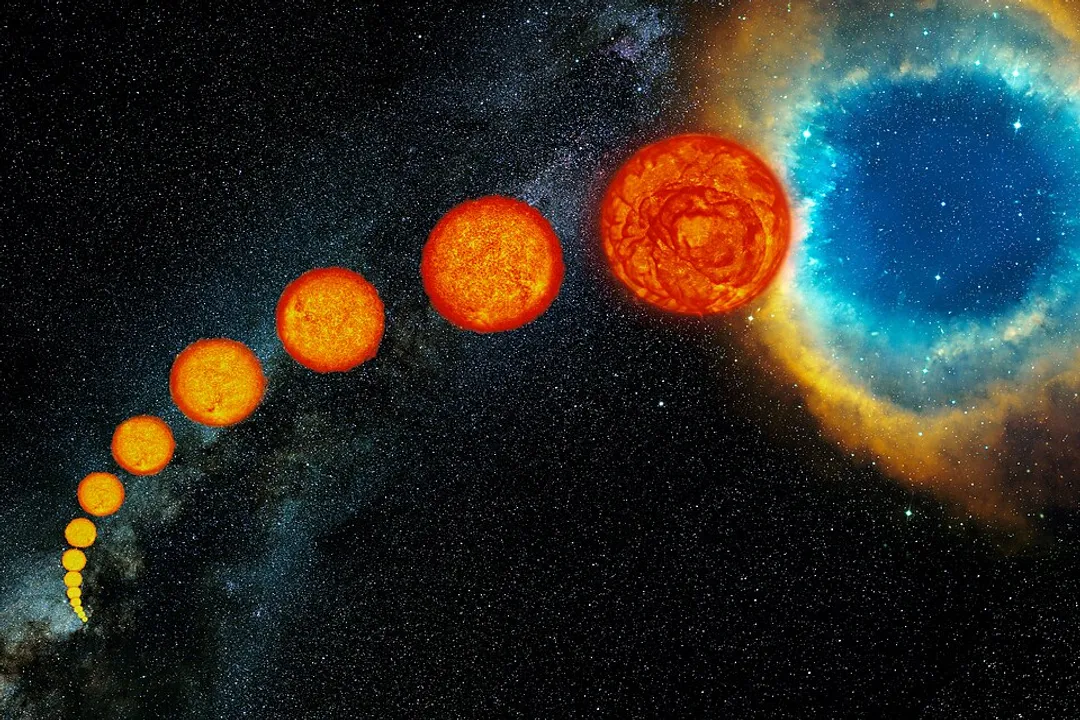
The cessation of light from a star is not a sudden event, like flipping a switch, but rather the final chapter in a history stretching across millions or billions of years. When we look up and consider which stars will eventually wink out, we are really asking about the fundamental physics governing their existence: nuclear fusion. A star shines because of the colossal energy released by fusing lighter elements into heavier ones deep within its core. [4][8] When the primary fuel for this engine runs out, the star enters its death throes, and the process of stopping its visible output begins. [1][7]
# Nuclear Fuel
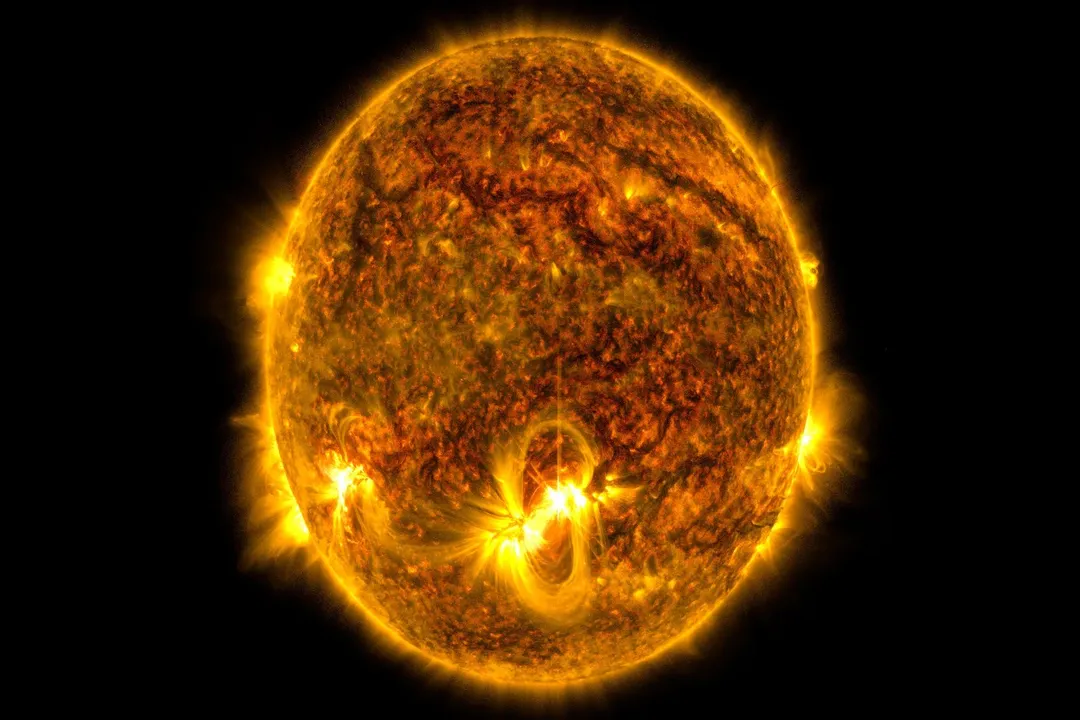
The brilliance of any star, including our own Sun, is sustained by a delicate, long-lasting balance. Inside the incredibly hot and dense core, immense gravitational pressure forces hydrogen atoms to fuse together, creating helium and releasing tremendous amounts of energy in the process. [4] This outward pressure perfectly counteracts the inward pull of gravity, keeping the star stable and luminous over what is known as its main sequence lifetime. [1][8] This phase constitutes the vast majority of a star's existence. [8]
However, this fuel source is finite. The exact rate at which a star consumes its hydrogen is directly proportional to its mass; more massive stars burn hotter, faster, and die much sooner than their smaller, cooler counterparts. [1] A star stops shining stably when the supply of hydrogen in its core is exhausted, forcing it to reorganize its internal structure to find a new, temporary energy source, or, failing that, to collapse. [4][8]
# Fuel Depletion
Once the core hydrogen is converted to helium ash, the outward thermal pressure drops because the fusion rate slows down or stops entirely in the core. [4] Gravity immediately takes over, causing the core to contract and heat up dramatically. [8] This heating often triggers a new phase of fusion in a shell surrounding the inert helium core, typically fusing the remaining hydrogen there, which causes the star's outer layers to swell enormously. [5]
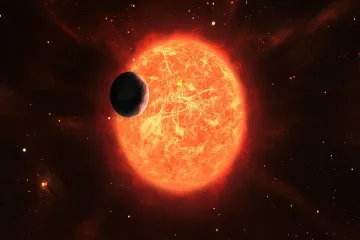
For stars like our Sun, this transition causes them to become a red giant. [5] The star doesn't immediately stop shining; it changes how it shines. The star expands, its surface cools, and it glows redder, but its total luminosity often increases before the final stages. [5] The true stop occurs after the star has exhausted all viable fuel sources available to it through fusion—hydrogen, then helium, and potentially heavier elements like carbon or oxygen if the star is sufficiently massive. [8]
For lower-mass stars, the process culminates when the star can no longer generate enough heat to fuse carbon, leading to the shedding of its outer atmosphere, leaving behind a dense remnant. [5] Stars that are far more massive than the Sun, however, can continue fusing progressively heavier elements in their core, right up to iron. [8] Iron is the crucial turning point; fusing iron consumes energy rather than releasing it, leading to a catastrophic and immediate loss of the star's internal support. [7]
# Low Mass
Stars with masses comparable to or only slightly exceeding our Sun follow a relatively gentle path toward fading out. [1][7] After exhausting core hydrogen and subsequently core helium (which fuses into carbon and oxygen), these stars lack the gravitational force needed to compress the core further and ignite carbon fusion. [8]
The star sheds its extended outer layers, often forming a beautiful, expanding shell of gas called a planetary nebula. [5] What remains behind is the intensely hot, small, and incredibly dense remnant core—a white dwarf. [5][7] A white dwarf does not generate new energy through fusion; it shines purely from the residual thermal heat it retained from its former life. [5] Over cosmic timescales, this object will simply radiate its stored heat away, slowly dimming until it becomes a cold, dark black dwarf. [5] This cooling process is exceptionally long, estimated to take longer than the current age of the universe, meaning that no true black dwarfs are thought to exist yet. [5]
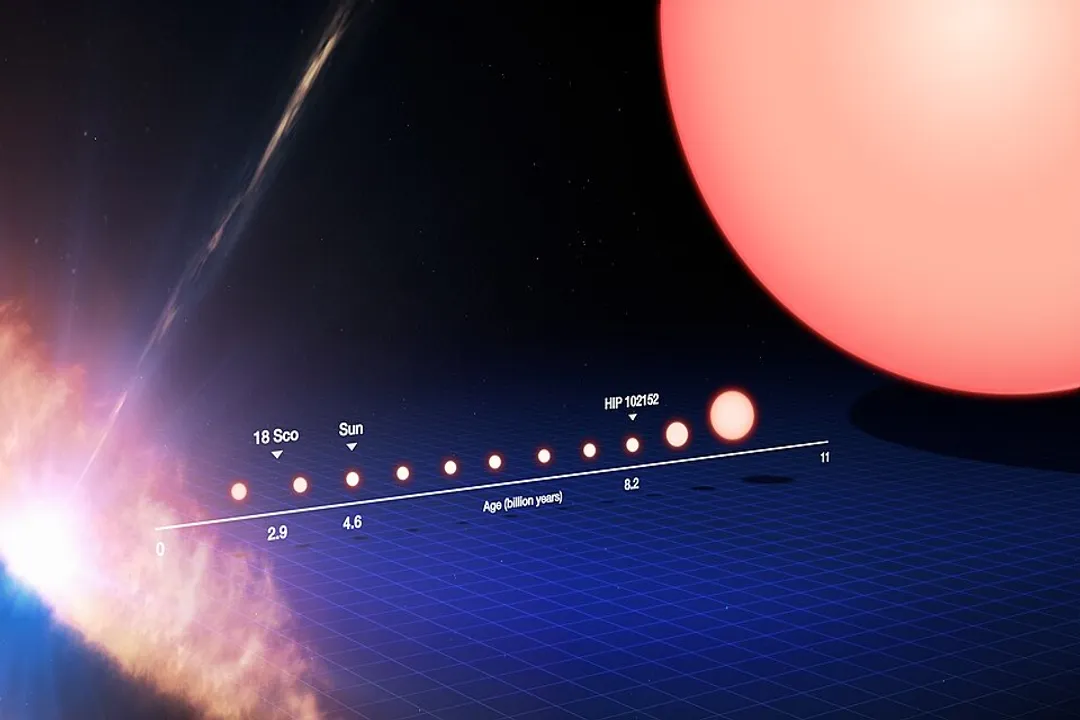
To put these differing timescales into perspective, consider the Sun. It is roughly halfway through its main sequence phase, having lived for about $4.6$ billion years and expected to continue for another $5$ billion years before becoming a red giant. [4] Small, red dwarf stars, in contrast, burn their fuel so slowly that their total lifespans are estimated to be trillions of years, far longer than the universe has existed so far. [1]
| Initial Mass Range (Solar Masses, ) | Final Stage Remnant | Mechanism of Light Cessation |
|---|---|---|
| $<0.08$ | Brown Dwarf (never a true star) | Fails to ignite sustained H fusion. |
| $0.08$ to | White Dwarf | Helium fusion stops; cools thermally. |
| to $25$ | Neutron Star | Core collapse triggers Type II Supernova. |
| $>25$ | Black Hole | Core collapse triggers Type II Supernova. |
| [1][7] |
# High Mass
When a star begins life with more than about eight times the mass of the Sun (), its end is far more dramatic. [7] These giants fuse elements all the way up to iron in their cores. [8] Once the iron core forms, fusion abruptly ceases, and gravity causes an instantaneous and overwhelming collapse. [7] This collapse is halted only by quantum mechanical effects, leading to a massive rebound explosion known as a supernova. [7][8]
The supernova is an incredibly luminous event, briefly outshining entire galaxies, but it is the mechanism by which the star expels its outer layers and destroys the ability of the core to sustain itself through fusion. [8] What remains depends on the remaining core mass after the explosion. If the core mass is between about $1.4$ and $3$ solar masses, it stabilizes as a neutron star. [7] If the remaining core mass is greater than roughly —exceeding the Tolman-Oppenheimer-Volkoff limit—gravity overwhelms all restorative forces, and the core collapses into a black hole. [7] In both these end states, the star ceases to be a radiating source of light fueled by fusion; any subsequent emission is merely the cooling of an extremely dense object or the bending of spacetime around an event horizon. [1]
# Light Travel
It is important to separate the physical cessation of fusion from the moment we, as observers on Earth, notice the star has gone dark. A star stops generating light when its internal processes fail, but that light still has to cross the vast gulfs of space to reach us. [2]
If a star several thousand light-years away were to suddenly cease fusion this very second, we would continue to see it shining brightly for another thousand years before its last photons arrived. [2] The fact that we have not seen any massive stars suddenly vanish from the visible night sky suggests that the closest stars are still very much alive, or that the vast majority of stars still have substantial fuel reserves remaining. [9] If a star did stop shining today, say, because its core collapsed into a black hole, the light emitted a million years ago would still be washing over Earth, perhaps for millennia to come. [2]
Furthermore, a star can appear to stop shining, or at least become dramatically dimmer, without actually having died internally. This happens when interstellar dust clouds or nebulae drift between the star and Earth, effectively obscuring its light from our view. [9] This is a failure of transmission rather than generation. [2] Observing changes in the sky requires long periods of monitoring because stellar lifecycles operate on cosmic timescales, meaning that any changes we observe are snapshots of events that happened long in the past. [9]
Related Questions
#Citations
Stellar evolution - Wikipedia
How often to do stars stop shining in the visible night sky ... - Quora
Astrophysicists may have cracked mystery of vanishing stars - Reddit
Star Basics - NASA Science
Star Life Cycle - ASPIRE
What causes stars to move and stop in the night sky? - Facebook
[PDF] Death of Stars
Stars and their life-cycle (article) | Khan Academy