Why are true black dwarfs not thought to exist yet in the universe?
Answer
Their cooling process takes longer than the current age of the universe
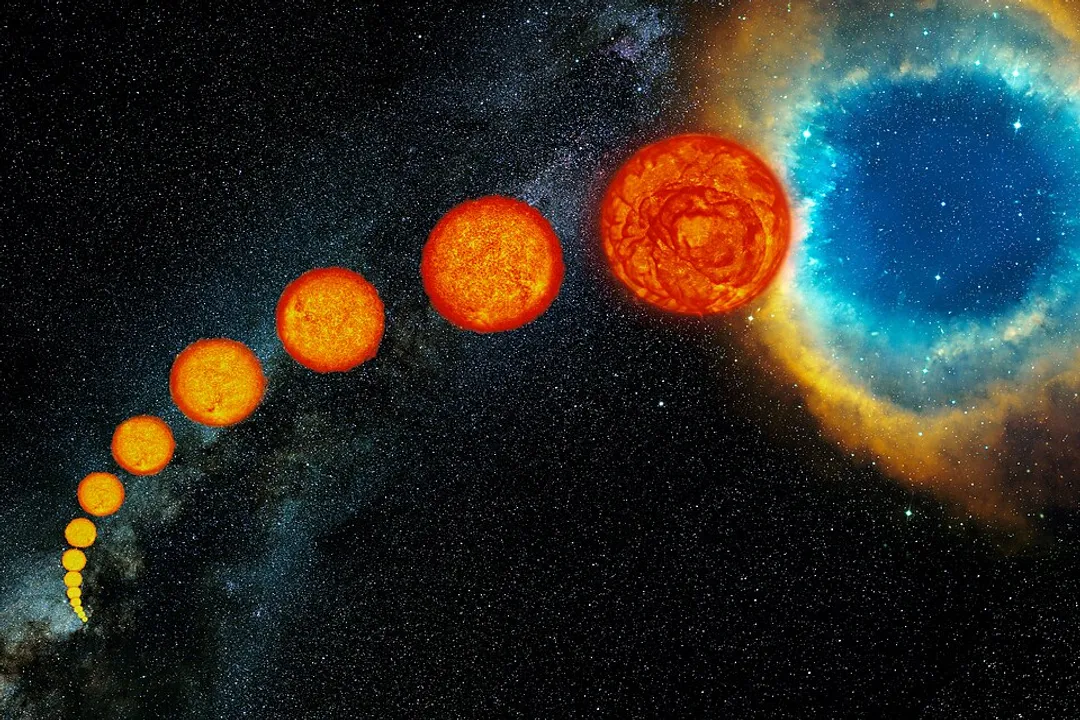
A black dwarf is the theoretical final evolutionary state for a white dwarf, which is the dense remnant core left behind by lower-mass stars after they shed their outer layers. After shedding its atmosphere, the white dwarf shines solely from the residual thermal heat it retained from its prior existence. To achieve the state of a black dwarf, this object must radiate all of that stored thermal energy away, becoming a cold, dark mass. The time required for this process of cooling down completely across cosmic timescales is estimated to be longer than the current age of the universe, meaning that no true black dwarfs are anticipated to have fully formed yet.
Related Questions
What process sustains the brilliance of any star, including our Sun?What stellar phase follows core hydrogen exhaustion for stars like our Sun?Why is the fusion of iron in a massive star's core catastrophic?What dense remnant remains after lower-mass stars shed their outer layers?How long are the estimated total lifespans of small, red dwarf stars?When does a star stop shining stably, forcing internal reorganization?What core mass threshold results in a Black Hole after a massive star supernova?If a star thousands of light-years away ceased fusion now, how long until we see darkness?Why are true black dwarfs not thought to exist yet in the universe?What dictates whether a star becomes a White Dwarf or undergoes a Supernova?