What stellar phase follows core hydrogen exhaustion for stars like our Sun?
Answer
Becoming a red giant
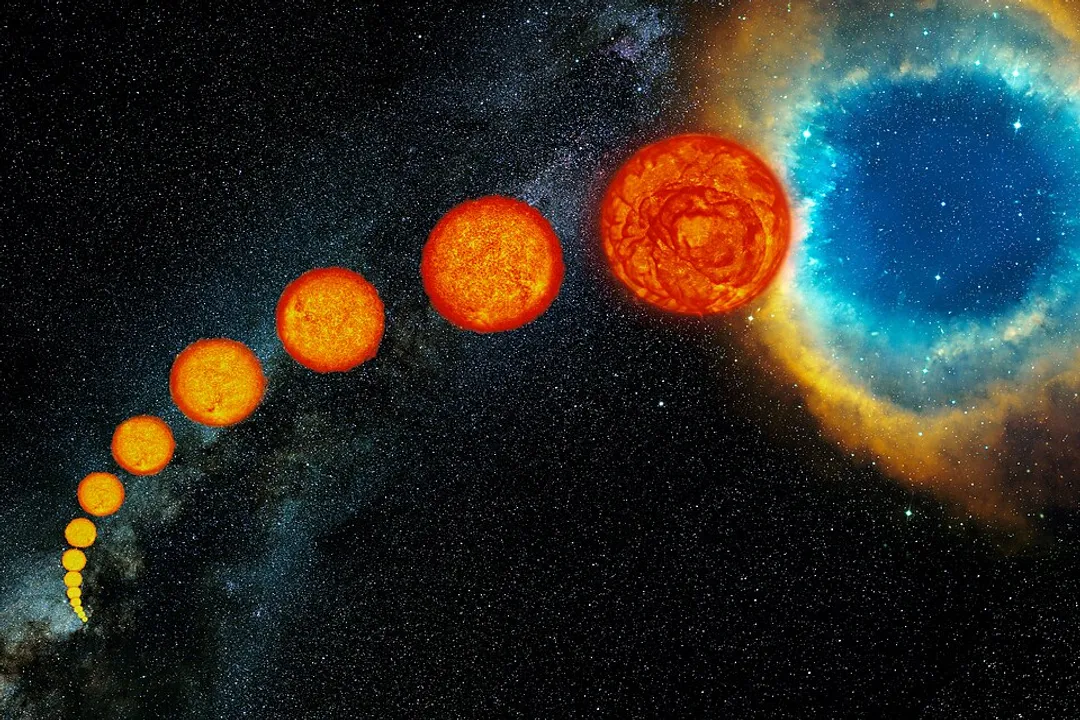
When the hydrogen fuel in the core of a star comparable to the Sun is depleted, the fusion rate in the core slows, causing gravity to dominate and heat up the core dramatically. This heating often ignites hydrogen fusion in a surrounding shell around the inert helium core. This new, temporary energy source causes the star's outer layers to swell enormously. This significant expansion and subsequent surface cooling causes the star to transform into what is specifically termed a red giant, changing how it shines, often increasing total luminosity before the star proceeds toward exhausting helium and shedding its outer layers.
Related Questions
What process sustains the brilliance of any star, including our Sun?What stellar phase follows core hydrogen exhaustion for stars like our Sun?Why is the fusion of iron in a massive star's core catastrophic?What dense remnant remains after lower-mass stars shed their outer layers?How long are the estimated total lifespans of small, red dwarf stars?When does a star stop shining stably, forcing internal reorganization?What core mass threshold results in a Black Hole after a massive star supernova?If a star thousands of light-years away ceased fusion now, how long until we see darkness?Why are true black dwarfs not thought to exist yet in the universe?What dictates whether a star becomes a White Dwarf or undergoes a Supernova?