What can cause a molecular cloud to start star formation?
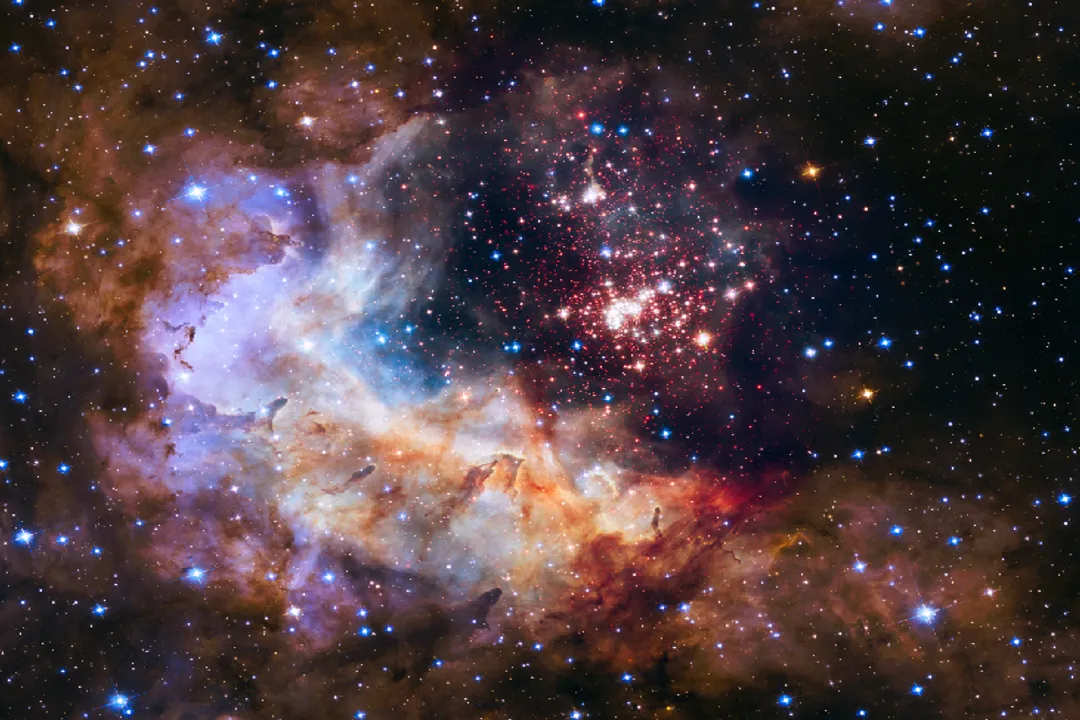
The process by which cold, vast clouds of gas and dust transition into blazing stellar nurseries, sparking the birth of stars, is one of the most fundamental stories in astrophysics. These massive reservoirs, known as molecular clouds, are the raw material of the cosmos, holding the potential energy needed to overcome the mighty force of gravity. Yet, this potential energy remains locked away until some external or internal mechanism perturbs the delicate balance within the cloud, nudging the densest regions past a critical threshold where collapse becomes inevitable.
# Cloud Chemistry
To understand what starts the fire, we must first appreciate the environment itself. Molecular clouds are the densest parts of the interstellar medium (ISM), the gas and dust spread between stars. They are characterized by interiors that are frigid, often around . This extreme cold is vital because it allows atoms to bind together into molecules; primarily molecular hydrogen (). Because molecular hydrogen is notoriously difficult to detect directly via infrared or radio waves, astronomers frequently rely on the second most abundant molecule, carbon monoxide (), as a tracer to map these invisible stellar nurseries.
These clouds are immense, with Giant Molecular Clouds (GMCs) spanning hundreds of light-years and containing up to $10^7$ times the mass of the Sun. Despite their colossal mass, they are still incredibly diffuse compared to even a laboratory vacuum on Earth. The visual edge of a molecular cloud isn't a sharp boundary, but rather a transition zone where molecular gas reverts to atomic gas, shielded from destructive ultraviolet radiation by internal dust grains.
# Structure Precedes Collapse
Within the grand, often irregular structure of a molecular cloud, the architecture required for star birth is already being laid out. The gas and dust organize themselves into a complex network of filaments, sheets, and bubbles. These filaments are not just passive structures; they are thought to be essential staging grounds.
Filaments fragment into denser, localized regions known as clumps, which are the precursors to star clusters. Within these clumps exist the true starting points: cores. These cores are the most gravitationally bound and densest regions, often possessing densities high enough to obscure background starlight, appearing as dark nebulae. The fundamental prerequisite for star formation is the localized competition between gravity and pressure. In these cores, the low temperature ensures low internal pressure, allowing the force of gravity, which scales with the accumulated mass, to eventually win out, forcing a rapid shrinkage in radius and a massive increase in density.
However, the critical question isn't just what collapses, but what makes the collapse happen in the first place? Why does one core start shrinking while its neighbor remains stable? This is where external influence or dynamic internal processes become necessary to push the system over the edge, a process sometimes called "triggering".
# External Impetus
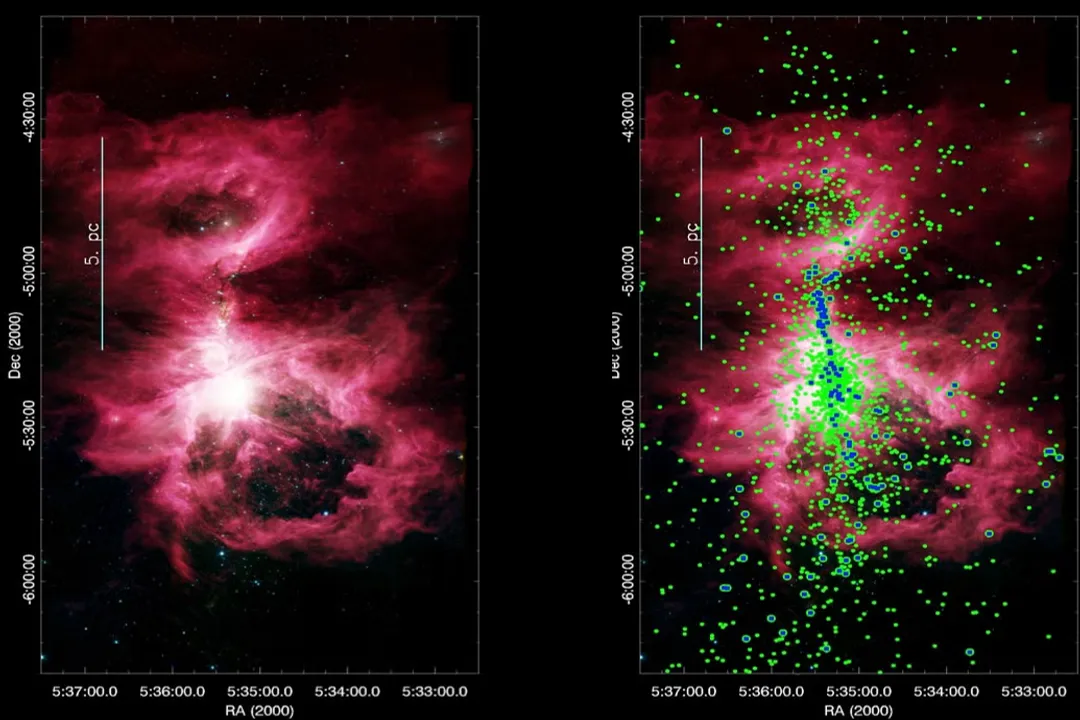
For a vast, seemingly stable cloud to begin the runaway gravitational contraction that leads to a protostar, an external shock or compression is often required to overcome the initial thermal resistance. Several astrophysical phenomena deliver this necessary push:
# Shock Waves
One of the most widely cited initial triggers involves the violent death of massive stars. When a star significantly larger than the Sun exhausts its fuel, it explodes as a supernova. The resulting shock wave travels outward, slamming into nearby molecular gas and dust, compressing it. If this compression raises the local density sufficiently—in effect, delivering a sudden, external push that enhances gravity's grip—the collapse begins. This mechanism can lead to propagating star formation, where a newly formed, massive star triggers the birth of the next generation of stars nearby, like a chain reaction moving through the cloud complex.
# Stellar Winds and Galactic Structure
The life of a massive star is short and energetic, characterized not only by its eventual explosion but also by a constant stream of high-speed charged particles known as a stellar wind. These winds also contribute to the heating and expansion of surrounding gas, and where they pile up against a denser region of the molecular cloud, they can induce the necessary compression to initiate gravitational collapse.
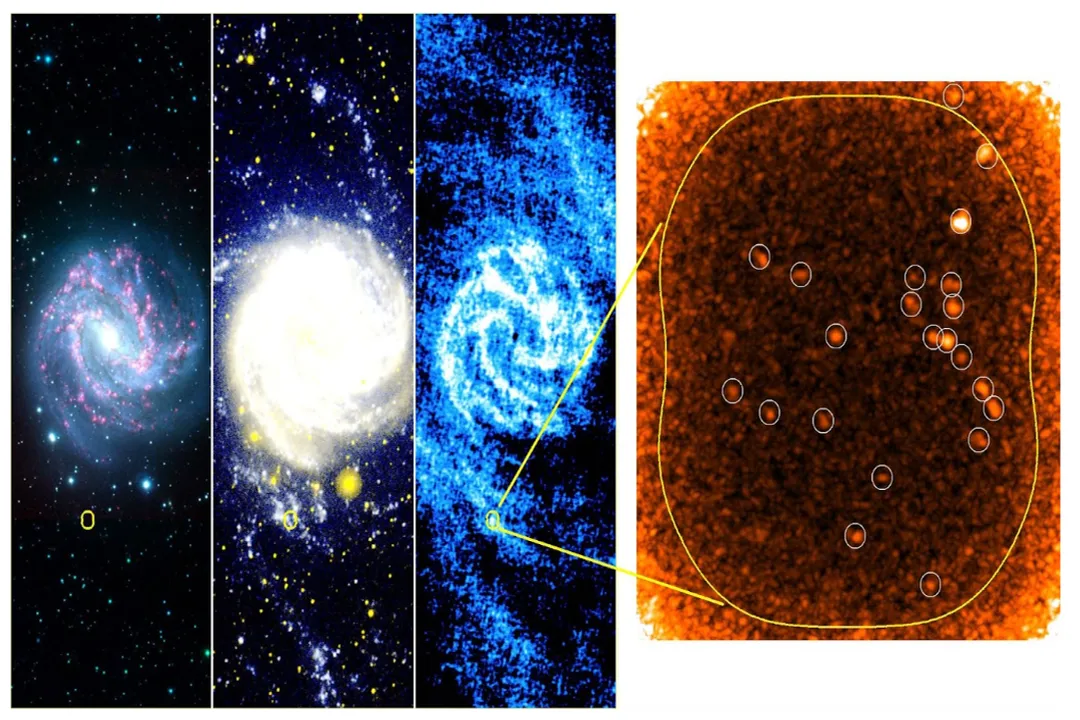
Furthermore, on grander scales, the structure of the galaxy itself can play a role. As the molecular gas orbits the galactic center, it passes through the spiral arms. These arms are regions of higher overall density, and the spiral density waves that trace them can compress the gas layer, acting as a slower, persistent trigger for cloud assembly and subsequent collapse.
# Cloud Collisions
Another direct physical trigger is the collision of two molecular clouds or even an interaction between a molecular cloud and a faster-moving atomic gas cloud. The violent impact provides an immediate, strong compression capable of initiating fragmentation and collapse across a wide area, far more instantaneously than the slower processes driven by density waves or stellar feedback.
It is interesting to consider that while collisions are a powerful trigger, models suggest they might be too slow to be the primary mechanism for forming the largest clouds themselves, as the timescale might exceed the typical lifespan of a molecular cloud structure. This implies that while cloud-cloud collisions can start star formation within an already formed cloud, other mechanisms are likely responsible for the initial assembly of the cloud structure that eventually becomes a stellar factory.
# The Role of Turbulence
Beyond specific external events like supernovae, the internal dynamics—specifically turbulence—emerges as a crucial element, perhaps even a ubiquitous one. Turbulence manifests as density and velocity fluctuations within the cloud material. When this turbulence is supersonic, it generates internal shock waves that weave a complex, three-dimensional structure of intersecting filaments, even in relatively low-density, warm neutral medium (WNM) clouds where gravity might otherwise be negligible.
The finding that this filamentary web can form before the cloud cools sufficiently to be a typical stellar nursery suggests a profound mechanism: structure formation precedes the final conditions for collapse. Gravitational instability, which is what eventually causes star formation, acts upon these pre-existing density contrasts created by turbulence and shocks. In essence, the chaotic motion of the gas carves out the deep gravitational potential wells (the dense filaments and cores) into which matter can then readily fall. This suggests a pluralistic model: while a specific event like a supernova might be the ultimate trigger for a specific cloud, the ability for a region to form stars rests on the presence of this turbulent scaffolding. The geometry imposed by the collapse of an elliptical cloud seeded with these fluctuations can naturally result in this filamentary network, indicating that gravity acting on slight initial imbalances is the dominant long-term process once the cloud mass is sufficient.
If we look at the very first stars in the universe, which formed before many heavier elements existed, the cooling mechanisms were less efficient. Without the abundance of carbon and oxygen needed to form —a crucial coolant that lets gas shed thermal energy without collapsing catastrophically—these primordial clouds needed to accumulate far greater mass for gravity to overwhelm the internal thermal pressure on its own. This highlights the environmental dependence: for modern, chemically rich clouds, a modest external trigger on a relatively dense core suffices; for the earliest stars, sheer mass was the only viable answer.
# The Inevitable Outcome: Protostars and Disks
Once the densest cores begin their final, rapid collapse, the process is self-perpetuating due to the laws of physics. As the core shrinks, its gravitational potential energy converts to kinetic energy, which turns into heat upon collision—heating the gas. Simultaneously, due to the conservation of angular momentum, the collapsing, spinning core must spin faster as its radius decreases, much like a figure skater pulling in their arms.
This rapid rotation is what sets up the next stage. Material falling toward the equator, which moves fastest, resists falling inward due to centrifugal force. This causes the infalling matter to flatten into a rotating disk around the central object—the protostar. The star continues to accrete mass from the surrounding envelope and disk until the central temperature becomes high enough for sustained nuclear fusion ( for hydrogen to helium). At this point, the energy output from fusion balances gravity, and the object achieves hydrostatic equilibrium—it is officially a star.
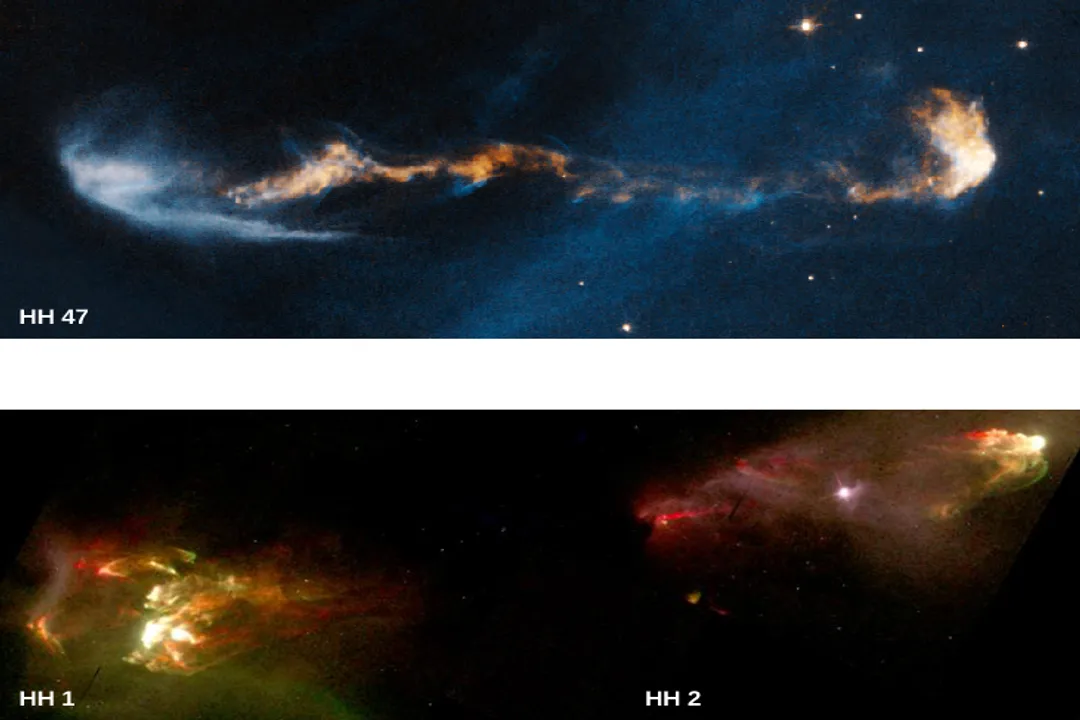
The fate of the surrounding material is either to be incorporated into the star or its orbiting disk, or to be ejected. As the young star matures, it generates powerful jets perpendicular to the disk and a strong stellar wind. These outflows clear away the remaining envelope material, often creating glowing structures known as Herbig-Haro objects where the jet slams into surrounding gas, eventually revealing the newborn star in visible light. The entire cloud complex is ultimately dispersed by the radiation and winds of its new stellar residents, closing the cycle as the dispersed gas eventually cools and feeds into new clouds elsewhere. The fact that we observe young, hot and type stars very near their birth clouds confirms that this rapid life cycle occurs right where the clouds are thickest.
Related Questions
#Citations
Molecular cloud - Wikipedia
Star Basics - NASA Science
How do star-forming clouds and star clusters arise? | Lee Hartmann
What causes a nebula - a very diffuse cloud of Hydrogen to ... - Reddit
The Outer Planets: A Star is Born
Mystery of Star Formation Revealed by Hearts of Molecular Clouds
Before These Clouds Form Stars, They Form A Complex Network of ...
18.1.2: Star Formation - Physics LibreTexts