How do interstellar clouds contribute to star formation?
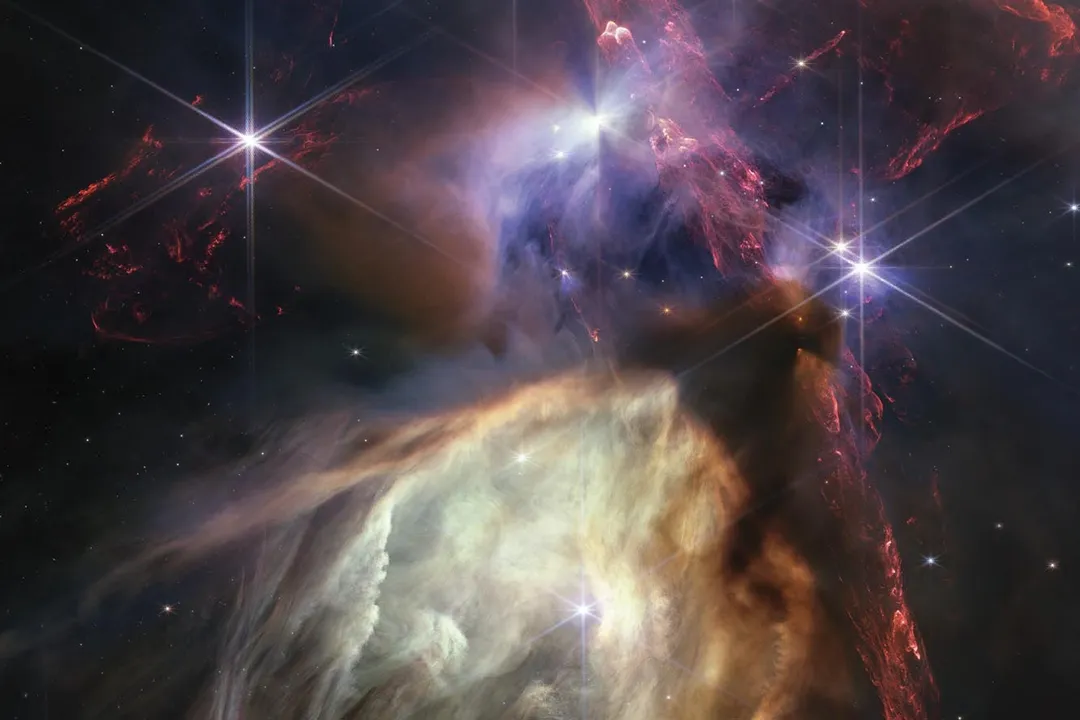
The vast, cold regions between the stars, known as the interstellar medium (ISM), are not empty voids but are populated by enormous, diffuse structures that serve as the raw material for cosmic creation: the interstellar clouds. These clouds, particularly the dense, cold molecular clouds, are the cradles where stars are forged over millions of years. Understanding how these structures come to be and how they are shaped by internal and external forces is fundamental to charting the life cycle of stars and galaxies.
# Cloud Origins
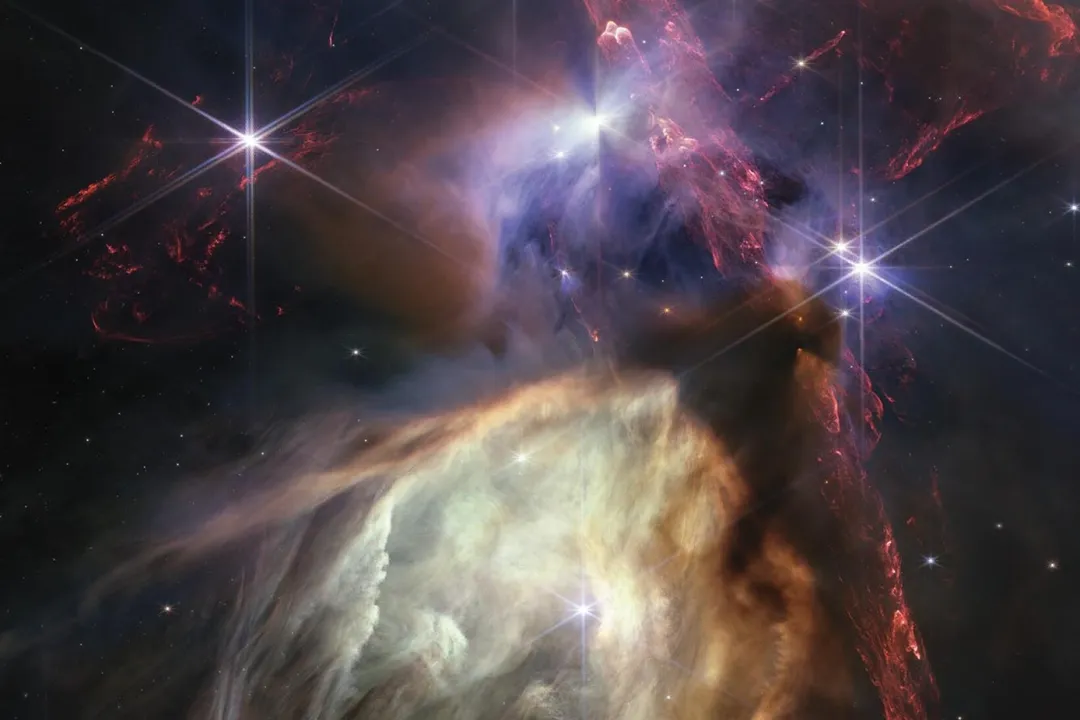
The birth of a star-forming cloud itself is a complex, large-scale process driven by galactic dynamics. These nurseries don't simply materialize fully formed; they often arise from the accumulation and compression of more diffuse, warmer gas that permeates the space between stars.
One pathway involves the compression of this lower-density gas. The ISM is a dynamic environment subject to various energetic events, such as the expanding bubbles of gas left by supernova explosions or the orbits of gas clouds as they sweep through a galaxy's spiral arms. When a collection of this lower-density, warmer gas encounters a shock wave—perhaps from an ancient supernova remnant—the gas is rapidly pushed together and slowed down. This compression forces the gas into a denser configuration. As this denser patch cools, it becomes gravitationally unstable, allowing it to contract further and form the giant molecular clouds we observe today.
Another mechanism is tied to galactic motion. As gas orbits the galactic center, it can be compressed when it moves through spiral arms, an event that can also trigger the necessary density increases to initiate cloud formation. In essence, star-forming clouds are the result of large-scale compression and subsequent cooling of the ambient interstellar material.
# Essential Matter
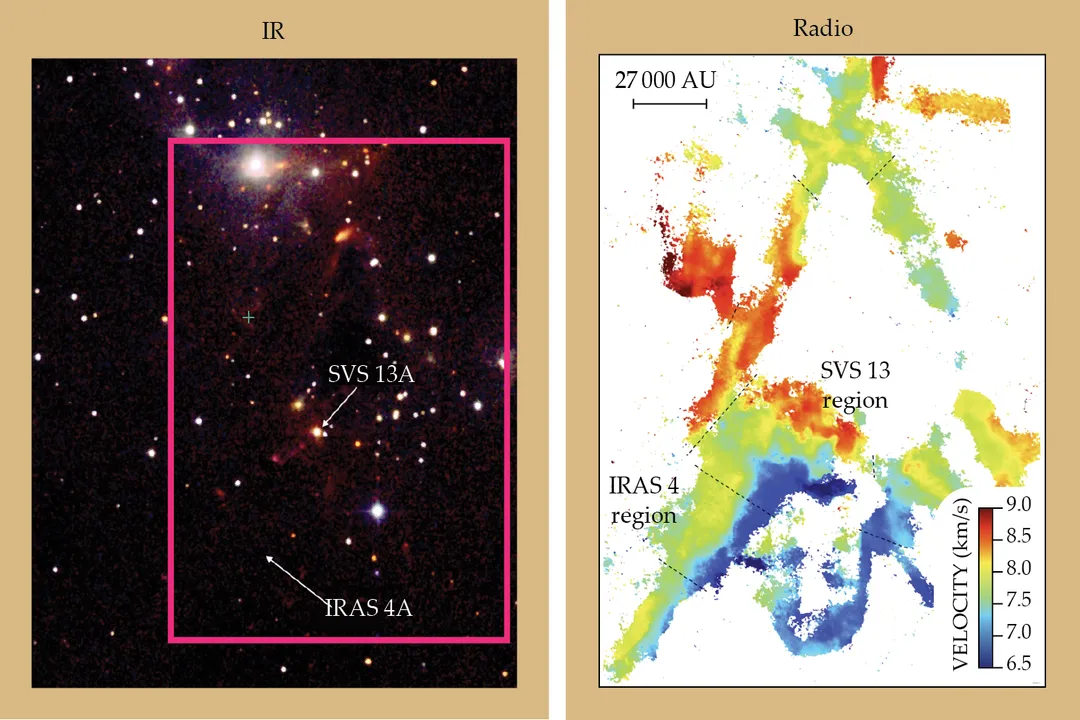
Molecular clouds are characterized by conditions dramatically different from Earth's atmosphere. They are primarily composed of molecular hydrogen (), which makes up about three-quarters of their mass, with most of the remainder being helium, and trace amounts of heavier elements existing as dust grains and other molecules.
The physical state of these clouds is critical to their function as stellar nurseries. They must be incredibly cold, typically having temperatures around 10 to 20 Kelvin (), which is only slightly above absolute zero. This low temperature is vital because it significantly reduces the internal thermal pressure pushing outward, allowing gravity to win the contest for dominance. Furthermore, these clouds are sparse compared to terrestrial standards. While they are the densest regions in the ISM, their density is still extremely low, often equivalent to the best laboratory vacuum achievable on Earth, measured in tens to thousands of particles per cubic centimeter.
The presence of dust is also non-negotiable. These microscopic solid particles, composed of rock or ice, play a significant role in the chemistry and physics of the cloud. They are responsible for blocking visible light from background stars, which makes these regions appear as dark patches against brighter nebulae or the Milky Way plane. Crucially, the dust acts as a radiator, emitting thermal radiation primarily in the far-infrared, which is the mechanism by which the cloud sheds the heat generated during gravitational contraction, allowing it to remain cold enough for collapse to continue.
To put the density contrast into perspective, we can compare the environment:
| Environment | Typical Density (Particles/cm³) | Significance to Star Formation |
|---|---|---|
| Earth's Atmosphere (Sea Level) | Extremely dense, high pressure | |
| Diffuse Interstellar Medium | Too warm and diffuse for collapse | |
| Giant Molecular Cloud Core | $10^4$ to $10^6$ | Sufficient density for gravity to overcome pressure |
| Earth's Best Vacuum | Used for laboratory comparisons |
This comparison highlights that even the densest star-forming regions are incredibly tenuous by human standards, yet the relative increase in particle count is what tips the balance toward star birth.
# Initiating Collapse
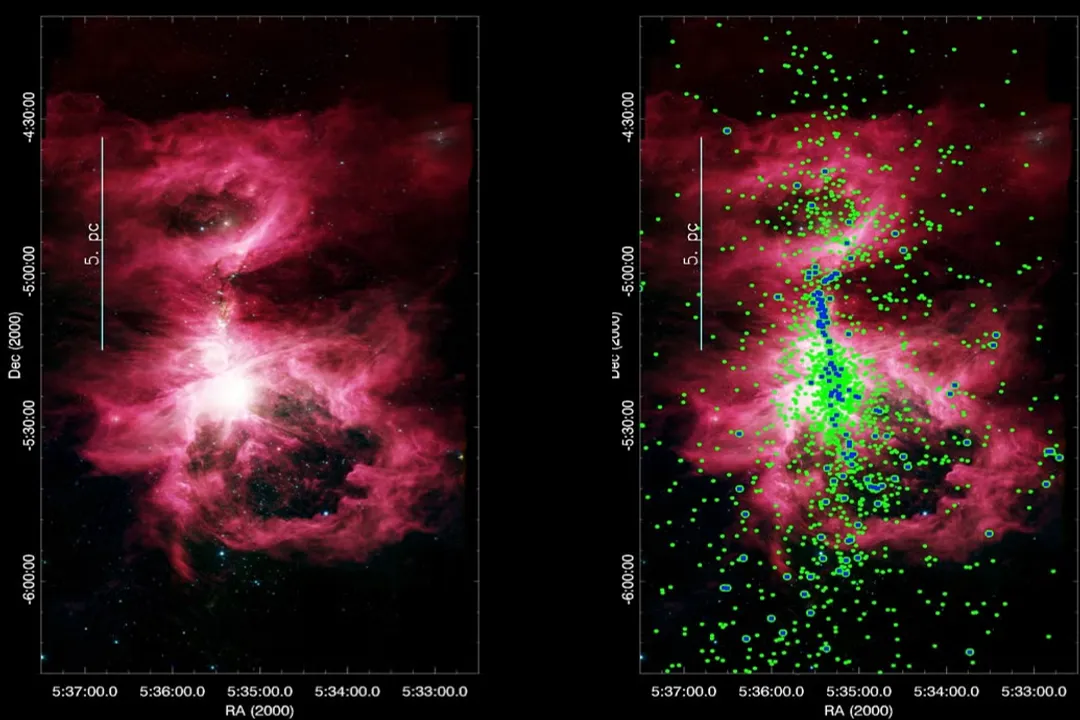
A massive, cold, and dense cloud is gravitationally unstable, meaning gravity exerts a net inward pull. However, the cloud needs a trigger to overcome initial resistance—whether that resistance comes from internal turbulence, magnetic fields, or rotation—and begin the process of fragmentation and collapse.
The initial trigger for star formation can often be traced back to external forces or internal instability. High-velocity collisions between molecular clouds can impart significant energy, creating regions of intense compression where gravity gains the necessary upper hand.
A particularly dramatic trigger involves shock waves. When a shock wave—generated by a passing supernova or the collision of gas flows—propagates through the cloud, it instantly compresses the gas in its path. This rapid, dynamic compression can raise the density locally above a critical threshold, immediately initiating gravitational collapse in those overdense regions. This localized collapse is far more efficient than waiting for the entire cloud to slowly contract under its own weight.
The concept of the Jeans Mass dictates the minimum mass a cloud needs to collapse at a given temperature and density; if the local mass exceeds this value, collapse is inevitable. Thus, the role of the trigger is to create localized regions where the density is high enough, or the temperature low enough, to dramatically lower the Jeans Mass, making collapse achievable on shorter timescales.
# Field Dynamics
While gravity initiates the inward pull, the interstellar medium is permeated by magnetic fields, which are carried along by the ionized components of the gas. These magnetic fields present a major complication to the otherwise straightforward gravitational collapse model.
Magnetic fields exert a pressure that resists compression, especially across the field lines. If the magnetic field is strong enough relative to the cloud's mass, it can effectively halt the collapse, maintaining the cloud in a state of magnetic support. For star formation to proceed, the collapsing material must somehow shed or bypass this magnetic resistance.
One way around this is if the collapsing core is dense enough that the gas can decouple from the magnetic field lines, a process called ambipolar diffusion. In this scenario, the neutral gas—the majority component—is free to fall inward under gravity, while the charged particles remain coupled to the magnetic field lines, effectively dragging the field lines inward at a slower rate than the gas itself. This slow slippage allows a central, dense core to form, eventually becoming massive enough for gravity to overwhelm any remaining magnetic tension.
Observational studies focusing on these magnetized clouds aim to map these fields, as the orientation of the magnetic field relative to the cloud's structure provides clues about the specific physical processes that dominated the star's formation environment. For example, fields running perpendicular to the direction of collapse might indicate that magnetic pressure played a significant role in slowing down the initial accumulation of mass.
# Building Cores
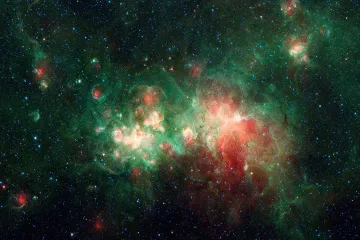
The overall molecular cloud is vast, encompassing perhaps hundreds of thousands of solar masses. Star formation, however, happens locally, within smaller, dense clumps or cores scattered throughout the larger structure. The process of the large cloud breaking down into these smaller, gravitationally bound units is known as fragmentation.
Turbulence within the cloud plays a critical role in this fragmentation. The chaotic motions and internal pressures within the cloud cause density variations. Where these variations are extreme enough—and the gas is cold enough—the local region becomes gravitationally unstable and detaches from the parent cloud's overall dynamics to contract independently.
Consider the timeline of events. A massive cloud might take millions of years to condense over its whole volume. However, once a core becomes sufficiently dense, the timescale for its own collapse, known as the free-fall time, can be dramatically shorter—perhaps only tens of thousands of years. This means that once the fragmentation has occurred, the next stage happens relatively quickly on an astronomical scale.
As a thought experiment, if we consider a typical molecular cloud core with a density of , its free-fall time () can be calculated using the inverse square root of the density () and the gravitational constant (). The fact that this time is significantly shorter than the cloud's overall lifetime suggests that once the structure is established, gravity acts with urgency on the small scale. This high-speed internal collapse is what defines the transition from cloud core to nascent star.
# Final Stages
Once a core has contracted enough to become gravitationally dominant over the pressures resisting it, it evolves into a protostar. This object is not yet a true star because its core is not hot or dense enough for sustained nuclear fusion of hydrogen.
The collapse continues, gathering mass from the surrounding envelope of gas and dust that has not yet fallen in. This infalling material often settles into a rotating disk around the central protostar. This accretion disk is important because it feeds the growing central object while simultaneously conserving the system's angular momentum, which prevents the entire collapsing mass from spinning itself apart. The protostar continues to heat up due to the conversion of gravitational energy into thermal energy as more material falls onto it.
This phase continues until the core of the protostar becomes hot and dense enough—reaching millions of degrees Kelvin—to ignite stable hydrogen fusion in its core. At this point, the outward pressure generated by fusion balances the inward pull of gravity, and the object achieves hydrostatic equilibrium, officially becoming a main-sequence star, having successfully drawn its mass and energy from the initial interstellar cloud structure.
Related Questions
#Citations
How do star-forming clouds and star clusters arise? | Lee Hartmann
Gazing into Magnetized Interstellar Clouds to Understand How Stars ...
Interstellar Medium and Molecular Clouds | Center for Astrophysics
Star Basics - NASA Science
Interstellar cloud - Wikipedia
How are multiple stars formed in interstellar clouds? - Facebook
The Formation of Stellar Systems From Interstellar Molecular Clouds
Star Formation - THE INFRARED UNIVERSE - IPAC/Caltech
A shocking beginning to star formation - Physics Today