What slows the contraction due to gravity of an interstellar cloud?

The inexorable pull of gravity initiates the grand cosmic process of star formation, drawing vast, cold expanses of interstellar gas and dust inward. Yet, this collapse is far from a simple free-fall; interstellar clouds are complex, dynamic entities, and several powerful physical mechanisms actively work to resist, slow, or even halt this gravitational contraction. For a cloud, or a fragment thereof, to transition from diffuse matter to a dense protostar, gravity must first overcome these inherent barriers. Understanding what slows this process is key to understanding how long it takes for a star to ignite and what properties it ultimately inherits.
# Thermal Pressure
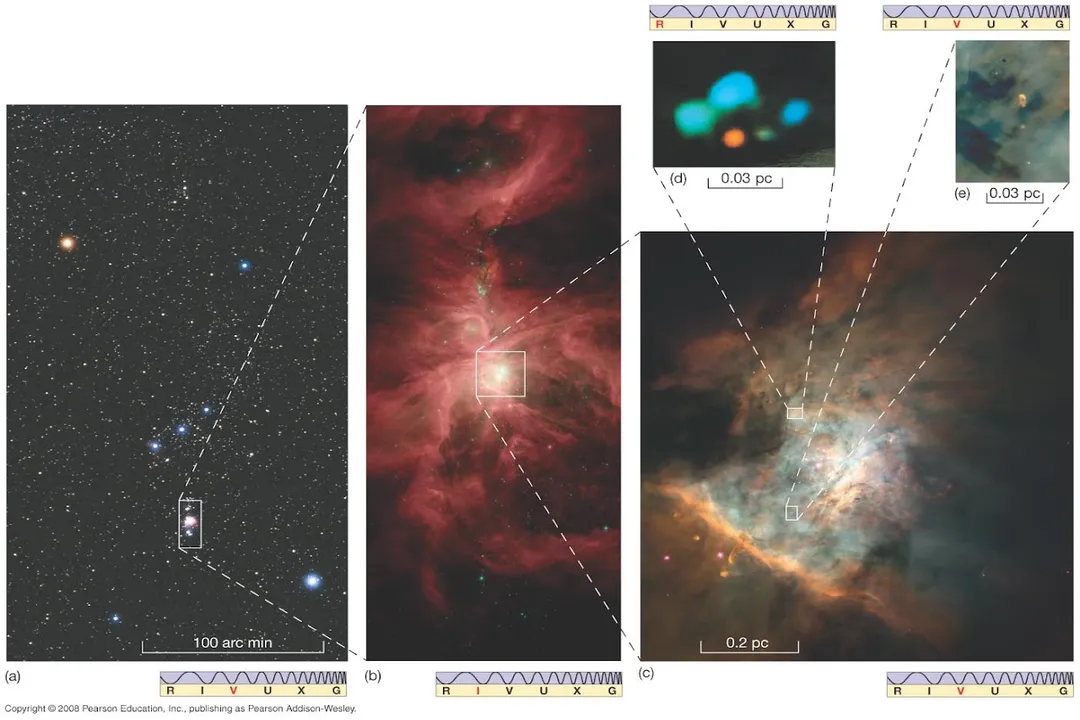
The most immediate and fundamental resistance to gravitational collapse stems from the internal thermal pressure of the gas itself. Interstellar molecular clouds, the nurseries of stars, are exceptionally cold, often hovering around to . [1][7] While this temperature is frigid by terrestrial standards, the gas particles still possess random kinetic energy, which translates into an outward pressure, , opposing the inward gravitational force ( is density, is temperature). [5]
For collapse to proceed, the cloud must effectively shed the energy generated by its own compression. If a gas cloud is not dense enough to trap its heat, the gravitational energy converted into kinetic energy (heat) is efficiently radiated away as infrared and radio photons, allowing the temperature to remain low and preventing the thermal pressure from building up significantly. [1][7] This initial, rapid collapse phase, sometimes described as a free-fall, continues as long as the cloud remains transparent enough for this cooling to occur. [7]
The slowing mechanism here is not just the initial pressure, but the trapping of that energy. As the cloud fragment compresses, it becomes denser and eventually opaque to the very photons it is generating. [1][7] When the interior heat—the thermal energy produced by gravitational work—can no longer easily escape, it builds up rapidly. This surge in internal temperature directly leads to a corresponding surge in thermal pressure, which pushes back against gravity, causing the contraction to slow dramatically. [1][7] This transition marks the emergence of a distinct, hot core—the first stage of a protostar—which has achieved a state close to hydrostatic equilibrium (where internal pressure balances gravity) but is not yet in thermal equilibrium (where fusion balances radiation). [7]
# Magnetic Support
Beyond the pressure generated by heat, interstellar clouds are threaded with magnetic fields, relics of the galactic environment from which they condensed. [5] These magnetic fields, though weak compared to Earth's field, are coupled to the ionized components of the gas. As the cloud begins to contract, the magnetic field lines are compressed along with the gas, causing the magnetic field strength () to increase dramatically—it scales inversely with the volume, roughly as . [5]
Because magnetic pressure () is proportional to the square of the field strength (), the resistance offered by the magnetic field escalates with extreme rapidity during compression. [5] If the magnetic field were perfectly coupled to all the gas, the resulting magnetic pressure could easily halt or prevent collapse altogether, even for clouds that are quite massive. [5]
The critical factor, and the mechanism that allows star formation to continue despite this hindrance, is the decoupling of the magnetic field from the bulk of the gas. In the very cold, mostly neutral molecular clouds, the gas is not perfectly conductive. The magnetic field is primarily tied to the small fraction of ionized particles. As the cloud collapses, neutral particles drift across the magnetic field lines until they collide with ions, effectively dragging the magnetic field along. This process is known as ambipolar diffusion. [5]
Ambipolar diffusion is a relatively slow process, significantly slower than the initial free-fall. It acts as a gradual leak for the magnetic support, allowing the central density to increase enough for gravity to locally overcome the magnetic and thermal pressure in the very core. The magnetic field and associated angular momentum are eventually shed outward into the surrounding envelope or disk, permitting the central accumulation of mass that defines the protostar. [5] In essence, the magnetic field doesn't stop the collapse indefinitely, but it dictates the timescale over which the collapse of the central core can occur, transforming a rapid collapse into a much more drawn-out affair governed by diffusion rates.

# Rotational Dynamics
Another physical quantity that resists spherical contraction is angular momentum, which, due to the conservation law, is amplified tremendously as the cloud shrinks. [5][6] Even an initial cloud fragment that is rotating extremely slowly will spin up to very high frequencies as its radius () decreases, because angular momentum () is proportional to (where is the rotation frequency). [5]
The effect of this increasing rotation is the generation of a centrifugal force, which acts perpendicular to the axis of rotation, opposing the inward pull of gravity most effectively at the cloud's equator. [3] This force prevents further collapse along that plane, compelling the contracting material to flatten into a disk structure around the central object. [3][5] This structure, the protoplanetary or protostellar disk, is a direct consequence of rotation slowing the overall contraction in the equatorial plane.
While gravity can still pull material inward along the rotation axis (the poles), the conservation of angular momentum ensures that the equatorial material cannot freely fall onto the forming protostar, effectively slowing the rate at which mass accretion can occur. If this angular momentum could not be shed, the cloud could never condense into a star or a star system, as the rotation speed would eventually become too great for gravity to overcome anywhere except perhaps the poles. [5] The formation of jets, often seen perpendicular to these disks, is another way angular momentum and magnetic fields work in concert to remove this rotational energy from the system. [2]
# The Role of Fragmentation and Cooling Efficiency
When considering the entire interstellar cloud, the concept of fragmentation is vital, and it reveals a layered resistance dynamic. A large cloud becomes unstable due to gravity exceeding pressure across its whole volume (surpassing the Jeans mass). [7] However, as it contracts, its density increases, which actually strengthens gravity locally relative to the local pressure that must be overcome for that smaller piece to collapse. [1][7]
This means that rather than the entire cloud collapsing at one rate, it breaks up into smaller, denser pieces—fragments—each pursuing its own gravitational collapse trajectory. [1][5] This process of fragmentation itself is a form of slowing down the overall collapse to a single point, as the cloud structure is being processed through many parallel, independent collapse pathways. [1]
The efficiency of cooling dictates the fragmentation process. In the earliest stages, cooling is efficient, allowing fragmentation to proceed rapidly down to smaller and smaller scales, eventually forming star-sized clumps. [7] The transition point where fragmentation ceases occurs when the core of a fragment becomes opaque and traps its heat. At this juncture, the thermal pressure rises sufficiently to resist gravity for that core, setting the size scale for the subsequent protostellar contraction phase, which is much slower than the initial free-fall/fragmentation phase. [5][7]
It is worth noting a peculiar difference in the earliest history of the universe. The first stars formed from clouds that lacked carbon and oxygen, the molecules () essential for efficient cooling in modern clouds. [1] Without this efficient radiative cooling, these primordial clouds had to be significantly warmer (), meaning gravity had a much larger thermal pressure to overcome. This resulted in the first stars being far more massive () than today's typical stellar births, demonstrating that the material composition of the cloud directly influences the stopping power of its internal pressure. [1]
# Synthesis of Slowing Mechanisms
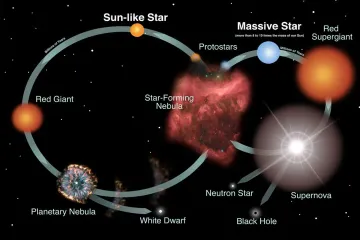
The retardation of gravitational collapse is not due to one single force but rather a continuous struggle where multiple pressure sources must be circumvented sequentially or simultaneously. [5]
A fascinating aspect arises when comparing the effectiveness of thermal versus quantum resistance. While thermal pressure builds up inside a protostar and slows the collapse, it is not enough to halt it entirely until fusion ignites. This is because the object is constantly radiating energy from its surface, allowing contraction to continue slowly (the Kelvin-Helmholtz contraction phase). [6] However, for very low-mass objects, where fusion temperatures () are never reached, contraction can be halted by a non-thermal mechanism: electron degeneracy pressure. [6] This quantum mechanical pressure, independent of heat content, resists further compression once the density becomes extremely high, resulting in "failed stars" known as brown dwarfs (). [1] Thus, in the initial collapse, thermal pressure slows things down by trapping radiation, but in the case of low-mass cores, quantum pressure stops the process before fusion can begin.
Another comparative point lies in the efficiency of energy removal. During the initial collapse and fragmentation phase (Stages 1 and 2), the cloud is so tenuous that heat is radiated away almost perfectly, meaning contraction is limited primarily by the rate at which matter can physically fall together. It is only when the core density reaches particles/m$^3$ (Stage 3) that it becomes opaque, trapping radiation and causing the thermal pressure to become the dominant immediate brake on the collapse rate, leading to the protostar stage. [6] This transition from radiation-limited cooling to pressure-limited support is arguably the single most important deceleration event in the birth of a star, determining the object's initial size and luminosity track before main sequence ignition. [7] The presence of dust, while only a tiny fraction of the mass, is paramount in this, as it provides the necessary opacity mechanisms in the infrared to trap the heat. [1]
The combined struggle against thermal pressure, magnetic pressure, and centrifugal forces ensures that the formation of a star like the Sun is a marathon, not a sprint, taking tens of millions of years from the initial cloud instability to the ignition of core hydrogen burning. [6]
Related Questions
#Citations
[PDF] Announcements
The Process of Star Formation | ASTRO 801
Star Formation - The University of Arizona
Chapter 19, Section 2
11 Star Formation - Introductory Astronomy
Basics of Star Formation
[PDF] Chapter 16 Star Birth
Lecture 14: Star Formation