What slows the contraction of a star-forming cloud?
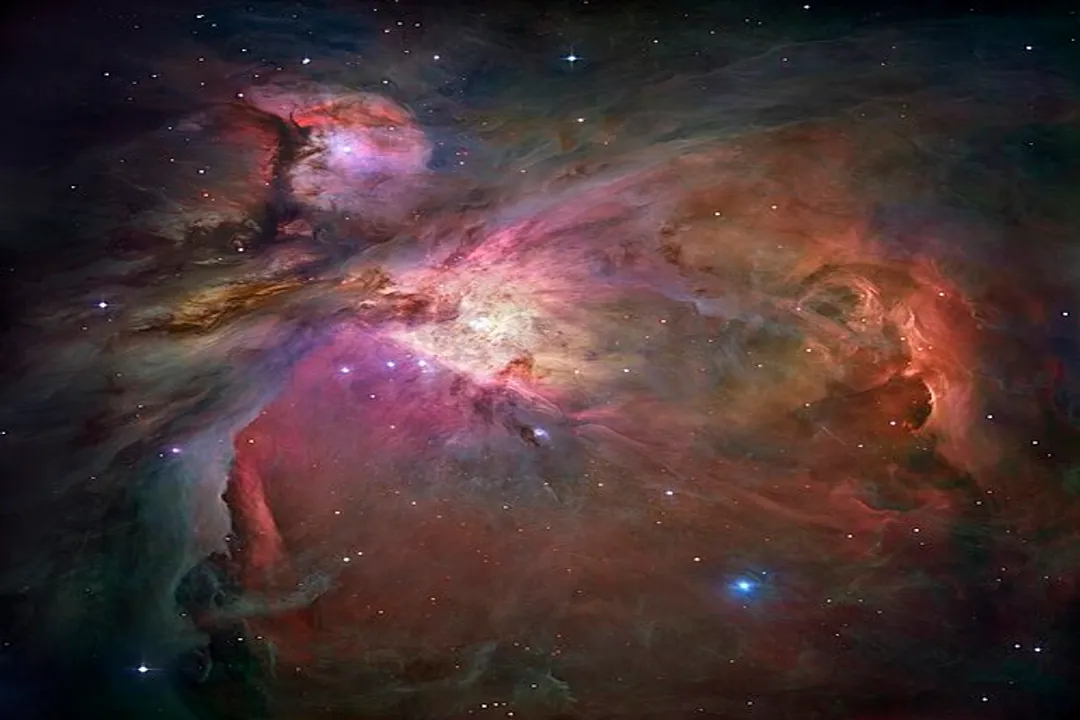
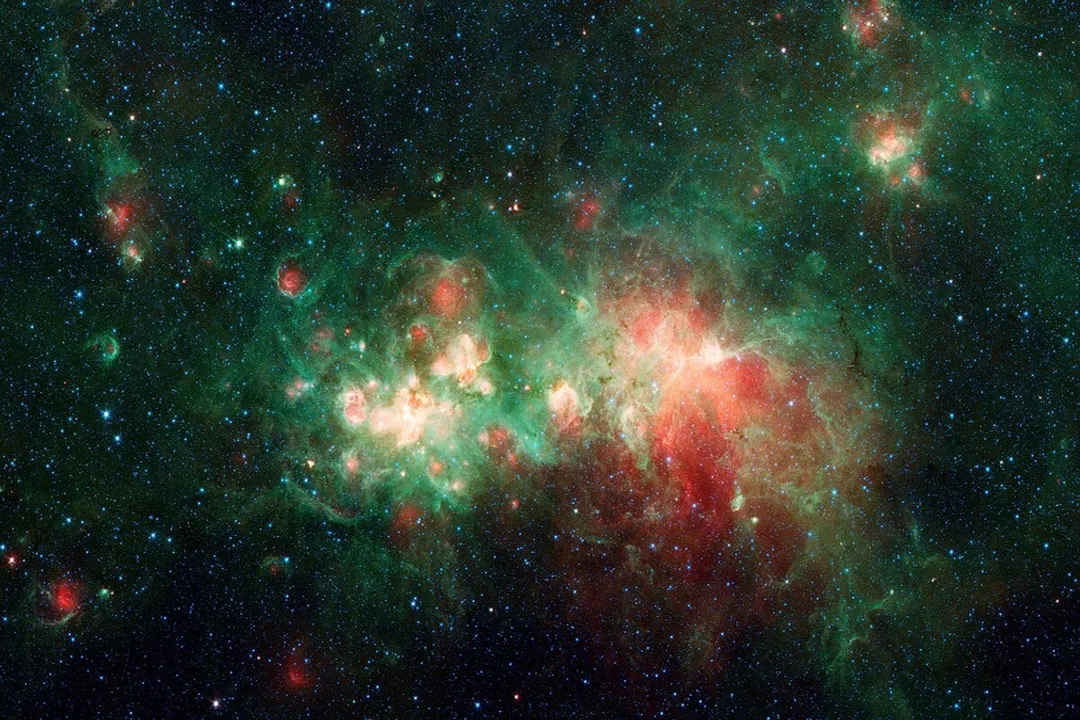
The process by which a vast, cold, tenuous cloud of gas and dust gives birth to a star is fundamentally a contest: the relentless inward pull of gravity versus several outward, resisting forces inherent in the cloud itself. If gravity were the only player, star formation would be a much quicker, more straightforward event. The fact that it takes millions of years tells us that something significant is constantly pushing back, slowing the inevitable collapse toward the protostar phase. These slowing mechanisms are crucial because they determine the timescale, the mass of the resulting star, and even whether a collapse happens at all.
# Internal Pressure
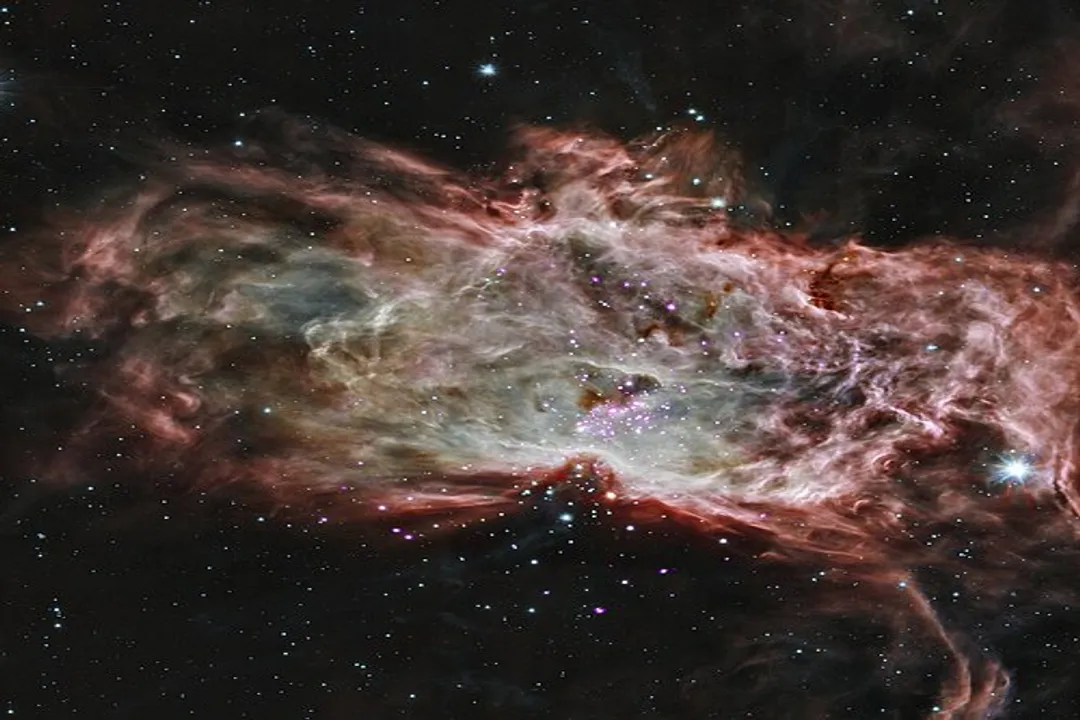
The most immediate resistance to gravitational collapse comes from pressure, which acts to keep the cloud puffy and supported. In an ideal scenario, thermal pressure—the kinetic energy of the randomly moving gas particles—would resist compression. However, in the very cold, dense cores where stars actually form, thermal pressure is often insufficient to halt the process once a certain density threshold is crossed, a concept tied closely to the Jeans mass. [4][9]
However, real star-forming regions, known as molecular clouds, are far from static thermal systems. They are complex environments where several forms of non-thermal pressure come into play, actively serving as the brakes on contraction. [8]
One major brake is magnetic pressure. Magnetic fields threading through the interstellar medium can exert significant outward forces when compressed by an external gravitational field. [9] If a cloud core is tightly coupled to the magnetic field lines passing through it, the field lines essentially become stiff supports resisting the squeeze. This magnetic tension can prevent the cloud from fragmenting or collapsing until the gas density becomes high enough to decouple from the field—a process called ambipolar diffusion. [9] This diffusion allows the neutral matter to fall inward while the charged particles and the magnetic field lag behind, effectively slowing the contraction of the mass that will become a star. [4]
Another key slowing agent is turbulence. Molecular clouds are not perfectly still; they are rife with supersonic motions and chaotic eddies, often generated by past events like supernova explosions or interactions with galactic spiral arms. [6] These turbulent motions store immense amounts of kinetic energy, which manifests as an effective pressure resisting the smooth, organized pull of gravity toward the center. [4][5] For a region to begin collapsing gravitationally, it must first overcome this initial turbulent support. If the turbulence is vigorous enough, it can maintain the cloud in a quasi-stable state, preventing widespread star formation across the entire giant molecular cloud structure. [9]
# Pressure Comparison
It is informative to compare the effectiveness of these pressures. Thermal pressure alone is generally weak in cold clouds (temperatures around 10 Kelvin), meaning gravity often wins quickly unless the cloud is vast. Magnetic and turbulent pressures, however, carry much more energy in the initial, less dense phases of a cloud. [4]
As an analogy, consider a dense, cold pocket within a molecular cloud. Thermal pressure is like trying to stop a heavy truck with a few small foam cushions—ineffective unless the truck is already moving slowly. Magnetic pressure and turbulence, conversely, are like setting up a complex network of interwoven steel cables and constantly moving wrecking balls around the truck; they apply a distributed, dynamic resistance that must be systematically overcome before the main gravitational momentum can take over. [7]
This highlights an original observation: the dominant slowing mechanism shifts as the collapse proceeds. Initially, turbulence and magnetic support dominate the resistance. Only when the core shrinks sufficiently, decoupling from the magnetic field and dampening the large-scale turbulence, does the thermal pressure (or the pressure from the forming protostar itself) become the final hurdle the gravitational collapse must clear to achieve hydrostatic equilibrium as a true star. [8]
# Angular Momentum
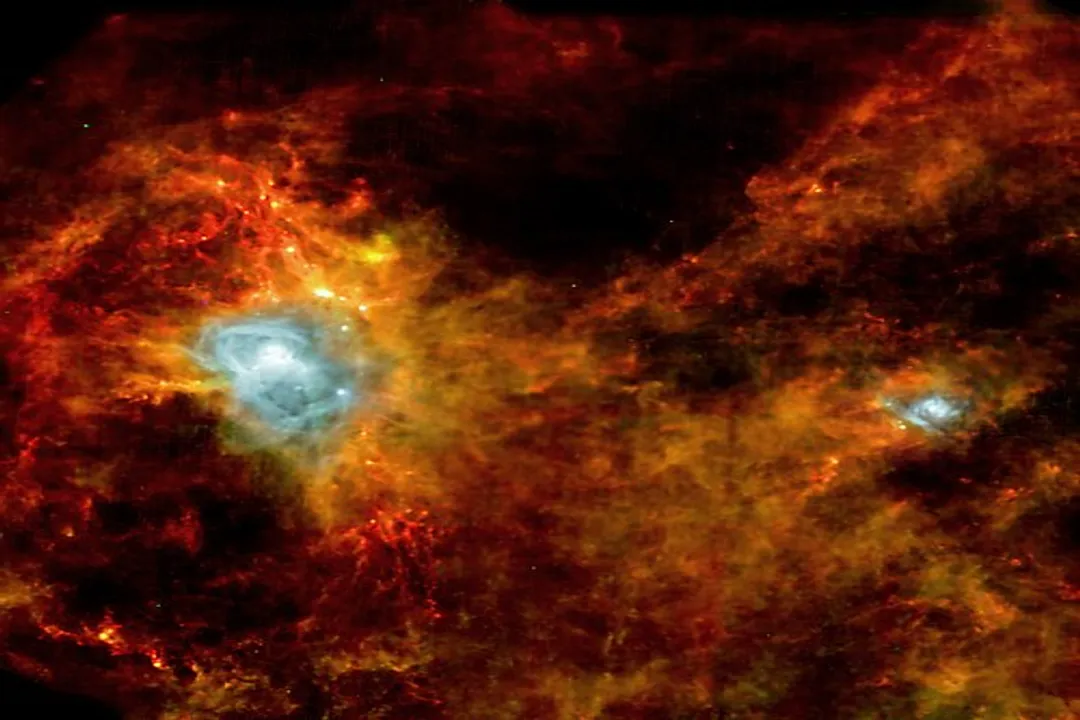
Gravity always pulls mass toward the cloud's center of mass, but clouds are rarely perfectly still. They possess some degree of angular momentum, meaning they are rotating, even if very slowly. [3] As a cloud contracts under gravity, this rotation must be conserved, a principle similar to a figure skater pulling their arms in to spin faster.
This conservation of angular momentum translates directly into an outward-acting force known as the centrifugal effect. [4] This effect is strongest at the equator of the collapsing cloud, pushing material outward and directly opposing the inward gravitational pull.
If the initial rotation rate is high enough relative to the mass and density, the centrifugal force can completely halt the collapse along the equatorial plane long before a star forms. [9] In such a case, the material flattens into a rotating disk—the very structure that often feeds the star and eventually forms planets. Therefore, angular momentum doesn't just slow contraction; it reorganizes it, converting a spherical collapse into a more complex process involving disk formation. This reorganization buys significant time, allowing the system to slowly shed or redistribute this angular momentum through magnetic or viscous processes before the central object can reach true stellar density. [5]
# Magnetic Braking and Field Strength
While magnetic fields provide support pressure, their interaction with the surrounding medium also actively works to slow the initial contraction—a process called magnetic braking. [9] As mentioned earlier, the charged particles within the core are tied to the magnetic field lines. If the outer, less-dense envelope of the cloud is not rotating as fast as the inner core is trying to, the magnetic field lines act like tethers or brakes, transferring angular momentum outward from the collapsing core to the surrounding, slower-moving gas. [4]
This process requires the magnetic field to be sufficiently strong to enforce this coupling across the relevant density gradients. If the field is too weak or the core has already decoupled (as in the extreme density of a protostar), magnetic braking becomes negligible.
To quantify the importance of these opposing forces, one could conceptualize a dimensionless ratio, often called the Mass-to-Magnetic Flux Ratio (). If this ratio is low (meaning the magnetic flux is strong relative to the mass ), the magnetic field dominates, and collapse is strongly inhibited or stopped entirely. [9] A successful star-forming core must have a local region where gravity has managed to increase the density significantly enough to lower this ratio below a critical threshold, allowing gravity to finally dominate the magnetic resistance.
# Cloud Fragmentation
Another way contraction is slowed is through the creation of multiple contraction events rather than one massive one. This is fragmentation. A large, unstable molecular cloud doesn't usually collapse uniformly into one giant object; instead, it fragments into smaller, denser clumps. Each clump then begins its own independent collapse process, governed by its own local Jeans mass. [9]
This process delays the final state of the entire original cloud because the collapse is distributed across many local centers. While each fragment collapses relatively quickly on its own timescale, the overall process of depleting the entire molecular cloud takes longer because it is now managing many smaller, simultaneous gravitational battles rather than one overwhelming one. [1]
# Final Overcoming Forces
Ultimately, the slowing mechanisms are overcome when gravity manages to isolate a region dense and cold enough such that the resisting pressures are no longer sufficient to maintain equilibrium. When the Jeans mass condition is met locally, gravity wins that particular pocket of the cloud.
For a star to truly form, the pressure must eventually yield. Thermal pressure is overcome when the cloud becomes optically thick—it can no longer radiate away the heat generated by compression efficiently, causing the temperature to rise dramatically and increase the thermal resistance, eventually leading to the stable state of the protostar. Magnetic pressure is overcome via ambipolar diffusion, detaching the mass from the field. Turbulence is overcome when the dense core dissipates the turbulent energy through viscous heating or when the scale of the motion becomes too small to resist the overwhelming large-scale gravitational contraction. [4]
The structure of a star-forming region, therefore, is a beautiful, dynamic map showing where gravity is winning (the collapsing cores), where magnetic fields are fighting back (the surrounding envelopes), and where chaotic motion is still dominant (the turbulent outer layers). The "slowness" is not a single resistance but a layered defense system put up by the physics of gas dynamics, magnetism, and rotation. [2]
#Videos
Week 10 / Lecture 2 : Stages of Star Birth - YouTube
Related Questions
#Citations
Astronomy & Cosmology CH 9 QQ Flashcards - Quizlet
The Outer Planets: A Star is Born
[PDF] Chapter 16 Star Birth Where do stars form? Star-Forming Clouds ...
Week 10 / Lecture 2 : Stages of Star Birth - YouTube
What types of events cause a gas cloud to collapse into a star/solar ...
Stars form by the gravitational contraction of clouds of gas in space ...
How is hydrostatic pressure overcome when a star is formed?
Star formation - Wikipedia