Where do all stars start to form?

The beginning of a star is a dramatic event, yet it occurs in the coldest, darkest corners of the galaxy, far from the bright, active regions we often picture. Stars are not born in isolation; they emerge from vast, diffuse clouds of gas and dust that drift through interstellar space. These stellar nurseries, known scientifically as Giant Molecular Clouds (GMCs), are immense reservoirs of the raw material required for stellar birth. [1][2]
A single GMC can span hundreds of light-years and possess a mass millions of times that of our Sun. [1] These structures are overwhelmingly composed of molecular hydrogen, the simplest element, alongside helium, and trace amounts of heavier elements mixed into fine cosmic dust grains. [1][5][9] The environment inside these clouds is exceptionally cold, often hovering around just ten degrees above absolute zero, or about $10$ Kelvin. [2][4] This frigidity is crucial because heat generates outward pressure that fights against the inward pull of gravity. Only when the material is sufficiently cold can gravity begin its work uncontested. [2]
# Molecular Nurseries
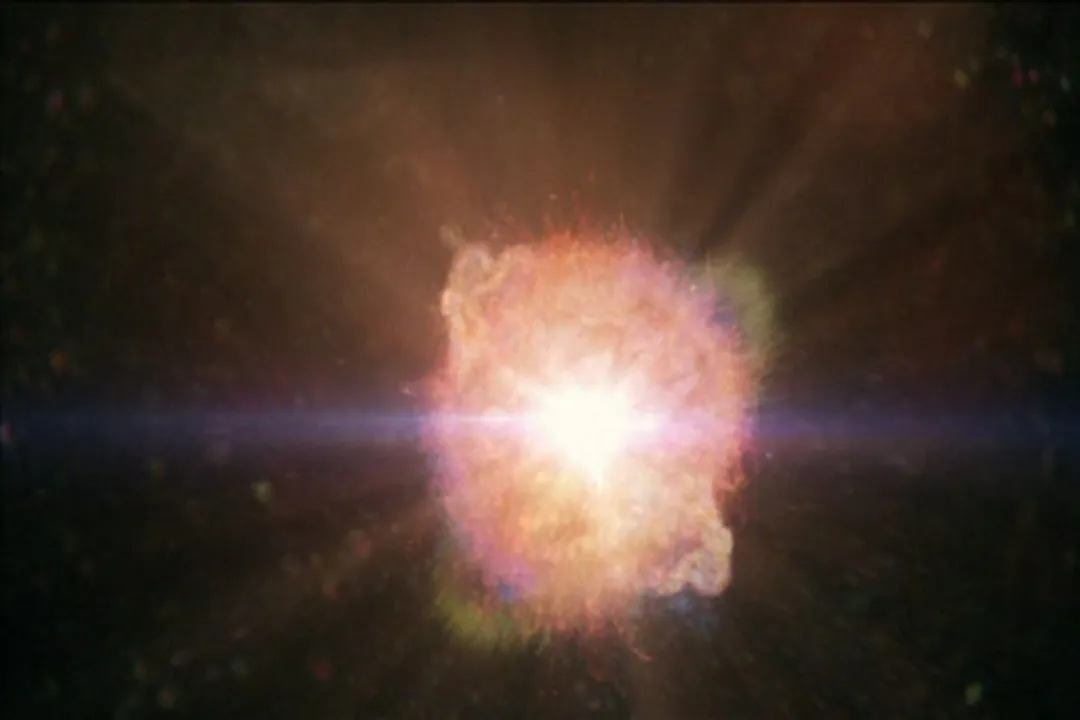
These massive clouds aren't uniform; they are turbulent, lumpy places where pockets of higher density are constantly being compressed and stirred by galactic winds or the shockwaves from nearby supernova explosions. [1][4] When a region within a GMC becomes dense enough, it enters the first critical phase toward stardom. This process often results in the formation of many stars simultaneously, suggesting that GMCs are fundamentally cluster factories rather than single-star creators. [1] It’s fascinating to consider that the initial distribution of these denser knots within the cloud dictates which stars will be born close together later on, influencing their entire evolutionary path due to gravitational interactions within a stellar family. [1]
# Gravity's Role
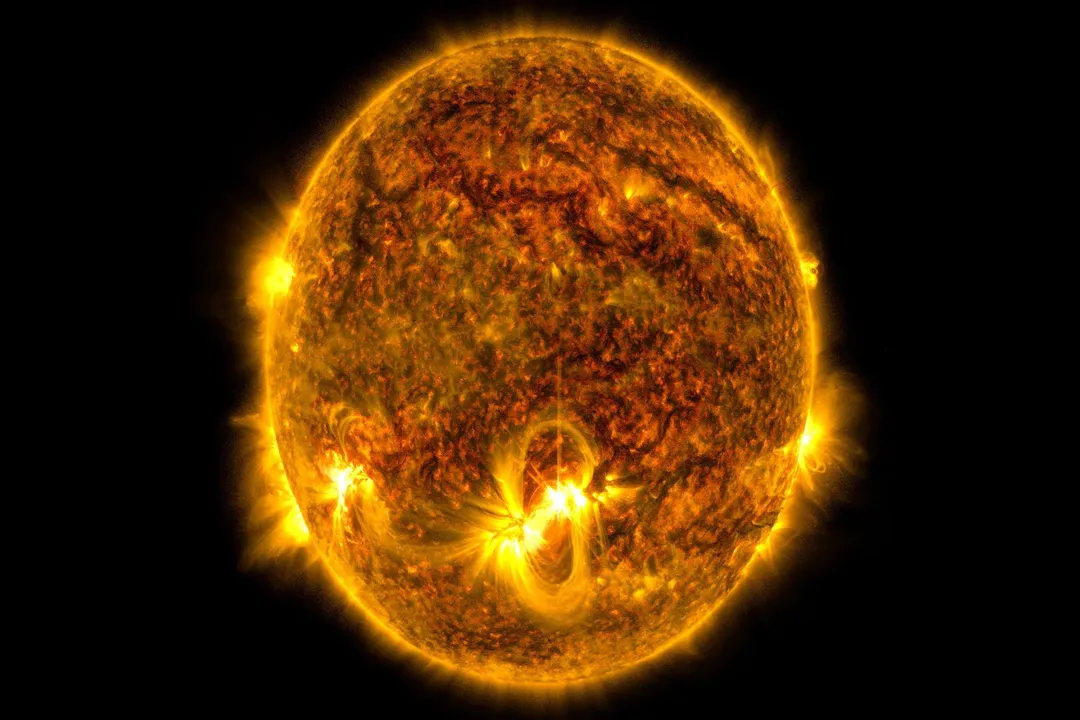
The entire mechanism hinges on gravitational collapse. Once a dense core within the GMC reaches a critical mass, its own self-gravity overcomes the internal thermal pressure and magnetic fields attempting to hold it up. [6] The core begins to contract, fragmenting the larger cloud structure into smaller pieces, each destined to become one or more stars. [1] As the core collapses, the material falls inward toward the center, gaining speed and increasing in density dramatically. [2] This infall continues, drawing in more and more material from the surrounding cloud envelope. [6]
This contraction phase is incredibly slow by cosmic standards, taking millions of years for the entire process to unfold. [2] Imagine a cloud spanning several light-years slowly shrinking over epochs—it highlights the inherent patience of astrophysics. The continuous accretion of mass means that stars are not born instantaneously; they grow over time by feeding on the surrounding cocoon of gas and dust. [6]
# Protostars Emerge
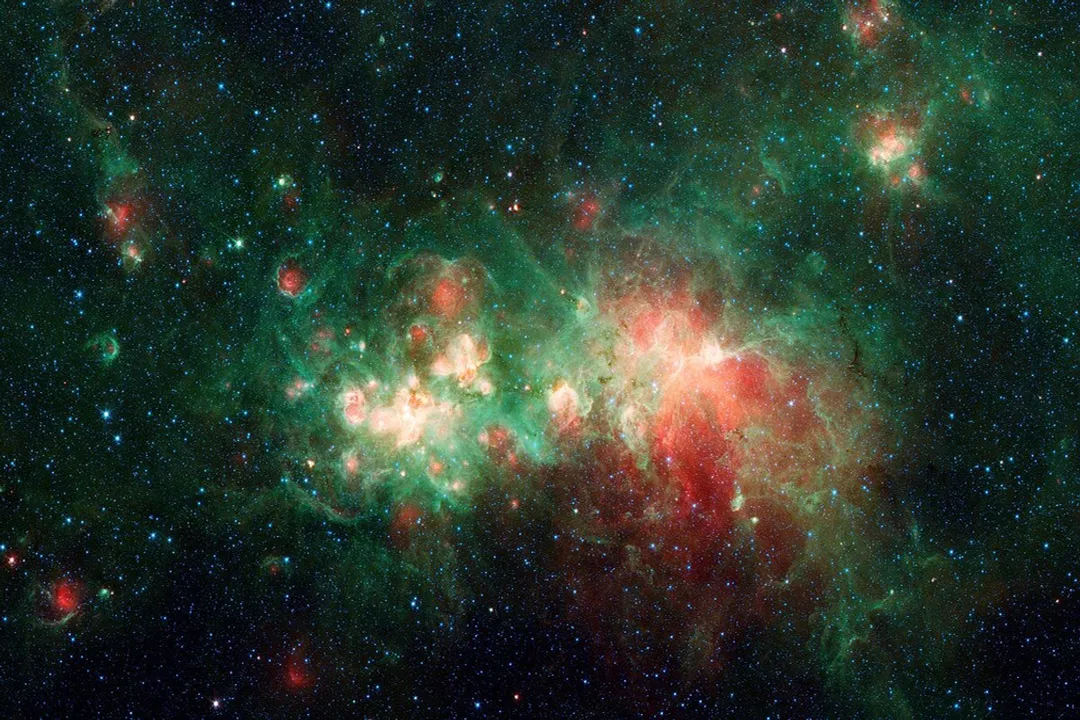
As the central region shrinks, gravitational potential energy is converted into kinetic energy and then heat. While the exterior of the cloud remains cold and dark, the very center begins to glow faintly as it compresses. [2] This glowing, contracting object is what astronomers call a protostar. [2][6] It is not yet a true star because its core is not hot enough for sustained nuclear fusion—the defining characteristic of a main-sequence star—but it is hot enough to emit infrared radiation. [6]
The protostar continues to gather mass from the disk of material swirling around it, a feature that also feeds the eventual formation of planets. [7] This stage is highly dynamic; outflows of material are often ejected violently from the protostar’s poles, carving out cavities in the surrounding cloud and halting further immediate accretion onto the core. [6] Only when the internal pressure and temperature reach approximately () does hydrogen fusion ignite in the core. At this moment, the object officially becomes a main-sequence star, balancing the inward crush of gravity with the outward push of fusion energy. [9] The entire sequence, from initial dense core to a stable star, can take roughly half a million years for a Sun-sized star. [2]
# Observation Tools
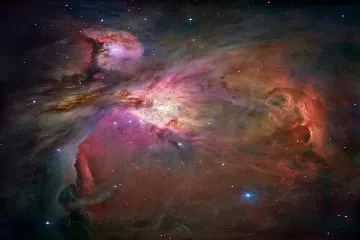
We cannot simply point a regular optical telescope at a GMC and see a baby star because the dense gas and dust effectively block visible light. [4][7] This is why observations of star formation rely heavily on instruments sensitive to longer wavelengths. Telescopes like the Atacama Large Millimeter/submillimeter Array (ALMA) are essential because they can peer through the obscuring dust to map the cold gas and dust structures where the earliest stages of collapse are happening. [7] ALMA lets researchers see the density fluctuations and the development of the surrounding accretion disks. [7] Conversely, telescopes like the Hubble Space Telescope can capture spectacular images of later stages, observing the glowing aftermath of nearby star births—the colorful nebulae where the most energetic young stars have already cleared away their natal material, such as the famous Pillars of Creation. [4]
# Cluster Births
It is important to note that the initial fragmentation of the molecular cloud means that stars are almost always born in groups, ranging from small associations to massive clusters containing thousands of members. [1] The immediate environment of a star—its neighboring stars—is determined by the structure of the original cloud core that collapsed to form it. This initial proximity has long-term consequences for the star's future orbital dynamics and stability. [1] Considering the universe's history, this implies a fascinating dependency: the chemical makeup of the early galaxy, specifically the amount of heavy elements (metals), must have played a role in setting the initial density thresholds required for these fragments to form in the first place, long before the first Sun-like star could ever ignite. [5] The initial availability of dust, which helps cool the gas and clump it together, is therefore a historical prerequisite for star formation as we know it.
Related Questions
#Citations
Star Basics - NASA Science
Star formation - Wikipedia
Star Formation | Center for Astrophysics | Harvard & Smithsonian
The formation of stars - ESA/Hubble
Where did the rocks that form planets, stars, asteroids etc. even ...
The formation and life cycle of stars - AQA - AQA - BBC Bitesize - BBC
Star and planet formation | ALMA Observatory
Life Cycle of Stars - BYJU'S
How and where are stars born in the Universe? - Quora