What is the start of a star called?
The moment a star truly begins its life, igniting the nuclear furnace that will power it for billions of years, is the climax of an immensely long and violent process. While one might hope for a single, tidy name for this event, the start of a star is better described as a cascade of stages, collectively known as star formation. This process takes a vast, cold cloud of interstellar material and concentrates it down into a brilliant, self-sustaining sphere of plasma.
# Nebula Genesis
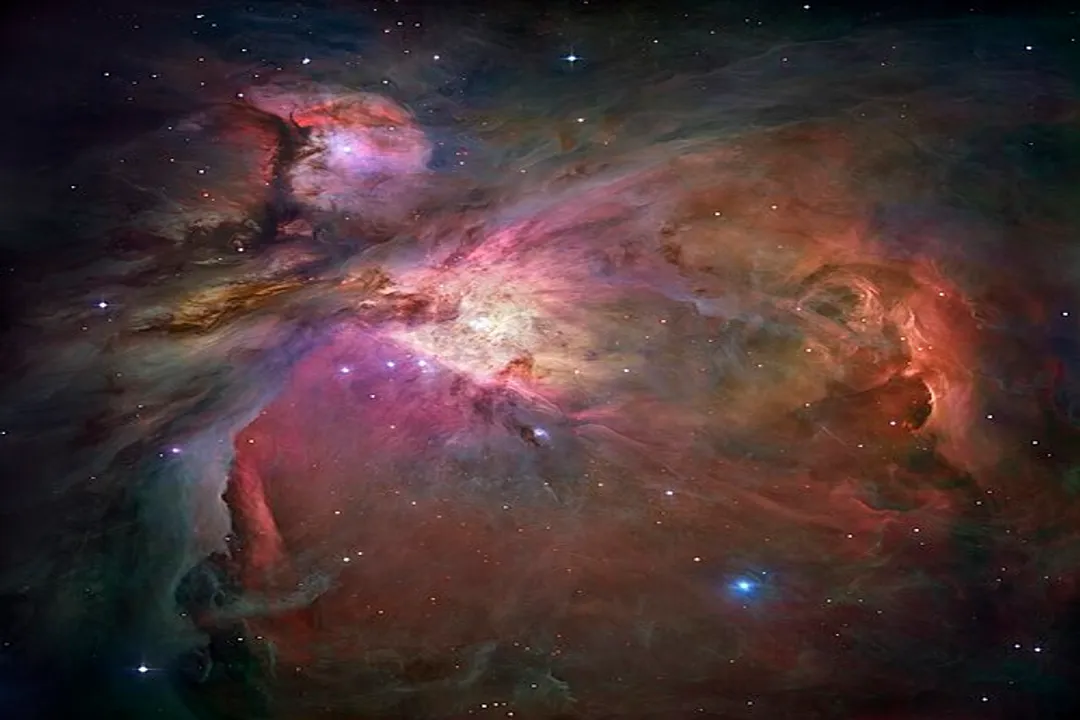
Stars are not born in empty space; they originate within giant nurseries scattered throughout galaxies. These stellar cradles are massive, cold, and dense concentrations of gas and dust known as molecular clouds or nebulae. The primary ingredients are simple: about $75%$ hydrogen and $24%$ helium, with the remaining $1%$ comprising heavier elements (or "metals" in astronomical terms).
These nebulae are immense, often spanning dozens or even hundreds of light-years across, containing enough material to create thousands of stars like our Sun. Paradoxically, despite their size, these clouds are incredibly diffuse compared to the atmosphere we breathe. The density is so low that the material is far colder than anything encountered on Earth, often sitting just a few degrees above absolute zero. For a star to begin forming, this tenuous material must first gather itself together against the tendency of the gas to expand outwards.
# Gravitational Collapse
The equilibrium within a molecular cloud is delicate, maintained by the internal pressure of the gas resisting the inward pull of its own gravity. For star formation to begin, something must upset this balance, tipping the scales toward collapse. Astronomers point to several potential triggers: the shockwave generated by a nearby supernova explosion, the gravitational disturbance from the passage of another nearby cloud, or simply internal turbulence and density variations within the cloud itself.
Once a sufficiently dense clump forms, gravity rapidly becomes the dominant force. This dense region starts to shrink, a process that causes the cloud to fragment into smaller, denser cores, each destined to become one or more stars. As a core contracts, the speed of the collapse increases, drawing more and more surrounding gas inward.
This initial gravitational contraction is profoundly energetic. It is here, before any true nuclear reactions begin, that the first major energy conversion occurs. The gravitational potential energy of the collapsing material is transformed into kinetic energy (motion), which then converts into thermal energy (heat) as particles collide. This explains why the center of the forming star heats up so dramatically, even before fusion starts; it is essentially being squeezed hot by its own immense weight. It is fascinating to consider that the object glows brightly for millions of years solely from this gravitational energy release—a massive amount of power generated without burning a single atom of fuel.
# Protostar Emergence
As the central clump shrinks, it becomes known as a protostar. A protostar is a distinct object from a full-fledged star because its energy source is still predominantly gravitational contraction, not nuclear fusion. It is hot, dense, and luminous, but it has not yet reached the core temperature necessary to sustain the fusion of hydrogen into helium.
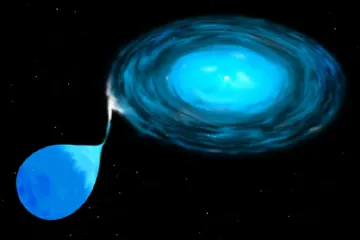
The entire system is rotating, a property conserved from the original, sprawling molecular cloud. Due to this rotation, not all the gas falls directly onto the protostar. Instead, the material flattens out into a spinning structure encircling the central object, known as a protoplanetary disk or accretion disk. This disk is crucial, as it serves as the reservoir from which the protostar continues to grow, slowly accreting mass over time.
The physics governing this contraction is complex. The time it takes for a protostar to form varies enormously depending on the final mass of the star. A star like the Sun might take tens of millions of years to fully form from its initial cloud fragment, whereas much more massive stars can complete the entire process in perhaps only a few hundred thousand years.
# Accretion Disk Dynamics
The presence of the disk dictates the final shape and behavior of the young stellar object. Mass transfer occurs as material spirals inward through the disk toward the protostar. However, this process is not smooth or quiet. Young protostars often exhibit powerful magnetic activity, leading to the ejection of energetic material away from the central object.
These outflows take the form of narrow, high-speed jets that shoot out along the rotational poles of the protostar and disk system. These jets help carry away excess angular momentum, allowing the remaining material to continue falling onto the protostar, thereby regulating the growth rate. For an observer on Earth, the protostar is often obscured by the dense envelope of the gas and dust cloud from which it is forming, making direct observation challenging. Astronomers must often look for indirect signs, such as infrared radiation, to detect these deeply embedded objects.
# Fusion Ignition
The transition from a gas-powered protostar to a self-sustaining star occurs when the gravitational squeeze finally heats the core to an unimaginable temperature: approximately $15$ million Kelvin ( K). At this critical threshold, the pressure and temperature are high enough to overcome the natural electrical repulsion between hydrogen nuclei (protons), forcing them close enough for the strong nuclear force to bind them together. This marks the start of sustained nuclear fusion, where hydrogen atoms fuse to create helium.
This moment of ignition is the true "birth" of the star as we typically define it. The energy released by fusion creates an enormous outward pressure that perfectly counteracts the inward crushing force of gravity. This balance, known as hydrostatic equilibrium, stops the long process of contraction. When this balance is achieved, the object officially joins the Main Sequence of stars, where it will spend the vast majority of its life steadily burning hydrogen. For context on the sheer precision required for this event: if the core temperature is even slightly lower than $15$ million K, fusion stalls, and the object might contract further, possibly becoming a brown dwarf (a "failed star"). If it were significantly hotter, the star would be vastly more massive and burn its fuel far more quickly.
# Stellar Types
The mass gathered by the protostar during its formative years determines its entire future, including its luminosity, temperature, and lifespan. The initial formation process itself can yield a wide array of stellar objects.
For instance, if the collapsing core fails to accumulate enough mass—falling below about $0.08$ times the mass of the Sun—it will never reach the $15$ million K threshold needed for sustained hydrogen fusion. These objects are classified as brown dwarfs. They do glow faintly, usually in the infrared, powered by residual heat and slow gravitational contraction, but they are not true stars.
Stars similar in size to the Sun ($0.5$ to $2$ solar masses) typically complete their gravitational collapse and enter the Main Sequence phase relatively quickly once fusion begins. Massive stars, however, go through the process much faster and end up residing on the high end of the Main Sequence, burning their fuel prodigiously fast, sometimes lasting only a few million years.
| Mass Relative to Sun | Formation Time Estimate | Final Classification |
|---|---|---|
| $<0.08$ M | N/A (Fails to ignite) | Brown Dwarf |
| M (Sun-like) | Million Years | G-type Main Sequence Star |
| $>8$ M (Massive) | Million Years | O or B-type Main Sequence Star |
It is an interesting exercise to compare the initial cloud scale to the final product. A single molecular cloud core can be several light-years across, containing gas that is so tenuous it is almost a perfect vacuum by Earth standards. Yet, this same material is concentrated into a sphere only about $1.4$ million kilometers in diameter (for the Sun). The compression factor is staggering, illustrating the immense power of gravity acting over cosmic timescales.
# Aftermath
Once the star settles onto the Main Sequence, the initial violent phase of birth is over. The accretion disk that surrounded the protostar remains, and it is from this material that planets, asteroids, and comets eventually coalesce. The star enters its long, stable adulthood, generating light and heat that travel across space, potentially leading to the formation of planetary systems. The life cycle of a star, therefore, begins not with a flash, but with a slow, gravitational gathering that culminates in a sudden, self-sustaining nuclear explosion deep within its core.
#Videos
What Is It Called When A Star Is Born? - Physics Frontier
Related Questions
#Citations
Star Basics
Star Formation
Star formation
how a star is born?
The Life Cycle of a Star
What is the birth of a star called?
Star Formation | Center for Astrophysics | Harvard & Smithsonian
Life Cycle of Stars
What Is It Called When A Star Is Born? - Physics Frontier
How Do Stars Form?