What are all stars called as they begin their lives?

The grand, shimmering lights we see overhead have an entire biography, an evolution written across billions of years, dictated entirely by one primary factor: their original mass. [3][5][9] Before a celestial body settles into the familiar, steady glow of a star like our Sun, it passes through several distinct, named phases. The story of what these budding suns are called begins long before they produce their own light, starting in the cold, dark reaches of space.
# Cloud Birth
Every star, regardless of whether it will end up a faint red dwarf or a spectacular supernova progenitor, begins life inside a nebula. [3][4][7][8] These vast, sometimes colorful, clouds are the universe’s stellar construction sites, often referred to as stellar nurseries. [4] A nebula is primarily composed of gas and dust, with hydrogen making up about 90% of the material, alongside helium and trace amounts of heavier elements. [8][1] These structures can be immense, sometimes spanning hundreds of light-years and containing mass up to ten million times that of our own Sun. [4]
Within these expansive, often undisturbed molecular clouds, the slow work of gravity commences. [4][8] Tiny density fluctuations cause material to clump together. As these clumps grow, their gravitational pull strengthens, drawing in even more surrounding dust and gas. [2][4] Over millions of years, this process continues until one dense pocket achieves sufficient mass to overcome the outward pressure and begins to collapse in on itself. [2][3][8]
# Core Collapse

As the massive cloud collapses, the concentrated matter at the center begins to spin faster and compress intensely. [2][7] This compression generates heat through friction, raising the temperature dramatically in the core. [2][4][6] This hot, dense, embryonic object is given its first formal name: the protostar. [1][2][5][7]
A protostar is not yet a true star; it lacks the engine of nuclear fusion. [2][8] The energy it emits at this stage—heat and light—is generated purely from the gravitational energy released as surrounding matter continues to fall onto it. [2] When a protostar first forms, the surrounding gas cloud can be as large as our entire solar system. [2] It can take a significant amount of time for this initial stage to complete; some sources suggest the contraction phase leading to a protostar can take anywhere from one hundred thousand to one million years. [2] A single nebula can spawn several protostars as the spinning cloud fragments. [1]
It is fascinating to consider the sheer scale of time involved even before the "birth" moment. If we imagine the entire lifespan of a Sun-like star to be about ten billion years on the main sequence, the relatively short, energetic, and messy phase of gathering mass—first as an unlit protostar, and then as a visible, contracting object—is merely the necessary but fleeting overture to its long, stable adulthood. [2][6]
# T Tauri
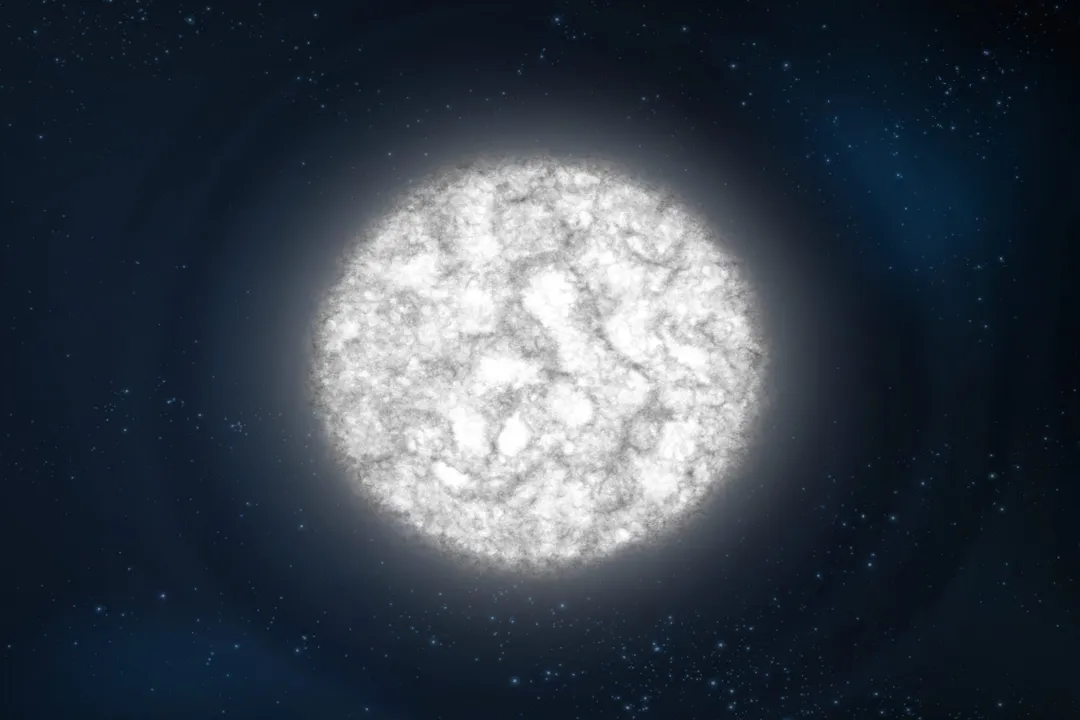
Once the protostar has collected a substantial amount of material, it often transitions into the next named, pre-stellar phase: the T-Tauri star. [2][5] This stage is named after a prototype star discovered in the Taurus constellation in 1852. [2]
The defining characteristic of a T-Tauri star is that its core, while hot and dense, has not yet reached the critical temperature required to ignite sustained nuclear fusion of hydrogen into helium. [2][5] Instead, the light and heat it radiates come from the continued gravitational collapse of its accumulating mass. [2] In appearance, T-Tauri stars can look much like the stars we observe at night, but they shine brighter than expected for a star of comparable mass because they possess a larger diameter. [2] This gravitational collapse, coupled with accretion, continues, allowing the core to slowly heat up over millions of years. [2] This phase can persist for up to one hundred million years. [2]
The T-Tauri phase encompasses a range of young, unstable objects. Astronomers have also classified certain highly variable young stars found in nebulae: FU Orionis stars (FUORs) and UX Orionis stars (UXORs). [9] FUORs are believed to be undergoing extremely rapid, large-scale accretion of material, leading to temporary, massive brightenings that last for years or decades before fading. [9] UXORs, conversely, show short-term dimming, likely due to clumps within their surrounding circumstellar disks temporarily eclipsing the star from our view. [9] The existence of these specific variable classes highlights how intense observational scrutiny of young objects—even those that are just about to become stars—has shaped our models of stellar formation. [9]
However, not all T-Tauri candidates achieve full stellar status. If a T-Tauri star fails to gather enough mass to reach the ignition temperature, it will never start fusion and will instead become a Brown Dwarf—a celestial body too small to be a true star but larger than a gas giant planet. [2] These objects cool down over time and eventually vanish from the night sky. [2]
# Ignition
For those protostars destined for long lives, the process culminates when the core temperature finally hits the threshold, often cited around ten million degrees Celsius or one million degrees Kelvin. [2][7][8] At this critical point, the immense pressure forces hydrogen nuclei to fuse, creating helium in a process called nuclear fusion. [1][4][5] This reaction is exothermic, releasing far more energy than it consumes. [2][5]
This release of energy creates an outward pressure that perfectly counteracts the relentless inward pull of the star’s own gravity. [3][4][8] This perfect balance is called hydrostatic equilibrium. [3][8] Once this state is achieved, the object stops contracting and officially graduates from its pre-stellar names. It is now considered a true star, entering the Main Sequence phase. [4][8]
The Sun, for instance, began its main sequence life about 4.5 billion years ago and will spend roughly ten billion years in this stable state, fusing hydrogen into helium. [2][6]
# Naming Evolution
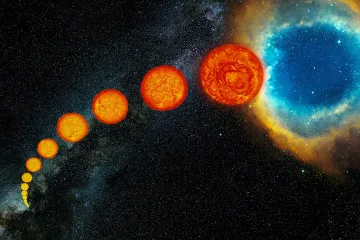
It is crucial to understand that the term "beginning their lives" can encompass the entire pre-main sequence journey, but the most technically precise names associated with the earliest, non-fusing state are protostar and T-Tauri star. [2][5] When astronomers first studied the regions where stars are clearly forming, they observed young, unstable stars exhibiting brightness variations—these were often generally called Orion variables or nebular variables. [9] These general historical classifications largely map onto the now better-understood T-Tauri phase, where the star's variability is a direct consequence of its final assembly—the slowing down and eventual cessation of accretion from the natal cloud. [9]
If we were to create a simple, sequential list of the names describing a star before it becomes a stable, burning star, the progression looks like this:
| Stage | Primary Name | Defining Characteristic |
|---|---|---|
| Collapse Initiation | Clump/Fragment | Gravitational collapse begins in a nebula. [2] |
| Pre-Fusion Brightness | Protostar | Shines from gravitational heating; surrounded by gas cloud. [2][5] |
| Post-Protostar Activity | T-Tauri Star | Core too cool for fusion; shines from continued gravitational collapse. [2] |
| Failed Star | Brown Dwarf | A T-Tauri that never ignites fusion. [2] |
| Stellar Birth | Main Sequence Star | Hydrogen fusion begins in the core, establishing hydrostatic equilibrium. [4][8] |
The initial naming reflects the mystery of the object's state. Calling it a protostar emphasizes that it is a proto, or first, form of a star, awaiting its true power source. Calling it a T-Tauri star emphasizes its visible, observable characteristic—its variability—which alerted astronomers to its youth and unstable nature, long before the underlying physics of core collapse was fully understood. [2][9]
Thus, as they begin their lives, stars are called protostars as they form and contract, and then T-Tauri stars (or related variable types) during their final, turbulent assembly phase, just before earning the title of a stable Main Sequence star upon achieving sustained nuclear ignition. [2][5]
Related Questions
#Citations
Stellar Evolution - | The Schools' Observatory
Star Basics - NASA Science
How Stars Form: A Star's Life Cycle in Six Stages - KiwiCo
A Star is Born: The Life Cycle of Stars | Wisconsin Space Grant ...
Stars | Research Starters - EBSCO
Life Cycle of Stars - BYJU'S
What is a Star? | Lifespan & Sizes - Lesson - Study.com
Stellar Evolution - aavso
The Lives of Stars - Wonderdome: Planetarium Shows for Schools