How long do blue stars live?
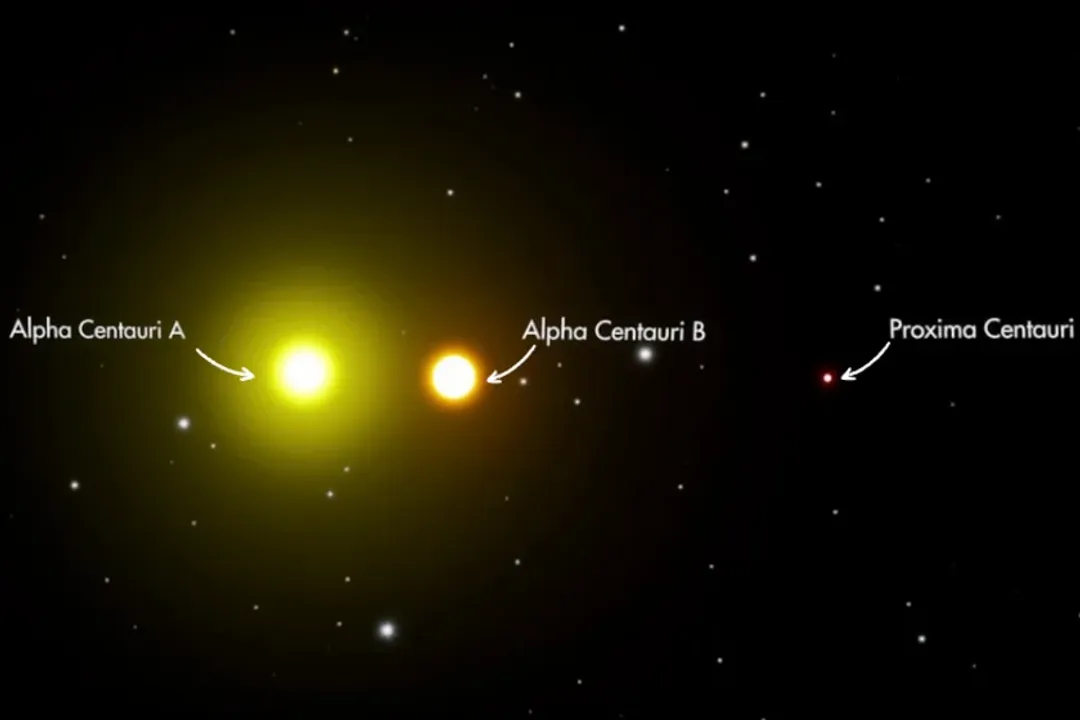
The most luminous and dazzling beacons in the night sky, the brilliant blue stars, burn through their existence at a truly staggering rate, lasting only a fraction of the time enjoyed by stellar neighbors like our own Sun. [3][5] To truly grasp the concept of a blue star's lifespan, one must first understand what makes them blue: extreme heat and immense mass. [6][8]
# Color Temperature
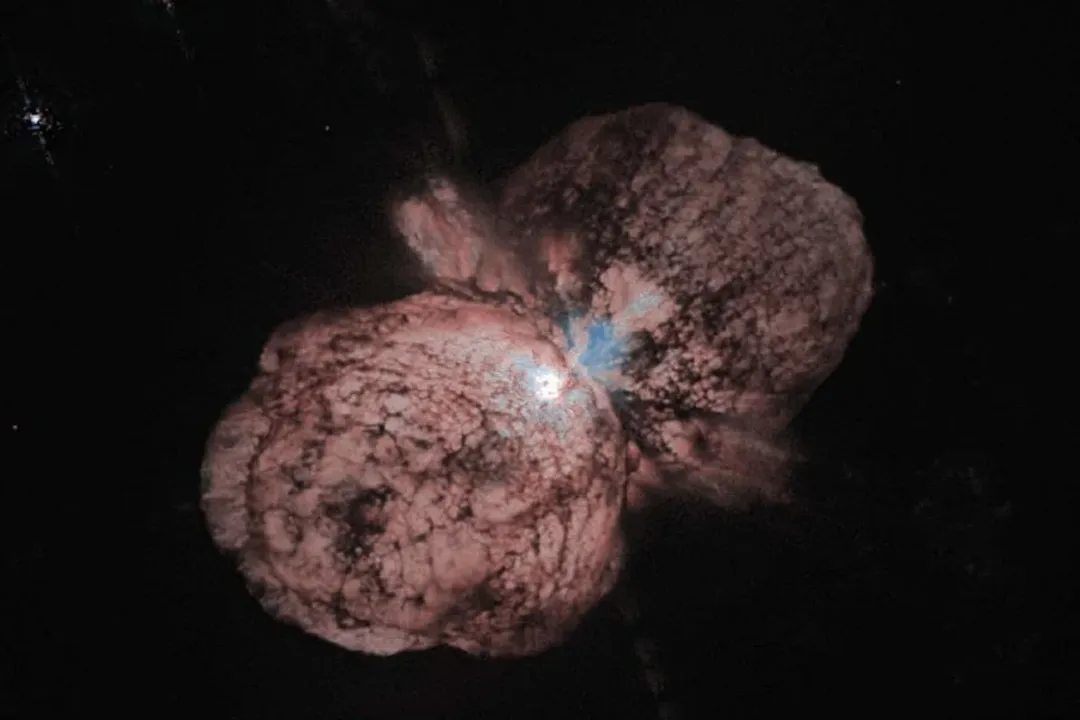
The visible color of a star is directly tied to its surface temperature. [6] Blue light has a shorter wavelength than the yellow or red light emitted by cooler stars, meaning a star must be fiercely hot to appear blue. [8] While our Sun, a G-type star, has a surface temperature around 5,800 Kelvin, the hottest blue stars can easily exceed temperatures of $20,000$ Kelvin, sometimes reaching up to $50,000$ K or more. [8][5] This high temperature places them in the spectral classes of O and B. [6]
These stars are not just hotter; they are significantly more massive than stars like the Sun. [4][5] A star's mass is the single most critical factor determining its lifetime, far outweighing its initial size or luminosity when considering longevity. [3]
# Mass Fuel Rate
The relationship between a star's mass and its rate of fuel consumption—its main sequence lifetime—is not linear; it is governed by a powerful power law. [4] For a star to maintain the enormous outward pressure required to counteract the gravitational crush of its much greater mass, it must generate energy at an accelerated pace. [2] Simply put, the more massive a star is, the more quickly it burns through its nuclear fuel, primarily hydrogen in its core. [3][5]
A massive star burns through its fuel supply far more voraciously than a less massive star. [4] If our Sun is expected to live for about 10 billion years, a star just 10 times the Sun's mass might only last 20 million years. [3] The most massive blue stars, the Blue Supergiants, consume their fuel supply so rapidly that their lives on the main sequence are incredibly brief by cosmic standards. [9][4]
# Lifespan Estimates
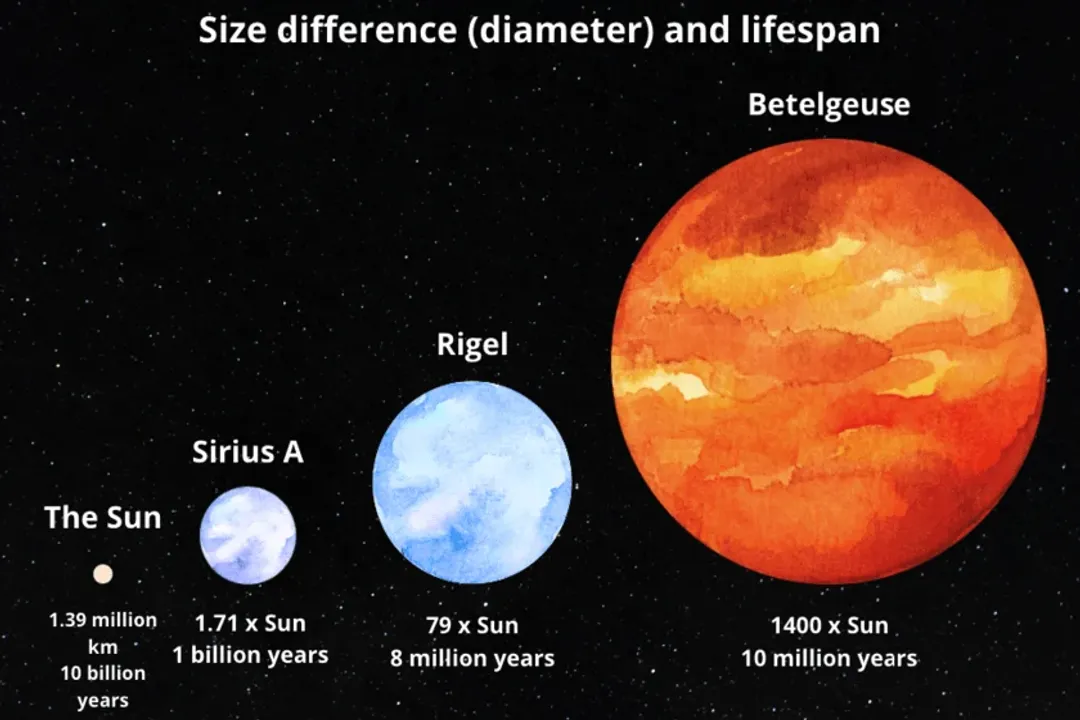
The vast range in stellar mass translates directly into an astonishing spread in possible lifespans. [3]
| Star Type (General) | Relative Mass | Approximate Lifespan |
|---|---|---|
| Red Dwarf | Solar Mass | Trillions of years |
| Sun-like Star (G-type) | $1$ Solar Mass | Billion years |
| Blue Giant/Supergiant | $> 10$ Solar Masses | Million years or less |
For comparison, stars that are classified as Blue Giants—hot, luminous stars generally more massive than the Sun—might only sustain core fusion for tens of millions of years. [2] The even larger Blue Supergiants are among the most massive stars known, possessing masses that can reach 100 times that of the Sun or sometimes more. [10][4] Because of their enormous mass and resulting luminosity, their lifetimes are exceptionally short, often calculated in the mere millions of years. [4][9]
It is an interesting point to consider that while a planet orbiting a typical G-type star like the Sun has billions of years for complex biology to potentially arise and evolve, a planet orbiting a massive blue star has only a fleeting window of perhaps only a few million years where the star’s energy output remains relatively stable enough to support liquid water. [1] This incredibly short timeframe presents a significant challenge for any potential biology seeking to establish itself near these stellar giants. [1][7]
# Evolution Changes
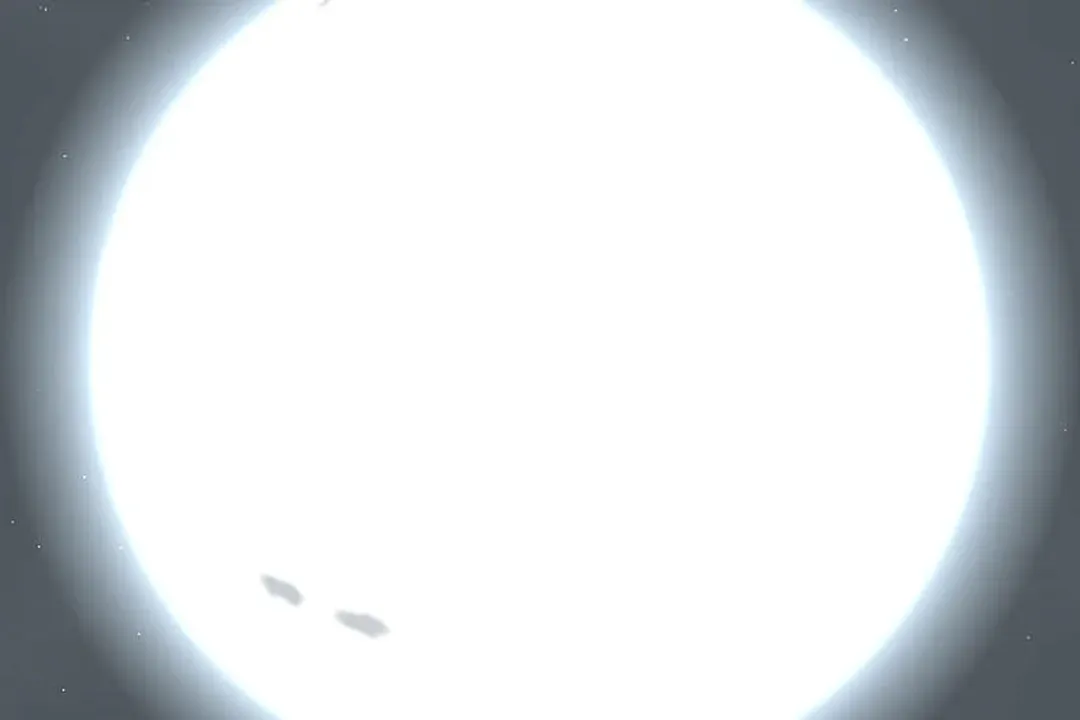
The life of a blue star is a fast-track evolutionary drama compared to the slow burn of smaller stars. [5] A star's blue color is often a sign that it has already moved off the main sequence, transitioning from a hotter, but less luminous, initial state, or it is a very young star that has rapidly evolved into a Blue Giant or Blue Supergiant. [2][10]
When these massive stars exhaust the hydrogen in their core, they do not transition into gentle Red Giants like the Sun will; instead, their collapse is dramatic and swift. [4] The remnants of these short, intense lives often result in spectacular stellar death events, such as a Type II supernova, leaving behind neutron stars or black holes. [10] This rapid shift from youth to cataclysmic death illustrates the inherent instability driven by high mass—the faster they burn, the more violent their final curtain call. [4]
# Planetary Habitability
The question of supporting life around such stars often leads to the conclusion that their lifespan is too short for life as we know it to develop. [1] However, even setting aside the lifespan issue, the sheer energy output poses problems. [7]
If a planet orbits very close to a blue star to remain warm enough for liquid water, it faces intense ultraviolet radiation and stellar winds due to the star's extreme surface temperature and luminosity. [7] Adaptations would be necessary, perhaps requiring deep subsurface oceans or thick atmospheric shielding, simply to survive the constant, overwhelming energetic assault from such a powerful neighbor. [7] Even if life did manage to emerge quickly, the stellar evolution path is so swift that the environment necessary for liquid water might vanish in the blink of an astronomical eye—a few million years—before life could truly take hold across a planetary surface. [1]
Observing our own Milky Way, the massive blue stars are statistically rare because they spend so little time in that phase of their life. [6] They are the ephemeral superstars of the galaxy, burning brightly and briefly before fading from the main stage, making their study crucial for understanding stellar endpoints, even if they are poor candidates for long-term cosmic neighbors. [5] Their massive nature means they are incredibly luminous, making them easy targets for astronomers despite their rarity and short tenure. [6]
Related Questions
#Citations
Could a blue star support life? I know generally no, but is ... - Quora
Blue giant - Wikipedia
How Long Do Stars Live? - Label Stars
Blue Super Giants - Isaac Newton Group of Telescopes
Stars
Blue Stars - Universe Today
What adaptations would be needed for life and water around a blue ...
Blue stars burn hotter than yellow or red stars, if that's the case will ...
Stars in an Exoplanet World - NASA Science