What is the longest a star can live?
The lifespan of a star is a cosmic timescale that dwarfs our brief human existence, but even among these celestial titans, there are vast differences in longevity. The key factor governing how long any given star will shine is its initial mass. Simply put, the bigger the star, the shorter its life; the smaller the star, the longer it endures. While our familiar Sun is expected to keep burning for billions of years, the universe also hosts stellar objects whose potential lifespans stretch into the tens or even hundreds of trillions of years—timescales that greatly exceed the current age of the cosmos.
# Mass Fuel Burn
Stars are giant, self-luminous spheres of gas, predominantly hydrogen, held together by gravity. Life begins when gravity causes a cloud of gas and dust to collapse until the core reaches temperatures high enough (exceeding $4$ million K) to ignite nuclear fusion, converting hydrogen into helium. This fusion generates an outward pressure that perfectly counteracts the inward pull of gravity, establishing the stable phase known as the main sequence.
The relationship between mass and luminosity is severe for stars. A star that is twice the mass of the Sun is not merely twice as bright; it is about 25 times as luminous. This increased energy output means it consumes its fuel supply far more rapidly. A general rule of thumb suggests that a star's lifetime is inversely proportional to its mass cubed, although the actual relationship varies slightly at the high and low ends of the mass spectrum.
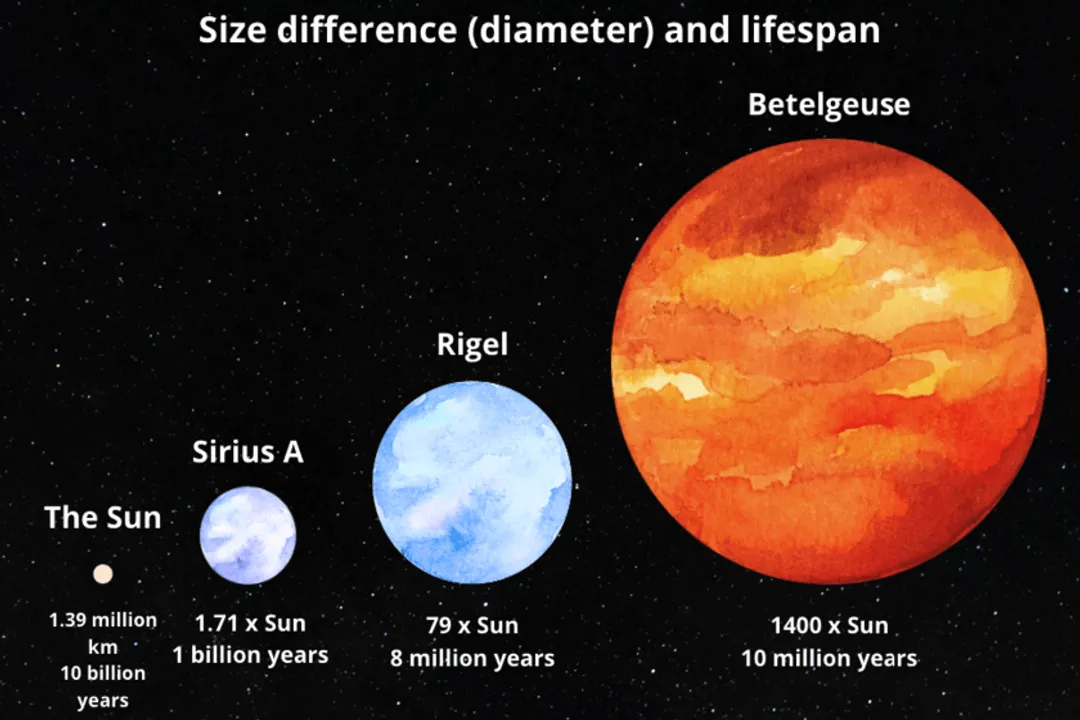
The most massive stars are the shortest-lived, living like cosmic rock stars—brilliant and brief. Stars with masses hundreds of times that of the Sun might only last 1 to 2 million years before ending in a spectacular supernova or hypernova explosion. Even stars ten times the Sun’s mass are only expected to live for 20 to 40 million years. For comparison, the massive blue supergiant Eta Carinae, estimated to be about 100 times the Sun’s mass, has a total predicted lifespan of just over 3 million years.
# Solar Middle
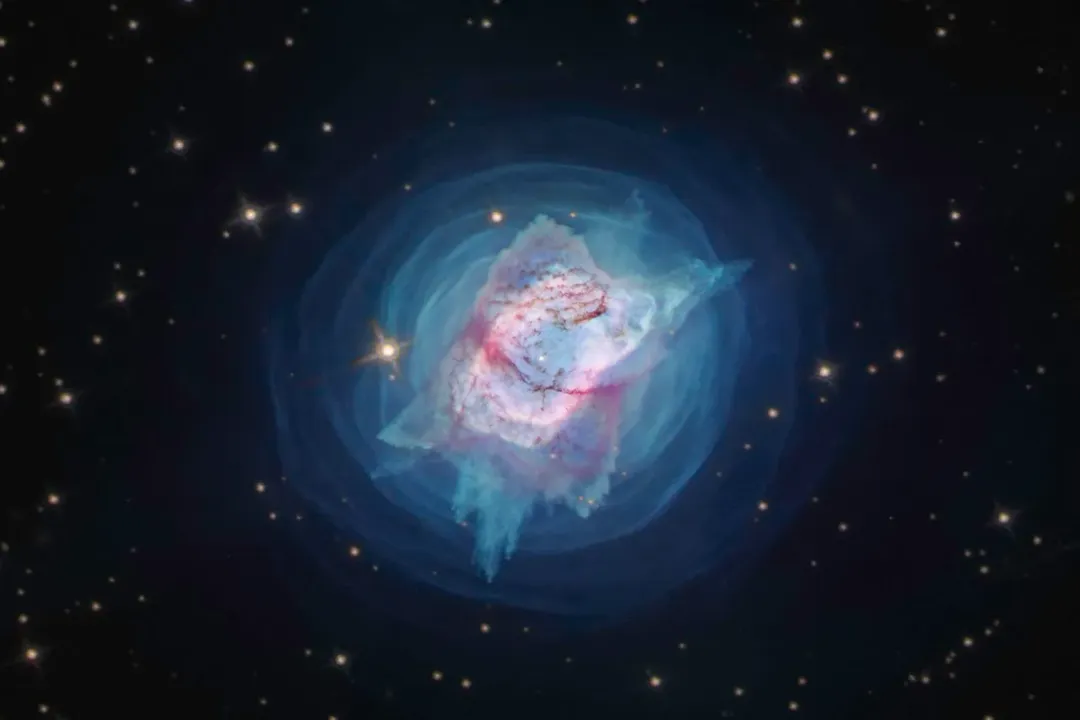
Stars like our Sun, classified as G-type main sequence stars, occupy a comfortable middle ground in terms of longevity. Our Sun, currently about 4.6 billion years old, has an estimated total main-sequence lifespan of about 10 billion years. In total, including the post-main sequence phases (red giant to white dwarf), its lifetime approaches 12 billion years. Stars with masses between roughly 40% and eight times the mass of the Sun generally follow this familiar evolutionary track: burning hydrogen in the core, expanding into a giant when the core hydrogen depletes, igniting helium in the core, and eventually shedding outer layers to form a planetary nebula, leaving behind a white dwarf remnant. Even at the lower end of this medium-mass spectrum, stars may approach a longevity of billion years—more than ten times the current age of the universe.
# Endurance Champions
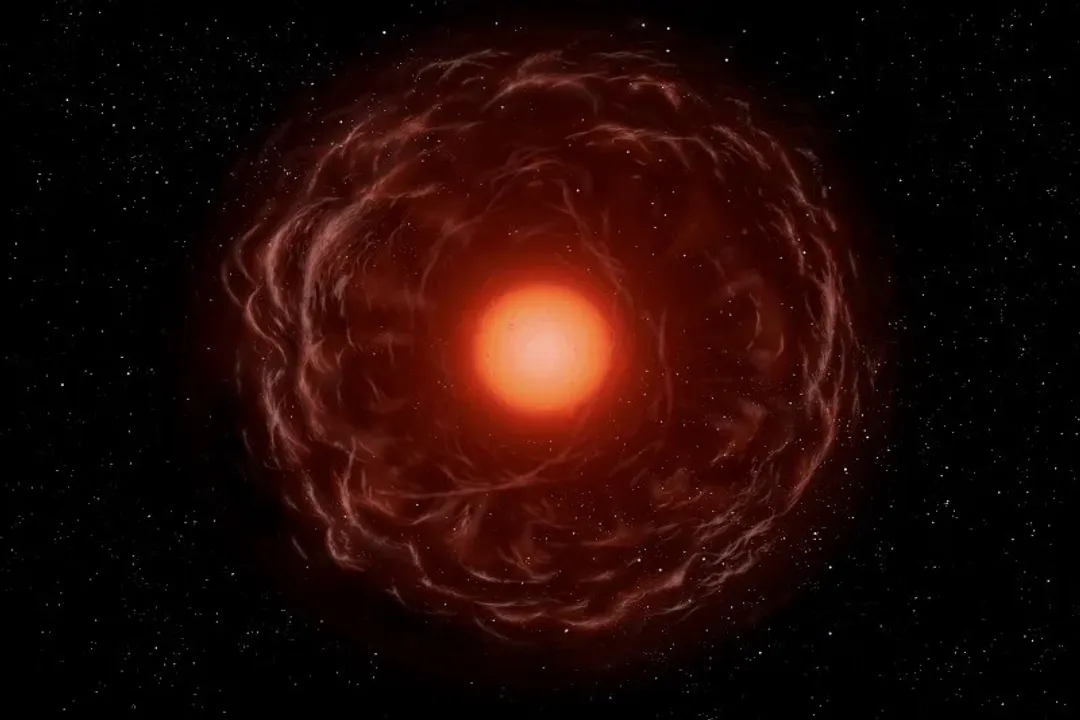
If we seek the longest-lived objects, we must turn to the opposite end of the stellar scale: the red dwarfs. These objects comprise the overwhelming majority of stars, estimated to be 75% to 80% of the stellar population in the galaxy. Red dwarfs are defined as stars with masses below 40% of the Sun's mass, yet they still maintain hydrogen fusion in their cores.
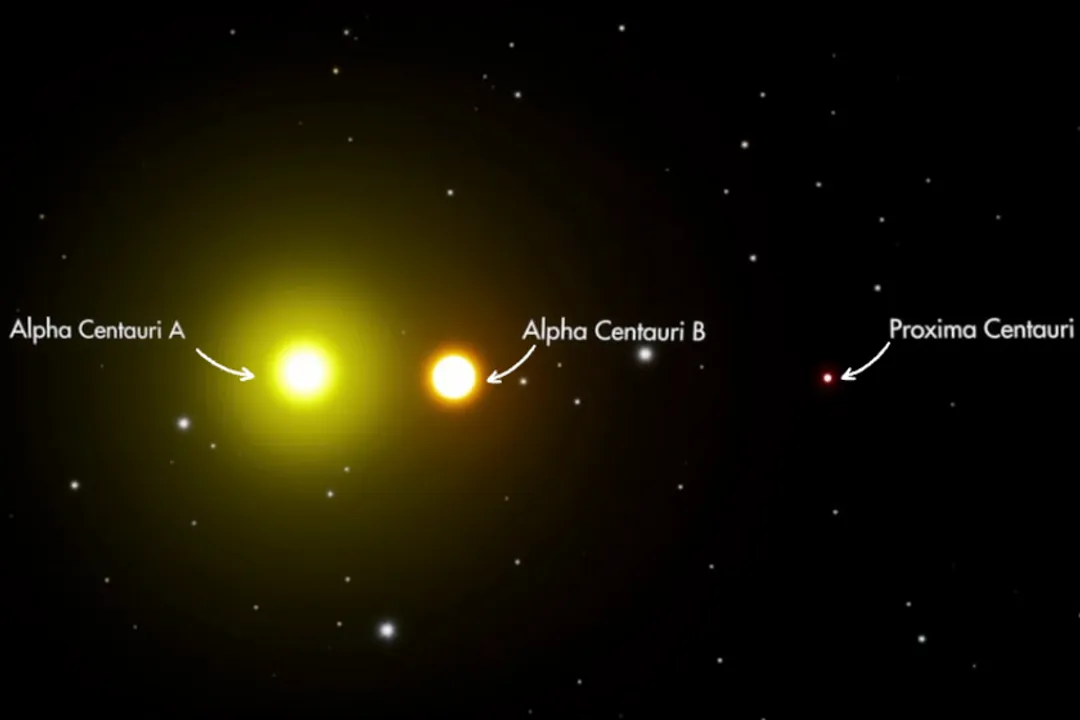
Their extended lives are due to their extremely low energy output and slow, gentle consumption of fuel. Proxima Centauri, the closest star to us, is a red dwarf that is only 12% of the Sun’s mass, radiating just $0.00016%$ of the Sun’s visible light.
The true secret to their longevity, however, lies in their internal structure. Stars like the Sun have a central core where fusion occurs, surrounded by a large, non-convective radiative zone, which is then surrounded by an outer convective zone. In Sun-like stars, the hydrogen fuel in the core is burned completely, but the hydrogen in the outer layers is never efficiently cycled into the core, meaning a significant portion of the star’s fuel remains unused.
Red dwarfs, being much less massive, are different; they are fully convective throughout their interior. This means that cooler material near the surface constantly sinks to the core, and hot material rises outward, continuously mixing the entire star. This allows the star to burn virtually all of its internal hydrogen supply, leading to efficiency levels that dwarf those of larger stars. While a Sun-like star only burns about 10% of its initial hydrogen, a $0.1$ solar mass star can burn 99% of its hydrogen before running out. This fundamental difference in fuel management explains why a star half the mass of the Sun is predicted to live eight times longer than the Sun.
Because of their low mass and lower core temperatures, these low-mass red dwarfs will never reach the conditions required to ignite helium fusion. They will not inflate into red giants or create planetary nebulae. When the hydrogen finally exhausts, they will simply contract into a helium white dwarf.
# Cosmic Time Scale
The lifespans of red dwarfs are truly staggering. Stars at the high end of the red dwarf spectrum (around ) might last a few hundred billion years. Barnard's Star, another local red dwarf, is estimated to have a total lifespan of about 10 to 12 trillion years. The very lightest true stars, those around 7.5% to 8% the mass of the Sun (about 80 Jupiter masses), represent the absolute upper limit on stellar longevity. Estimates for these least massive stars place their main-sequence lives between a minimum of 20 trillion years and a maximum of around 380 trillion years.
To put this into perspective, our universe is currently estimated to be 13.8 billion years old. This means the longest-lived stars burning now will continue to shine for tens of thousands of times longer than the cosmos has already existed. If you were standing on an Earth-like world orbiting a 0.08 solar mass red dwarf today, the star would still be less than 0.001% through its expected life, having only recently transitioned from a fully convective state to having a radiative core, based on modeling. The star’s evolution is so slow that its HR diagram path involves spending trillions of years moving slowly before a sharp, rapid turn toward its final white dwarf state.
While the universe is currently slowing its rate of star formation, it has not stopped entirely. Even after the universe has expanded enough to move most galaxies beyond our Local Group, new stars will still be forming within our merged Milky Way/Andromeda system for many trillions of years.
It is fascinating to consider the final flicker of stellar existence, which might occur long after the main reservoirs of cosmic gas are spent.
One potentially fascinating mechanism for creating the very last stars involves objects known as brown dwarfs—failed stars not massive enough to sustain hydrogen fusion. These brown dwarfs often exist in binary systems. Over immense timescales, if two brown dwarfs spiral inward and merge, their combined mass might finally cross the threshold—around $80$ Jupiter masses—required to ignite sustained hydrogen fusion. This merger would create a brand new red dwarf, initiating a final cycle of brilliance lasting up to the maximum estimated lifetime of 380 trillion years. This suggests that while the current generation of stars has a long expiration date, the absolute final illumination in our local corner of the universe might come from the merger of stellar remnants, potentially shining several quintillion years from now.

# Fuel Management Comparison
To highlight the difference between star types, consider the efficiency of fuel use related to internal structure. A Sun-like star spends its life fusing core hydrogen, eventually contracting and puffing up as it tries to fuse hydrogen in a surrounding shell. Its ultimate fate involves becoming a red giant and discarding outer layers, leaving behind a core composed of carbon and oxygen. By contrast, the red dwarf model shows that its total nuclear burning lifetime is over 6 trillion years, during which it consumes 99% of its initial hydrogen. In essence, a star’s lifespan is not just about how much fuel it starts with, but how effectively it can access and utilize every last bit of that fuel before its internal physics forces a final contraction.
This difference in lifespan has profound implications for the potential for life around these objects. While massive stars live and die too quickly for complexity to arise, and Sun-like stars offer billions of years, the red dwarfs offer an almost incomprehensible duration of stability. Any planet orbiting in the habitable zone of a red dwarf would have timescales for evolution and, potentially, the emergence of life, vastly longer than the entire current age of the universe.
Related Questions
#Citations
What is the longest a star can live?
Star Basics
The Lives of the Longest Lived Stars
How Long Do Stars Live?
What Is the Longest a Star Can Live?
How Long Do Stars Last?