What color star has the longest lifespan?
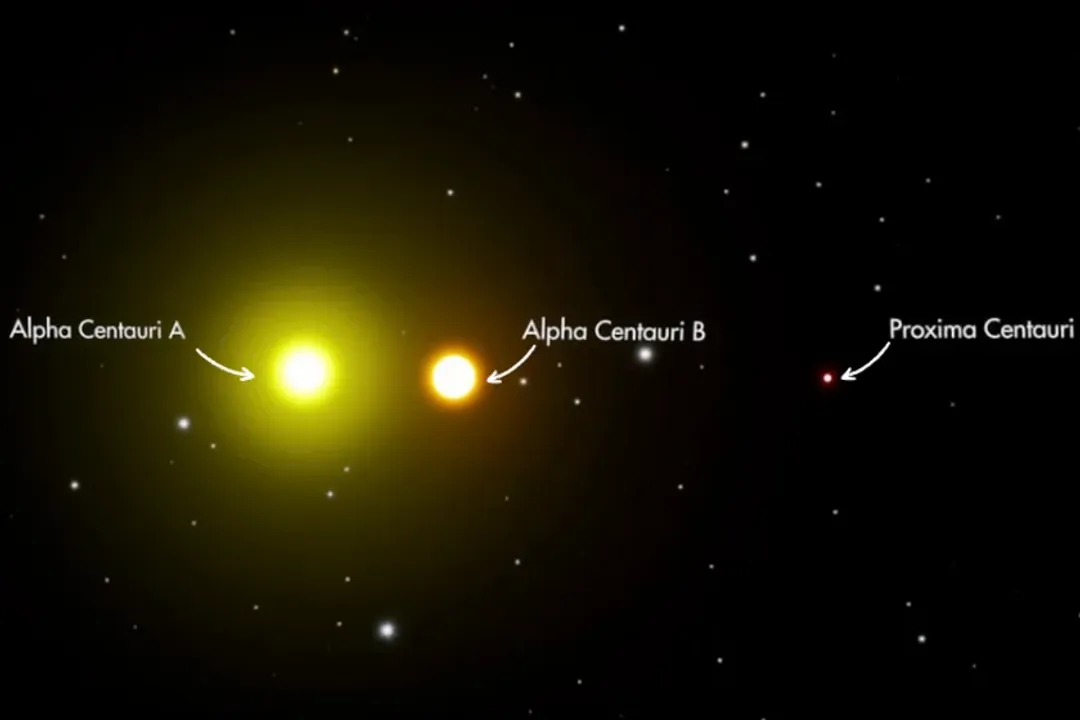
The color of a star is intrinsically linked to its temperature, its mass, and, most dramatically, its ultimate fate and how long it graces the cosmos. While our own Sun, a yellow G-type main-sequence star, is expected to shine for a total of around 12 billion years, the stars that truly win the longevity contest are the much cooler, dimmer ones: the red dwarfs. [7] These stellar embers are not just long-lived; they are virtually eternal on the timescale of the current universe, potentially lasting for trillions of years. [5][6]
# Stellar Hue Mass
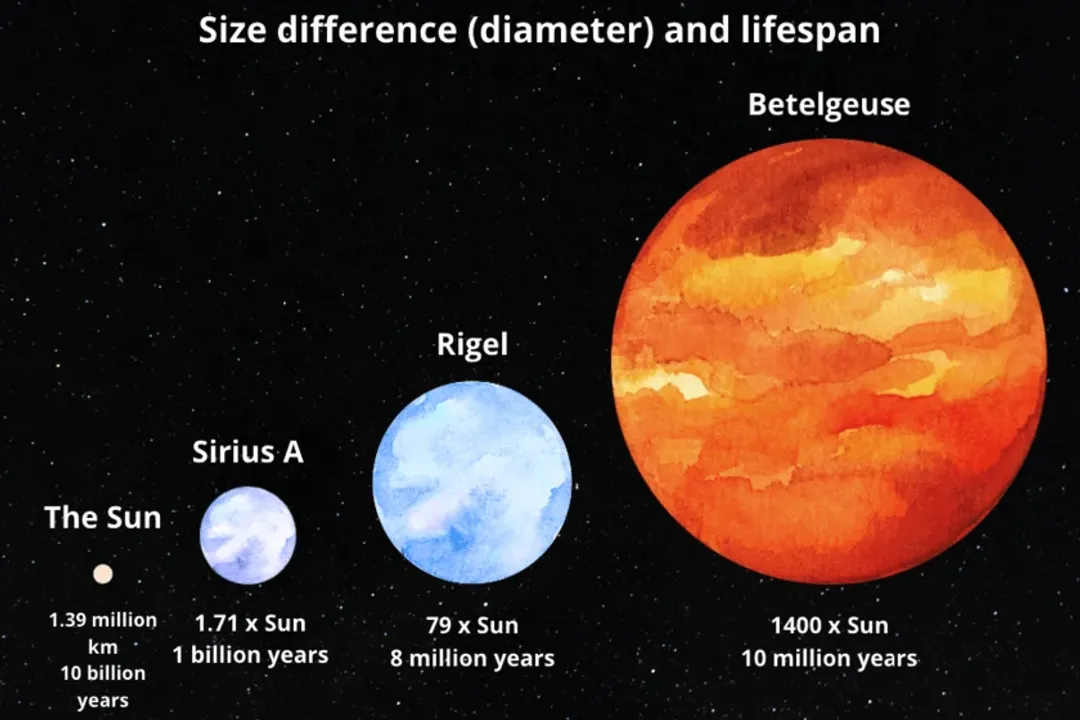
To understand why red is the color of permanence in stellar life, one must first appreciate the spectral classification system that astronomers use to categorize main-sequence stars, which spend about 90% of their lives fusing hydrogen. This sequence runs from the hottest, most massive stars to the coolest, least massive ones: O (blue), B (blue-white), A (white), F (yellow-white), G (yellow, like our Sun), K (orange), and M (red).
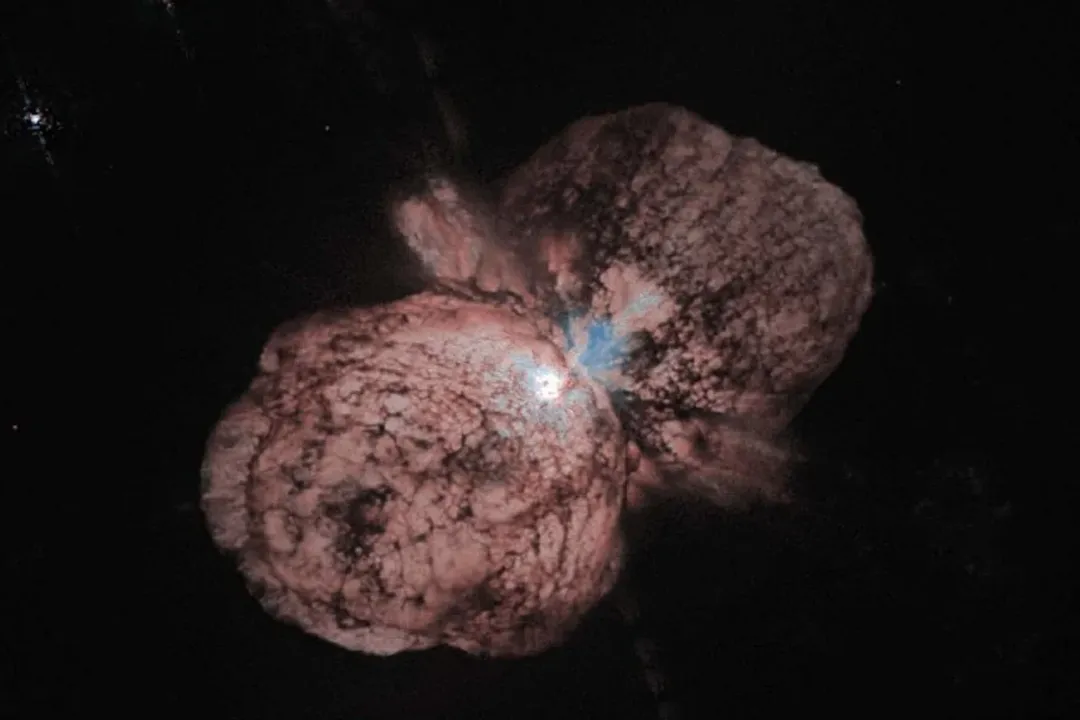
The general rule is an inverse relationship: the more massive a star, the shorter its life. [7] Massive, blue stars burn their hydrogen fuel at an astonishing rate due to the crushing pressure and extreme temperatures in their cores, resulting in brilliant luminosity but brief careers, sometimes lasting only a few million years. [7] For instance, a star like the blue supergiant Eta Carinae has a main-sequence lifespan of only about 3 million years. [7] Even a star with 17 times the Sun's mass, like Rigel, burns out in about 10 million years. [7]
At the other end of the spectrum are the red dwarfs, categorized as spectral type M stars. [4] These stars are very low-mass, typically weighing between about $0.08$ and $0.6$ times the mass of the Sun (). [4] Their cooler surface temperatures, often between $2,000$ and $3,500$ K, result in low luminosity—sometimes only one ten-thousandth that of the Sun. [4] This faintness is what preserves them. Because they emit so little energy, they consume their fuel supply at a leisurely pace, allowing them to remain on the main sequence for timescales that dwarf the age of the universe, which is currently estimated at less than 14 billion years. [4][5]
# Convection’s Endurance

The critical factor separating the lifespan of a red dwarf from a Sun-like star is not just the rate of consumption, but how the fuel is accessed. A Sun-like star, or any star larger than approximately , develops a layered structure: a fusion core surrounded by a radiative zone and then an outer convective zone. [4] In this configuration, the fusion process only occurs in the central core, where hydrogen is converted into helium. [8] Once the hydrogen in that small core is used up, the star must evolve off the main sequence, expanding into a red giant. For the Sun, only about $10%$ of its total hydrogen supply is located in this central core region. [7]
Red dwarfs below that threshold are fundamentally different because they are fully convective. [4][8] Imagine the entire body of the star acting like a convection oven, where superheated plasma continuously rises, releases heat at the surface, cools, and sinks back down through the star's interior. [8] This process ensures that the helium byproduct generated by fusion in the center is constantly mixed and carried outward, while fresh, unfused hydrogen from the outer layers is continuously circulated into the core. [4]
This mechanism means that a low-mass red dwarf can, theoretically, convert almost all of its hydrogen into helium for fuel. [4] While a Sun-like star must stop fusing after exhausting its core hydrogen, the red dwarf sips its fuel from its entire volume. This efficiency is staggering; a red dwarf is predicted to maintain this steady fusion for up to 10 trillion years. [4] If we consider the Sun’s 10-billion-year lifespan as the benchmark for a star that only utilizes its core fuel, a fully efficient red dwarf effectively multiplies that duration by a factor of ten, in addition to burning fuel at a much slower rate in the first place.
# Life Cycle Contrast
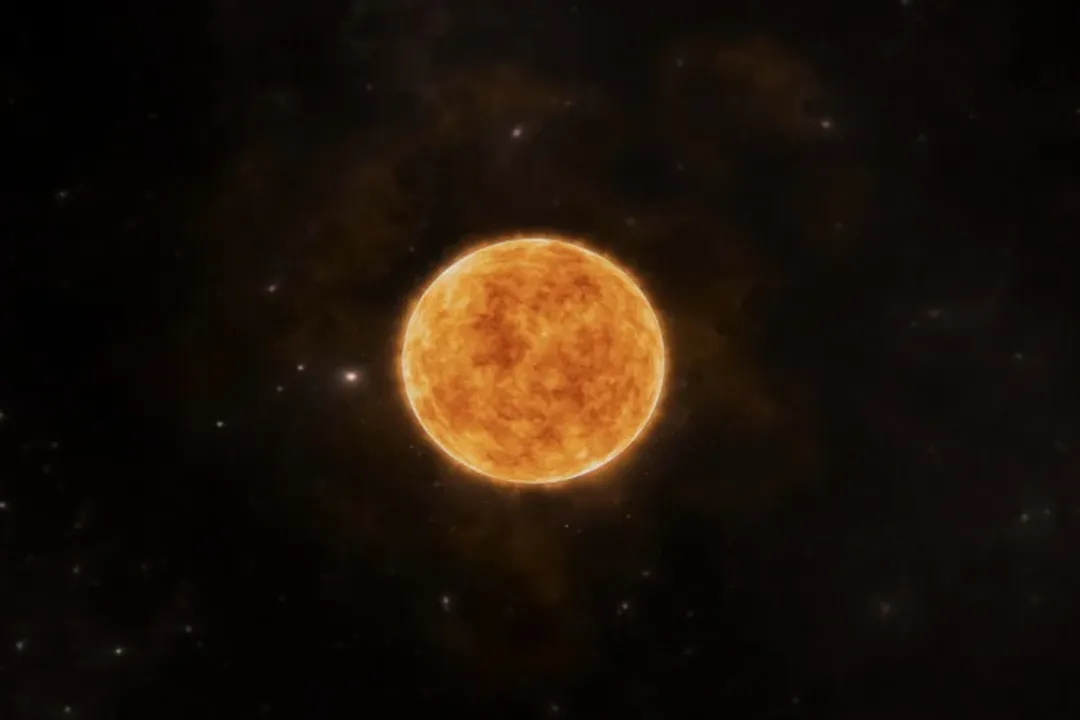
To truly appreciate the longevity of these faint stars, it helps to contrast their predicted evolution against those of medium- and high-mass stars. The differences in mass lead to vastly different destinies. [7]
| Star Type | Mass () | Main-Sequence Lifespan (Approx.) | End State |
|---|---|---|---|
| Massive Star | $> 8$ | A few million years | Supernova Neutron Star or Black Hole |
| Sun-like Star (G-type) | billion years | Red Giant White Dwarf | |
| K Dwarf (Orange) | Moderate | $15-45$ billion years | Evolve similarly to the Sun |
| Red Dwarf (M-type) | $0.08 - 0.6$ | Trillions of years | Blue Dwarf White Dwarf (No Red Giant) |
The Sun, currently about $4.6$ billion years old, is halfway through its main sequence. [7] In about 5 billion more years, it will enter the Red Giant phase, swelling significantly before shedding its outer layers to leave behind an Earth-sized stellar cinder known as a white dwarf, which will then slowly cool over eons. [7]
The red dwarfs take a quieter path. Because they are not completely convective, the most massive red dwarfs (around $0.25$ to ) are predicted to eventually exhaust their core hydrogen, contract, and become hotter and brighter, transitioning into blue dwarfs before becoming white dwarfs. [4] The least massive among them, however, may never become red giants at all; they are expected to simply increase their surface temperature and luminosity steadily over trillions of years until they finally evolve into a white dwarf. [4]
The nearest star to our solar system, Proxima Centauri, is a prime example of a red dwarf, possessing only about one-eighth of the Sun's mass. [7] Its projected total lifespan is estimated to be around 4 to 5 trillion years. [7] Barnard’s Star, another nearby red dwarf, is estimated to last for 10 to 12 trillion years. [7] Given that the universe is only about $13.8$ billion years old, it means that no red dwarf star that has ever formed has died yet. [5] This fact alone illustrates their supreme durability.
# The Slow Burn Factor
The immense lifespan is a direct consequence of the extremely slow burn rate, which is proportional to luminosity. For a typical red dwarf, its luminosity is predicted to be roughly th of the Sun's. [4] This means that for every unit of hydrogen the Sun consumes in a given time, that small red dwarf consumes only $0.0001$ units. If the Sun burns its limited core fuel for 10 billion years, a star burning $1000$ times slower, even if it only used its core fuel, would last $1000$ times longer. But since the red dwarf uses nearly $100%$ of its fuel thanks to full convection, the total time stretches into the tens of trillions of years, far outstripping any other stellar category. [4][6]
This slow evolution presents unique challenges and opportunities for any potential planets orbiting them. The habitable zone—the region where liquid water could exist—is very close to the dim star, meaning planets in this zone are likely tidally locked, with one side facing perpetual day and the other perpetual night. [2][4] Furthermore, in their youth, red dwarfs are often flare stars, emitting flares that can be 10,000 times more powerful than the Sun’s largest recorded flares, potentially stripping away atmospheres. [2] However, the good news is that these intense outbursts typically settle down after the first billion years, leaving a stable, gentle light source for the vast majority of their trillions-of-years existence, providing an unparalleled window for biological evolution to experiment. [2]
The light from these stars is so faint that none of the red dwarfs nearest to us, even Proxima Centauri, are visible to the naked eye from Earth. [4][5] Yet, they make up the bulk of the galaxy's stellar population. Estimates suggest red dwarfs account for about $73%$ of the fusing stars in the Milky Way, making the longest-lived stars the galaxy’s most common inhabitants. The very structure of star clusters can even be dated by observing which low-mass red dwarfs have just begun to leave the main sequence, providing a lower limit to the age of the observable universe itself. [4]
Ultimately, when we ask which star color offers the longest lifespan, the answer is red, the color of the smallest, coolest, and most fuel-efficient hydrogen-fusing stars. They are the tortoises of the stellar world, setting the cosmic clock for timescales we can barely comprehend, ensuring that the dim glow of a red dwarf will be the very last light to fade in the far, far future of the cosmos.
#Videos
Why Do Red Dwarfs Live So Long? - YouTube
Related Questions
#Citations
Red dwarf - Wikipedia
This star is closest to eternity! - YouTube
Red Dwarfs: The Most Common and Longest-Lived Stars | Space
What's the estimated lifespan of the smallest red dwarves? - Reddit
How Long Do Stars Live? - Label Stars
Stars in an Exoplanet World - NASA Science
Red dwarf star | Definition, Facts, & Temperature | Britannica