What stars have the shortest lifespan?
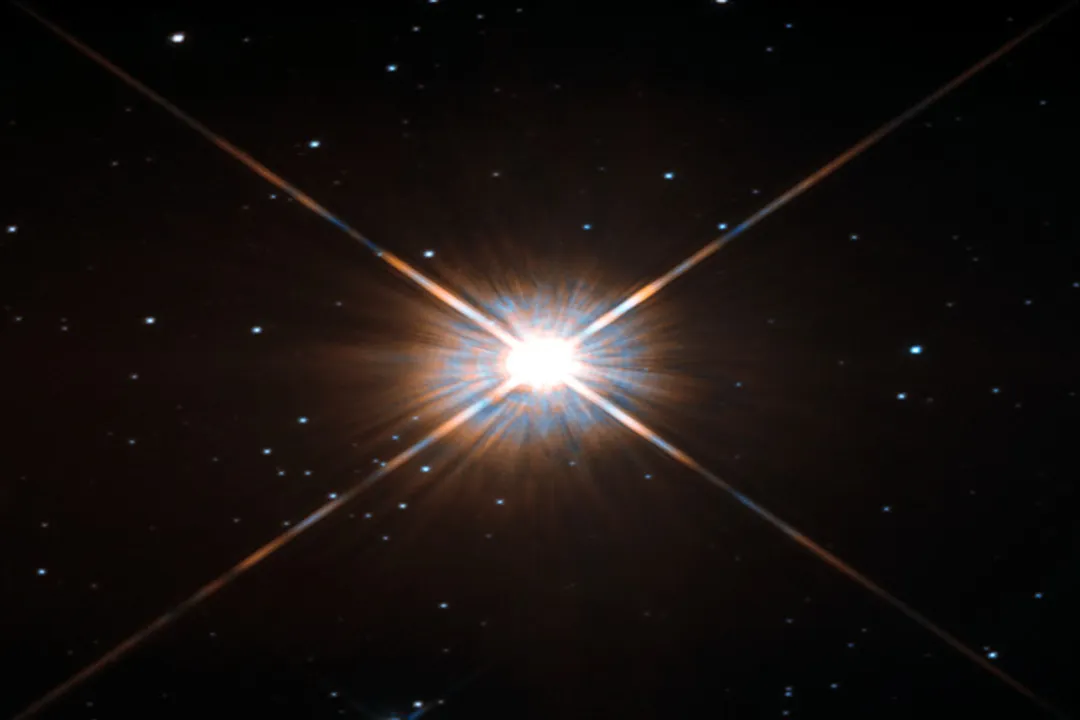
The question of which stars lead the briefest existence in the cosmos immediately points us toward the giants, the behemoths of the stellar world. While our own Sun, a middle-aged G-type star, is slated for a lifespan stretching billions of years, the most massive stars live and die in a spectacular, yet fleeting, instant on the cosmic clock. These stellar titans consume their nuclear fuel at an astonishing rate, making their existence a dramatic, brief flare against the eons of the universe.
# Mass Determines Time

The single most crucial factor dictating how long a star will shine is its initial mass. This relationship is wonderfully counterintuitive to those expecting bigger things to last longer; in the stellar realm, the bigger they are, the faster they burn out. A star spends the majority of its life fusing hydrogen into helium in its core, a process that dictates its main sequence lifespan.
The mechanism at play is directly related to gravity and pressure. A star with significantly more mass possesses a much stronger gravitational pull trying to crush it inward. To counteract this immense pressure and maintain hydrostatic equilibrium—the balancing act that keeps a star stable—the core temperature and pressure must be vastly higher. These extreme conditions force nuclear fusion reactions to proceed at a runaway pace, consuming the star's hydrogen fuel reservoir far more rapidly than in smaller stars.
For instance, if we compare a star that is only a fraction of the Sun's mass to one that is perhaps 50 times the Sun's mass, the difference in their remaining time is staggering. While the Sun has about 10 billion years left on its main sequence, that massive star might only last a few million years, or even less. To put this into perspective, a star with 10 times the mass of the Sun might only endure for about 20 million years, a blink compared to the Sun’s lifetime.
Here is a quick comparison illustrating this mass-luminosity-lifespan trade-off:
| Stellar Mass (Solar Masses) | Relative Luminosity | Approximate Main Sequence Lifespan (Years) |
|---|---|---|
| 0.5 | 0.05 | > 100 Billion |
| 1 (Sun) | 1 | 10 Billion |
| 10 | 10,000 | 20 Million |
| 50 | 500,000 | 5 Million |
# The Briefest Existence
The stars that hold the title for the shortest lifespans are the most massive stars on the upper end of the stellar mass scale, often exceeding 50 to 100 times the mass of the Sun. These colossal objects are generally blue or blue-white in color due to their intense surface temperatures.
Guinness World Records recognizes the shortest-lived star as one with a mass of around 150 solar masses, which has a predicted lifespan of only 2.8 million years. This record holder exemplifies the extreme end of stellar burnout. It’s important to remember that these figures are based on current astrophysical models; observing the true beginning-to-end life of such a fast-burning star is impossible within human history.
The theoretical upper limit for how massive a star can be—and therefore how short its life—is around 150 to 300 solar masses, beyond which the outward pressure from radiation alone overcomes gravity, causing the star to be blown apart almost as soon as it forms. This immense radiation pressure is a key factor in their short, dramatic lives.
One fascinating piece of recent work suggests that some of these massive stars might be experiencing a "simple solution" to a long-standing mystery regarding their atmospheric structure and the ejection of mass. Even subtle variations in how they shed their outer layers can significantly impact their evolution and final moments, making the precise calculation of their lifespan a delicate balancing act.
# The Longest Contrast
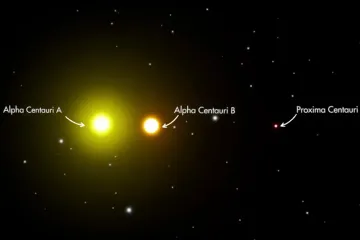
To fully appreciate the brevity of the shortest stellar lives, we must look at the opposite extreme: the red dwarfs. These stars are the most common type in the Milky Way galaxy and are significantly less massive than the Sun, often being less than half its mass.
Red dwarfs are the universe’s marathon runners. Because they are small, their core temperatures and pressures are much lower, causing them to fuse hydrogen incredibly slowly. Unlike larger stars that only mix the hydrogen in their core with the helium ash, red dwarfs are believed to be fully convective, meaning the helium "ash" is constantly churned out of the core and replaced with fresh hydrogen from the outer layers. This efficiency allows them to utilize nearly all their hydrogen fuel. Consequently, the predicted lifespans for the smallest red dwarfs can stretch for trillions of years—far longer than the current age of the universe, which is about 13.8 billion years.
If you imagine the entire history of the universe as a single human lifetime, a massive star lives for only a few hours, while our Sun lives for about 80 years, and a red dwarf has not even reached puberty yet.
# The Explosive Finale
The short life of a massive star invariably ends in a spectacular catastrophe: a supernova. Because these stars are so massive, once they exhaust the hydrogen in their core, they proceed rapidly through subsequent fusion stages, building up layers of heavier and heavier elements until an inert iron core forms. Iron fusion consumes energy rather than releasing it, leading to catastrophic core collapse.
The collapse happens in milliseconds, resulting in a shockwave that blasts the star's outer layers into space in an explosion that can briefly outshine entire galaxies. This event seeds the interstellar medium with the heavy elements necessary for future generations of stars, planets, and life. This short, violent demise contrasts sharply with the quiet, slow fade-out expected for a low-mass star like a red dwarf, which will likely just shrink into a white dwarf without any supernova fanfare.
The sheer energy output of a massive star in its brief main sequence phase is almost incomprehensible. While it exists for only a few million years, it can produce more total energy than a Sun-like star will generate over its entire 10-billion-year tenure.
It is worthwhile to consider that the term "shortest lifespan" is slightly ambiguous when discussing stellar death; a star might exist for 5 million years and then end in a hypernova over a few seconds, or it might spend a few hundred thousand years after hydrogen exhaustion evolving into a Wolf-Rayet star before collapsing. However, the total time from birth to core-collapse remains extremely short compared to smaller stars. While we can precisely calculate the main sequence time based on mass and luminosity, the exact timing of the final, swift collapse stage still involves complex physics related to internal structure and mass loss mechanisms. The shortest-lived stars essentially begin their lives on a countdown timer set for a few million years, a cosmic extravagance that fuels the creation of the heavier elements we see around us today.
#Videos
Which Type Of Star Has The Shortest Life Span? - Physics Frontier
Related Questions
#Citations
Shortest lived stars | Guinness World Records
What is the shortest lifespan of a star created during the big bang ...
Which Type Of Star Has The Shortest Life Span? - Physics Frontier
What is the longest and the shortest times that stars can live? - Quora
Flexi answers - What type of star has the shortest lifespan? - CK-12
Red dwarf - Wikipedia
The most massive, luminous stars have the shortest lifetimes. Here's ...
How Do Stars Die and How Long Do Stars Live? - Sky & Telescope
Astronomers Keep Finding Stars That Should Be Dead. Now, We ...