Which type of stars have the shortest lifespan?
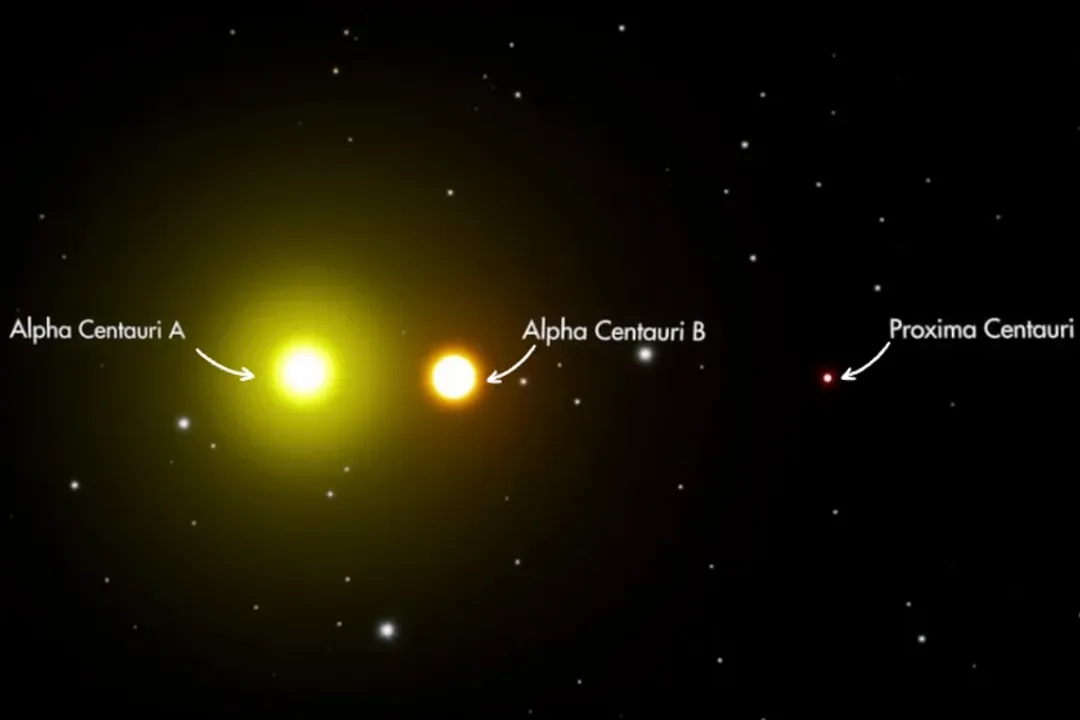
The cosmic story of a star is largely dictated by one overriding factor: its starting mass. While we often think of stars as eternal fixtures in the night sky, burning steadily for unimaginable stretches of time, the reality is that stellar lifespans vary dramatically, from brief, furious flashes to epochs lasting longer than the universe itself has existed so far. [7][5] The fundamental question of which star lives the shortest life finds its answer at the extreme upper end of the mass scale. The biggest, brightest, and hottest stars are the universe's speed demons, living fast and dying young in astronomical terms. [1][6]
# Mass Dictates
The duration a star spends on the main sequence—the longest and most stable phase of its life—is inversely proportional to its mass. [1][5][7] This relationship isn't linear; it's a drastic scaling where a small increase in mass leads to a disproportionately massive decrease in lifespan. [7] Stars fuse hydrogen into helium in their cores, and the rate at which they consume this fuel governs how long they last. [6]
For a star to maintain hydrostatic equilibrium—the balance between the inward crush of its own immense gravity and the outward pressure generated by nuclear fusion—more massive stars require exponentially higher core temperatures and pressures. [7] Imagine trying to keep a giant bonfire lit; you need to feed it fuel at a staggering rate to prevent it from collapsing under its own weight. This intense pressure forces the hydrogen fusion reactions to occur far more rapidly than they do in smaller, cooler stars like our Sun. [7][6]
The stars with the shortest lifespans are those classified as the most massive, typically falling into the O and B spectral types. [6][7] These behemoths can start their lives with masses perhaps fifty times, or even more, than that of the Sun. [7] Because of their overwhelming gravitational pull, their internal furnaces roar at peak efficiency from the moment of their birth.
# Giants Burn Fast
The most massive stars are characterized by their immense luminosity. Luminosity, which is the total energy a star radiates per second, scales incredibly steeply with mass—often proportional to the mass raised to the power of three or even four. [7] A star that is just ten times the mass of the Sun might shine hundreds or even thousands of times brighter. [7]
This extreme brightness is the direct manifestation of their rapid fuel consumption. While they possess the largest initial reserves of hydrogen fuel, their burn rate is so excessive that they exhaust these reserves in a blink of an eye, cosmically speaking. [1][7]
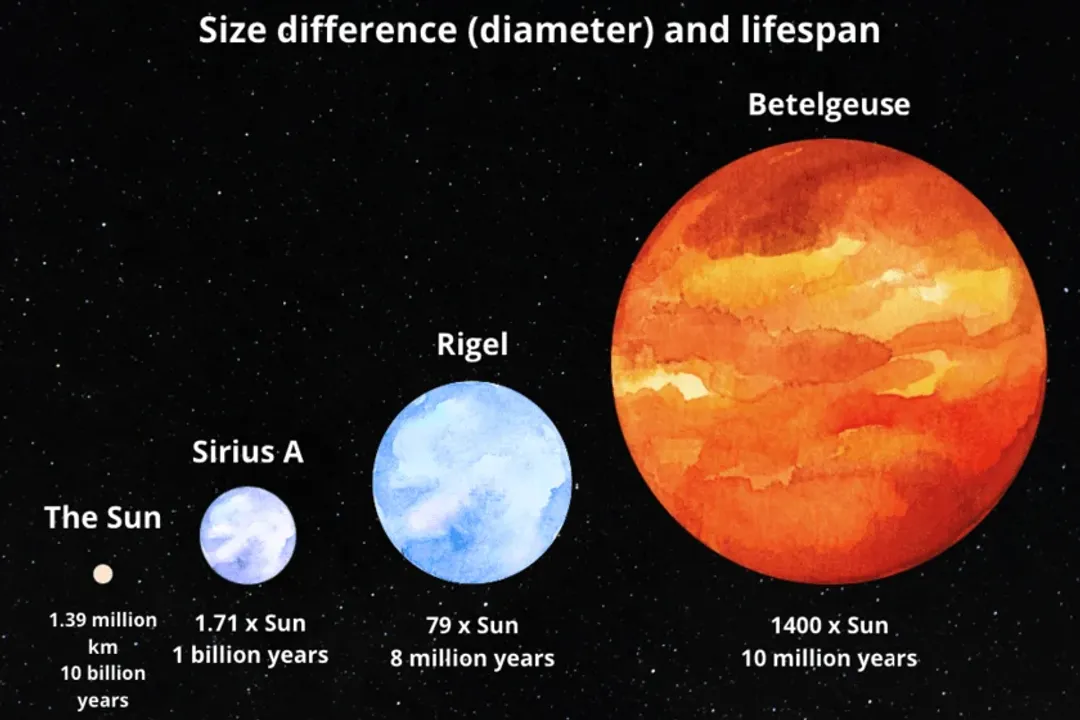
Consider the upper echelon of stellar giants. The most massive stars, those exceeding perhaps 30 solar masses, live lives measured not in billions of years, but in mere millions. [1] For example, a star with 25 times the mass of the Sun might only last for about 7 million years. [1] To put that into perspective, our Sun, a relatively modest G-type star, has an estimated total lifespan of about 10 billion years. [6] When we look at the sky, we are seeing the present state of stars that have been forming and evolving since the galaxy’s inception. Yet, any O-type star we observe is guaranteed to be a very young star, because none of the earliest ones could possibly still be shining today. [8]
# Lifespan Extremes
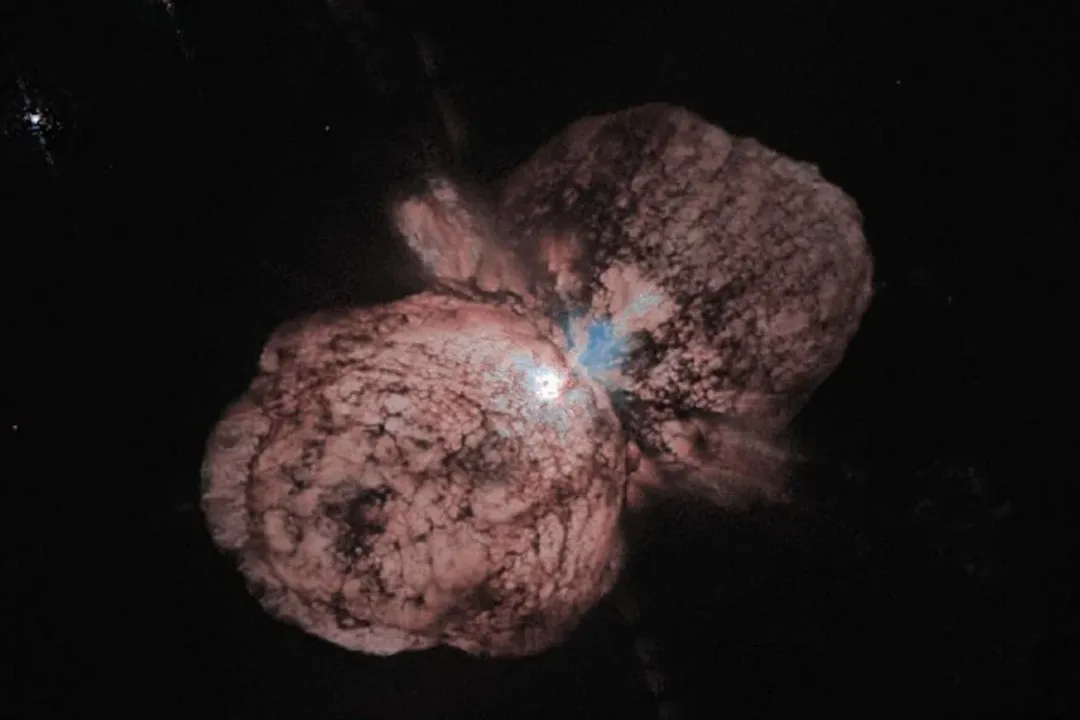
The contrast between the shortest-lived and longest-lived stars is one of the most dramatic comparisons in astrophysics. [5]
On one end, we have the small, cool red dwarfs (M-type stars). These low-mass objects sip their fuel very slowly, fusing hydrogen at a glacial pace due to their lower core temperatures and less intense gravity. [7] Their lifespans are estimated to be in the trillions of years. [5][7] Since the universe is only about 13.8 billion years old, no red dwarf that has ever formed has yet reached the end of its life; they are, by definition, the longest-lived objects we know of. [7]
On the other end are the scorching blue giants—the O-type stars—which are the shortest-lived. [1][7] Their lives end in spectacular fashion, typically exploding as Type II supernovae when their core runs out of usable fuel, leaving behind either a neutron star or a black hole, depending on the initial mass. [8] The entire process, from birth on the main sequence to final collapse, can be concluded in as little as a few million years. [1]
Here is a simplified look at this spectrum of stellar longevity:
| Star Type (Approximate Mass) | Fuel Consumption Rate | Main Sequence Lifespan (Approximate) |
|---|---|---|
| O-Type (High Mass, >16 ) | Extremely High | Few Million Years |
| Sun-like Star (1 ) | Moderate | ~10 Billion Years |
| Red Dwarf (Low Mass, <0.5 ) | Very Slow | Trillions of Years |
Note: denotes solar masses. [1][7]
# Fuel Burn Ratios
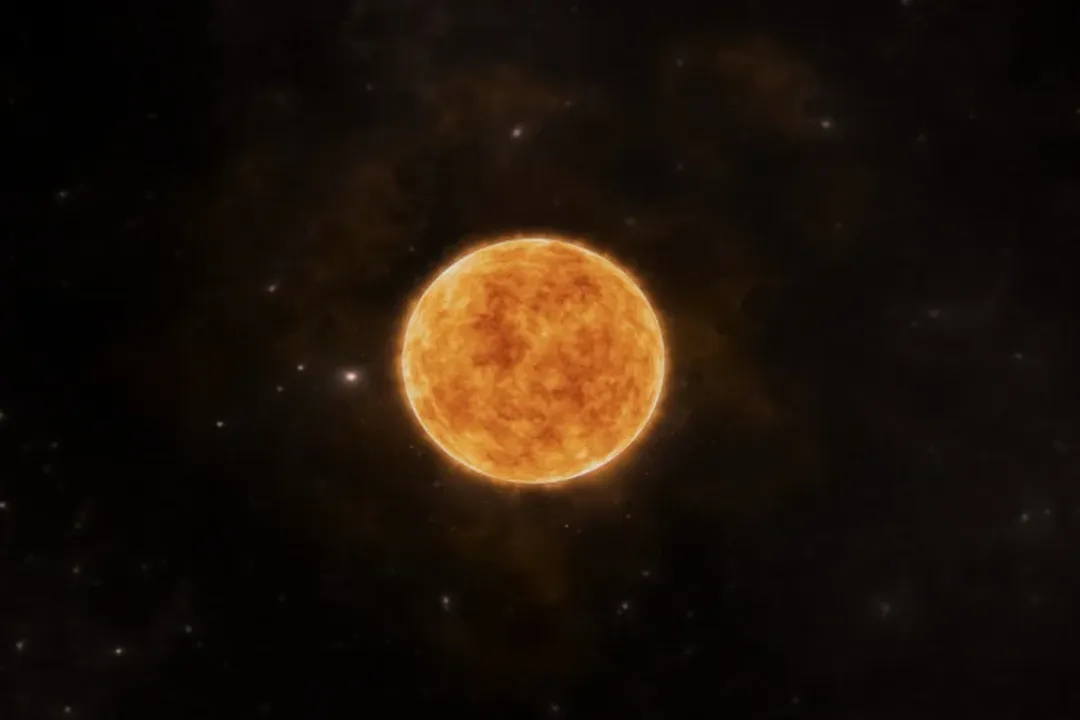
To grasp the severity of the shortest lifespans, we can look at the ratio of fuel available versus the rate it is burned. While the precise mathematics involves complex stellar structure models, we can establish a proportional comparison. If our Sun, with its 10-billion-year lease, represents one unit of life cycle time, a star that is 20 times the Sun's mass might burn through its fuel pool over a hundred thousand times faster. [7]
If we imagine a hypothetical scenario where a 20-solar-mass star could somehow be "re-fueled" to the Sun's initial mass, the Sun would need to burn its entire supply in just a few hundred million years to match the massive star's rate of consumption, even though the massive star had much more hydrogen to begin with. This trade-off is entirely governed by the pressure cooker environment inside the massive star's core. The sheer force of gravity requires a monumental outward pressure, which is achieved only through utterly ferocious fusion rates. [7] This rapid consumption is the essential mechanism leading to the shortest stellar existences.
# Death’s Speed
The very physical conditions that necessitate a short, burning life for these massive stars also guarantee their dramatic end. The speed of their life is intrinsically linked to the violence of their death. [8] Because they fuse elements beyond helium so quickly—moving on to carbon, neon, oxygen, and silicon in their core before finally creating an iron core—they only have a short time before that iron core forms. [8] Fusion stops cold at iron because fusing iron actually consumes energy rather than releasing it.
When that inert iron core forms, the outward pressure from fusion instantly vanishes. Gravity wins the final battle catastrophically, causing the core to collapse in milliseconds. [8] This implosion rebounds into a shockwave, resulting in a supernova explosion, which momentarily outshines entire galaxies. [8] In essence, the characteristics that make an O-type star’s life brief—its high mass and intense gravity—are precisely the characteristics required to trigger such an energetic demise. [7] A low-mass star, like the Sun, will gently puff off its outer layers as a planetary nebula, a quiet farewell compared to the explosive exit of its massive cousins. [8]
# Stellar Classification Context
Understanding where these short-lived stars sit in the astronomical catalog helps contextualize their role. Astronomers classify stars using spectral types, primarily based on surface temperature, with the O-type being the hottest and blue-colored, followed by B, A, F, G (our Sun), K, and M (coolest and reddish). [6]
The most massive stars fall squarely into the O spectral class. [6] These are the giants with surface temperatures generally above 30,000 Kelvin. [7] They spend almost no time on the main sequence compared to the vast spans covered by cooler stars. If you were to plot stars on the Hertzsprung-Russell (H-R) diagram, which plots luminosity against temperature (or spectral type), the O-type stars inhabit the top-left corner—the region of highest luminosity and highest temperature—and their path across this diagram is swift and brief. [7]
Even slightly less massive stars, the B-type stars, which might be 5 to 15 times the mass of the Sun, still have lifespans measured in tens of millions of years, significantly shorter than the Sun’s 10-billion-year run, but longer than the O-types. [1] The entire sequence demonstrates a fundamental principle of astrophysics: the hotter and brighter a star is, the faster its clock runs down. [6] The stars with the shortest lifespans are those that choose maximum output from the moment they ignite.
#Videos
Which Type Of Star Has The Shortest Life Span? - Physics Frontier
Related Questions
#Citations
Flexi answers - What type of star has the shortest lifespan? - CK-12
Which Type Of Star Has The Shortest Life Span? - Physics Frontier
Physical Science Chapter 14 Flashcards | Quizlet
What is the shortest lifespan of a star created during the big bang ...
What is the longest and the shortest times that stars can live? - Quora
How Long Do Stars Live? - Label Stars
How Do Stars Die and How Long Do Stars Live? - Sky & Telescope
The Life Cycle of Stars | National Air and Space Museum
Which type of star has the shortest lifespan? A. Largest B. Medium ...