Do blue stars have a shorter lifespan?

The color of a star offers immediate clues about its fundamental nature, particularly its surface temperature and, consequently, its destiny. Generally speaking, the hottest celestial bodies shine with a distinct blue hue, while cooler stars trend toward yellow or red. [7][8] This simple visual observation unlocks a profound physical principle: there is a direct trade-off between a star’s temperature and how long it remains shining steadily on the main sequence.
# Star Color
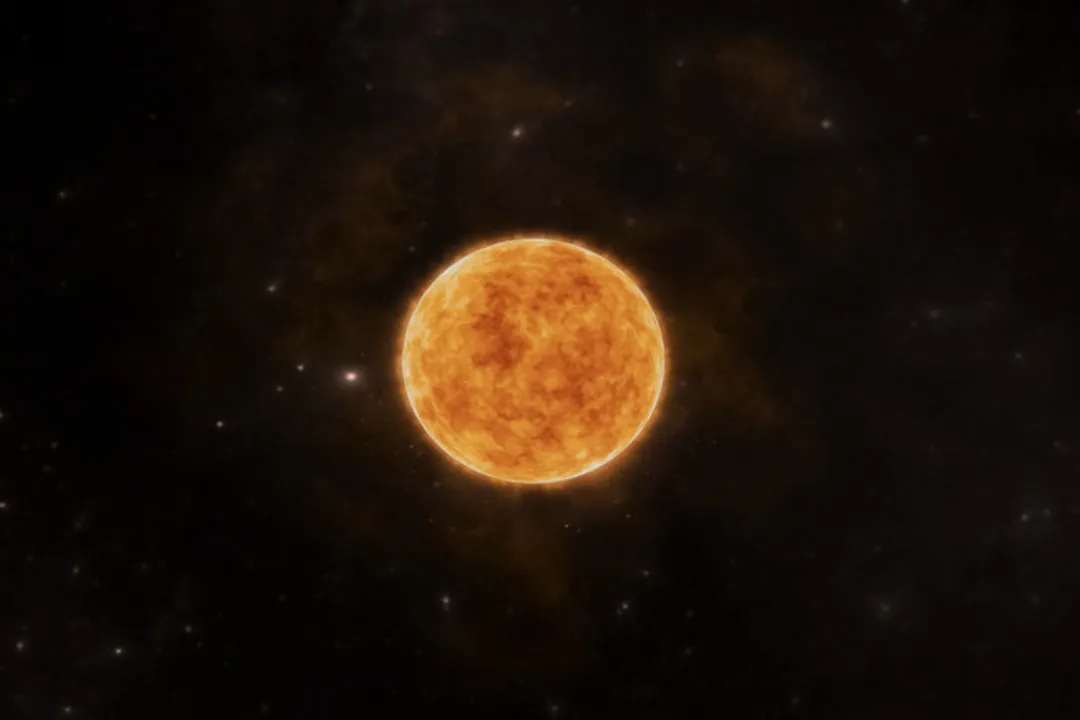
The spectrum of stellar colors directly maps to their temperature profiles. Think of it like heating metal; the hotter it gets, the closer its glow moves toward the blue end of the visible spectrum. [7] A star’s color is dictated by its effective surface temperature, which, in turn, is heavily influenced by its mass. [7][8] Blue stars are the scorching titans of the stellar population, possessing surface temperatures far exceeding those of familiar, middle-aged stars like our Sun, which appears yellow. [7]
# Burn Rate
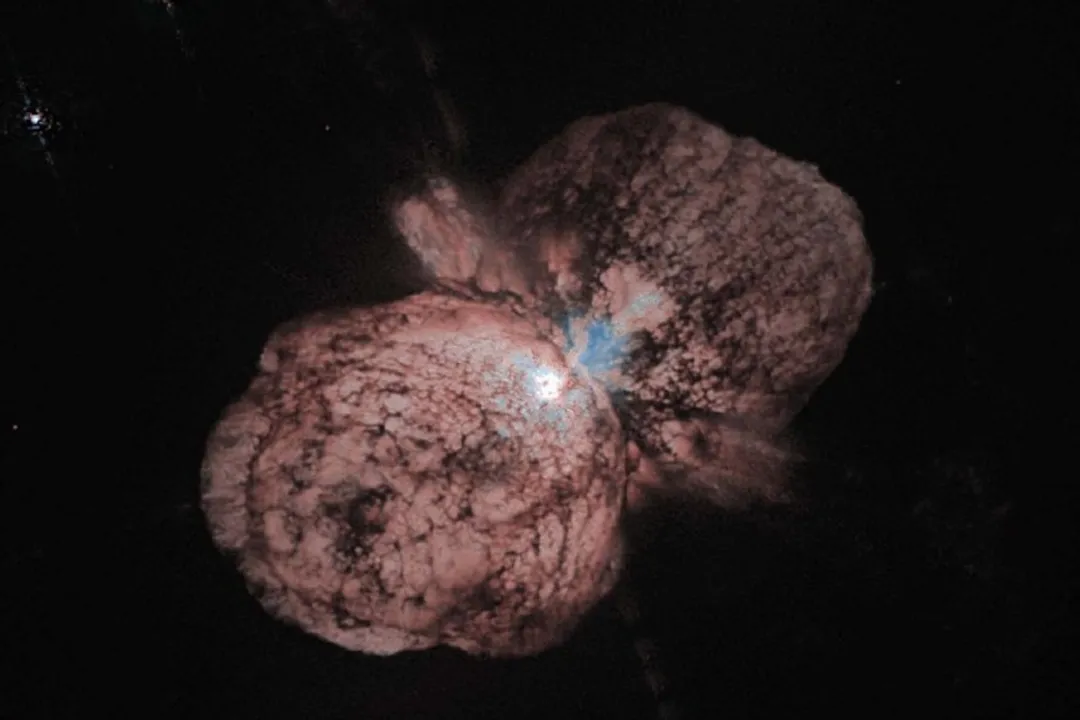
The critical factor determining a star's lifespan is how quickly it converts its vast hydrogen fuel reserves into energy through nuclear fusion. Because blue stars are so much hotter and more massive than their cooler counterparts, they experience an immensely accelerated rate of fusion. [1] This rapid burning means that even though a blue star starts with a greater reserve of fuel than a smaller star, it consumes that reserve at a disproportionately higher rate. [5] It is not just about how much fuel you have, but how fast you are emptying the tank.

# Supergiant Mass
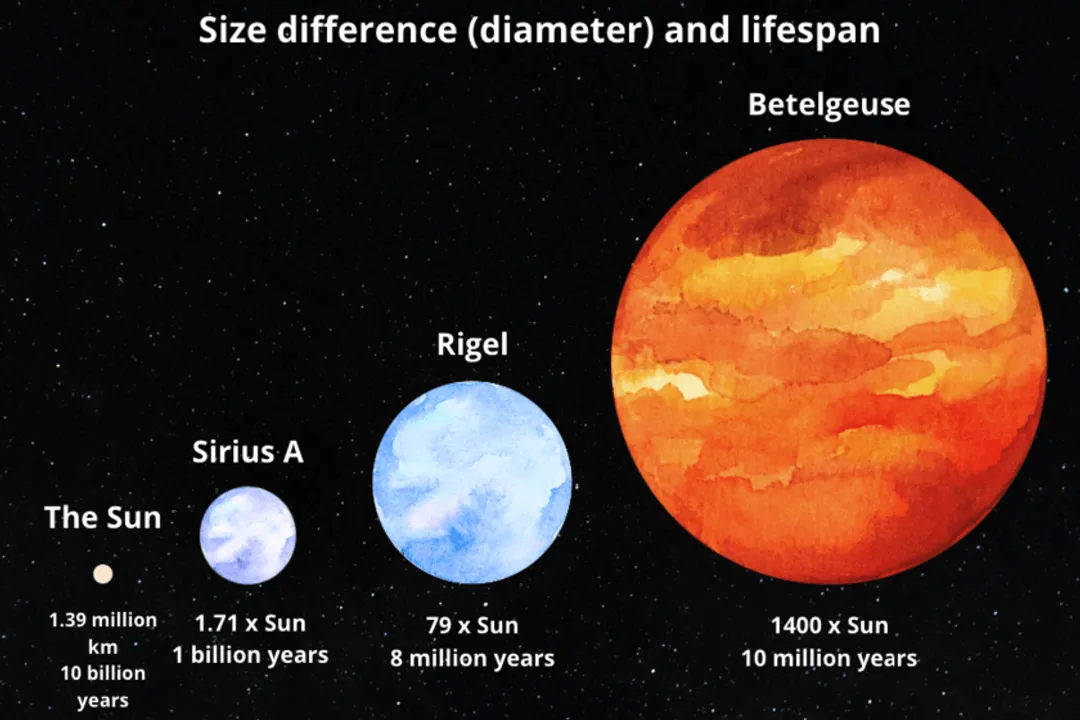
The most dramatic examples of this rapid stellar evolution are found among the blue supergiants. [5][6] These stars are born with tremendous mass, often many times that of the Sun. [5] This high mass generates crushing internal pressures, driving the nuclear furnace at an almost unbelievable pace to support the star against its own immense gravity. [5] Their luminosity is staggeringly high, sometimes exceeding a million times that of our Sun. [6] This extreme output requires an extreme fuel consumption, ensuring their tenure in the galaxy is comparatively brief. [5] While our Sun is expected to live for roughly ten billion years, a massive blue star might exhaust its core fuel in only a few million years. [1] Considering the age of the universe, those few million years constitute a spectacular, yet incredibly swift, existence for such a luminous object. [2]
If we consider the Sun’s estimated lifespan of about 10 billion years as a cosmic benchmark, the difference with a massive blue star is staggering. If a blue supergiant burns its fuel thousands of times faster due to its extreme heat and mass, the resulting lifespan is measured in mere ticks of the universal clock—perhaps a few million years—whereas the Sun’s life is measured in eons. The sheer energy output required to maintain that temperature results in an exponentially faster depletion of nuclear fuel compared to the steady, leisurely burn of a star like the Sun. [1][5]
# Life Duration
The relationship is firmly established: the bluer and hotter the star, the shorter its overall life span. [1][8] Red dwarfs, which are cool and dim, can maintain their slow burn for trillions of years, long outliving the current age of the universe. [8] In sharp contrast, the most massive stars, which are blue, represent the shortest-lived stellar configurations known. [2] These stars blaze spectacularly bright for a very short period before rapidly concluding their lives, often ending in dramatic supernova explosions. [5] While specific records exist for the shortest-lived stars, they all share the common traits of high mass and high temperature, which mandate a swift demise. [2]
# Habitable Zones
This rapid stellar evolution presents significant challenges for the possibility of sustaining life around blue stars, even those large enough to host planets in a conventionally defined habitable zone. [3] For complex life, as we understand it, to potentially evolve, a stable energy source lasting for billions of years is generally considered necessary—our own planet’s history offers a good illustration of that timescale requirement. [3] A blue star’s lifespan of just a few million years offers an extremely narrow window, if any, for biological complexity to arise and develop before the star dramatically changes or dies. [3] The intensity of the blue star’s ultraviolet radiation, combined with its brief lifetime, renders the stability required for life a significant hurdle, making them less promising candidates for hosting enduring biospheres compared to cooler, longer-lived stars. [3]
Observing these giants is akin to catching a cosmic firework display. Because their lives are so short relative to the age of the cosmos, finding one actively burning in its prime at any given moment across the observable universe is statistically less likely than spotting a star that has had time to evolve slowly, like a G-type star. When we look out and see a blue supergiant, we are witnessing a star in its brilliant, albeit ephemeral, adolescence, consuming its youth at a ferocious pace before its inevitable, and rapid, retirement from the celestial stage.
Related Questions
#Citations
Blue stars burn hotter than yellow or red stars, if that's the case will ...
Shortest lived stars | Guinness World Records
Could a blue star support life? I know generally no, but is ... - Quora
Blue supergiant - Wikipedia
Astronomers Finally Able to See Beneath Surface of Mysterious Blue ...
Blue Super Giants - Isaac Newton Group of Telescopes
The bluer the star, the hotter it is! Stars come in different colors, and ...
How Long Do Stars Live? - Label Stars
Blue stars: The biggest and brightest stars in the galaxy - Space